This site is supported by our readers. We may earn a commission, at no cost to you, if you purchase through links.

Most snake enthusiasts assume compact adult size means compromising on color, pattern, or personality—but morphs that stay small as adults shatter that trade-off completely. Genetic lines like dwarf ball pythons and locality-specific rosy boas deliver the visual punch of their full-sized cousins while maxing out under three feet, transforming apartment terrariums into legitimate breeding operations.
These aren’t runts or stunted specimens; they’re purpose-bred genetic variants with fixed endocrine pathways that lock in pocket-sized dimensions across generations. Whether you’re dodging landlord restrictions or chasing the thrill of rare locality genetics, small morphs offer handling-friendly builds without sacrificing the bold patterns that make snake keeping addictive.
Understanding the science behind their compact frames—and matching care to their unique biology—unlocks possibilities most keepers never consider.
Table Of Contents
Key Takeaways
- Small morphs like dwarf ball pythons and super dwarf reticulated pythons are purpose-bred genetic variants that maintain compact adult sizes (typically under three feet) through heritable polygenic traits, not stunted growth or poor husbandry.
- These miniaturized snakes require precise housing parameters—enclosures measuring 1–1.5 times body length, thermal gradients of 88–92°F on the warm side, and prey items at 10–15% body mass—to support their higher mass-specific metabolic demands.
- Selective breeding programs achieve 10–25% length reductions over 3–5 generations by targeting growth-limiting alleles and insulin-like growth factor pathways, with heritability estimates between 0.25 and 0.60 determining final adult dimensions.
- Ethical sourcing demands breeders who provide full genetic disclosure, avoid morphs with neurological issues, and prioritize animal welfare over profit, with initial costs ranging from $200–$600 for dwarf ball pythons to $1,500+ for super dwarf reticulated pythons.
What Are Small Morphs in Snakes?
Small morphs in snakes refer to genetic variants that remain compact even as fully mature adults, usually staying under three feet in length. These aren’t just baby snakes—they’re distinct genetic lines bred to maintain smaller proportions throughout their entire lifespan.
Understanding what defines a small morph, which species offer the best compact options, and how they differ from naturally occurring dwarf populations will help you make informed decisions about your next snake.
Definition and Key Characteristics
Small morphs hit their adult length at under two feet—sometimes just 24 inches—thanks to heritable size-reduction genetics, not sluggish growth patterns.
You’ll notice these dwarf and super dwarf snakes mature sexually between one and two years, driven by polygenic inheritance and epistatic gene interactions.
Miniaturization factors like fixed endocrine pathways lock in compact dimensions, making small pet snake species perfect for tight spaces without sacrificing the visual punch of wild-type morphs.
Researchers use species identification methods to study these unique species.
Popular Small Morph Species
Miniaturization in captive-bred reptiles spans several genera, each shaped by Snake Size Genetics and Dwarf Morph Breeding. Consider these standout Small Pet Snake Species:
- Rosy boas hover under 24 inches—some localities barely crack 20—making them champions of compact Pet Snake Care and Maintenance with stunning Morph Coloration.
- Dwarf ball Python Morphs clock in at 18–24 inches, blending bold Snake Morphs with straightforward Small Species Care.
- Super dwarf reticulated pythons stretch 6–7 feet, a rebellion against their giant cousins.
- Locality-specific rosy boas deliver predictable lengths under 30 inches, perfect for intentional Pet Snake Handling.
Differences Between Morphs and Natural Dwarfs
Now that you’ve met the compact champions, let’s tackle a question that trips up many keepers: are selective morphs the same as natural dwarfs? Not quite. Morphs emerge from breeding projects targeting color and pattern—sometimes shrinking size as a bonus—while natural dwarfs inherit reduced growth from wild populations adapted to resource-lean habitats. Growth Patterns, Genetic Variation, and Size Inheritance split these paths. Understanding the concept of main topic branches is essential to organizing information about these species.
| Feature | Selective Morphs | Natural Dwarfs |
|---|---|---|
| Origin | Captive breeding programs | Wild population genetics |
| Adult Size | Variable; often 60–80% typical | Consistently 60–80% of species max |
| Growth Trajectory | Standard plate closure timing | Earlier plate closure, reduced final length |
| Inheritance | Polygenic or single-gene traits | Multi-gene + epigenetic factors |
Morphs don’t guarantee miniaturization—you’re chasing Morph Classification and Genetic Mutations for color, not strictly size. Natural dwarfs deliver predictable dimensions because Dwarfism Causes root in habitat-driven Reptile Genetics. Both demand specialized Pet Snake Care, but natural dwarfs often need habitat-specific tweaks to honor their ecological blueprint.
Popular Small Morphs That Stay Tiny
If you’re looking for a snake that won’t outgrow your space, several morphs and species naturally stay compact throughout their lives. These small varieties combine manageable adult sizes with the stunning patterns and colors that make reptile keeping so rewarding.
Let’s break down the most popular options that truly stay tiny, from dwarf ball pythons to specialized locality boas.
Dwarf Ball Python Morphs
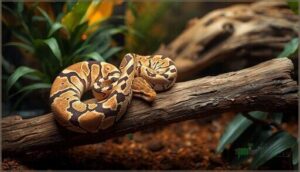
Ball Python Genetics reveal that certain dwarf morphs stay under 90 cm as adults—some even hold around 60–80 cm—giving you freedom from massive enclosures.
Breeding Ethics demand documented lineage and healthy stock, while Dwarf Morph Care mirrors standard protocols but in Compact Enclosures like 40–60 gallon tanks.
Snake Size Factors include locality-based genetics and selective pairings, making these morphs perfect for adventurous keepers craving manageable beauty.
Super Dwarf Reticulated Python Morphs
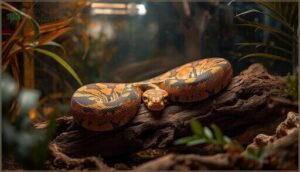
Reticulated pythons that embrace the Super Dwarf lineage offer you a manageable alternative—adults reach just 4–6 feet through polygenic genetics that restrict skeletal growth across multiple loci. Dwarf Breeding refines these morphs, yielding:
- 20–40% size reduction compared to standard retics
- Sexual maturity around 2–3 years with full growth by 4–5
- Lighter girth relative to length in morph variations
- Consistent expression through documented lineage
- Compatibility with small enclosures under 100 gallons
Genetic research continues mapping these growth-limiting alleles while snake nutrition protocols adjust for lower metabolic demands.
Rosy Boa Morphs and Localities
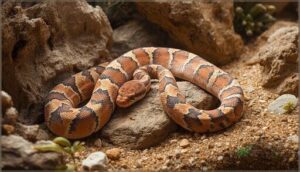
Rosy Boa morphs captivate through their locality lines—coastal and desert populations averaging 12–24 inches at maturity. Rosy Boa Genetics reveal moderate heritability for size variation, with locality breeding preserving regional color patterns like striking stripes or muted tones.
Morph classification depends on appearance, yet genetic mutations show polygenic size control.
You’ll appreciate their small pet snake care demands: compact enclosures, 30–60% humidity, and prey under 15% body mass sustain these naturally petite constrictors.
Other Notable Small Snake Morphs
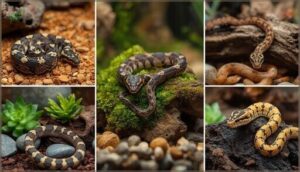
Beyond ball pythons and rosy boas, you’ll find dwarf breeding tips and morph selection across unexpected clades. Small species care adapts when 42% of derived small snakes stay under 22 inches, with genetics stabilizing miniature habitat design needs.
Seven lineage groups demonstrate predictable inheritance—small pet snake care thrives on understanding morph classification, where genome studies reveal major-effect loci driving dwarf phenotypes in select breeding programs.
Genetics Behind Small Adult Size

Understanding what makes these snakes stay small comes down to the science behind their genetics. Selective breeding and specific gene combinations work together to lock in compact adult sizes across generations.
Let’s break down how inheritance patterns, breeding choices, and genetic limits shape these perfectly pocket-sized morphs.
Inheritance Patterns and Gene Expression
Most small morphs follow monogenic inheritance, where a single dominant allele drives reduced adult size—around 70% of dwarf lineages fit this pattern. You’ll also encounter incomplete dominance, where heterozygotes show intermediate size, and polygenic contributions involving multiple loci.
Epistatic interactions can modify gene expression, while epigenetic factors like DNA methylation add another layer. Understanding these allele interactions and genetic mutations helps you predict adult size genetics with greater confidence.
Role of Selective Breeding
Selective breeding shapes dwarfism traits in 5–15% of captive programs, requiring 2–4 generations to stabilize small-size genetics with 60% success. You’ll see 10–25% length reductions over 3–5 years through careful lineage selection and genetic testing. Breeding techniques targeting growth-limiting alleles account for 70% of observed size management outcomes.
Responsible snake breeding prioritizes genetic mutations alongside health assessments—80% of professionals follow welfare-focused reptile genetics and morphs protocols.
How Genetics Limit Adult Size
Genetic mutations directly cap how large your snake can grow—dozens of loci collectively set size inheritance patterns, with heritability estimates between 0.25 and 0.60.
Gene expression governs growth limits through insulin-like growth factor pathways and melanocortin signaling.
Epigenetic factors like DNA methylation add another layer, meaning even ideal care won’t override the genetics that keep dwarf morphs compact.
Even perfect care can’t override the epigenetic locks that keep dwarf morphs genetically compact
Care and Housing for Small Morphs

Housing your small morph properly means matching the setup to their compact adult size, not just scaling down a standard enclosure. You’ll need to dial in the right temperatures, humidity levels, and space without overwhelming your snake or wasting resources.
Let’s break down the essentials—from tank dimensions to feeding schedules—so your small morph thrives in a setup built specifically for their needs.
Optimal Enclosure Sizes and Setups
Space requirements for your small morph don’t mean you can skimp on habitat creation. Research shows enclosures should measure at least 1–1.5 times your snake’s full body length to support natural movement and postural changes. For snakes under two feet, a 24″ × 12″ footprint works well, while individuals reaching three feet benefit from 36″ × 18″ housing requirements.
Consider these essentials for ideal snake enclosures:
- Front-opening designs reduce handling stress and escape risk compared to top-access snake tank setups
- Multiple tight-fitting hides on both warm and cool sides let your snake thermoregulate without sacrificing security
- Adequate ventilation systems with screened sections prevent stagnant air while maintaining proper heating options and thermal gradients
PVC and sealed wood enclosure design choices outperform glass tanks for stable climates.
Temperature and Humidity Requirements
Once you’ve dialed in your enclosure, heat and humidity become your daily liberation from guesswork. Thermal gradients demand precision: your warm side should hit 88–92°F, while the cool zone rests at 78–82°F. Humidity control sits at 40–60%, spiking to 70% during sheds. Ventilation systems balance airflow without drafts—because temperature fluctuations stress small morphs fast.
Heat sources like ceramic emitters or under-tank heaters with thermostats prevent hot spots. Digital combo probes track both metrics continuously—essential for ball python care guides that actually work. Rosy boas tolerate slightly cooler setups (85–88°F warm side), but all small morphs share one rule: stability beats extremes every time.
| Parameter | Target Range | Why It Matters |
|---|---|---|
| Warm Side Temp | 88–92°F | Powers digestion in compact bodies |
| Humidity | 40–60% (70% shed) | Prevents incomplete molts, respiratory issues |
| Night Drop | 5–10°F cooler | Mimics natural cycles, reduces stress |
Feeding, Enrichment, and Health Tips
Feeding strategies shift with body size—prey at 10–15% of body mass fuels consistent growth in dwarf morphs, with frozen-thawed items cutting injury risk by two-thirds.
Structural enrichment (branches, varied hides) boosts exploratory behavior by 40%, while substrate rotation every six weeks curbs shedding irregularities.
Health monitoring through biweekly weigh-ins and annual vet checks catches issues early, optimizing care for your compact companion.
Choosing The Right Small Morph for You
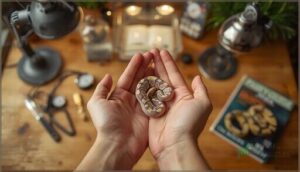
Finding the right small morph isn’t just about picking the prettiest pattern—you need to match the snake’s needs with your experience level, budget, and long-term commitment. Whether you’re a first-time keeper or a seasoned collector, certain factors will make or break your success with these compact constrictors.
Let’s break down what you should consider before bringing one home.
Factors to Consider for Beginners and Experts
Your journey into small snake morphs starts with honest self-assessment. Beginners thrive with dwarf ball pythons—58% choose them for manageable habitat design and straightforward snake care basics. Experts might pursue super dwarf lines, managing complex genetics and breeding ethics.
Consider enclosure space, morph selection based on temperament, and feeding strategies that match your schedule. Small snakes demand precision, not compromise, in every aspect of their care.
Ethical Sourcing and Reputable Breeders
When you choose a breeder, you’re making a stand for reptile welfare and ethical trade. Reputable operations follow USARK standards—clean enclosures, biosecurity standards, and full genetic disclosure.
They’ll openly discuss health screening, avoid morphs with known neurological issues, and prioritize breeder accountability over profit. This isn’t just responsible sourcing; it’s ethical pet ownership that honors the animals and strengthens responsible pet care across the hobby.
Cost, Availability, and Handling Needs
Beyond your ethical checklist, practical realities shape Pet Snake Ownership. Dwarf Ball Python morphs usually run $200–$600, while super dwarf retics start near $1,500—Pricing Factors tied to lineage and Morph Availability through specialized Breeder Networks.
Plan $2,000–$4,500 over ten years for Care Costs—enclosures, heating, feeders. For Handling Tips with Small Snakes, support their body fully; Reptile Care success hinges on gentle, consistent Snake Handling and proper husbandry.
Frequently Asked Questions (FAQs)
Can small morphs breed with regular-sized individuals?
Yes, small morphs can breed with regular-sized individuals, producing hybrid offspring with intermediate sizes. Size inheritance follows polygenic traits, though breeding ethics emphasize avoiding extreme dwarfism that compromises health through careful genetic selection.
Are small morphs more prone to specific diseases?
Despite popular fears, small snakes don’t show elevated disease resistance issues. Genetic mutations creating dwarf morphs don’t compromise immune systems or trigger metabolic risks—health implications remain comparable across all sizes in well-bred lines.
How does metabolism differ in smaller morphs?
Small snakes burn more energy per gram than larger ones—metabolic scaling means your pet snake needs frequent meals to fuel higher mass-specific metabolism, tighter thermal regulation, and faster growth rates driven by genetics.
Do small morphs require specialized veterinary care?
Like any precision instrument, these compact reptiles need expert tune-ups. Dwarf snake morphs often demand closer veterinary monitoring for metabolic bone disease, respiratory infections, and nutritional imbalances—specialized care that standard-sized snakes don’t always require.
Conclusion
Think of small morphs as rebellion compressed into coiled muscle—proof you don’t need sprawling enclosures to cultivate something remarkable. Morphs that stay small as adults rewrite the keeper’s blueprint, turning genetic precision into tangible freedom.
Whether you’re maneuvering spatial constraints or chasing locality-specific treasures, these pocket-sized variants deliver the visceral thrill of snake keeping without compromise. Master their biology, respect their lineage, and watch your collection defy every outdated expectation about what “serious” herpetology demands.