This site is supported by our readers. We may earn a commission, at no cost to you, if you purchase through links.

A corn snake strikes at movement, not malice—but that instinct creates risk when your scaly companion faces live prey equipped with teeth and survival instincts of its own. Bite wounds, stress-induced regurgitation, and parasite transmission aren’t theoretical concerns; they’re documented outcomes in captive feeding scenarios where predator-prey dynamics unfold in confined glass enclosures rather than forest floors.
Commercially bred rodents reduce those hazards through controlled husbandry, yet choosing between live mice, frozen-thawed alternatives, and prey sizing protocols demands understanding of reptile physiology and feeding behavior.
Your snake’s nutritional needs shift dramatically from hatchling to adult stages—feeding intervals compress or expand based on growth rates, not arbitrary calendars—while injury prevention starts with recognizing when a 15-gram pinkie becomes appropriate fuel versus a regurgitation risk.
Table Of Contents
Key Takeaways
- Live prey introduces measurable risks—bite wounds, parasite transmission, stress-induced regurgitation—that frozen-thawed alternatives eliminate while preserving 95-98% of nutritional content when stored at -18°C and properly thawed.
- Prey sizing must match 1.0-1.5 times your snake’s midbody girth with surgical precision; exceeding this threshold triggers regurgitation, intestinal impaction, and jaw trauma that outweigh any perceived feeding benefits.
- Feeding intervals compress from every 5-7 days for hatchlings to 10-14 days for adults based on metabolic demands and growth rates, not arbitrary schedules—delays become mandatory during shedding cycles or illness to prevent digestive complications.
- Commercially bred rodents reduce pathogen exposure by 60-80% compared to wild-caught prey while delivering consistent sizing and nutritional profiles that support predictable growth tracking without introducing unpredictable variables into your feeding protocol.
Live Prey Options for Corn Snakes
When you’re weighing live prey options for your corn snake, you’ll encounter three primary categories: rodents (mice and rats), avian prey (chicks), and the ongoing debate between wild-caught versus commercially bred sources.
Each option carries distinct nutritional profiles, risk factors, and welfare implications that directly impact your snake’s health and safety.
Understanding these foundational choices—alongside the ethical and legal frameworks governing live prey—sets the stage for informed feeding decisions.
Common Live Prey Types (Mice, Rats, Chicks)
When feeding your Corn Snake, you’ll encounter three primary live prey options, each offering distinct nutritional profiles and availability considerations. Mice dominate feeding protocols for hatchlings and juveniles, while rats serve larger specimens requiring bulkier prey items. Chicks provide dietary variation, though snake preferences often favor rodents due to evolutionary feeding behaviors.
Common live prey selections include:
- Mice – Most frequently used across all growth stages, offering consistent Prey Nutrition
- Rats – Preferred for adult snakes, delivering higher caloric density per feeding
- Chicks – Alternative protein source promoting dietary diversity
- Commercially bred rodents – Reduce parasite transmission risks through controlled husbandry practices
Prey handling protocols emphasize appropriate sizing relative to snake girth, usually 1-1.5 times the widest body circumference. Humane sourcing practices favor commercially bred stock over wild-caught alternatives, minimizing pathogen introduction while ensuring consistency.
Regional supplier availability influences prey type selection, though feeding ethics mandate stress reduction during live prey interactions. Your feeding guide should prioritize frozen-thawed alternatives when possible, reserving live mice and rats for snakes refusing prekilled options. Effective science writing requires clear communication styles.
Wild-Caught Vs. Commercially Bred Prey
Your Prey Sourcing decision directly impacts Disease Risks in your Corn Snake. Commercially bred live mice undergo health screening in controlled environments, delivering consistent Nutrient Variance compared to wild-caught alternatives carrying parasites, pathogens, and unpredictable nutritional profiles.
Frozenthawed mice from reputable suppliers offer standardized Prey size options while minimizing Environmental Impact and ensuring Humane Treatment. Feeding frequency remains consistent regardless of prey origin, though wild specimens demand quarantine protocols before introduction.
Understanding the main topic branches can help in organizing information about Corn Snake care.
Ethical and Legal Considerations
Beyond sourcing decisions, your live prey feeding practices intersect with Animal Welfare regulations and Ethical Standards governing Captive animal care. Most jurisdictions mandate humane treatment during feeding events, requiring you to minimize suffering through proper Animal husbandry protocols, quarantine procedures, and documented sourcing.
These Legal Framework elements shape responsible Zoological conservation while reducing Wildlife Conservation and Conservation Impact concerns tied to wild-caught prey.
Choosing The Right Prey Size
Selecting appropriately sized prey isn’t guesswork—it’s a precise calculation that directly impacts your corn snake’s digestion, growth rate, and injury risk. The width of the prey item at its thickest point should match 1 to 1.5 times your snake’s girth at the widest body section, creating a visible but manageable bulge post-feeding.
Prey width should match 1 to 1.5 times your snake’s girth—precision feeding prevents digestion failures and injury
Below, you’ll find the specific sizing guidelines that correspond to your snake’s life stage, the measurable risks of oversized meals, and the practical metrics that separate ideal nutrition from preventable regurgitation or starvation.
Matching Prey to Snake’s Girth

Your corn snake’s midbody girth dictates every feeding decision, serving as the biological blueprint for prey size guidelines and feeding safety tips. Measure circumference with flexible tape, then match prey diameter to 1.0–1.5 times that width—never exceed this threshold. Proper snake girth measurement ensures digestion monitoring remains predictable, growth tracking stays consistent, and feeding frequency aligns with metabolic demands across all corn snake nutrition stages.
- Hatchlings require pinkie mice measuring 0.2–0.4 inches in diameter
- Juveniles shift to fuzzies matching current midbody width precisely
- Adults accept prey roughly equivalent to girth, occasional one-step increases permitted
- Mismatched prey types trigger regurgitation, stress, or insufficient caloric intake
Prey Size Guidelines by Age and Stage

As your snake matures from hatchling to adult, prey size charts shift dramatically. Hatchlings demand pinkies at 0.2–0.4 inches, juveniles graduate to fuzzies matching midbody girth, and adults accept prey 1.0–1.5× their width.
Feeding schedules compress with age: hatchlings eat every 5–7 days, juveniles stretch to 7–10 days, and adults plateau at 10–14-day intervals. Dietary adjustments track snake growth rates, not calendar dates.
Risks of Feeding Oversized Prey

Overfeeding dangers escalate when prey size exceeds one-third your snake’s girth. You’ll risk regurgitation, intestinal impaction requiring veterinary intervention, and jaw trauma from overstretched tissues.
Digestion issues compound as oversized meals slow metabolic processing, stunting growth rates despite increased caloric intake.
Feeding complications multiply: prey aggression during strikes, choking incidents, and obesity from chronic overfeeding. Maintain the girth ratio religiously—your snake’s esophagus wasn’t designed for anatomical gambling.
Feeding Frequency and Schedules

When you feed your corn snake matters just as much as what you offer. A hatchling’s metabolism runs hot, burning through meals in days, while an adult processes prey across weeks—misjudge these intervals, and you’ll either starve a growing snake or burden a sedentary one with excess weight.
Your feeding schedule must flex with age, activity level, and physiological events like shedding or illness, transforming a rigid routine into a responsive framework.
Feeding Intervals for Hatchlings, Juveniles, and Adults
Your Corn Snake’s age dictates its feeding schedule with surgical precision. Hatchlings demand prey every 5–7 days, fueling explosive growth stages during early snake development. Juveniles thrive on identical intervals—every 5–7 days—as their bodies convert protein into length and girth.
Adults, metabolically slower, require feeding frequency of 7–14 days. These dietary adjustments align feeding schedules with natural energy demands, preventing malnutrition while sidestepping obesity’s grip.
Adjusting Frequency Based on Growth and Activity
Growth monitoring transforms your feeding strategy into a precision instrument. Track your snake’s weight monthly—hatchlings gaining 3–5 grams weekly signal healthy metabolic rates, while stagnant growth demands immediate feeding frequency adjustments.
Activity tracking reveals caloric needs: elevated nocturnal movement justifies shorter intervals between meals, whereas lethargy extends them.
Feeding cues like increased forward positioning confirm readiness. Digestion efficiency, observed through consistent stool quality, validates your prey size choices and schedule.
Recognizing When to Delay Feeding (Shedding, Illness)
When your corn snake’s eyes cloud over with that telltale blue-gray haze, appetite plummets—shedding signs demand immediate feeding pauses to prevent regurgitation and stress. Illness detection hinges on recognizing subtle shifts in behavior and appearance:
- Lethargy or respiratory distress (wheezing, mucus) warrants delaying meals until veterinary assessment confirms recovery
- Persistent feeding refusal beyond 2–3 weeks signals underlying health monitoring needs
- Incomplete sheds require waiting 1–2 days post-cycle before resuming your feeding frequency to confirm digestive readiness
Live Prey Feeding Techniques

When you present live prey to your corn snake, the method matters as much as the meal itself. Proper technique reduces stress for both predator and prey while minimizing bite wounds, defensive strikes, and digestive complications.
The following strategies address injury prevention and post-feeding monitoring with clinical precision.
Minimizing Stress and Injury Risks
When you introduce live prey, you’re walking a tightrope between natural instinct and preventable harm. Stress reduction begins with a dedicated feeding environment, separate from the main enclosure, minimizing disturbances that escalate prey panic. Injury prevention demands appropriate prey size—1 to 1.5 times your snake’s girth—and tongs for controlled delivery.
Snake safety hinges on reading body language: tail whipping, refusal to strike, or prolonged hesitation signal stress. Feeding techniques must prioritize humane treatment—source prey from reputable breeders, inspect for illness, and never force interaction. Remove hiding spots to prevent unpredictable movements, maintain proper temperature gradients to encourage natural hunting behavior, and stop feeding immediately if prey escapes or your snake demonstrates distress.
Feeding frequency adjustments, usually every 5-7 days for hatchlings and 10-14 days for adults, reduce repetitive stress exposure while supporting healthy growth trajectories.
| Risk Factor | Mitigation Strategy |
|---|---|
| Prey bites during strike | Use feeding tongs, maintain distance |
| Environmental stress | Calm, clutter-free feeding area |
| Oversized prey injury | Match prey to snake’s widest girth |
| Defensive thrashing | Monitor prey behavior, intervene early |
| Post-feeding trauma | Inspect mouth and body for wounds |
Signs of Successful Feeding and Digestion
After your snake secures its meal, watch for these five digestion speed indicators to confirm successful nutrient absorption and guide post-feeding care:
- Relaxed, wrapped posture with minimal resistance during gentle handling checks within 12-24 hours
- Visible midsection swelling that migrates steadily, signaling active snake feeding processing
- Return to normal activity within 24-72 hours, reflecting efficient snake nutrition metabolism
- Firm, dark stool produced 24-72 hours post-meal, confirming feeding cues were accurate
- Consistent snake hydration behavior and weight gain over consecutive feeding frequency cycles
Health and Nutrition Concerns

While live prey offers nutritional advantages, it introduces risks you can’t ignore—from bite wounds that spiral into infections to parasitic loads lurking beneath seemingly healthy fur.
Your snake’s body condition reveals whether you’re threading the needle between deprivation and excess, a balance that shifts with every shed cycle and seasonal metabolic dip.
The following concerns demand your attention before, during, and after every feeding session.
Risks of Feeding Live Prey (Injury, Parasites)
Feeding live prey carries tangible risks you can’t ignore. Physical injury—bites, jaw dislocations, esophageal damage—occurs when prey fights back during capture, sometimes leading to infection or tissue necrosis.
Live rodents harbor parasites like nematodes and bacterial pathogens that transfer during feeding, increasing disease transmission and compromising your snake’s immune system.
Prey handling and enclosure contamination heighten these dangers, making parasite control and injury risk management essential for animal health.
Monitoring for Overfeeding or Underfeeding
Beyond injury and parasites, you’ll need consistent weight tracking and body scoring to catch feeding errors early.
Fifteen to twenty percent of captive corn snakes show overfeeding signs when prey size or frequency climbs too high, leading to obesity and digestive strain within six to twelve months.
Feeding logs documenting prey type, size, and intervals improve early detection, helping you align nutrition planning with species-specific growth charts and metabolic needs.
Supplementation and Balanced Diet Tips
Weight tracking alone won’t guarantee reptile nutrition without addressing vitamin needs and nutrient balance. Gut loading your prey—feeding them calcium-rich vegetables, grains, or commercial diets 24 to 48 hours before you offer them—elevates dietary variety and meets nutritional requirements that wild diets naturally provide.
For balanced snake nutrition, consider these supplementation strategies:
- Rotate calcium sources across prey types to support skeletal integrity.
- Add vitamin supplements sparingly, only when deficiency signs appear or a vet confirms gaps in dietary needs.
- Monitor prey fat content to prevent obesity while maintaining energy balance.
- Schedule periodic nutritional consults to adjust gut loading protocols and assess overall reptile nutrition.
Alternatives to Live Prey
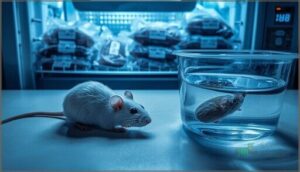
Frozen-thawed prey eliminates the risks associated with live feeding while maintaining nutritional integrity, offering you a safer alternative that preserves your snake’s health without compromising dietary requirements. When properly stored at -18°C and thawed using controlled methods, frozen rodents retain 95-98% of their original protein content, fat composition, and micronutrient profiles.
The shift from live to frozen-thawed prey requires strategic implementation, but understanding the comparative benefits will equip you with the knowledge to make an informed feeding decision.
Benefits of Frozen-Thawed Prey
When you ditch live prey for frozen-thawed mice, you slash injury risk by eliminating defensive bites during feeding, boost feeding safety through predictable meal protocols, and preserve prey nutrition with minimal degradation—usually less than 5% protein loss when frozen at -20°C and properly thawed.
This shift enhances snake health while supporting humane treatment standards, reduces parasite exposure by 60-80%, and streamlines corn snake feeding schedules, allowing you to focus on reptile nutrition instead of managing live prey hazards during snake care and maintenance.
| Benefit Category | Live Prey Risk | Frozen-Thawed Advantage |
|---|---|---|
| Feeding Safety | Bite injuries, escape incidents | Zero defensive aggression |
| Snake Health | Parasite exposure, stress | 60-80% lower infection rates |
| Dietary Needs | Inconsistent sizing | Uniform prey nutrition profile |
| Humane Treatment | Prolonged stress events | Instantaneous frozen storage protocols |
Transitioning From Live to Frozen-Thawed
Your corn snake may refuse frozen-thawed mice initially, but gradual shift protocols—warming prey to 37-40°C, wiggling with feeding tongs, and braining techniques—boost acceptance rates within 2-4 feeding cycles while preserving snake nutrition and digestion efficiency.
Start by offering freshly thawed prey immediately post-live meal, maintaining a 5-7 day feeding frequency, and monitor closely for signs of feeding safety improvements as your reptile adapts.
Nutritional Comparison: Live Vs. Frozen-Thawed
Frozen-thawed mice deliver consistent caloric content and nutrient retention, though prey texture shifts slightly during thawing, occasionally impacting feeding acceptance in finicky corn snakes. Live mice trigger stronger instinctual responses, yet digestion rates remain comparable across both formats when you match prey size correctly.
Consider these diet and nutrition factors:
- Moisture loss alters frozen-thawed mice texture minimally
- Parasite transmission risks drop markedly with frozen options
- Nutritional value stays stable through proper storage protocols
- Feeding acceptance improves with scent-cue acclimation techniques
Top Products for Corn Snake Feeding
When feeding your corn snake, whether you’re working with live or frozen-thawed prey, having the right equipment ensures safety, efficiency, and proper nutrition delivery.
The following products represent essential tools and food sources that simplify feeding routines while minimizing stress for both you and your snake.
Each item tackles specific feeding challenges, from secure prey presentation to reliable frozen food storage.
1. Loving Pets Stainless Steel Dog Bowl
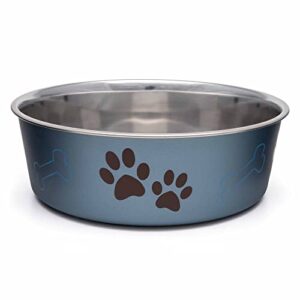
You’ll recognize the Loving Pets Stainless Steel Pet Bowl as a feeding accessory that delivers food safety advantages for corn snake keepers managing live mice or thawed prey. Its stainless steel construction resists bacterial colonization—critical when feeding frequency averages 7–14 days and residue accumulates.
Bowl design includes a removable rubber base, preventing spills during prey presentation and reducing substrate contamination. Though marketed for dogs, the durable, food-grade material suits reptile feeding protocols, and dishwasher compatibility streamlines sanitation between feedings when prey size or feeding accessories require frequent cleaning.
- Stainless steel resists bacteria buildup between feedings, keeping prey presentation areas sanitary
- Removable rubber base prevents spills during prey handling and stops the bowl from sliding on smooth surfaces
- Dishwasher-safe design makes cleaning simple after each feeding cycle
- Bowl may be smaller than expected, so double-check dimensions before ordering for larger prey items
- Interior sticker can be tricky to remove completely before first use
- Rubber base needs to be detached before running through the dishwasher
2. Humane Mouse Catch Trap

When capturing live prey demands precision, the blinc humane mouse catch trap delivers ethical trapping through a spring-loaded door that prevents escape while minimizing stress—critical when corn snake feeding techniques prioritize mouse safety and welfare.
Its ABS plastic construction (6.7″L × 2.4″W × 2.6″H, 10.6 ounces) offers portability for indoor placement near feeding zones, though trap effectiveness depends on routine trap maintenance to prevent gnawing damage.
You’ll need to monitor captures at intervals aligned with humane handling protocols, ensuring live prey remains uninjured before presentation to your corn snake while reducing bite risks inherent in uncontrolled rodent encounters.
- Spring-loaded door mechanism prevents mouse escape while allowing visual monitoring through transparent ABS construction
- Two-pack design (10.6 oz each) provides backup traps for continuous feeding schedules without waiting for cleaning between uses
- Reusable build reduces long-term costs compared to disposable traps when maintaining regular live-prey feeding protocols
- ABS plastic material is vulnerable to gnawing damage from trapped mice, potentially requiring premature replacement
- Door mechanism may fail to stay open after repeated use, complicating trap resetting and mouse release procedures
- Cleaning difficulties between captures can lead to odor buildup that may deter future mice from entering the trap
3. Imagitarium Frozen Pinkie Mice
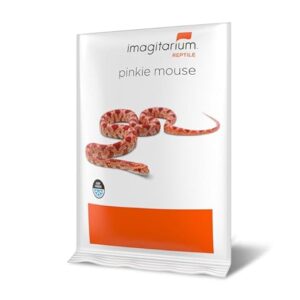
When frozen-thawed mice replace live prey in your corn snake diet and nutrition plan, Imagitarium’s 50-count medium pinkie mice (rank 355 in reptile food) eliminate parasite transmission risks while preserving snake nutrition through proper frozen storage at consistent sub-zero temperatures.
You’ll optimize prey quality by thawing methods that reach body temperature—refrigerator overnight or controlled warm water submersion—before presenting pliable, ice-free specimens via tongs to guarantee feeding safety and stimulate natural predatory responses.
Feeding frequency for hatchlings (every 5-7 days) aligns with these conveniently packaged portions, reducing stress for both keeper and specimen.
- Eliminates the risk of parasites, mites, and ticks that live prey can carry, keeping your reptile healthier long-term.
- Convenient 50-count packaging means you can stock up and maintain consistent feeding schedules without frequent reordering.
- Reduces stress during feeding for both you and your snake since there’s no risk of live prey biting or injuring your pet.
- Requires proper thawing time and technique to reach body temperature, which adds prep work before each feeding.
- Quality control issues can occur during shipping, with some customers receiving thawed or partially thawed mice that may be unusable.
- Pinkie size may be too small for adult or larger juvenile snakes, limiting its usefulness as your reptile grows.
Frequently Asked Questions (FAQs)
Can corn snakes eat insects or invertebrates?
While insects seem a natural dietary variety for carnivorous diet needs, corn snakes require vertebrate prey—mice, rats—for proper calcium needs and growth. Invertebrates lack adequate nutrition, making insect nutrition inadequate for snake enrichment despite prey size convenience.
How to store live prey before feeding?
You’ll need proper prey storage and humane handling to keep live mice healthy before feeding.
Refrigerate live feeders at 2–4°C in ventilated containers, rotating stock weekly while maintaining strict sanitation practices.
Do corn snakes need vitamin or calcium supplements?
Ironically, despite our supplement-obsessed culture, your corn snake thrives without them. Whole prey—mice with bones intact—delivers complete calcium and vitamins naturally, making additional supplementation unnecessary unless a veterinarian diagnoses specific nutrient deficiencies requiring targeted intervention.
What temperature should prey be when offered?
You’ll want to warm prey to 85-90°F before feeding. Using a water bath or careful microwave bursts ensures ideal temperature control, enhances scent cues for safe feeding, and aids digestion optimization without risk.
Can multiple corn snakes be fed together?
Never feed multiple corn snakes together—prey competition triggers feeding dynamics that escalate into dangerous snake interaction, causing bites or regurgitation.
Multi snake care demands separate feeding schedules to guarantee proper snake nutrition and prevent injury.
Conclusion
The theory that live prey for corn snakes represents “natural feeding” crumbles under captive reality—wild predation spans acres, not 40-gallon enclosures where injured rodents trap your snake in defensive scenarios. Frozen-thawed protocols eliminate bite wounds while delivering identical nutrition, yet prey sizing and feeding intervals remain non-negotiable across both methods.
Your vigilance transforms feeding from routine task into calculated risk management, where every meal either fortifies your snake’s health or introduces variables you can’t retract once fangs meet fur.