This site is supported by our readers. We may earn a commission, at no cost to you, if you purchase through links.

Your new corn snake arrives tomorrow, and you’ve spent the last week watching setup videos that all contradict each other. One breeder swears by glass tanks, another insists PVC is the only option, and someone’s comment section is arguing about whether newspaper or aspen makes better bedding.
Understanding snake housing requirements for beginners doesn’t have to feel like decoding conflicting scientific studies—it comes down to replicating your specific species’ natural habitat while prioritizing safety and maintenance.
Most new keepers overcomplicate the basics or skip critical elements like proper temperature gradients, creating stress that leads to feeding refusals or health issues within the first month. Getting the enclosure right from day one prevents these common setbacks and gives your snake the stable environment it needs to thrive.
Table Of Contents
Key Takeaways
- Your snake’s enclosure must replicate species-specific natural habitat conditions with proper temperature gradients (75–90°F), humidity levels (40–70% depending on species), and secure escape-proof housing to prevent stress-related feeding refusals and health issues.
- PVC enclosures offer superior thermal insulation and lighter weight compared to glass tanks, while proper sizing requires floor space at least 1.5 times your snake’s length for ground-dwellers or vertical space for arboreal species.
- Essential setup includes appropriate substrate (aspen for arid species, coconut fiber for tropical), hiding spots at both warm and cool ends, and heat mats controlled by thermostats to prevent burns while maintaining safe basking temperatures.
- Weekly deep cleaning with reptile-safe disinfectants, daily spot-cleaning, proper feeding schedules (every 5–14 days based on age), and monitoring for stress signals like refusing food or incomplete sheds are non-negotiable maintenance requirements.
Choosing The Right Enclosure for Your Snake
Your snake’s enclosure is more than just a box—it’s their entire world. The right setup gives them room to move, temperature zones to regulate their body heat, and security from stress.
Your snake’s enclosure isn’t just a box—it’s their entire world, giving them room to move, thermal zones, and security from stress
Let’s walk through the key decisions you’ll face when selecting housing for your slithery friend.
Glass Vs. PVC Enclosures
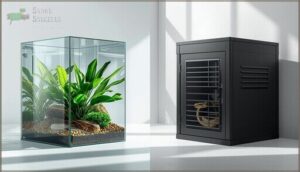
When choosing your snake enclosure, you’ll face two primary enclosure materials: glass and PVC. Glass reptile housing and enclosures offer unbeatable visibility options for monitoring your slithery friend, but they’re heavier and need careful heat management. PVC delivers better thermal insulation and lighter durability comparison, plus stackable designs with built-in ventilation systems and escapeproof lids. Budget-conscious beginners often prefer PVC’s forgiving nature in reptile enclosure design. Effective research papers require clear writing guides to improve readability.
Proper Sizing Based on Species

Your snake enclosure must match your species size guidelines. For common ground-dwelling snakes, enclosure length should equal at least 1.5 times your snake’s total length. Calculate habitat footprint by ensuring floor space reaches 2.5 times combined girth plus snake length ratio.
Arboreal species need vertical space allocation—height matching one-third their body length. Upgrade when your snake reaches two-thirds of current enclosure depth capacity.
Researchers must consider research methodology when designing experiments to study snake behavior.
Secure Lids and Escape Prevention
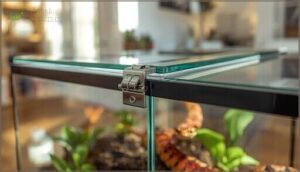
Your perfectly sized snake enclosure means nothing if your slithery friend can push through gaps. Install a secure enclosure with locking mechanisms that resist climbing attempts—snakes are surprisingly persistent escape artists.
Check these critical security features:
- Latches that fasten from outside the snake cage
- Lid edges that seal completely without gaps
- Hardware inspected monthly for loosening or wear
Escapeproof designs prevent dangerous situations for everyone involved.
Placement for Reduced Stress
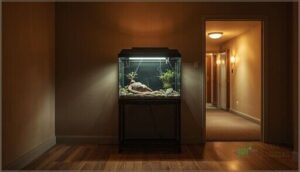
Once you’ve secured that lid, think about enclosure positioning. Place your snake enclosure away from doorways and high-traffic zones—constant movement triggers stress. Choose a quiet corner at eye level or slightly below to minimize vibrations.
Avoid direct sunlight that disrupts temperature gradients and basking spots. Stress reduction starts with thoughtful traffic control and ambient noise management around hiding spots.
Essential Substrates and Cage Furnishings
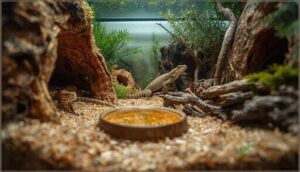
Once you’ve secured the right enclosure, it’s time to turn that empty box into a comfortable home. Your snake needs the right substrate underfoot, places to hide, and a few key furnishings to feel secure.
Let’s look at what goes inside to keep your slithery friend healthy and stress-free.
Best Bedding Options for Beginners
Your bedding material shapes your snake’s daily life more than nearly any other terrarium setup choice. For beginners, aspen bedding offers excellent absorbency with minimal dust, while paper-based substrates like reptile paper provide trouble-free cleanup as you learn proper reptile care routines.
Here are proven options that balance substrate safety with humidity control:
- Aspen shavings – Low dust, affordable, and ideal for arid-dwelling species
- Paper-based products – Clean surface for monitoring waste and supporting reptile hygiene
- Coconut fiber – Retains moisture for tropical species but requires vigilant mold prevention
- Reptile carpet – Reusable and beginner-friendly for short-term snake enrichment setups
Avoid cedar and pine entirely. They emit phenols that damage your slithery friend’s respiratory system.
Hides, Branches, and Enrichment Items
Your snake’s habitat thrives when you offer secure hiding spots at both warm and cool ends. Position ceramic or plastic hides with openings at least 1.5 times your pet’s body width.
Add smooth-surfaced branches anchored firmly—about twice your snake’s midbody girth works best for perching and snake climbing.
Rotate enrichment weekly to spark natural snake behavior while inspecting for sharp edges that compromise microclimate control and reptile care standards.
Water Bowl Placement and Size
On the cooler side of your reptile enclosure, position a stable water bowl with 2–3 cm bowl depth to support snake hydration without drowning risk.
Choose a dish holding 10–20% of your snake’s body weight—120–250 ml for small species, 500–1500 ml for larger ones.
Change water daily to maintain water quality and humidity levels, rinsing weekly with hot soapy water to prevent biofilm while supporting humidity control.
Heating and Temperature Gradients

Your snake can’t regulate its own body temperature, so you’ll need to create the right heat zones inside the enclosure.
Getting this setup right means using the proper equipment and knowing where to place it. Let’s walk through how to build a safe, effective temperature gradient for your slithery friend.
Setting Up a Basking Spot
Your snake needs a designated warm zone to raise its body temperature for digestion and metabolism. Position the basking spot on one end of the enclosure to create a thermal gradient—usually 85–90°F at the heat source, tapering to 75–80°F on the cool side. This heat gradient allows natural snake thermoregulation.
Raise the basking area slightly to keep it dry, and make certain your slithery friend can retreat to cooler hides nearby.
Using Heat Mats and Thermostats
Heat mats create the warm zone your snake needs, but they require careful temperature control to prevent burns or overheating. Place the mat under one side of the enclosure to establish the heat gradient. A thermostatic controller is essential—it maintains stable basking spot temperatures and prevents dangerous spikes.
Here’s how to set up heating elements safely:
- Position the heat mat beneath one end only, leaving the opposite side cool for thermoregulation
- Connect a separate digital or oil-filled thermostat to regulate the heat source automatically
- Place an accurate thermometer at the warm end to verify basking spot temperatures match species requirements
- Avoid relying solely on under-tank heating; pair with ambient heat if needed
- Never wire heat mats directly to power strips without thermostatic protection
Monitoring and Adjusting Temperatures
A digital thermometer with a probe placed at your warm end reads basking temperatures within ±1–2°C—essential for precision temperature control. Check both sides daily to confirm your heat source maintains stable temperature gradients from the basking spot to the cool zone.
Thermostat settings prevent dangerous spikes, while ambient monitoring catches gradual drift. Record highs and lows to spot equipment failures early, ensuring your temperature probes and gradient control protect your slithery friend’s health.
Managing Humidity and Ventilation
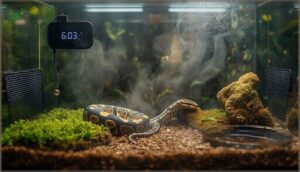
Getting the humidity right isn’t just about misting your snake’s enclosure and hoping for the best. Different species need different moisture levels, and you’ll need reliable tools to track what’s actually happening inside that habitat.
Proper ventilation works hand-in-hand with humidity control—too much or too little airflow can throw everything off balance.
Ideal Humidity Ranges by Species
Environmental adaptation starts with understanding that each species thrives at different humidity levels. Getting this right prevents shedding issues and respiratory problems in your slithery friend.
- Ball pythons need 40–60% ambient humidity with localized spikes during shedding cycles
- Garter snakes prefer slightly higher ranges at 50–70% to support their moisture-dependent metabolism
- Corn snakes thrive at 40–60%, making humidity control straightforward for beginners
Species research guides proper reptile housing and enclosures setup.
Tools for Measuring and Maintaining Humidity
You’ll need accurate tools to track and control moisture in your vivarium. A calibrated digital hygrometer gives you reliable humidity levels within ±5% accuracy—verify it monthly with a salt test. Pair it with a humidity controller or fogging system to automate adjustments without over-wetting.
Place the probe at enclosure height, away from water bowls, for true ambient readings.
Log daily moisture monitoring data alongside temperature gradients and thermometers for complete environmental tracking.
Ensuring Proper Airflow
Ventilation systems work hand-in-hand with your humidity control setup. You need cross-ventilation—intake and exhaust vents positioned on opposite sides—to support respiratory health without creating drafts. Screened panels with mesh openings prevent escapes while promoting gentle airflow management.
Clean vent screens monthly to avoid blockages that trap stagnant air and cause mold. Watch your slithery friend’s behavior near vents; panting or agitation signals improper enclosure design requiring immediate adjustment.
Routine Snake Care and Enclosure Maintenance
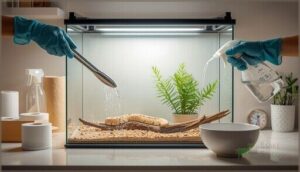
Keeping your snake healthy goes beyond setup—it’s about staying on top of regular maintenance. A clean enclosure, safe feeding habits, and vigilance against unwanted guests like bacteria or mold make all the difference. Here’s what you need to build into your routine.
Cleaning Schedules and Safe Disinfectants
Your slithery friend’s snake habitat deserves weekly deep cleans, with daily spot-cleaning when you notice waste. Use reptile-safe disinfectants—quaternary ammonium or accelerated hydrogen peroxide formulations work best for pathogen prevention.
Follow a two-step protocol: remove substrate, scrub with detergent, rinse thoroughly, then apply disinfectant and air-dry before reintroducing your snake.
For high-humidity species, bump cleaning schedules to twice weekly during shedding cycles to prevent mold in the animal enclosure.
Feeding Practices and Food Safety
Timing matters more than most reptile keepers realize regarding snake health and behavior. Feed juveniles every 5–7 days and adults every 7–14 days, adjusting based on body condition and species metabolism.
To ensure optimal care, follow these guidelines:
- Prey Selection: Choose frozen-thawed mice or rats matching your snake’s girth at the widest point.
- Food Handling: Thaw prey in sealed bags using warm water, never microwaves.
- Feeding Schedules: Track dates and prey sizes to monitor reptile nutrition and diet patterns.
- Dietary Variety: Rotate appropriate prey types to support balanced animal health and feeding frequency needs.
Preventing Mold, Bacteria, and Parasites
Vigilance protects your snake habitat from invisible threats. Clean weekly with a 1:10 bleach solution, rinse thoroughly, and dry completely before reintroducing your pet. Remove uneaten prey within 24 hours to prevent bacterial control issues.
Choose paper-based substrate over moisture-trapping materials for better mold prevention. Balance humidity levels and temperature gradients to reduce condensation.
Schedule annual fecal tests for parasite screening—early detection saves lives.
Monitoring Snake Health and Behavior
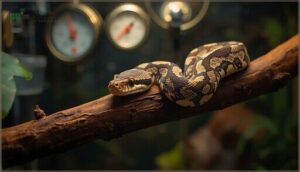
Your snake’s health depends on more than just the right setup—you need to watch for subtle changes in behavior and physical condition. Even with perfect housing, snakes can develop stress-related issues or illness that require quick intervention.
Let’s cover the key signs to monitor, environmental factors that affect shedding, and safe practices for handling your slithery friend.
Recognizing Signs of Stress or Illness
Your snake’s behavior tells you everything about its wellness. Stress signals include hiding constantly, refusing food for over a week, or unusual aggression.
Illness detection starts with spotting skin abnormalities—lesions, blisters, or shedding delays point to environmental issues. Watch for discharge around the mouth, rapid breathing, or tremors. These health indicators mean your snake habitat needs immediate attention.
Proper humidity levels and temperature directly affect reptile health, so behavioral changes shouldn’t be ignored.
Shedding and Environmental Adjustments
When your snake enters its shedding process, you’ll notice cloudy eyes and dull skin—signals to adjust humidity control immediately. Boost humidity to 60–70% using a moisture box or enclosure misting.
Maintain stable temperature gradients between 75–85°F to support skin health and molt management. Provide a shallow soaking dish and smooth surfaces for rubbing.
Monitor closely; incomplete sheds indicate your humidity or temperature gradient needs fine-tuning for ideal reptile health.
Safe Handling and Hygiene Practices
Before you handle your slithery friend, wash your hands thoroughly to protect both of you. Support the snake’s body evenly with both hands—never grab the tail or neck.
Wear clean gloves when cleaning habitats, and follow proper disinfection methods with reptile-safe products. These hygiene protocols prevent bacterial transfer and stress.
If snake behavior seems off during handling, consult a reptile veterinarian. Good animal welfare starts with consistent hand washing and mindful snake handling techniques.
Frequently Asked Questions (FAQs)
Can snakes live together in one enclosure?
Most adult snakes are territorial loners and shouldn’t share space. Co-housing risks stress, disease transmission, and unequal heat access.
Species compatibility matters, but individual secure enclosures remain the ideal choice for beginners.
How often do snakes need veterinary checkups?
Most healthy pet snakes benefit from at least one annual veterinary exam for preventive medicine and health checks.
Juveniles, breeding individuals, or those showing behavioral changes require more frequent reptile veterinary care visits.
What should I do if my snake escapes?
Stay calm and close the room immediately.
Check warm hiding spots near heat sources first. Use a flashlight to search low areas, then gently place your slithery friend back in its secure terrarium.
Do snakes need lighting or UV exposure?
Most snakes don’t require UVB lighting for metabolic health or vision. A basic heat source and consistent photoperiod meet standard lighting requirements for common species.
Proper temperature and lighting cycles support natural behavior, but UV exposure risks overheating.
How do I transport my snake safely?
Your slithery friend needs a rigid, escape-proof container with ventilation for travel safety.
Support its body gently during transfer, maintain stable temperatures, and minimize movement to prevent stress or injury during snake transport.
Conclusion
Think of your snake’s enclosure as the foundation of a house—get it wrong, and everything else becomes harder. Understanding snake housing requirements for beginners means committing to precision with temperatures, humidity, and security from day one.
Your corn snake won’t adapt to poor conditions; it’ll simply stop eating and decline. Follow species-specific guidelines, monitor daily, and adjust as needed.
A properly designed habitat prevents problems before they start, giving your snake decades of healthy life.
- https://www.sciencedirect.com/topics/pharmacology-toxicology-and-pharmaceutical-science/snake
- https://qualitycage.com/blogs/quality-snake-care/best-pet-snakes
- https://www.reptilerescuecenter.org/caresheets/ballpython/
- https://journals.biologists.com/jeb/article/218/14/2279/14389/Snake-constriction-rapidly-induces-circulatory
- https://www.researchgate.net/publication/232678980_Sex_Differences_in_Body_Size_and_Ectoparasite_Load_in_the_Ball_Python_Python_regius