This site is supported by our readers. We may earn a commission, at no cost to you, if you purchase through links.

Glass tanks trap cold like a refrigerator. Your snake can’t generate its own body heat, so without an external heat source, digestion stops, immune function crashes, and activity levels plummet.
The solution isn’t just any heating pad—it’s one designed specifically for glass enclosures with proper coverage, thermostat compatibility, and moisture resistance. Under-tank heating pads deliver steady belly heat that mimics sun-warmed rocks, but only when installed correctly.
The wrong pad or improper placement creates hot spots that burn scales or cold zones that stress your snake. You need precise temperature control between 25°C and 45°C, coverage spanning 25-40% of the tank floor, and UL-certified materials that won’t short out from humidity.
Table Of Contents
Key Takeaways
- Glass tanks lose heat rapidly because snakes can’t generate their own body warmth, making under-tank heating pads essential for digestion, immune function, and preventing cold stress that can kill your pet.
- Your heating pad must cover 25-40% of the tank floor with thermostat control between 25°C and 45°C to create the thermal gradient snakes need—without this, you risk dangerous hot spots or inadequate warmth.
- Installation mistakes like skipping the thermostat, using adhesive-only mounting, or ignoring monthly inspections lead to burns, equipment failure, and life-threatening temperature swings.
- Budget heating pads work if you pair them with quality external thermostats and monitor temperatures daily, but expect adhesive failures and potential replacements within the first year.
Why Snakes Need Heating Pads for Glass Tanks

Your snake can’t produce its own body heat. Glass tanks lose warmth quickly, especially at night, which puts your pet at risk for cold stress and sluggish digestion.
Understanding how snakes regulate temperature will help you create a safe thermal environment they can actually use.
Thermoregulation and Snake Biology
Understanding thermoregulation reveals why your snake depends entirely on you for warmth. Unlike mammals, snakes rely on ectothermic physiology—they can’t generate metabolic heat. This means cold stress disrupts everything:
Snakes depend entirely on you for warmth because they can’t generate their own body heat like mammals can
- Digestion slows or stops completely
- Immune function weakens markedly
- Activity levels drop dangerously
- Disease susceptibility increases rapidly
Snake heating pads provide the temperature control essential for snake health and proper reptile thermoregulation. Ensuring the right temperature is vital for maintaining a healthy environment, which involves careful methodological assessment to prevent stress.
Risks of Cold Stress in Glass Enclosures
Glass tanks increase cold stress risks through poor glass insulation and heat loss. Here’s what happens when climate control fails:
| Risk Factor | Physical Impact | Health Consequence |
|---|---|---|
| Conduction loss | Suboptimal temps persist | Digestion impairment |
| Convection drafts | Thermal shock episodes | Immune suppression |
| Day-night swings | Stress hormone spikes | Reduced feeding |
| Poor gradients | Limited mobility zones | Slowed growth rates |
| Chronic exposure | Metabolic disruption | Disease vulnerability |
Cold stress prevention demands proper reptile heating and temperature control—especially in cold climates where ambient conditions worsen snake health outcomes.
Importance of Stable Thermal Gradients
You need a stable thermal gradient—not just warmth—to support proper thermoregulation benefits. When your heating pad covers 25-40% of the tank floor, your snake can shuttle between warm and cool zones to regulate body temperature without metabolic stress.
Temperature fluctuation disrupts digestion and immune function, so reliable gradient stability through quality reptile heating and thermostats keeps temperature control consistent across daily cycles.
Key Features of Heating Pads for Glass Tanks

Not all heating pads work well with glass tanks. You need to keep in mind size, temperature control, and safety features before you buy.
Here’s what to look for when choosing a heating pad for your snake’s enclosure.
Size and Coverage Recommendations
Your heating pad should cover 60 to 75 percent of the enclosure floor to establish an effective thermal gradient. This coverage area allows proper heat distribution while preserving cool zones essential for thermoregulation.
In standard 40–60 cm tanks, aim for a heating surface of 20–30 cm wide. Proper pad placement prevents overheating and ensures your snake can move between warm and cool areas naturally.
Temperature Control and Thermostat Compatibility
Precision matters when you’re creating safe heat zones for your snake. An adjustable temperature range between 25°C and 45°C accommodates different species while external thermostats prevent dangerous overheating beyond 40°C cutoff points.
- Digital thermostats with feedback probes deliver accurate thermal regulation you can trust
- Mechanical controllers offer straightforward on-off operation for basic snake heating pads
- Verify your thermostat’s load rating matches your pad’s wattage to maintain stable temperature gradients
Material, Waterproofing, and Safety Certifications
Silicone and rubberized housings resist the humidity your glass tank traps, while flexible carbon elements distribute heat evenly across snake heating pads.
Look for UL or ETL certification processes confirming electrical safety standards and thermal insulation ratings. IPX4 waterproof ratings protect against moisture without full submersion.
Material testing ensures BPA-free construction and seal integrity that keeps heating mats functioning safely through routine cleaning.
Safe Installation and Maintenance Tips

Installing a heating pad correctly isn’t just about sticking it under the tank—it’s about creating a safe thermal environment your snake can rely on. You’ll need to position the pad strategically, monitor temperatures with precision, and maintain the equipment regularly to prevent failures.
Let’s walk through the essential steps to keep your setup both effective and safe.
Proper Placement for Thermal Gradients
Your snake’s survival hinges on correct heat distribution across the tank floor. Position the pad to cover 25-40% of one end—this creates distinct temperature zones your snake can navigate for thermal regulation.
Here’s what you must do:
- Place the pad toward the warm end, never directly under hides or water bowls
- Verify the gradient slopes gradually from warm to cool zones
- Align pad placement with any overhead basking lights for coordinated reptile heating
- Confirm warm-zone temperatures stay within your species’ safe range using reliable monitors
Using Thermostats and Temperature Monitors
You can’t rely on a heating pad alone—thermostats and temperature sensors are your safety net against overheating. Use a digital thermostat with probe placement directly under the pad for accurate thermal control.
Verify readings with an infrared thermometer at the basking site. Check your temperature gradient control twice daily during setup, then weekly.
Calibrate sensors against a reference point before first use to guarantee reliable heat monitoring and reptile heating safety features work correctly.
Cleaning, Inspection, and Replacement Schedules
Regular pad maintenance keeps your snake safe and your equipment reliable. Follow these safety protocols for reptile heating solutions:
- Clean your heat mat weekly with a damp cloth and mild soap—never submerge it.
- Inspect cords and connectors monthly for fraying or corrosion.
- Test temperature control accuracy every 30 days against setpoints.
- Replace heating pads showing electrical deterioration or heat inconsistency.
- Document all cleaning schedules and inspection intervals in a maintenance log.
Benefits and Limitations of Under-Tank Heating Pads

Under-tank heating pads solve one problem exceptionally well—they deliver steady belly heat that mimics sun-warmed surfaces in nature.
But they’re not without trade-offs, and you need to understand both sides before committing to this setup.
Here’s what works, what doesn’t, and how to manage the limitations that come with the territory.
Consistent Warmth and Health Benefits
Under-tank heating pads deliver thermal stability your snake can count on. When you maintain consistent warmth, you’re supporting digestive efficiency and reducing metabolic stress that weakens immune function. Proper heat distribution through quality reptile heating pads creates the foundation for snake thermoregulation, leading to measurable health outcomes.
| Benefit | Temperature Impact | Health Outcome |
|---|---|---|
| Digestive Support | 28–32°C basking zone | Nutrient assimilation |
| Immune Function | Stable baseline temps | Reduced cold stress |
| Shedding Cycles | Consistent warmth | Normal skin health |
Temperature control through reliable reptile heating ensures your snake thrives rather than merely survives.
Risks of Overheating and Fire Hazards
While heating pads provide steady warmth, they carry real risks you can’t ignore. Overheating can burn your snake’s skin when temperatures climb past safe ranges. Fire hazards emerge from damaged cords or contact with flammable substrates.
You need thermal monitoring and overheat protection to prevent electrical hazards. Always use burn prevention features and temperature control systems with your heating equipment safety.
Managing Humidity and Substrate Issues
Glass tanks trap moisture faster than you’d expect, especially when heat mats boost evaporation. You’ll need smart humidity control and substrate selection to prevent mold growth and respiratory trouble.
Here’s your moisture management checklist:
- Use adjustable vents to maintain airflow and prevent humidity spikes
- Choose low-retention substrates that won’t hold excess water near your heat mat
- Monitor hygrometers daily, placing them away from direct heating zones
- Create a moisture gradient with dry areas opposite damp refuges
- Replace compacted substrate regularly to preserve thermal balance and ventilation systems
Top Snake Heating Pads for Glass Tanks
You need a heating pad that won’t fail when your snake’s health depends on it.
The following nine options combine reliable heat distribution with safety features designed for glass tank installation.
Each product includes specific wattage ratings and thermostat compatibility details to help you make an informed choice.
1. Aiicioo Reptile Heating Pad
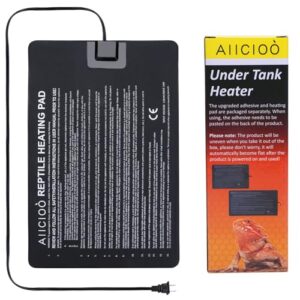
You’ll find the Aiicioo reptile heating pad delivers steady warmth through thin, flexible construction designed for glass tanks. This heat mat usually covers one portion of your terrarium floor, creating the thermal gradient your snake needs for proper thermoregulation.
Pair it with an external thermostat to maintain basking zones between 85°F and 90°F—critical for reptile comfort and thermal safety. Check adhesive contact regularly, as poor pad maintenance can reduce heat distribution.
While Aiicioo features competitive pricing for reptile heating solutions, adhesive durability remains a common concern among users monitoring terrarium heating systems.
| Best For | Snake owners with small to medium glass terrariums who want an affordable under-tank heating option and plan to use it with a thermostat for safe temperature control. |
|---|---|
| Power | 16W |
| Material | PVC |
| Installation | Adhesive mount |
| Thermostat | No |
| Size | 14×8 inches |
| Tank Type | Glass |
| Additional Features |
|
- Thin, low-profile design fits easily under glass tanks without adding bulk or raising the enclosure too high
- Compatible with external thermostats to maintain precise basking temperatures and prevent overheating
- Budget-friendly pricing makes it accessible for reptile keepers setting up their first heating system
- Adhesive backing often loses grip over time, requiring repositioning or additional mounting solutions
- Heat distribution can be uneven across the pad, creating potential hot spots without proper monitoring
- Durability concerns reported by users, with some units degrading or failing within the first year of use
2. Reptile Heat Pad Mat
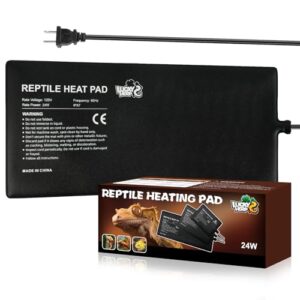
Standard reptile heat pads sized 8×18 inches offer 24W energy efficiency while supporting thermal gradients across glass terrariums. You’ll notice waterproof PVC pad materials distribute warmth evenly, maintaining basking zones for terrestrial species without excessive power draw.
This under tank heater requires external thermostat pairing—most units lack built-in temperature regulation, making safety features like dual protection systems non-negotiable.
While the reptile heating solution provides consistent heat distribution for turtles, lizards, and snakes, adhesive reliability varies. Position this heat mat carefully to guarantee proper contact with your terrarium heater surface for peak performance.
| Best For | Reptile owners with glass terrariums who need an affordable, energy-efficient heat source for tropical or desert species that require belly heat to regulate digestion and activity levels. |
|---|---|
| Power | 24W |
| Material | Waterproof PVC |
| Installation | Adhesive mount |
| Thermostat | No |
| Size | 8×18 inches |
| Tank Type | Glass |
| Additional Features |
|
- Energy-efficient 24W design keeps electricity costs low while maintaining steady warmth for your pets
- Waterproof PVC construction stands up to humid terrarium conditions and accidental spills without damage
- Compact 8×18 inch size fits perfectly under standard tanks to create proper temperature gradients
- Adhesive backing often fails to stick properly, requiring extra effort or alternative mounting solutions
- No built-in thermostat means you’ll need to buy a separate controller to avoid overheating risks
- Some users report uneven heating or inconsistent temperature performance across the mat surface
3. Aiicioo Reptile Heat Pad Thermostat
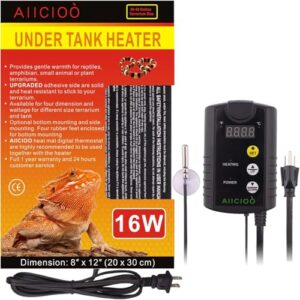
You’ll find digital thermostat control built directly into this 8×12-inch reptile heat pad, eliminating separate device purchases. The 16-watt unit attaches via adhesive to glass tank bottoms, though pad materials may lose grip over time.
Temperature control ranges from 104°F to 122°F with clear display monitoring—critical for reptile heating safety. Safety features include rubber feet for heat distribution and adjustable thermostat settings.
Durability concerns exist with some units failing within twelve months, making regular inspection essential for proper reptile care.
| Best For | Snake and lizard owners who want an affordable all-in-one heating solution with built-in temperature control for small to medium glass terrariums. |
|---|---|
| Power | 16W |
| Material | Adhesive |
| Installation | Adhesive mount |
| Thermostat | Yes |
| Size | 8×12 inches |
| Tank Type | Glass |
| Additional Features |
|
- Built-in digital thermostat eliminates the need to buy a separate temperature controller, saving money and setup hassle.
- Clear temperature display lets you monitor and adjust heat settings between 104°F and 122°F without guesswork.
- Flexible mounting options—attach to the bottom or side of your tank depending on your setup and space needs.
- Adhesive backing often loses its grip over time, requiring you to reattach or secure the pad with alternative methods.
- Durability issues reported with some units failing within a year, which raises concerns about long-term reliability.
- May not generate enough warmth for larger enclosures or cold room conditions, limiting its use to smaller tanks.
4. Hapinary Reptile Heating Pad Mat
You’ll get dependable thermal gradient control with this aluminum film and pearl cotton construction, measuring 26.77 × 11.81 inches for medium glass terrariums. The Hapinary mat distributes reptile heat evenly across basking zones when paired with external thermostats—essential for reptile heating pads safety.
Adhesive installation requires glass surfaces only, never wood substrates. Mat maintenance tips include monthly cord inspections and surface cleaning to prevent moisture damage.
Hapinary product reviews note the lightweight design at 1.6 ounces, though durability in high-humidity reptile heating setups requires careful monitoring with your terrarium heater system using proper heat mats.
| Best For | Reptile owners with small to medium glass terrariums who need a reliable under-tank heating solution for species like snakes, lizards, and tortoises that require controlled basking zones. |
|---|---|
| Power | N/A |
| Material | Aluminum film |
| Installation | Insulation mat |
| Thermostat | No |
| Size | 26.77×11.81 inches |
| Tank Type | Terrarium |
| Additional Features |
|
- Lightweight and thin design (1.6 oz, 0.04 inches) makes installation easy under glass tanks without taking up space
- Works with external thermostats to create precise temperature gradients for reptile thermoregulation
- Aluminum film and pearl cotton construction provides even heat distribution across the 26.77 × 11.81 inch surface
- Only compatible with glass surfaces—can’t be used on wood or porous substrates, limiting placement options
- Durability concerns in high-humidity environments may require frequent monitoring and maintenance
- Ranked #328 in its category, suggesting there are more popular and possibly better-performing alternatives available
5. Reptile Heat Pad With Thermostat
You’ll need precise thermostat settings with this graphene reptile heat pad—its digital controller spans 68-135°F for reliable temperature control across 8 × 5.9 inches. The IPX7-rated PVC construction ensures moisture won’t compromise safety features during routine terrarium heater operation.
Heat distribution stays consistent through the pad materials’ graphene core, ideal for reptile heating when you’re managing thermal gradients. The 12-hour smart timer prevents overheating during unattended periods. External thermostats remain compatible, though built-in regulation manages most snake species’ basking requirements effectively.
| Best For | Reptile owners who need reliable temperature control for terrariums and want a waterproof heating solution with built-in safety features. |
|---|---|
| Power | 7W |
| Material | Graphene |
| Installation | Adhesive mount |
| Thermostat | Yes |
| Size | 8×5.9 inches |
| Tank Type | Glass/terrarium |
| Additional Features |
|
- Graphene heating core provides fast, even warmth across the 8″ x 5.9″ surface with adjustable temps from 68-135°F
- IPX7 waterproof rating and flame-retardant cover handle high-humidity environments safely
- Built-in 12-hour timer and digital thermostat eliminate the need for separate temperature controllers
- 5.8-foot cord may be too short for larger setups or distant outlets
- Smaller 8″ x 5.9″ size won’t work well for bigger enclosures or multiple reptiles
- Higher price point compared to basic heat pads without integrated thermostats
6. Reptile Terrarium Heat Mat Pad
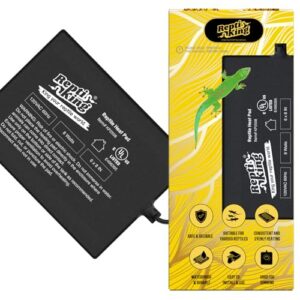
Your snake’s thermal gradient depends on consistent heat mat materials that won’t fail during humid terrarium conditions. This 6″ × 8″ pad delivers 8W of steady reptile heating through waterproof construction designed for terrarium design challenges.
The adhesive backing secures placement under glass tanks, though you’ll require an external controller—no built-in thermostat controls reptile thermoregulation here.
Regular pad maintenance includes checking connections and surface temperatures. The reptile terrarium heat mat pad covers 25–30% of smaller enclosures, establishing proper heat mats zones when paired with accurate monitoring equipment for reliable terrarium heating performance.
| Best For | Small to medium snake owners and reptile keepers who need a compact heating solution for glass terrariums and want precise temperature control with an external thermostat. |
|---|---|
| Power | 8W |
| Material | Waterproof |
| Installation | Adhesive mount |
| Thermostat | No |
| Size | 6×8 inches |
| Tank Type | Glass |
| Additional Features |
|
- Waterproof construction holds up well in humid terrarium environments and resists moisture damage over time
- 8W power output provides steady, energy-efficient heat that’s safe for continuous use in smaller enclosures
- Adhesive backing makes installation straightforward on glass tanks without shifting or repositioning issues
- No built-in thermostat means you’ll need to buy a separate controller to prevent overheating and maintain safe temperatures
- 6″ × 8″ size only covers about 25–30% of smaller tanks, so larger enclosures will need multiple pads or a bigger heating solution
- Not recommended for acrylic tanks or heat-sensitive materials, which limits compatibility with certain terrarium types
7. Repti Home Reptile Heat Pad Thermostat
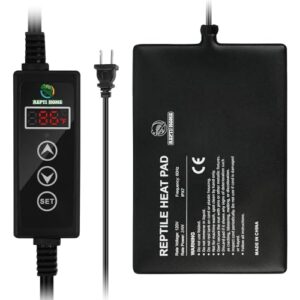
Your thermostat settings determine whether your snake thrives or suffers from thermal stress—this 24W controller handles temperature control from 68°F to 122°F with intelligent PID regulation. The digital display shows real-time heat distribution across your 8″ × 18″ heat mat, while IPX7-rated pad materials withstand terrarium humidity without failure.
Safety features include automatic shutoff when thermostats detect temperature spikes beyond programmed limits. Pair this thermal control system with compatible heat mats for reliable reptile heating that maintains proper reptile heat zones in glass enclosures.
| Best For | Snake and reptile owners who need precise temperature control for under-tank heating pads to maintain consistent thermal gradients in their terrariums. |
|---|---|
| Power | 24W |
| Material | Waterproof |
| Installation | Adhesive mount |
| Thermostat | Yes |
| Size | 8×18 inches |
| Tank Type | Glass |
| Additional Features |
|
- Digital PID thermostat gives you precise temperature control between 68°F and 122°F, so you can dial in the exact heat your reptile needs without guesswork.
- IPX7 waterproof rating means the controller holds up in humid terrarium environments where moisture can kill cheaper thermostats.
- Automatic shutoff protection kicks in if temperatures spike, preventing dangerous overheating that could harm your snake or damage your enclosure.
- Some users report the temperature readings don’t match what’s actually happening in the tank, making it tricky to trust the display.
- The adhesive backing can leave permanent sticky residue on glass and sometimes loses its grip over time.
- Instructions don’t always line up with the actual controls, so you might spend time figuring out how to change settings through trial and error.
8. Reptile Vivarium Heat Mat
Your 7W heat mat delivers gentle, uniform warmth through slow-heating technology designed to prevent dangerous temperature spikes in glass terrariums. The 15 × 28cm heating plate features damp-proof heat mat materials with a temperature adjustment dial—though you’ll need a separate thermostat for precise reptile thermoregulation between 85°F and 92°F.
This reptile vivarium heat mat installs on tank bottoms or sides, creating essential heat distribution for snakes requiring belly heat.
Regular mat maintenance includes monthly cord inspections and damp-cloth cleaning to maintain proper terrarium heating performance.
| Best For | Snake and lizard owners seeking an affordable under-tank heating solution for small to medium terrariums who already own or plan to purchase a separate thermostat. |
|---|---|
| Power | 7W |
| Material | Damp-proof |
| Installation | Adhesive mount |
| Thermostat | No |
| Size | 15×28 cm |
| Tank Type | Glass |
| Additional Features |
|
- Slow-heating design prevents dangerous temperature spikes that could burn reptiles or crack glass enclosures
- Flexible installation options let you mount it under the tank or on the side depending on your species’ heating needs
- Removable and damp-proof construction makes cleaning straightforward and holds up well in humid environments
- No built-in thermostat means you’ll need to buy one separately to safely control surface temperatures
- 7W output and 15 × 28cm size limit coverage to smaller enclosures, making it unsuitable for large or multi-animal setups
- Temperature dial offers minimal precision compared to digital controls, increasing the risk of incorrect heat gradients without monitoring
9. ZJchao Reptile Heating Pad
Your ZJchao pad offers three adjustable thermostat settings through its durable PU leather construction—but don’t skip the external controller. The cold-resistant silicone wires promise longevity, though reliability reports vary across different terrarium heating setups.
At low power consumption levels, this heat mat creates adequate heat distribution for small glass tanks when paired with quality safety features like auto-shutoff protection. However, the short cord limits placement flexibility for larger reptile heating pad configurations.
The premium pad materials clean easily with damp cloths, supporting proper reptile care and maintenance between temperature checks.
| Best For | Reptile owners with small to medium terrariums who need an affordable under-tank heating solution with basic temperature control for snakes, lizards, or turtles. |
|---|---|
| Power | N/A |
| Material | PU leather |
| Installation | In-nest placement |
| Thermostat | No |
| Size | N/A |
| Tank Type | Pet nest |
| Additional Features |
|
- Three adjustable temperature settings let you customize warmth levels for different reptile species and environmental needs
- PU leather surface wipes clean easily, making maintenance simple between cage cleanings
- Cold-resistant silicone wiring is designed to last longer than standard cords in fluctuating temperature conditions
- Reliability issues reported by some users, with inconsistent heating performance across different setups
- Short power cord restricts where you can place the pad under your terrarium
- Limited to three preset temperatures, which may not provide precise enough control for species with specific heat requirements
Frequently Asked Questions (FAQs)
Can heating pads crack glass tanks over time?
A 40-gallon aquarium placed on concrete developed hairline fractures after three months—not from the heating pad itself, but from direct glass contact without substrate buffering.
Thermal stress occurs when heat concentrates unevenly, but proper installation prevents crack formation entirely.
Do heating pads work with screen lids?
Yes, heat transfer works through screen lids when you maintain proper thermal gradients. Use wired thermostats for temperature control and monitor substrate regularly to guarantee safe installation and prevent hot spots.
How much electricity do snake heating pads use?
Most reptile heating pads draw 5-25 watts depending on size. A 10-watt pad uses roughly 24 kWh daily—about 2 kWh monthly. Thermostat temperature control reduces wattage usage and electricity costs markedly.
Should heating pads stay on during summer months?
Most keepers turn off heating pads during hot summer months to prevent thermal stress and overheating.
Use thermostats with ambient cooling strategies for seasonal temperature control, ensuring energy efficiency while maintaining safe thermal gradients for your snake.
Conclusion
Your snake’s survival hinges on the details—one wrong move and you’re playing with fire. Snake heating pads for glass tanks deliver life-sustaining warmth when paired with thermostats and proper placement.
Measure coverage at 25-40% of the floor. Check temperatures daily. Inspect pads monthly for wear. Cold-stressed snakes don’t recover quickly, so precision isn’t optional.
Install correctly, monitor consistently, and your snake thrives. Skip these steps and risk burns, hypothermia, or worse.
- https://academichelpexpress.blog/2024/08/please-use-the-bulleted-points-and-the-rubric-below-to-guide-your-work-your-pa/
- https://www.sciencedirect.com/science/article/pii/S0749208123000268
- https://pmc.ncbi.nlm.nih.gov/articles/instance/9553038/bin/pone.0275964.s005.docx
- https://www.scribd.com/document/356795007/Research-Methods-Knowledge-Base
- https://arxiv.org/html/2507.17948v2