This site is supported by our readers. We may earn a commission, at no cost to you, if you purchase through links.
Your snake’s substrate sits beneath them every moment of their life, directly contacting delicate scales and respiratory membranes—yet many keepers unknowingly create hazardous conditions with seemingly innocuous bedding choices. I’ve treated countless cases of preventable respiratory distress, dermatitis, and life-threatening impaction traced back to toxic substrates like cedar shavings or calcium sand.
The warning signs often appear subtle at first: a faint ammonia smell, slight discoloration in one corner, or your snake avoiding certain areas of the enclosure. These early indicators signal deeper problems—phenol exposure, bacterial colonization, or moisture imbalances that compromise your animal’s immune function.
Recognizing signs of bad substrate for snakes before clinical symptoms emerge protects your reptile from weeks of unnecessary suffering and expensive veterinary intervention.
Table Of Contents
Key Takeaways
- Watch for ammonia smells, dust clouds, mold patches, visible pests, or wet spots in your snake’s bedding—these red flags signal immediate health risks like respiratory distress, dermatitis, and potentially fatal impaction that demand substrate replacement within 24-48 hours.
- Avoid cedar shavings, pine, calcium sand, gravel, cat litter, walnut shells, corncob bedding, and treated wood entirely—these materials release toxic phenols, create airborne irritants, or cause life-threatening intestinal blockages when ingested during feeding.
- Choose aspen shavings for most species or coconut fiber for humidity-dependent snakes like ball pythons, maintaining 2-4 inches of depth and replacing substrate every 4-6 weeks to prevent bacterial colonization and fungal growth.
- Monitor your snake’s behavior daily for lethargy, feeding refusal, wheezing, incomplete sheds, or avoidance of certain enclosure areas—these clinical signs indicate your substrate has already compromised their respiratory function, skin integrity, or digestive health.
Common Signs of Bad Snake Substrate
Your snake’s substrate can quietly sabotage its health before you realize something’s wrong. Recognizing the warning signs early gives you the power to prevent respiratory distress, skin infections, and life-threatening impaction.
Watch for these five red flags that signal it’s time to change your substrate immediately.
Unusual Odors or Persistent Smells

Your nose is your first line of defense in odor detection and substrate safety. A persistent musty or ammonia-like smell signals waste buildup, mold growth, and toxicity risks that threaten air quality monitoring. Sharp chemical odors indicate contamination requiring immediate substrate sanitation.
Elevated humidity above 50-60% accelerates spoilage, so moisture control and humidity management are essential for odor control and reptile care. Regular cleaning and maintenance can help prevent methodological flaws in substrate quality assessment.
Excessive Dust or Airborne Particles
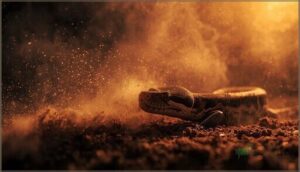
Beyond smells, watch for visible clouds of fine particles when you disturb the bedding—a red flag for Air Quality and respiratory issues. Dust Reduction isn’t optional; it’s critical for substrate safety and reptile care. Effective advanced search patterns can help identify key terms related to air quality control.
- Particle Control above 2 mg/m³ introduces toxicity and airborne irritants
- Poor Ventilation Systems trap dust, elevating impaction risk during feeding
- Humidity Management reduces airborne debris while supporting healthy airways
Mold or Fungal Growth
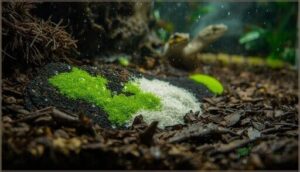
If you spot fuzzy patches—green, black, or white—on your snake’s bedding, you’re looking at mold, a genuine threat to reptile health and wellness. High humidity control failures and poor substrate maintenance create the perfect storm for fungal prevention breakdowns, turning safe reptile substrate options into toxic substrates and environmental hazards. Mold detection isn’t just about substrate safety; it’s about protecting your snake from respiratory distress and dermatitis.
| Mold Color | Common Cause | Health Risk |
|---|---|---|
| Green/Black | Poor ventilation, excess moisture | Respiratory irritation, wheezing |
| White/Pink | Organic decay, wet substrate | Dermatitis, substrate impaction |
| Slimy Film | Water spills, overwatering | Lethargy, secondary infection |
Watch for musty odors and discoloration—both signal it’s time to replace bedding immediately. Snake hygiene depends on keeping surfaces dry between cleanings and boosting airflow to starve fungi of the damp conditions they crave. Regular spot-cleaning and following best practices for maintaining snake enclosures will help you catch moisture problems before mold takes hold.
Visible Pests or Insects
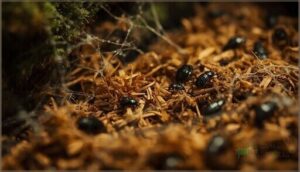
Tiny beetles darting across your bedding or delicate webbing in enclosure corners signal beetle infestations—and they pose real threats to reptile health and wellness. These pests thrive in damp, organic substrates, turning safe reptile substrate options into toxic substrates and environmental hazards. Insect identification matters: springtails and mold mites multiply fast, contaminating surfaces and triggering substrate impaction if your snake ingests them.
Four pest control methods for substrate safety:
- Replace contaminated bedding immediately to stop reproduction cycles and eliminate mite management challenges before they escalate.
- Boost ventilation and reduce moisture to starve pests of the damp conditions they need to survive and breed.
- Implement substrate sanitization protocols by freezing new bedding for 48 hours or baking at 200°F for 30 minutes.
- Inspect deliveries and storage areas regularly—grain beetles and carpet beetle larvae often hitchhike in bulk shipments.
Discoloration or Wet Spots
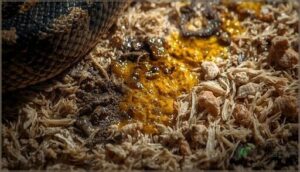
Yellow-brown staining or damp patches reveal critical moisture control failures that compromise substrate safety. These color changes signal fungal colonization and bacterial buildup—prime drivers of respiratory distress and dermatitis. Chronic exposure to contaminated bedding can shorten your pet’s life significantly, so understanding proper substrate care and corn snake lifespan factors helps you catch these warning signs early.
Proper humidity management and substrate maintenance demand immediate wet spot removal when you notice discoloration. Ignoring these warnings risks substrate impaction from decomposing bedding, making substrate selection and safety your first defense against illness.
Health Problems Linked to Unsafe Substrate
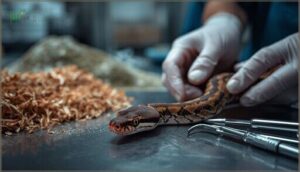
Unsafe substrate doesn’t just create mess—it creates medical emergencies. When your snake lives on the wrong bedding, you’ll see predictable health problems that range from annoying to life-threatening.
Here are the five most common conditions caused by hazardous substrate materials. Choosing safe materials like coconut fiber or aspen is key to preventing these issues, as explained in this complete guide to garter snake care.
Respiratory Issues or Wheezing
When your snake develops respiratory health problems, you’re witnessing environmental hazards at work. Dusty or aromatic substrates trigger airway inflammation and tracheal issues, leading to wheezing causes that escalate quickly.
Bronchial problems manifest as open-mouth breathing or excess mucus—signs of substrate impaction in the airways from toxic substrates. If wheezing persists beyond 24-48 hours, it’s become life-threatening and demands immediate veterinary intervention. Preventing substrate-related respiratory issues starts with choosing safer bedding options, which you can explore in our complete guide to building a proper snake enclosure.
Skin Irritation or Dermatitis
Redness, scales lifting, or small erosions signal dermatitis causes linked to dusty or chemically-tainted bedding. Toxic substrates and environmental hazards—cedar oils, mineral sands, mold—trigger irritant reactions and skin lesions that compromise your snake’s barrier defenses.
Substrate allergies and dermal infections follow when moisture or contaminants persist. *Chronic contact worsens these conditions rapidly.
- Switch to inert, low-dust options and monitor for improved skin health.
Impaction From Ingested Substrate
Substrate ingestion leads to gut blockage when fibrous or particulate bedding accumulates in your snake’s intestines. Intestinal obstruction from impaction risk manifests as absent defecation, abdominal swelling, and vomiting—signs demanding immediate veterinary intervention.
Swallowed substrate can block your snake’s intestines, causing lethal impaction that demands emergency veterinary care
Feeding behaviors and enclosure design influence how much substrate your snake consumes. *Gastrointestinal health depends on substrate safety.
- Choose aspen or paper-based options to protect reptile health and wellness during normal exploratory activity.
Difficulty Shedding or Retained Shed
Incomplete molts signal that your enclosure’s moisture level has fallen short of what your snake’s skin health demands. Difficulty shedding occurs when substrate depth fails to support natural rubbing behaviors or when dusty bedding disrupts humidity control during molt cycles—a direct threat to reptile health and wellness.
*Retained shed indicates environmental failure, not individual weakness.
*
- Monitor relative humidity at 50–70% between cycles and 70–80% during active shedding
- Provide 2–4 inches of substrate depth for effective skin-removal friction
- Avoid dusty materials that irritate tissue and complicate snake shedding
- Inspect eye caps and tail tips for incomplete release after each molt
- Implement humid hides when ambient conditions can’t sustain proper snake care and maintenance
Lethargy or Loss of Appetite
When your snake shows diminished activity paired with feeding issues, substrate toxicity may be starving cells of oxygen or triggering systemic inflammation. Snake anorexia lasting beyond three days—especially with respiratory stress—demands immediate evaluation of bedding choices.
Toxic substrates and environmental hazards disrupt humidity control and invite impaction, compromising reptile health and wellness. Prolonged lethargy signals environmental failure requiring urgent reptile care intervention.
Hazardous Substrate Materials to Avoid
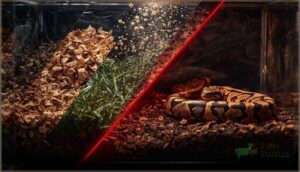
Some substrates aren’t just ineffective—they’re categorically unsuitable for snake enclosures and pose direct health threats. The materials below contain harmful chemicals, create impaction risks, or damage your snake’s respiratory system.
Understanding which substrates to remove from consideration protects your animal from preventable illness and life-threatening complications.
Pine and Cedar Shavings
Aromatic hazards lurk in those fragrant wood chips. Pine shavings and cedar shavings release volatile oils—phenols and monoterpenes—that trigger respiratory damage and skin irritation in your snake.
Here’s what toxic substrates do:
- Irritate airways, causing wheezing and labored breathing
- Inflame skin, leading to dermatitis and discomfort
- Reduce feeding response and activity levels
- Increase substrate impaction risk when ingested
Choose substrate alternatives like aspen for reptile substrate safety.
Gravel, Sand, and Calcium Sand
Coarse particles pose deadly substrate toxicity threats. Gravel risks include impaction when your snake swallows fragments during feeding, while sand hazards create airborne dust that inflames respiratory tissues.
Calcium dangers are particularly severe—calcium sand produces fine particles that trigger respiratory issues and cement into hard masses when moist, dramatically increasing impaction risk.
These materials are categorically unsuitable for substrate safety in any enclosure.
Cat Litter, Walnut Shells, Corncob Bedding
Cat litter, walnut shells, and corncob bedding introduce toxic substrates and environmental hazards your snake doesn’t need. Cat litter dust creates an impaction risk during shedding, while compromised humidity control fosters mold. Walnut fragments splinter into sharp edges that injure tissue when swallowed, and corncob bedding compacts under moisture, disrupting burrowing needs and snake behavior. These materials fail every standard for reptile substrate selection and substrate safety.
Treated or Chemically-Tainted Wood
Lumber risks escalate when preservatives, arsenic compounds, or chromium-based pesticides seep into your snake’s environment. Chemical exposure through offgassing effects creates respiratory distress, while cedar shavings and pine release phenols that damage liver tissue. Wood toxicity doesn’t announce itself until symptoms appear.
- Pressure-treated lumber offgasses volatile compounds that irritate airways and eyes
- Wood preservatives introduce toxic substrates and environmental hazards into burrowing zones
- Ingested fragments cause gastrointestinal blockage, compromising reptile health and wellness
Substrate safety demands untreated materials exclusively.
Contaminated or Fertilized Soil
Soil toxicity emerges when nitrogen-rich fertilizers irritate your snake’s mucous membranes, triggering respiratory distress and coughing. Chemical residues—pesticides, herbicides, heavy metals—cause dermatitis through direct contact and substrate impaction when ingested during feeding.
Fertilizer risks include ammonia vapors producing ocular irritation, while nutrient-dense substrates generate bioaerosol effects from microbial growth. *Contaminated soil represents environmental hazards incompatible with substrate safety.
- Choose verified reptile substrate options exclusively.
Top Safe Substrates for Healthy Snakes
After identifying what harms your snake, you need reliable alternatives that won’t jeopardize their health.
The substrates below have been vetted through clinical observation and provide safe environments across different species and humidity requirements.
Each option meets specific enclosure needs while eliminating the respiratory irritants, impaction risks, and chemical exposures discussed earlier.
1. Natural Aspen Snake Bedding Supply
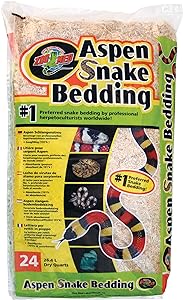
Zoo Med Aspen shavings represent the standard in reptile substrate options for most snake species. This natural material achieves 191% absorbency while remaining completely dust-free—critical for preventing respiratory complications.
Your snake’s habitat benefits from aspen’s neutral pH and absence of phenolic compounds found in cedar or pine. The substrate allows natural burrowing behaviors while maintaining excellent odor control.
Available in 5-pound bags through major pet supply retailers, aspen bedding requires complete replacement every 4-6 weeks to guarantee ideal substrate safety and prevent bacterial colonization.
| Best For | Snake owners looking for a safe, absorbent bedding that supports natural burrowing behavior and is easy to maintain. |
|---|---|
| Material Type | Aspen |
| Absorbency | 191% absorbency rating |
| Odor Control | Odorless |
| Safety | Safe for all snakes |
| Weight/Volume | 5.35 Pounds |
| Habitat Type | All reptiles |
| Additional Features |
|
- 191% absorbency rating handles moisture well and controls odors effectively
- Dust-free and free of harmful chemicals, making it safe for respiratory health
- Allows snakes to burrow and nest naturally, which is great for their wellbeing
- Needs complete replacement every 4-6 weeks, which adds to ongoing costs
- Wet spots don’t always dry completely and need to be removed manually
- May not be available in all local pet stores depending on your area
2. Organic Coconut Reptile Bedding Substrate
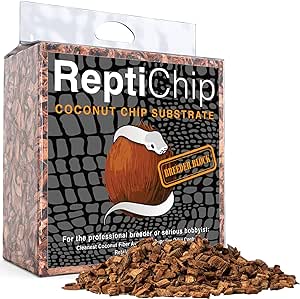
Organic Coconut Reptile Bedding Substrate delivers excellent humidity control for tropical species requiring 70-80% moisture levels. This compressed substrate expands to 10 pounds of fibrous material—ideal for ball pythons and other humidity-dependent snakes. Coconut fiber benefits include enhanced odor absorption and eco-friendly renewability.
ReptiChip reptile substrate maintains proper substrate depth at 2-4 inches while supporting natural burrowing behaviors. Your snake’s respiratory health remains protected through minimal dust generation.
Replace coconut husk bedding every 4-6 weeks to prevent mold formation and guarantee excellent reptile health throughout substrate selection.
| Best For | Reptile owners with tropical species like ball pythons, boas, or tegus who need reliable humidity control and a natural, eco-friendly substrate that absorbs odors effectively. |
|---|---|
| Material Type | Coconut Chips |
| Absorbency | Highly absorbent |
| Odor Control | Odor-absorbing |
| Safety | Earth-friendly |
| Weight/Volume | 10 lbs expanded |
| Habitat Type | Tropical environment |
| Additional Features |
|
- Expands from a compact brick to 10 pounds of bedding, giving you great value and easy storage until you need it.
- Retains moisture really well, making it simple to maintain the 70-80% humidity levels that tropical reptiles thrive in.
- Absorbs waste and odors naturally while producing minimal dust, which keeps your reptile’s enclosure fresher and safer for their respiratory system.
- Needs to be replaced every 4-6 weeks to prevent mold growth, which can add up in cost and maintenance time.
- Can be pretty dusty when you’re first hydrating and expanding the brick, so you might need to do it outside or wear a mask.
- Doesn’t clump or hold together well, so it’s not ideal if your reptile likes to create structured burrows or tunnels.
3. Kritter’s Natural Coconut Reptile Bedding
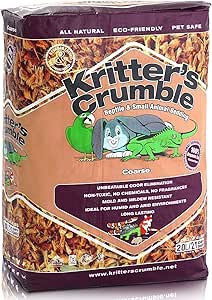
Kritter’s Natural Coconut Reptile Bedding provides biodegradable coconut fiber benefits in a 21-quart organic format—perfect for maintaining snake humidity needs between 50-70%. This reptile substrate option delivers exceptional odor elimination while supporting your snake’s natural burrowing instincts.
Monitor moisture levels daily to prevent mold growth within 24-72 hours of dampness. Replace substrate every 4-6 weeks as part of essential substrate maintenance tips.
Though some packages arrive dusty, coconut husk safety remains high compared to aromatic wood shavings. Your snake’s respiratory system stays protected when you maintain proper ventilation throughout the enclosure.
| Best For | Snake owners who want a natural, biodegradable bedding that controls odor while maintaining the right humidity levels for their pet’s health. |
|---|---|
| Material Type | Coconut Husk Fiber |
| Absorbency | Super absorbent |
| Odor Control | Unbeatable odor elimination |
| Safety | Pet safe, no chemicals |
| Weight/Volume | 2.24 pounds (21 quarts) |
| Habitat Type | Humid and arid |
| Additional Features |
|
- Super absorbent coconut fiber eliminates odors naturally without chemicals or fragrances that could harm your snake
- Supports healthy humidity levels between 50-70% and encourages natural burrowing behavior
- Completely biodegradable and compostable, so you can toss it in your garden when it’s time to change the bedding
- Some bags arrive dusty or damaged, which can irritate your snake’s respiratory system if you don’t rinse it first
- Gets moldy fast if you let it stay too wet—you’ll need to check moisture daily and replace damp spots right away
- More expensive than basic aspen shavings, and the 21-quart bag might not fully cover larger enclosures
4. Zilla Coconut Husk Reptile Bedding
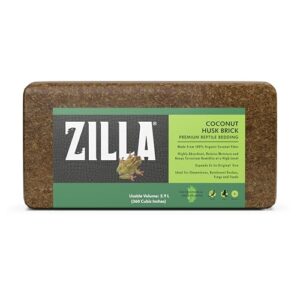
Zilla Coconut Husk Reptile Bedding expands five times its brick size when hydrated, giving you flexible humidity control tips for tropical snake enclosure design. This 100% organic coconut fiber substrate offers premium reptile bedding options at $6.79 per brick—enough to cover a 55-gallon terrarium floor.
Hydrate thoroughly before use to minimize dust during substrate maintenance. The natural coconut husk benefits include moisture retention without the phenols found in pine shavings, ensuring substrate safety for your snake’s respiratory system. Replace every 4-6 weeks when following proper reptile substrate selection protocols.
| Best For | Snake owners who need a natural, humidity-retaining substrate for tropical species that require moisture for healthy shedding. |
|---|---|
| Material Type | Coconut Fiber |
| Absorbency | Highly absorbent |
| Odor Control | Natural humidity control |
| Safety | Non-toxic, biodegradable |
| Weight/Volume | Covers 55-gallon tank |
| Habitat Type | Tropical habitats |
| Additional Features |
|
- Expands five times when hydrated, covering a 55-gallon enclosure for just $6.79
- Natural coconut fiber maintains humidity without the respiratory irritants found in pine or cedar shavings
- Soft texture encourages natural burrowing behavior and supports egg incubation for breeding projects
- Requires regular hydration monitoring to prevent mold growth in high-moisture sections
- Loose fibers can pose a minor impaction risk if snakes ingest large amounts during feeding
- Needs thorough pre-wetting before use to avoid dusty conditions during setup and cleaning
5. Zilla Reptile Terrarium Bedding Mix
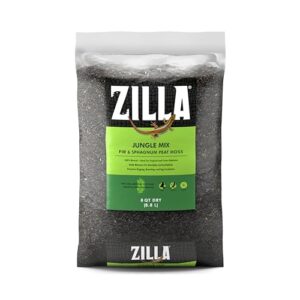
Zilla Reptile Terrarium Bedding Mix blends aged Douglas fir bark with sphagnum peat moss for enhanced moisture control in forest-dwelling species. You’ll achieve 70-80% humidity management during shedding cycles with just 2-4 inches substrate depth—ideal for ball pythons and rainbow boas.
Rinse thoroughly before use to remove clay dust that compromises substrate safety. This coconut fiber alternative provides natural terrarium maintenance at $12 for 8 quarts, though substrate options with aromatic wood require careful monitoring.
Replace monthly to prevent toxic materials from fungal contamination in your snake substrate.
| Best For | Snake owners with tropical or forest species like ball pythons and rainbow boas who need reliable humidity control and a natural substrate that encourages burrowing behaviors. |
|---|---|
| Material Type | Fir Bark & Moss |
| Absorbency | Highly absorbent |
| Odor Control | Earthy scent |
| Safety | Organic, safe |
| Weight/Volume | 5.8 Pounds (8 Quart) |
| Habitat Type | Tropical and forest |
| Additional Features |
|
- Maintains 70-80% humidity with just 2-4 inches of depth, perfect for shedding cycles
- Organic blend of Douglas fir bark and sphagnum peat moss creates a natural forest floor feel
- Encourages natural digging and nesting behaviors while controlling odor
- Contains clay dust that requires thorough rinsing before it’s safe to use
- Some batches have splinters that could harm your snake
- Needs monthly replacement to prevent mold and fungal growth in humid setups
Frequently Asked Questions (FAQs)
How often should I replace snake substrate?
Replace snake substrate every 1 to 4 weeks depending on your snake’s age, waste production, and substrate type.
Spot-clean daily and perform full changes immediately if you notice odor, dampness, or mold affecting snake health.
What substrate depth is best for snakes?
Think of substrate depth as your snake’s foundation—too shallow restricts burrowing, too deep risks impaction.
Most terrestrial species thrive with 2 to 4 inches, enabling natural digging while maintaining proper humidity control and temperature gradients.
Can humidity levels affect substrate safety?
Yes—humidity control directly impacts substrate safety. High moisture fuels mold growth and bacterial colonies, while low humidity creates dust that irritates airways.
Proper enclosure management and substrate moisture balance are essential for reptile health and wellness.
Do different snake species need different substrates?
Species specificity shapes substrate selection substantially. Match reptile substrate options to natural habitats—burrowing needs require loose materials, humidity control demands moisture-retentive bedding, while arboreal snakes need climbing-friendly snake enclosure surfaces minimizing ingestion risks during reptile bedding materials changes.
How do I properly clean reusable substrates?
Remove all waste, then scrub with hot water and reptile-safe detergent. Rinse thoroughly until no residue remains. Dry completely before reusing to prevent mold.
Proper substrate sanitizing protects your snake’s respiratory health.
Conclusion
Your snake’s substrate functions like the foundation of a house—invisible problems eventually compromise everything above it. Recognizing signs of bad substrate for snakes protects your animal before phenol exposure or bacterial colonization triggers clinical disease. Monitor for dust, odors, moisture accumulation, and behavioral changes.
Replace compromised bedding immediately, switch to aspen or coconut-based materials, and maintain rigorous hygiene protocols. Your vigilance determines whether your snake thrives in ideal conditions or suffers preventable respiratory distress and dermatitis.
- https://www.facebook.com/groups/BRASUS
- https://www.thebiodude.com/blogs/how-to-setup-a-bioactive-vivarium-terrarium-or-paludarium/20-types-of-wood-and-leaves-never-to-use-in-a-terrarium
- https://academichelpexpress.blog/2024/08/please-use-the-bulleted-points-and-the-rubric-below-to-guide-your-work-your-pa/
- https://www.onelook.com/?loc=olthes1&w=subpoint
- https://www.sciencedirect.com/science/article/pii/S0749208123000268