This site is supported by our readers. We may earn a commission, at no cost to you, if you purchase through links.

Cedar shavings smell wonderful to you. To your snake, they’re a slow poison. The aromatic oils that make cedar and pine so appealing in a pet store aisle can inflame airways and damage the liver.
Choosing what substrate for snake habitat setups is one of your biggest husbandry decisions. It controls humidity, shapes burrowing behavior, and decides whether your snake breathes clean air. A ball python needs 50-60% humidity, while a corn snake wants 3-4 inches of bedding to tunnel through.
Aspen, coconut fiber, cypress mulch, and paper each solve different problems, and each carries its own risks. Here’s how they stack up.
Table Of Contents
- Key Takeaways
- What Substrate Should You Use for Your Snake’s Habitat?
- Snake Substrates Compared: Aspen, Coconut, Cypress, and Paper
- Snake Substrate Safety: Toxic Materials, Dust, and Ingestion Risks
- Cleaning Snake Substrate: Waste Removal, Mold Prevention, and Replacement
- Buying Snake Substrate: Quality, Quantity, and Value
- Frequently Asked Questions (FAQs)
- What is the best substrate to use for snakes?
- What not to use for snake bedding?
- What do you put at the bottom of a snake enclosure?
- What is the best substrate for a snake tank?
- What is the best substrate for snakes?
- What is the best ground for a snake enclosure?
- What to put in the bottom of a snake tank?
- What substrate is bad for snakes?
- Can substrates affect a snakes shedding process?
- How to acclimate a snake to new substrate?
- Conclusion
Key Takeaways
- Skip cedar and pine shavings, since their aromatic oils irritate your snake’s airways and can damage its liver, and choose safer options like aspen, coconut fiber, cypress mulch, or paper instead.
- Match your substrate to your species by choosing coconut fiber for humidity-loving ball pythons and boas, and deeper, loose bedding of 3-4 inches or more so your snake can burrow.
- Watch for hidden risks like dust, mold, impaction from swallowed bedding, and soil additives such as fertilizer, vermiculite, and perlite, and feed prey on a clean surface or with tongs.
- Spot-clean daily and fully replace the substrate every 2-4 months, and use paper towels for quarantine since they make droppings, mites, and blood easy to spot.
What Substrate Should You Use for Your Snake’s Habitat?
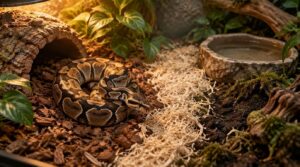
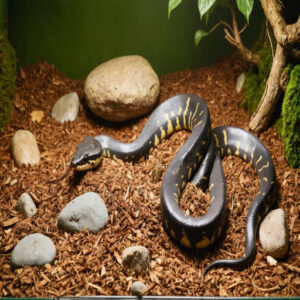
The right substrate depends on your snake’s species, size, and humidity needs. You’ll find the best substrate choices for three popular snakes below. Let’s start with the ball python, then move on to the corn snake and the boa constrictor.
If you want a setup that holds humidity and handles waste naturally, a bioactive substrate for snakes can work well for all three species.
Ball Python Substrate Needs
A ball python needs a substrate that holds moisture without turning soggy. Coconut fiber does that well, keeping humidity between 50-60% and resisting mold. Aspen shavings suit juveniles and support burrowing.
Here’s what you’ll want to check:
- Depth of 2-4 inches
- Humidity retention
- Substrate safety: no pine, cedar, or sand
You’ll protect your snake by choosing carefully.
Corn Snake Substrate Needs
Corn snakes need deeper bedding than you might expect, because species needs differ. You’ll want 3-4 inches so your snake can burrow.
Aim for 65-75% humidity retention. Among substrate types, a mix of 40% topsoil, 40% Reptisoil, and 20% sand holds moisture without turning soggy. Leaf litter helps.
Substrate safety comes first: choose additive-free soil, never fertilizers or chemicals.
Boa Constrictor Substrate Needs
Boas are bigger and thirstier than corn snakes, so your substrate has to work harder. Your boa constrictor needs several inches of coconut husk or soil mix for humidity retention at 55-75%.
If your enclosure keeps drying out, this guide to maintaining boa constrictor habitat humidity walks through misting routines and moisture-friendly setups that keep levels steady.
- You’ll watch your boa tunnel under the bedding.
- You’ll see it settle in, calm and secure.
- You’ll feel proud of a naturalistic habitat.
Replace substrate every 1-2 months.
Snake Substrates Compared: Aspen, Coconut, Cypress, and Paper
Aspen, coconut fiber, cypress mulch, and paper each work well for snakes. You’ll see how they compare on humidity control, burrowing comfort, and quarantine use. Let’s match your snake’s needs to the right one.
Humidity Control and Moisture Retention

Think of your substrate as a sponge, soaking up moisture and releasing it slowly. That’s how humidity control works.
Match substrate types to your snake’s moisture levels:
| Species | Humidity |
|---|---|
| Ball python | 50-60% |
| Corn snake | 40-50% |
| Boa constrictor | 55-75% |
| Shedding boa | 75-85% |
Coconut fiber and cypress mulch boost humidity retention, while aspen suits drier setups. Good moisture retention means less misting.
Since moisture-retaining substrates can grow mold if left unchecked, it helps to compare the best reptile substrates for ball pythons before deciding which one fits your humidity routine.
Burrowing Comfort and Substrate Depth
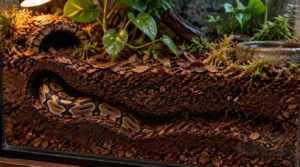
When you match substrate depth to your snake’s burrowing behavior, you’ll see calmer, healthier animals. Ball pythons need 3 to 4 inches. Hognose snakes need at least 4, and sand boas need 4 to 6.
Loose, natural burrowing substrates like coconut fiber blended with play sand give you strong humidity retention and real burrowing enrichment. Don’t pack it down tight.
Paper for Quarantine and Monitoring
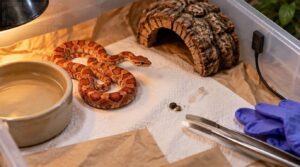
Paper towels make the best quarantine substrate you can buy. You’ll spot abnormal droppings, urates, mites, and blood at a glance, and you can swap everything in seconds.
Paper towels are the best quarantine substrate, letting you spot droppings, mites, and blood at a glance and swap everything in seconds.
Humidity is the catch. Paper won’t hold moisture, so you’ll add a damp moss hide for tropical species. It’s simple, safe, and ideal for beginner snake care.
Daily swaps protect substrate hygiene.
Snake Substrate Safety: Toxic Materials, Dust, and Ingestion Risks
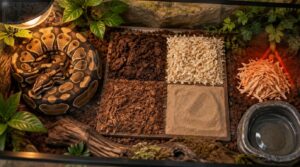
Some substrates look fine but can hurt your snake. You’ll want to know which ones to avoid before you fill the enclosure. Here are the four main safety risks you’ll need to check.
Toxic Woods and Oils
Some of the most common toxic substrates sit right on the pet store shelf. Cedar shavings and pine shavings release aromatic oils that irritate your snake’s airways. Over time, you’ll see respiratory issues, poor sheds, and a sluggish animal.
The damage doesn’t stop at the lungs. Cedar oil can harm the liver, so skip it. Choose aspen instead.
Dust and Respiratory Risks
Open a bag of fresh aspen and watch the cloud rise, like flour off a baker’s table. Your snake breathes that air all day.
Dust is one of the most common respiratory irritants in a snake enclosure. Choose dustfree reptile bedding, skip general rodent shavings, and keep damp spots from turning into mold exposure. Protect respiratory health in snakes, and you’ll avoid most respiratory issues.
Ingestion and Impaction Risks
Can a snake really swallow its bedding? Yes, and it happens more often than you’d think. Ingestion usually occurs when prey lands on loose substrate during a strike.
Feed frozen-thawed prey with tongs, or on a clean, bare surface. Particle size matters too, since small bits cling to moist prey. Impaction risks rise with dehydration, cool temperatures, and hatchlings. Call a reptile vet if symptoms persist.
Unsafe Soil Additives
Think a bag of potting soil is harmless? Think again. Many contain toxic substrates you’ll never spot on the label, and substrate toxicity builds fast in a closed enclosure.
Skip these additives:
- Fertilizer granules that burn skin and mucosa
- Vermiculite and perlite, which add impaction risks and respiratory irritants
- Pesticide residues that cause tremors
- Damp mixes prone to mold exposure indoors
Cleaning Snake Substrate: Waste Removal, Mold Prevention, and Replacement
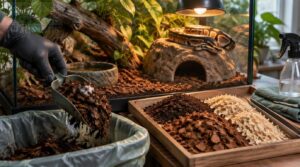
A safe substrate only stays safe if you keep it clean. Good substrate maintenance starts with daily spot cleaning. You’ll scoop feces, urates, and soiled material within an 8-10 inch radius, then toss uneaten food and shed skin.
Choose substrate with mold resistance and waste absorption, and keep airflow steady. Wipe mold with white vinegar, then rinse with plain water.
| Species | Full Replacement | Note |
|---|---|---|
| Corn snake | Every 3-4 months | Spot clean between |
| Ball python | Every 2-3 months | Spot clean often |
| Sand boa | Every 3 months | Hard to spot clean |
| Coco husk | Don’t reuse | Discard it |
Full substrate replacement means disinfecting the bare enclosure with a 10% bleach solution, rinsing well, and drying it completely before your snake goes back in.
Buying Snake Substrate: Quality, Quantity, and Value
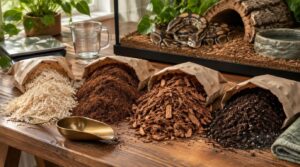
Replacement schedules shape your budget, so buy with them in mind. A simple substrate comparison starts with price per use, not price per bag.
Aspen runs cheap but molds fast in humid enclosures, so you’ll rebuy often. Cypress mulch lasts a couple of months with spot cleaning. Coco husk blocks cost $25-30 each alone, but about $11 on a half or full pallet.
Check reptile substrate brands for low dust and snake-specific designs. Pro Coco and Zoo Med are solid picks.
Compare online reptile suppliers before you order. Bulk deals cut substrate cost fast, especially across several enclosures. Aim for at least 3 inches of depth, and you’ll know exactly how many bags to buy. Price all substrate types separately.
Frequently Asked Questions (FAQs)
What is the best substrate to use for snakes?
Which option wins? The best substrate for snakes depends on your species.
In any snake habitat, a substrate comparison shows that tropical snakes need humidity retention, while corn snakes thrive on aspen for burrowing behavior.
What not to use for snake bedding?
Bedding is your snake’s whole world, so don’t poison it. Skip cedar shavings and pine shavings, since their oils irritate lungs.
Avoid toxic substrates, sand, damp piles that invite mold growth or impaction from ingestion.
What do you put at the bottom of a snake enclosure?
Think of the floor as your snake habitat’s foundation.
You’ll find substrate types like aspen, cypress, coconut husk, or paper towels.
Match humidity control and burrowing behavior to your species, and use safe feeding practices.
What is the best substrate for a snake tank?
Is one substrate really best for every snake? No. The best choice depends on your species. Match humidity control to your snake: coconut husk for ball pythons, aspen for corn snakes, and prioritize substrate safety always.
What is the best substrate for snakes?
Picture damp, earthy coconut husk cradling your snake as it tunnels. That’s the best reptile substrate for most keepers.
Match your species-specific bedding needs, nail humidity control for reptiles, and skip cedar for safer shedding.
What is the best ground for a snake enclosure?
Ground is a snake’s home. Choose coconut husk or cypress for substrate safety for snake enclosure, moisture retention and humidity control, burrowing species substrate depth, nonabrasive particle size for shedding, reptile substrate cost and sourcing.
What to put in the bottom of a snake tank?
Like castle floors strewn with rushes, you’ll want bedding that mimics the wild.
Pick coconut fiber for ball pythons, aspen for corn snakes. Skip toxic substrates. Deeper layers boost habitat enrichment and simplify substrate cleaning.
What substrate is bad for snakes?
Your snake’s enclosure shouldn’t be a minefield.
Toxic substrates like pine, cedar or fir shavings damage lungs. Skip sand or calcium sand, scented or clumping cat litter, gravel and crushed walnut, which cause serious impaction.
Can substrates affect a snakes shedding process?
Your substrate is the unsung stagehand of every shed. Yes, it does affect shedding success: poor substrate moisture levels and low humidity levels leave stuck skin, while safe, moisture-retaining bedding gives snake shedding cycle support.
How to acclimate a snake to new substrate?
Worried a slow swap is overkill? It isn’t.
Mix old and new bedding over 1-2 weeks for smooth substrate acclimation. Check substrate moisture levels, temperature regulation, and burrowing safety, then watch eating and snake health.
Conclusion
Picture your snake sliding into a cool, dark tunnel of damp coconut fiber, flanks pressed against the walls, breathing easy. That’s the payoff of a good setup.
Deciding what substrate for snake habitat to buy comes down to your species, humidity needs, and safety checklist. Skip cedar and pine. Match depth to behavior, spot-clean often, and replace bedding before mold shows up.
Get the bedding right and your snake will show you with calm shedding.