This site is supported by our readers. We may earn a commission, at no cost to you, if you purchase through links.

Your hatchling corn snake just gulped down its first fuzzy mouse, and now you’re staring at the calendar wondering when to offer the next one. Feed too often, and you risk regurgitation or obesity. Wait too long, and growth stalls. Getting a juvenile snake meal schedule right isn’t about following a rigid calendar—it’s about reading your snake’s body condition, metabolism, and feeding cues.
Young snakes grow fast, which means their nutritional needs shift every few weeks. What works for a two-month-old hatchling won’t cut it for a six-month-old juvenile hitting its growth spurt. You’ll need to adjust prey size, feeding intervals, and even environmental factors as your snake matures, and knowing when to make those changes separates healthy growth from frustrating setbacks.
Table Of Contents
Key Takeaways
- Feed juvenile snakes every 5-7 days as hatchlings, stretching to 7-10 days around 6 months and 10-14 days as they approach adulthood, adjusting based on body condition rather than rigid calendar schedules.
- Choose prey that’s roughly 10% of your snake’s body weight and no wider than 1.5 times its girth—oversized prey causes regurgitation and stress, while undersized prey stunts growth and creates nutritional gaps.
- Monitor your snake’s hunger cues like increased prowling and tongue-flicking rather than forcing meals, and watch for satiety signs like extended hiding periods that signal proper digestion.
- Maintain stable temperatures and humidity in the enclosure for 24 hours before feeding, reduce handling on meal days, and track weight monthly to catch overfeeding or health issues early.
Juvenile Snake Feeding Frequency Guidelines
Getting the feeding schedule right can feel like a guessing game when you’re new to keeping juvenile snakes. The good news is that age-based guidelines take most of the mystery out of mealtime decisions.
Once you’ve nailed down timing, you’ll also want to consider what to feed a pet snake to ensure your juvenile is getting proper nutrition as it grows.
Let’s break down the feeding intervals, growth adjustments, and hunger signals you need to watch for.
For a complete breakdown of portion sizes and scheduling as your boa grows, check out this comprehensive feeding guide for boa constrictors.
Recommended Feeding Intervals by Age
Generally, your juvenile snake needs food every 5 to 7 days during those early growth stages. Hatchlings thrive on this weekly feeding schedule because their tiny bodies are burning energy like crazy!
If your young snake seems hesitant at mealtime, these proven strategies to boost your snake’s appetite can help get them back on track.
As your snake hits the early juvenile phase around 6 months, you can stretch feeding cycles to every 7 to 10 days. Late juveniles and subadults do well with 10 to 14 day intervals, reflecting their slowing growth rate.
Understanding the role of snake metabolism rates is essential for determining the best feeding schedule.
Adjusting Frequency as Snakes Grow
As your juvenile snake matures, you’ll notice clear metabolic shifts that signal it’s time to adjust the feeding schedule. Watch growth rate closely—once rapid weight gain plateaus around 1 year, stretch intervals from weekly to every 10 days.
Snake development isn’t linear, so feeding frequency must flex with age factors. Body condition trumps calendar dates. If your snake’s getting pudgy, lengthen gaps between meals.
Proper snake nutrition means adapting prey size and timing as feeding cues change! Understanding the right prey size guidelines is essential for healthy growth.
Recognizing Hunger and Satiety Cues
Beyond timing adjustments, you need to read your juvenile snake’s actual feeding behavior. Hunger signs are pretty clear—watch for increased prowling near the glass, rapid tongue flicking, and tracking your hand movements.
After a meal, satiety indicators kick in: your snake will hide for 5-7 days while digestion patterns run their course, showing zero interest in food until metabolic processing wraps up.
Tracking your snake’s summer feeding frequency helps you anticipate these rest periods and avoid unnecessary handling during critical digestion phases.
Determining Proper Prey Size and Type
Getting the prey size right isn’t rocket science, but it makes all the difference between a thriving snake and a stressed one. You’ll need to match what you’re feeding to your snake’s weight and width, not just eyeball it and hope for the best.
Let’s break down exactly how to choose prey that keeps your juvenile growing strong without causing problems.
Matching Prey Size to Snake’s Body Weight
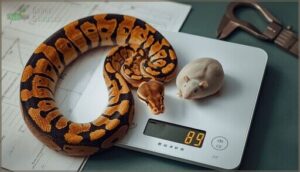
Think of prey weight as a recipe, not a guessing game—get it right and your juvenile snake thrives. Aim for prey that’s roughly 10% of your snake’s body weight, measured on a digital scale. Use snake girth measurement at the widest point to confirm the prey won’t exceed 1.5 times that width.
Aim for prey at 10% of your snake’s body weight and no wider than 1.5 times its girth
- Too heavy? You’re looking at regurgitation, obesity, and a stressed-out snake
- Too light? Growth stalls, malnutrition creeps in, and feeding schedules get complicated
- Just right? Steady growth, healthy body condition score, and a happy eater
- Track it! Feeding charts and regular weigh-ins keep nutritional balance on point
Suitable Prey Types for Juveniles

Frozen-thawed rodents are your go-to prey item selection for juvenile snake nutrition—pinkies for hatchlings, fuzzies for growing snakes, and hoppers as they bulk up. Each prey size matches developmental stages and digestive health needs.
Overfeeding these prey items can lead to weight issues, so follow proper portion control guidelines to keep your snake at a healthy size.
Feeding techniques matter too: thaw frozen prey properly, use tongs for safety, and skip live feeders to avoid injuries.
Prey quality control starts with reputable suppliers offering captive-bred, parasite-free options that support superior snake nutrition.
Risks of Oversized or Undersized Prey

Precision matters when choosing prey size. Oversized prey can trigger regurgitation or digestive issues—prey exceeding 1.5 times your juvenile snake’s width causes mechanical stress. Conversely, undersized prey creates the opposite problem: inadequate nutrition and stunted growth unless you adjust feeding schedule frequency.
Studies show prey around 70-80 percent of body mass approaches the breaking point. Match prey size to your snake’s girth for ideal feeding results.
Creating a Consistent Meal Schedule

A feeding schedule isn’t just a nice-to-have—it’s the backbone of your juvenile snake’s healthy growth. You can’t wing it and expect consistent results, so planning ahead with the right tools makes all the difference.
Let’s break down three practical strategies that’ll help you stay on track and adjust as your snake develops.
Using Feeding Charts for Planning
A feeding chart isn’t just a calendar—it’s your roadmap for juvenile snake nutrition and growth rate monitoring. By documenting each meal, you’ll fine-tune your feeding schedule, track prey size adjustment over time, and spot health changes early.
These feeding record analysis tools help you avoid overfeeding, plan consistent feeding frequency, and guarantee your snake’s getting exactly what it needs as it grows.
Tracking and Adjusting Feeding Days
Once you’ve got your chart in place, keeping tabs on actual feeding days turns your plan into a living, breathing schedule that conforms to your snake’s needs. Mark each meal, note any refusals, and watch for feeding cues like increased activity or tongue-flicking.
If your juvenile snake skips a meal, don’t panic—adjust your next feeding day accordingly and keep tracking weight to guarantee consistent snake nutrition.
Monitoring Growth and Schedule Changes
Growth tracking turns guessing into knowing. Weigh your juvenile snake monthly and measure its length to spot trends—healthy juveniles gain steadily, not in wild spurts. Watch for these signs to refine your feeding schedule:
- Consistent weight gain means your current feeding frequency and prey size match nutritional needs perfectly.
- Plateaus or loss signal it’s time for feeding adjustments or a vet check.
- Rapid, excessive growth suggests you’re overfeeding—extend intervals between meals to prevent obesity and maintain proper snake nutrition for long-term health monitoring.
Environmental Factors Affecting Feeding

Your snake’s environment isn’t just a home—it’s the foundation for healthy eating habits. Temperature, humidity, lighting, and stress levels all play a role in whether your juvenile snake feels comfortable enough to feed.
Let’s look at the key environmental factors you need to get right for consistent, successful meals.
Importance of Temperature and Humidity
Think of your juvenile snake’s enclosure as a delicate ecosystem—temperature and humidity aren’t just background details, they’re the foundation of healthy digestion.
You’ll need stable temps for proper thermoregulation and consistent humidity control to prevent feeding strikes. Temperature fluctuations trigger regurgitation, so microclimate management and environmental monitoring become non-negotiable for maintaining your snake feeding schedule and supporting peak reptile care and snake health.
Impact of Enclosure Size and Lighting
Your enclosure’s size and lighting cycles shape feeding environments more than you’d think. Larger spaces reduce predation stress, while stable day-night lighting improves strike timing in juveniles. Thermal gradients let your snake bask before meals, boosting appetite.
Refuge placement matters too—multiple hides increase confidence during prey presentation. Get these reptile enclosure and habitat details right, and you’ll see consistent feeding success with better reptile health overall.
Reducing Stress for Successful Feeding
Beyond physical setup, your feeding techniques drive success. Maintain stable temps for 24 hours before meals—rushed conditions trigger refusals in juveniles.
Stick to a daily feeding schedule within the same narrow time window. Use calm prey presentation with tongs, no sudden moves.
Keep noise low and skip handling that day. These stress reduction steps turn picky eaters into consistent feeders.
Top 3 Tools for Juvenile Snake Feeding
You don’t need a fancy lab setup to feed your juvenile snake properly. A few simple tools make the process safer, more accurate, and way less stressful for both of you.
Here are three essentials that’ll help you nail feeding time every week.
1. Amazon Basics Digital Kitchen Scale
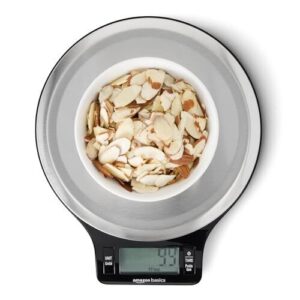
Precision matters when you’re measuring prey for your juvenile snake, and a reliable kitchen scale takes the guesswork out of portion control. The Amazon Basics Digital Kitchen Scale delivers weight accuracy up to 11 pounds, letting you nail that 10% body weight target every time.
Its tare function means you can weigh frozen prey in any container, subtracting the dish weight automatically.
Whether you’re prepping a feeding schedule with pinkie mice or tracking portion control as your snake grows, this digital weighing tool keeps your snake feeding techniques on point.
| Best For | Snake owners who need accurate portion measurements for feeding juveniles and tracking prey weight as their pet grows. |
|---|---|
| Primary Use | Weighing portions |
| Target Audience | Home cooks/Pet owners |
| Price Range | Budget-friendly |
| Ease of Use | Simple operation |
| Material Quality | Stainless steel/BPA-free |
| Special Features | Tare function |
| Additional Features |
|
- Tare function lets you weigh frozen prey in any container without doing mental math
- Measures up to 11 pounds with multiple unit options, so it grows with your snake from pinkies to larger prey
- Affordable and compact enough for regular feeding prep without taking up counter space
- Auto-shutoff can interrupt you mid-prep when you’re portioning multiple feedings
- Display gets blocked by larger bowls, which is annoying when weighing bulkier prey items
- Doesn’t measure to decimal places in grams, so you lose some precision for tiny prey
2. Poison Frogs Biology Guide

While kitchen scales handle the “how much” question, understanding toxin production and alkaloid profiles in your feeder species adds another dimension to your juvenile snake feeding schedule.
The Poison Frogs Biology Guide covers species diversity, coloration patterns, and frog habitat details that matter when sourcing prey.
If you’re gut-loading feeders with amphibian-eating arthropods, knowing which insects affect alkaloid profiles helps you maintain prey quality.
It’s a Snake Feeding Guide that connects dots between prey size, chemistry, and snake feeding techniques most keepers overlook.
| Best For | Serious poison frog keepers and breeders who want a deep dive into frog biology, care, and husbandry. |
|---|---|
| Primary Use | Frog care reference |
| Target Audience | Herpetology enthusiasts |
| Price Range | $185.00 |
| Ease of Use | Comprehensive reference |
| Material Quality | High-quality printing |
| Special Features | 1000+ photos/illustrations |
| Additional Features |
|
- Packed with practical tips for keeping and breeding poison frogs.
- Features over 1,000 vivid photos and illustrations.
- Covers common diseases and detailed care techniques.
- Some information may be repetitive or outdated.
- The price is high compared to online resources.
- Frog classification in the book may not match current standards.
3. Similac Infant Formula With Prebiotics

You won’t find baby formula on most juvenile snake feeding schedules, but Similac Infant Formula With Prebiotics offers an unexpected parallel for understanding gut health principles. Its blend of five HMO prebiotics mirrors concepts you’ll apply when selecting prey size and evaluating feeder gut content.
While this Snake Feeding Guide focuses on whole prey nutrition for your snake feeding routine, the product’s emphasis on digestive support reminds you that what your feeders eat directly affects your juvenile snake’s growth and metabolic efficiency.
| Best For | Snake owners who want to understand how prebiotic gut health principles in commercial formulas can inform better feeder prey selection and nutrition management for juvenile snakes. |
|---|---|
| Primary Use | Infant nutrition |
| Target Audience | Parents of infants |
| Price Range | $175.22 |
| Ease of Use | Easy to prepare |
| Material Quality | Non-GMO ingredients |
| Special Features | 5 HMO prebiotics |
| Additional Features |
|
- Features 5 HMO prebiotics that mirror gut health concepts applicable to evaluating feeder prey nutrition and digestive efficiency in reptiles.
- Non-GMO formulation with no artificial growth hormones demonstrates ingredient quality standards worth considering when sourcing feeder animals.
- Easy-to-mix powder format offers a parallel to the convenience needed in maintaining consistent feeding schedules for growing snakes.
- Not designed for reptile consumption and offers no direct nutritional value for snakes or their typical feeder prey.
- Premium pricing at $175.22 for a product irrelevant to snake care diverts budget from actual reptile feeding supplies.
- Requires careful preparation and storage protocols that don’t translate to the straightforward whole-prey feeding approach snakes need.
Monitoring Health and Preventing Issues

Keeping your juvenile snake healthy means watching for warning signs before they become serious problems. You’ll need to spot the difference between a snake that’s thriving and one that’s heading toward trouble with its feeding routine.
Let’s look at the key health concerns you should monitor and how to adjust your approach when things go off track.
Signs of Overfeeding or Underfeeding
Your juvenile snake’s body tells a story. Watch for rapid weight gain without matching length growth—that signals obesity risk. On the flip side, persistent weight loss or lethargy during meals screams nutrient deficiency.
Recurrent regurgitation means your prey size or feeding schedule needs tweaking. Even shedding issues can point to an undernourished, poorly fed snake that’s not getting what it needs.
Preventing Regurgitation and Obesity
To prevent regurgitation and obesity in your juvenile snake, stick to smaller, frequent meals that match its growth rate. Proper prey size—no wider than 1.5 times its body—keeps digestion smooth and prevents overfeeding.
Keep your enclosure warm enough for efficient digestion, and weigh your snake regularly. Those frozen prey portions? They’re your best ally for maintaining a healthy weight and avoiding messy feeding complications.
Adjusting Schedule for Health Concerns
When your snake shows signs of illness, think of feeding adjustments as hitting the pause button—not the stop button. Health monitoring and veterinary guidance will shape your recovery strategies and nutrition planning moving forward.
- Cut feeding frequency by 25–50% and watch your juvenile snake’s response over 1–2 weeks
- Switch to smaller prey size temporarily to ease digestion workload during recovery
- Track body condition weekly, aiming for steady 2–5% monthly weight gain
- Gradually reintroduce your normal snake feeding schedule after improvement, monitoring appetite and stool quality to prevent obesity in snakes
This measured approach to reptile nutrition and health keeps stress low while your snake heals.
Frequently Asked Questions (FAQs)
Can I feed my juvenile snake live prey?
You can, but it’s risky. Live prey may bite or scratch your young snake, causing injury.
Pre-killed or frozen-thawed prey eliminates snake injury risks while addressing prey welfare and feeding ethics concerns effectively.
What if my snake refuses to eat?
Temporary refusal happens—shedding, stress, or feeding anxiety can stall appetite. Check husbandry first: temperature, humidity, hiding spots.
Try smaller prey or appetite stimulation techniques. If your juvenile snake refuses past two feedings, consult a reptile vet.
Should I handle my snake before feeding time?
Skip the handling before mealtime. You’ll want to let your snake settle and focus on feeding, since pre-feeding care and handling risks can spike feeding stress and disrupt their natural snake behavior and feeding routine.
How do I transition between different prey sizes?
Start with prey slightly smaller than your snake’s girth, then increase by 10–20% per shift. Wait for multiple successful meals before moving up, watching for refusal or regurgitation.
Is it safe to feed multiple prey items?
You can offer multiple prey items to boost feeding efficiency, but watch for regurgitation risk.
Total portions shouldn’t exceed digestive capacity—stick with one appropriately sized prey item for most juvenile snakes.
Conclusion
Your snake’s next meal isn’t just about marking days on a calendar—it’s about watching how that last mouse settles, how the body thickens, how hunger resurfaces. Coincidentally, the snakes that thrive aren’t always the ones fed most often; they’re the ones whose keepers adjust their juvenile snake meal schedule based on real-time cues.
Read your snake, not just the clock, and growth happens exactly as it should.