This site is supported by our readers. We may earn a commission, at no cost to you, if you purchase through links.

Your snake hasn’t moved from that same coil in three days—and suddenly, what seemed like typical resting behavior starts to feel wrong. Lethargy in snakes doesn’t announce itself with obvious distress signals the way it might in mammals. Instead, it creeps in through subtle shifts: a python that stops tongue-flicking when you approach, a corn snake with muscles that feel oddly slack when handled, or a ball python that ignores food for the third week running.
Recognizing lethargic snake warning signs early means distinguishing between normal brumation cycles or pre-shed behavior and genuine illness that demands intervention. The difference often lies in clusters of symptoms—decreased responsiveness paired with physical changes like sunken eyes or poor skin texture—rather than any single red flag.
Table Of Contents
Key Takeaways
- Lethargy in snakes appears as clustered symptoms rather than single red flags—watch for decreased responsiveness paired with physical changes like sunken eyes, slack muscle tone, or prolonged food refusal spanning multiple feeding cycles.
- Environmental factors trigger most lethargy cases before illness does, so verify your temperature gradients span 5–10°C, humidity levels match species requirements, and enclosure hygiene stays consistent before assuming medical problems.
- Persistent lethargy lasting beyond 72 hours after you’ve corrected husbandry issues demands immediate veterinary attention, especially when combined with respiratory distress, severe weight loss, or dehydration signs like tenting skin.
- Normal brumation cycles and pre-shed behavior mimic illness, but true medical emergencies reveal themselves through multiple concurrent symptoms—open-mouth breathing with lethargy, or rapid weight loss with skin wrinkling—that won’t resolve with environmental adjustments alone.
Key Signs of Lethargy in Snakes
You know your snake’s normal rhythm—how it moves, when it investigates its enclosure, and how alert it seems when you approach.
If you’re still figuring out the best timing, this guide to snake feeding schedules breaks down how activity patterns connect to hunger cues.
When that baseline shifts, your first job is recognizing the change isn’t just a quiet day or pre-shed behavior.
Watch for these four clinical markers that signal true lethargy and warrant closer evaluation.
Reduced Movement and Activity
The hallmark of snake lethargy is reduced movement compared with your animal’s normal activity levels. You’ll notice your snake resting listlessly in stretched-out or uncoiled resting postures rather than its typical coiled posture.
If your snake also refuses food for several weeks, check out this guide on why snakes stop eating and how to help them recover.
Behavioral shifts include minimal repositioning over hours or days, with weak muscle tone creating a flaccid feel when you handle it—a sharp contrast to healthy, firm resistance.
Monitoring your snake’s behavior is vital, especially when checking for signs of common health issues that may indicate a need for veterinary care.
Reluctance to Explore or Climb
Arboreal and semi-arboreal snakes that stop using branches or elevated ledges often signal illness. If your previously active climber now stays exclusively on the ground for days, take note—this shift in exploration patterns indicates compromised welfare.
Setting up proper elevated perches and choosing the right hides for arboreal snakes can help you monitor whether your snake is using vertical space normally or showing early signs of health trouble.
Watch for these changes in climbing behavior and vertical space use:
- Decreased use of climbing structures despite prior regular use
- Preference for ground-level resting over elevated perches
- Reduced response to environmental enrichment you’ve provided
- Association with inadequate enclosure conditions (temperature, humidity)
- Temporal changes from your snake’s individual baseline activity
Record these deviations; sustained reluctance to explore warrants veterinary evaluation, especially when combined with anorexia or abnormal posture. Monitoring for reptile health issues is vital in maintaining your snake’s overall well-being.
Decreased Responsiveness to Stimuli
Beyond reduced exploration, you’ll notice your snake reacting more slowly—or not at all—to everyday stimuli. Healthy snakes usually respond within seconds to handling, vibrations, or movement outside their enclosure.
When lethargy sets in, these reaction times stretch noticeably longer. Diminished sensory responses often indicate neurological signs or underlying illness requiring a reptile veterinarian’s assessment—especially when your snake ignores routine environmental triggers it previously acknowledged.
Loss of Muscle Tone
Weak posture becomes apparent when you gently handle your snake—instead of firm, controlled coiling, you’ll feel a flaccid body that drapes limply across your hand. This muscle atrophy manifests as an inability to support its own weight or hold its head upright.
Reduced reflexes accompany this muscle degeneration, signaling systemic illness that warrants immediate veterinary medicine intervention to prevent irreversible damage to your snake’s health.
Changes in Feeding and Drinking Behavior
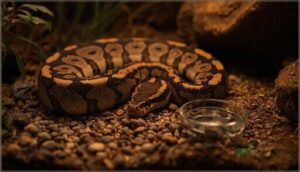
One of the earliest red flags you’ll notice when your snake isn’t feeling well is a shift in how it eats and drinks. These changes often show up before other symptoms become obvious—making them critical warning signs you don’t want to miss.
Poor appetite often stems from environmental stress, so double-check that your terrarium setup meets proper ventilation and humidity requirements to rule out respiratory irritation.
Let’s walk through the specific feeding and drinking behaviors that signal something’s wrong.
Refusal or Hesitation to Eat
When your snake refuses food for several days, you’re witnessing one of the earliest appetite signals that something’s off—though it doesn’t always mean severe illness. Food avoidance can stem from environmental stress or metabolic discomfort, making feeding behavior a critical window into your snake’s wellbeing.
- Shedding cycles naturally suppress eating habits temporarily
- Dehydration triggers voluntary feeding cues reduction as self-protection
- Temperature fluctuations disrupt normal appetite loss patterns
Monitor these nutrition deficits closely—persistent refusal demands veterinary assessment before weight loss becomes visible.
Sudden Change in Appetite
When your snake abruptly rejects prey it previously accepted—including both live and pre-killed offerings—you’re observing acute anorexia, a clinical sign that demands investigation rather than a temporary preference shift.
Missing more than two consecutive meals signals potential husbandry errors (incorrect temperatures, stressful handling) or underlying medical conditions like stomatitis, gastrointestinal obstruction, or systemic infection.
Document feeding refusal patterns—prolonged appetite disorders compromise immune function and organ health.
Reduced Interest in Water
Hydration lapses—when your snake stops visiting its water bowl or responding to fresh water changes—often precede visible dehydration signs by several days, making decreased drinking behavior an early warning you shouldn’t ignore. Water deprivation quickly escalates into clinical dehydration, particularly when compounded by humidity effects or water quality issues. Watch for:
- No drinking observed after routine misting or bowl refills
- Sunken eyes, wrinkled skin, or abnormally dry yellow urates
- Reduced tongue flicking alongside general snake lethargy
Species relying on environmental moisture rather than active drinking may show progressive dehydration despite a clean bowl being present—mouth rot, kidney disease, or systemic infections further suppress drinking motivation and warrant immediate reptile care evaluation and possible hydration therapy.
Unusual Weight Loss
Unintentional loss of 10 percent or more body weight over weeks signals systemic disease—viral infections, internal parasites, or cryptosporidiosis all drive progressive emaciation alongside snake lethargy. Weekly weight monitoring catches early muscle wasting before your animal shows sunken eyes or prominent vertebral spines. Track body condition using a 5-point scoring system, palpating the spine and ribs—dehydration signs and poor nutrition accelerate cachexia, demanding immediate reptile health evaluation.
| Early Warning Signs | Later-Stage Deterioration |
|---|---|
| Gradual weight decline over 2–4 weeks | Visible spine prominence, dorsal muscle wasting |
| Subtle loss of body condition score | Sunken eyes, wrinkled skin, lethargy |
| Reduced feeding response | Severe emaciation requiring urgent veterinary care |
Physical Symptoms Accompanying Lethargy
When your snake becomes lethargic, its body often shows visible signs that something’s wrong. These physical symptoms can help you distinguish between normal rest periods and genuine health concerns.
Watch for the following changes in your snake’s appearance and behavior—they’re your most reliable indicators that medical attention may be needed.
Dry or Wrinkled Skin
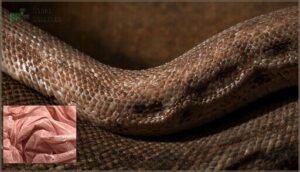
When your snake’s skin loses its smooth, supple texture—looking accordion-like or saggy instead—you’re seeing a classic dehydration sign. Check skin turgor by gently pinching: healthy skin snaps back instantly, while dehydrated skin tents or stays wrinkled.
Dry shedding with retained patches often accompanies these skin and scale abnormalities, signaling your snake’s fluid balance needs immediate attention to prevent further health decline.
Sunken Eyes or Dull Coloration
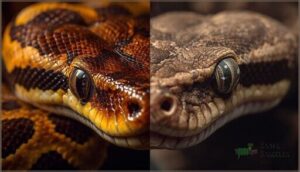
Your snake’s eyes should look bright and alert—almost gem-like, so when they appear sunken or clouded, something’s robbing them of their vitality. Eye abnormalities and color loss aren’t cosmetic issues; they’re critical signs of illness demanding your immediate attention.
Dull scales and skin discoloration—faded browns instead of rich earth tones—reveal that snake lethargy has physical roots. Eye sunkenness and cloudy eyes signal dehydration or systemic illness.
Poor Shedding or Retained Shed
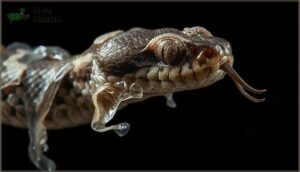
Beyond dull coloration, incomplete molts reveal deeper health troubles. Retained shed acts like a tourniquet around extremities, cutting circulation and trapping moisture that invites infection. Dysecdysis (abnormal shedding process) signals that humidity control has failed or systemic illness is draining your snake’s vitality, demanding immediate intervention.
- Helmet-like patches remain stuck after the shedding process, especially around eyes and tail tips
- Scale stacking creates skin folds that impede movement and hydration
- Eye caps persist, reducing visibility and causing corneal irritation
- Constricted digits or tail from retained scales cutting off blood flow
- Dry, wrinkled skin in affected regions despite proper reptile care and maintenance
Shedding issues and molting problems don’t resolve on their own. Persistent retained scales warrant veterinary assessment to rule out metabolic disease or parasites compromising snake health.
Lack of Tongue Flicking
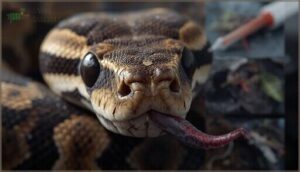
A lethargic snake’s tongue tells the whole story—when tongue flick rate drops to zero, vomeronasal function shuts down, severing your snake’s chemical link to its world. Snake sensory behavior depends on constant sampling, so absent flicking during handling signals trouble.
Thermal effects below 20°C slow tongue flicking naturally, but neurological signs like seizures alongside this behavioral change indicate urgent illness requiring immediate veterinary attention.
Environmental Factors That Trigger Lethargy

Your snake’s enclosure isn’t just a home—it’s the foundation of its health. When temperature, humidity, cleanliness, lighting, or ventilation fall outside the proper range, your snake’s metabolism slows and lethargy sets in.
Let’s examine the three most common environmental triggers you need to monitor.
Incorrect Temperature or Humidity
When temperature regulation fails, your snake’s ectothermic nature leaves it vulnerable—thermal gradients should span 5–10°C from cool to warm zones. Temperature extremes trigger lethargy quickly: hypothermia slows metabolism and immune function, while heat stress causes weakness and dehydration.
Monitor humidity levels with hygrometers, as both excess moisture (promoting respiratory infections) and low humidity (causing dehydration) compromise activity and responsiveness in captive snakes.
Poor Enclosure Hygiene
Neglected enclosure cleaning creates a breeding ground for pathogens that drain your snake’s energy. Waste accumulation elevates ammonia levels, irritating respiratory tissues and skin—lethargy often follows within days of exposure.
Maintain strict hygiene protocols:
- Replace substrate weekly or after contamination events
- Disinfect hides, bowls, and fixtures every 7–10 days
- Remove feces and uneaten prey within 24 hours
- Sterilize contaminated materials immediately
Consistent waste management prevents bacterial and fungal infections that manifest as reduced activity and appetite.
Inadequate Lighting or Ventilation
Without adequate UVB lighting, your snake can’t synthesize vitamin D3—calcium absorption falters, muscle function deteriorates, and lethargy sets in. Expired bulbs emit minimal UVB despite appearing bright, so replace them per manufacturer guidelines.
Poor ventilation systems trap heat and stale air, creating conditions for heat stress and respiratory infections. Effective airflow management maintains proper temperature gradient and humidity levels, preventing the environmental factors that sap energy.
Consistent lighting cycles support circadian health—12-hour photoperiods keep biorhythms stable and activity levels normal.
When to Seek Veterinary Attention

You can’t afford to wait when your snake’s lethargy signals something serious—knowing when to call a reptile veterinarian can mean the difference between a treatable condition and a life-threatening emergency.
Knowing when lethargy demands a veterinarian’s attention can mean the difference between treating your snake and losing it to emergency
Some warning signs demand immediate professional attention, even if you’ve already corrected temperature gradients or humidity levels in the enclosure.
Watch for these critical indicators that your snake needs veterinary care right away.
Persistent Lethargy Lasting Several Days
When your snake’s inactivity stretches beyond 24 hours—especially past normal rest cycles—you’re watching a window close on safe observation. Persistent lethargy signals underlying disease that demands veterinary attention, not guesswork.
Watch for these urgent patterns requiring professional diagnosis:
- Unresponsiveness lasting 3+ days despite corrected temperature and humidity
- Progressive hiding with zero exploratory snake behavior
- Continuing refusal to feed through multiple feeding cycles
- Worsening muscle tone or abnormal body posture
- Dehydration signs including sunken eyes and wrinkled skin
Chronic lethargy often masks systemic infections, parasites, or organ disease—early stages of illness your eye can’t diagnose alone.
Health risks escalate when behavioral changes persist without environmental cause. Prompt veterinary care facilitates disease diagnosis through blood work, imaging, and cultures before your snake deteriorates into an emergency requiring aggressive hospital treatment.
Additional Signs of Illness (e.g., Breathing Issues)
Labored breathing, mucus discharge, or audible wheezing—these red-flag symptoms transform simple lethargy into a veterinary emergency you can’t afford to delay. Respiratory distress combined with snake lethargy often indicates respiratory infections, scale rot, or fungal infections requiring immediate veterinary care.
| Warning Sign | What It May Indicate |
|---|---|
| Open-mouth breathing, nasal discharge | Respiratory infections requiring antibiotics |
| Neurological tremors, head tilting | Neurological issues or organ failure |
| Skin lesions, darkened scales | Scale rot or systemic bacterial infection |
Don’t wait—these conditions worsen rapidly without treatment.
No Improvement After Environmental Adjustments
You’ve corrected the temperature gradient and humidity levels, yet your snake remains motionless—that’s when environmental factors alone can’t explain what’s happening. Chronic conditions and systemic disease often hide behind persistent snake lethargy that won’t budge despite your best efforts.
- Medical intervention becomes essential when lethargy continues beyond 72 hours after husbandry optimization
- Diagnostic tests from a reptile veterinarian identify infections, parasites, or organ dysfunction
- Veterinary guidance prevents progression to irreversible debilitation or death
Signs of Dehydration or Severe Weight Loss
When your snake’s skin tents instead of snapping back—or when you can suddenly feel each vertebra—you’re looking at dehydration signs and weight loss causes that demand immediate veterinary care.
Sunken eyes, wrinkled skin, and poor shedding combined with rapid weight loss indicate failing fluid balance and compromised snake health, threatening your animal’s welfare beyond what home intervention can address.
Frequently Asked Questions (FAQs)
Can stress alone cause sudden lethargy in snakes?
Yes—chronic stress triggers neuroendocrine changes that cause behavioral withdrawal and allostatic overload in snakes. Your pet may appear suddenly lethargic from stress alone, though a reptile veterinarian should rule out concurrent illness.
Do snakes become lethargic before shedding cycles?
It’s par for the course—your snake becomes less active before shedding. During ecdysis, snakes naturally conserve energy as their skin renews, showing reduced movement and feeding interest before molting completes.
How does age affect snake activity levels?
Juvenile snakes display 5 to 2 times more daily movement than adults, reflecting higher metabolic demands during growth stages.
Age-related decline in activity patterns generally reduces adult movement by 20–40%, influenced by ecological factors and prey availability.
Are certain snake species naturally more lethargic?
Absolutely—some species show naturally reduced movement patterns. Desert adaptation and constrictor activity levels differ by ecology.
Species variation in lethargy baseline means your ball python won’t match your corn snake’s energy, and that’s completely normal.
Can overfeeding lead to temporary lethargy episodes?
Overfeeding can trigger temporary lethargy as your snake diverts energy toward digestion—especially after large meals. This postprandial sluggishness usually resolves within 24–72 hours, but persistent inactivity warrants a reptile veterinarian consultation to rule out digestive health complications.
Conclusion
A thousand subtle shifts can signal trouble—but now you know which ones matter. Catch those lethargic snake warning signs early: slack muscles paired with sunken eyes, prolonged food refusal alongside poor shedding.
You’re equipped to act before minor husbandry issues escalate into critical illness. Trust your observations, verify environmental parameters first, and don’t hesitate to consult a reptile veterinarian when symptoms cluster or persist. Your vigilance translates directly into your snake’s survival and long-term health.