This site is supported by our readers. We may earn a commission, at no cost to you, if you purchase through links.

Your ball python is coiled on the cool side of her tank—again. She’s been there for three days straight, barely moving, refusing food, and breathing with her mouth slightly open. You’ve checked everything: substrate’s clean, water’s fresh, humidity’s perfect.
But when you finally measure the basking spot, your thermometer reads 98°F—far beyond the safe zone for most pythons. Yes, snakes can absolutely get too hot in their tanks, and the consequences go beyond temporary discomfort. Unlike mammals, reptiles can’t sweat or pant effectively to cool down, making them vulnerable to heat stress that damages organs, disrupts digestion, and can prove fatal within hours.
Understanding the warning signs and maintaining proper thermal gradients isn’t optional care—it’s the difference between a thriving snake and a veterinary emergency.
Table Of Contents
- Key Takeaways
- Can Snakes Get Too Hot in Their Tank?
- Health Risks of Overheating in Snakes
- Recognizing Signs Your Snake is Overheated
- Preventing Overheating in Snake Enclosures
- What to Do if Your Snake Gets Too Hot
- Frequently Asked Questions (FAQs)
- What happens if snakes get too hot?
- How to tell if a snake is overheating?
- What temperature is too hot for a snake?
- How to cool down a snake enclosure?
- Do different snake species have different heat tolerances?
- Can room temperature affect my snakes tank?
- How often should I check my thermometers?
- Are heat rocks safe for snake enclosures?
- Can snakes recover from mild heat stress?
- Conclusion
Key Takeaways
- Snakes cannot regulate their own body temperature, so they depend entirely on you to create a proper thermal gradient (10-20°F range between warm and cool zones) to prevent heat stress, organ damage, and potentially fatal heatstroke.
- Watch for critical overheating signs like mouth gaping, excessive hiding, lethargy, and restlessness—these symptoms can escalate to organ failure within hours if temperatures exceed species-specific safe zones (typically 90-92°F maximum).
- Prevent overheating by positioning heat sources on one end only, using thermostats with digital thermometers at both warm and cool zones, and checking readings daily to maintain stable gradients within 1-2 degrees.
- If your snake overheats, turn off heat sources immediately, move it to the cool zone, offer lukewarm water, and seek veterinary care if you see persistent mouth breathing, seizures, or loss of coordination—gradual cooling prevents shock while rushed intervention can cause additional harm.
Can Snakes Get Too Hot in Their Tank?
Yes, snakes can absolutely get too hot in their tanks, and it happens more often than most keepers realize. Your snake depends entirely on the environment you create to regulate its body temperature, and without proper setup, even well-meaning heat sources can push temps into dangerous territory.
If you’re using glass tanks, choosing the right heating pad with precise temperature control becomes critical to prevent those dangerous hot spots that can harm your snake.
Understanding why temperature control matters, what ranges your species needs, and what happens when things get too warm will help you keep your snake safe and thriving.
Why Temperature Regulation Matters for Snakes
Thermal balance isn’t optional for your snake—it’s survival. As ectotherms, snakes depend entirely on external heat sources to fuel their metabolism, digestion, and immune function.
Without proper thermoregulation through temperature gradients, they can’t process food, fight disease, or even move efficiently. Heat stress disrupts these critical processes, making temperature control the cornerstone of responsible ectotherm care and snake wellbeing.
Understanding behavioral adaptations in snakes is important for ensuring their thermal needs are met.
Optimal Temperature Ranges for Common Species
Species variation demands precise climate control—ball pythons need a heat gradient of 88–92°F warm side and 78–82°F cool side, while corn snakes thrive at 85–90°F and 75–80°F respectively. Garter snakes prefer cooler ranges of 82–86°F basking and 72–78°F ambient.
Thermal cycling matters too: nighttime temperatures can drop 5–10°F without compromising thermoregulation. Understanding your snake’s specific temperature research ensures proper snake tank temperature and prevents heat stress.
As with many reptiles and fish, understanding the preferred temperature ranges of each species helps support ideal health.
Risks of Exceeding Safe Temperatures
When temperatures climb beyond those safe ranges, your snake faces serious danger. Heat stress kicks in as metabolic demands spike, pushing respiration and heart rate to exhausting levels.
Prolonged temperature extremes cause dehydration through increased moisture loss, concentrate urine that damages kidneys, and disrupt digestion—meals get regurgitated or sit unprocessed. Without proper environmental control and thermoregulation options, heatstroke can trigger organ failure and neurological damage.
Health Risks of Overheating in Snakes

When your snake’s tank gets too hot, the consequences go far beyond temporary discomfort.
Overheating can disrupt digestion, suppress immunity, and cause fatal stress—so knowing how to check if your snake’s habitat is warm enough helps you maintain the right balance.
Overheating triggers a cascade of physiological problems that can escalate from mild stress to life-threatening emergencies within hours.
Understanding these specific health risks helps you recognize why precise temperature control isn’t optional—it’s essential for your snake’s survival.
Dehydration and Kidney Damage
When your snake overheats, dehydration kicks in fast. Excessive heat pulls moisture from tissues, thickening blood and straining kidney function.
Without proper thermoregulation through a temperature gradient, renal cells struggle to filter waste effectively. Prolonged heat stress can trigger acute kidney injury, reducing filtration capacity and elevating toxin levels.
If dehydration persists, you’re looking at potential organ damage that compromises your snake’s long-term health and survival.
Heat Stress and Organ Failure
When core temperatures climb above safe thresholds, your snake’s organs face cascading damage.
Heat stress triggers mitochondrial breakdown in muscle and liver cells, compromising energy production and releasing inflammatory signals that harm tissues.
Prolonged exposure disrupts circulation, reducing blood flow to essential organs and risking multi-organ failure.
Without immediate temperature monitoring and intervention, heatstroke can cause irreversible neurological damage and potentially fatal organ collapse.
Behavioral and Digestive Issues
Excessive thermal stress throws your snake’s behavior and digestive health into disarray, compounding the physical damage from overheating. When environmental factors push temperatures too high, you’ll notice:
- Increased anxiety and agitation as thermoregulation fails
- Refusal to feed or regurgitation of recent meals
- Chronic dehydration affecting gut motility and nutrient absorption
- Erratic movements signaling neurological distress
- Prolonged hiding or restlessness indicating severe stress
These feeding issues often precede heatstroke if heat management isn’t corrected immediately.
Recognizing Signs Your Snake is Overheated
When your snake’s enclosure gets too hot, you’ll notice specific behavioral changes that signal distress. These symptoms can escalate quickly, so recognizing them early gives you the best chance to prevent serious harm.
Watch for these three critical warning signs that your snake is overheating.
Lethargy and Unresponsiveness
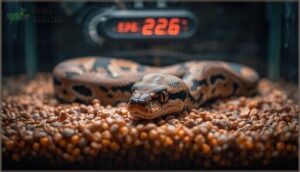
When your snake lies motionless with minimal head movement or fails to respond to gentle touch, heat stress may be disrupting neural signaling and circulatory function.
High tank temperatures slow reflexes, depress muscle tone, and trigger stupor as dehydration lowers blood volume. This lethargy differs from normal rest—cooling and rehydration usually restore curiosity and responsiveness within hours, confirming temperature effects on thermoregulation.
Excessive Hiding or Restlessness

When your snake paces the enclosure walls or burrows repeatedly into substrate, thermal stress is driving instinctive escape behavior. Proper thermoregulation demands a reliable temperature gradient—without it, your animal will:
- Retreat to burrows for extended periods, reducing appetite and slowing shed cycles
- Display frequent doorway pacing or rapid head movements signaling discomfort
- Shift constantly between zones, attempting to stabilize body temperature
- Show defensive tail flicking near the warm area, indicating enclosure design failures
These patterns reveal thermal discomfort before dehydration or heatstroke escalate.
Gaping, Mouth Breathing, and Other Distress Signals
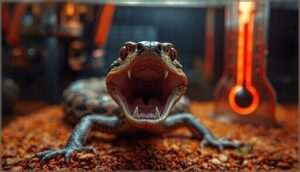
When your snake opens its mouth wide during rest—gaping for several seconds at a time—you’re witnessing a critical distress signal tied to thermal stress and impaired thermoregulation. This reflexive behavior, often accompanied by heavy panting or wheezing sounds, indicates respiratory issues from heat stress.
Persistent mouth breathing beyond a few minutes demands immediate cooling intervention to prevent dehydration, heatstroke, and organ failure.
Preventing Overheating in Snake Enclosures

Preventing overheating isn’t complicated, but it requires attention to three critical components of your setup. You need to establish the right thermal environment, select appropriate equipment, and maintain consistent monitoring.
Let’s walk through each element so you can protect your snake from temperature-related stress.
Creating a Proper Temperature Gradient
Think of your enclosure as a roadmap your snake navigates by feel. A proper thermal gradient spans 10 to 20 degrees Fahrenheit across the tank, giving your snake control over its body temperature without risking heatstroke.
A proper thermal gradient of 10–20°F across the tank lets your snake regulate its body temperature and avoid heatstroke
- Position heat sources on one end to create a distinct warm zone and cooler retreat
- Use a thermometer at both ends to confirm the gradient remains stable within 1 to 2 degrees daily
- Avoid clustering heat under hides where temperatures concentrate and escape routes disappear
Choosing and Positioning Heating Equipment
Your choice of heating systems shapes the quality of your temperature gradient from the ground up. Undertank heaters deliver steady belly warmth, while heat lamps create focused basking zones overhead.
Match wattage selection to your tank size—25 to 40 watts suits most 20-gallon setups—and position heat sources on one end only. Always pair them with a thermostat to prevent runaway spikes that endanger your snake.
Monitoring With Thermostats and Thermometers
Pairing a thermostat with digital thermometers gives you precision monitoring and heat source control that passive observation can’t match. Place temperature sensors at both ends to verify your thermal gradient—one in the basking zone, one in the cool retreat.
Calibrate your thermostat regularly to maintain accuracy within one degree, ensuring your undertank heater never pushes temperatures into dangerous territory.
What to Do if Your Snake Gets Too Hot

If your snake shows signs of overheating, you need to act quickly but carefully. Rushing the cooling process can cause shock, so gradual intervention is critical.
Here’s how to respond effectively, recognize when professional help is necessary, and adjust your setup to prevent future incidents.
Immediate Steps to Cool Your Snake Safely
If you spot signs of overheating, turn off your heat lamp immediately and shift your snake toward the cooler end of its temperature gradient. Place a shallow dish of lukewarm water nearby to encourage drinking and support thermoregulation without causing thermal shock. Never use ice or cold water—gradual heat reduction prevents heatstroke complications.
- Increase airflow by running a small fan near (not directly on) the enclosure
- Lightly mist the habitat to aid evaporative cooling and maintain safe temperatures
- Monitor both zones with accurate thermometers every 15 minutes during emergency care
When to Seek Veterinary Attention
Some symptoms demand immediate veterinary care. If your snake shows persistent mouth breathing, seizures, complete unresponsiveness, or loss of coordination after cooling efforts, contact your reptile vet right away.
Heatstroke can trigger organ failure and neurological damage within hours. Medical intervention through fluid therapy and supportive treatment often determines survival when heat stress escalates beyond home management.
Adjusting Your Enclosure Setup to Prevent Recurrence
After a close call with heatstroke, you need to redesign your enclosure for reliable thermoregulation. Start by repositioning your heat source to create distinct thermal gradients—warm zones shouldn’t exceed species-specific limits while cool zones stay between 70-85°F.
- Install a thermostat with alert thresholds to prevent temperature spikes beyond safe ranges
- Use slotted vents at opposite enclosure ends for cross-ventilation without drafts
- Mount digital thermometers on both warm and cool zones for continuous monitoring
- Position heat mats or lamps on one side only, never covering the entire floor
- Replace airtight glass lids with mesh panels to improve airflow and prevent heat trapping
Proper enclosure design with ventilation systems and temperature control equipment prevents recurrence.
Frequently Asked Questions (FAQs)
What happens if snakes get too hot?
Temperature extremes trigger metabolic disturbances and organ damage in snakes. Overheating causes dehydration, immune suppression, and digestive failure.
Severe heatstroke leads to neurological damage, increasing mortality when thermoregulation fails and heat management breaks down.
How to tell if a snake is overheating?
Watch for rapid breathing with an open mouth, frequent movement toward cooler zones, lethargy, excessive hiding, and head stretching.
These overheating symptoms indicate your snake is struggling with heat stress and needs immediate temperature adjustment.
What temperature is too hot for a snake?
Most pet snakes experience heat stress when basking zones exceed 92°F or ambient temperatures climb past 85°F.
Species-specific temperature thresholds vary, but persistent exposure above 90°F disrupts temperature regulation and triggers overheating.
How to cool down a snake enclosure?
Move your tank away from direct sunlight and reduce heat sources using a thermostat-controlled setup.
Improve ventilation with screen lids, position fans strategically, and add ceramic tiles to the cool side for effective heat management.
Do different snake species have different heat tolerances?
Like fingerprints, each snake species carries unique thermal adaptation shaped by its native habitat.
Desert dwellers tolerate higher heat than forest species, while body size and age influence temperature sensitivity and thermoregulation needs considerably.
Can room temperature affect my snakes tank?
Room temperature directly influences your snake’s tank by setting the baseline ambient control for your entire thermal gradient.
A warm room reduces heat source demand but can narrow your temperature gradient, while cold rooms make achieving proper basking temperatures harder without sturdy tank ventilation and insulation.
How often should I check my thermometers?
Check your thermometers daily, comparing warm and cool zone readings each morning.
Perform a second check after any heat source adjustment or lighting change, and always verify temperatures before feeding your snake.
Are heat rocks safe for snake enclosures?
Heat rocks aren’t recommended—they create hot spots and uneven heat that cause burn risk, especially for vulnerable ground-dwelling species.
Safe alternatives like ceramic emitters or thermostatic under-tank heaters provide better heat management and temperature regulation.
Can snakes recover from mild heat stress?
Yes, snakes recover from mild heat stress when you restore proper thermal regulation quickly.
Most show rapid improvement in snake behavior and feeding within one to three days after cooling and rehydration.
Conclusion
Think of temperature management like walking a tightrope—precision keeps your snake balanced and healthy.
Now you know that snakes can get too hot in tank environments, recognize the warning signs, and understand how to prevent overheating through proper gradients and monitoring. Check your thermometers weekly, invest in quality thermostats, and never guess at temperatures.
Your vigilance protects your snake from heat stress, organ damage, and potentially fatal consequences. Temperature control isn’t complicated—it’s simply essential.