This site is supported by our readers. We may earn a commission, at no cost to you, if you purchase through links.

Your snake’s enclosure goes dark, the lamp clicks off, and the temperature starts to fall. Whether it falls to 78°F or 66°F decides if your snake wakes up thriving or slowly sick.
So, what temperature do snakes need at night? For most popular pet species, the answer is 70°F or higher, with a gentle 5–8°F drop from daytime highs. Dip below that for extended periods and metabolism slows, digestion stalls, and respiratory infections creep in.
Ball pythons, corn snakes, and boas each follow slightly different rules after dark. Here’s exactly what your species needs, and how to heat it safely overnight.
Table Of Contents
- Key Takeaways
- What Temperature Do Snakes Need at Night?
- Nighttime Temperature Needs by Snake Species
- Why Nighttime Temperatures Matter for Snake Health
- How to Heat Snake Enclosures Safely Overnight
- Monitoring and Maintaining Safe Nighttime Temperatures
- Frequently Asked Questions (FAQs)
- What is too cold for snakes to be out?
- What time of night are snakes most active?
- What smell does a snake hate most?
- Do snakes come out in 70 degree weather?
- What temperature should a snake be at night?
- What temperature is too cold for snakes to be out at night?
- Should I leave my snakes heat lamp on all night?
- What is too cold for a ball python at night?
- Can snakes survive without any nighttime heating?
- Do baby snakes need different nighttime temperatures?
- Conclusion
Key Takeaways
- Keep your snake’s enclosure at 70°F or higher overnight, with only a gentle 5–8°F drop from daytime highs, since longer or deeper dips slow digestion and invite respiratory infections.
- Check your species’ limits, because ball pythons shouldn’t go below 70°F, boas below 68°F, or corn snakes below 64°F, and hatchlings need steadier temperatures with little or no drop.
- Heat your enclosure with a ceramic heat emitter or under-tank heat mat on a thermostat, mounted on one side so your snake keeps a warm end and a cool end, and skip white heat lamps, colored night bulbs, and heat rocks.
- Place probe thermometers at both ends of the enclosure and check them every evening, because a failing device or uneven heat can quietly stress your snake when you’re not watching.
What Temperature Do Snakes Need at Night?

Why do so many keepers lose sleep over the dark hours? Because your snake can’t generate its own body heat, so your enclosure has to supply it.
Since nighttime temperatures can drop without a heat lamp, a snake terrarium lighting guide can help you pair ceramic heat emitters with the complete darkness your snake needs after sunset.
Here’s the short answer: nighttime temperatures should hold at 70°F or higher for most popular pet snakes. A gentle drop from daytime is natural and healthy. A crash below that baseline isn’t. Drops that stay above it can even support natural behavior and healthy rhythms. Most species tolerate natural nighttime temperature drops of 5–8°F, though tropical species from stable environments may need steadier temperatures.
If your room runs cold, add ceramic heat emitters or undertank heating pads, and run them through a thermostat. That keeps a steady temperature gradient without light that disrupts your snake’s day and night rhythm. Tropical species need warmer floors than temperate ones, so check your snake’s specific range.
Nighttime Temperature Needs by Snake Species

Not every snake needs the same nighttime temperature, and guessing can cost you. Your species decides how warm the enclosure should stay after lights out, so you’ll want the right numbers for each one. Here’s what ball pythons, corn snakes, and boa constrictors need overnight.
Ball Python Nighttime Temperatures
You can let nighttime temperatures drop safely for a ball python, but not too far. Keep the room at 72–78°F and never below 70°F.
Here’s your overnight checklist:
- Hold the warm hide at 80–85°F.
- Run a ceramic heat emitter on a thermostat.
- Preserve a thermal gradient.
Skip heat rocks and colored bulbs. Your snake needs darkness and consistent overnight warmth. Pairing a thermostat with a reptile under tank heat mat keeps the warm hide steady all night without glowing bulbs or risky heat rocks.
If you’re weighing your options, this guide on whether ball pythons really need an under-tank heater explains when a ceramic emitter or radiant panel works just as well.
Corn Snake Nighttime Temperatures
Corn snakes are a bit more forgiving. Healthy adults handle a cooler night, but corn snake nighttime temperatures still need limits. Keep a ceramic heat emitter on a thermostat and preserve your thermal gradient.
| Snake | Nighttime Target |
|---|---|
| Hatchling | 80–85°F warm hide |
| Juvenile | 80–85°F warm hide |
| Adult | 70–75°F room |
| Never below | 64°F |
Verify both ends with dual probes every single night.
Pairing those probe readings with a safe reptile heating mat for families helps keep the warm side steady while the cool side stays near 75°F–80°F.
Boa Constrictor Nighttime Temperatures
Boa constrictor care follows the same logic, just with a bigger animal. Let nighttime temperatures settle between 70 and 80°F, and never let them drop below 68°F. Some subspecies, like B. c. nebulosa, want about 80°F.
If your room runs cold, use a ceramic heat emitter on a thermostat. Keep your thermal gradient intact. Check both ends nightly with probes.
Why Nighttime Temperatures Matter for Snake Health

Every snake you keep depends on ectothermy, which means your enclosure’s nighttime temperatures directly control its body function. Get them wrong, and thermal stress builds quietly.
A proper temperature gradient lets your snake pick its comfort zone, even after dark. Cooling too far slows digestion, risks regurgitation, and raises cortisol, which weakens immunity. Juveniles suffer most, since cold nights commonly trigger respiratory infections.
Let your snake choose its comfort zone even after dark, because cooling too far weakens digestion, immunity, and especially the health of juveniles
A reliable thermostat keeps those numbers steady. Here’s what’s at stake:
- Your snake refusing a meal it can’t digest
- A hatchling wheezing through a preventable infection
- A frightened animal pacing the glass all night
- Weeks of stress you never saw coming
- A healthy pet you could’ve kept safe
Steady nighttime temperatures protect your snake’s health, mood, lifespan.
How to Heat Snake Enclosures Safely Overnight
You don’t need fancy gear to keep your snake warm overnight, but you do need the right gear. Start with a ceramic heat emitter. It gives off heat without any visible light, so your snake’s day-night rhythm stays intact.
Pair it with a smart thermostat, always. A thermostat keeps the output steady and stops overheating before it starts. Put the probe in the zone you’re regulating.
Here’s how to build the setup:
- Mount the ceramic heat emitters on one side to create a proper temperature gradient.
- Add undertank heating pads or a heat mat for steady floor warmth.
- Cover mesh tops with plexiglass to hold heat.
- Skip heat rocks and colored night bulbs completely.
Your snake needs a warm side and a cool side, so never center the heat.
Monitoring and Maintaining Safe Nighttime Temperatures
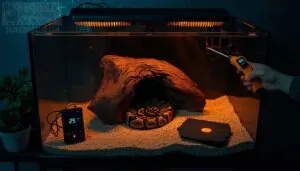
Drop below 72°F for long stretches and your snake’s metabolism slows, digestion stalls, and respiratory infections become a real risk. That’s why temperature monitoring matters most for nighttime temperatures, when nobody’s watching.
Place a digital probe thermometer at each end of the enclosure so you can verify the temperature gradient. Add an infrared thermometer and check basking spots and decor surfaces weekly. Two readings that disagree? One device may be failing.
Run every heat source through a thermostat, with the probe inside a hide on top of the substrate. Choose a model with alarms, and you’ll hear about deviations immediately.
In rack systems, scan every single level. Heat stratification quietly wrecks temperature consistency, and regular infrared checks catch it early.
Frequently Asked Questions (FAQs)
What is too cold for snakes to be out?
Picture a wild corn snake caught outside when a nocturnal temperature drop hits 55°F. You’re looking at trouble. Anything below 60°F slows digestion and weakens immunity quickly, and sustained exposure under 40°F can be fatal.
What time of night are snakes most active?
Wondering when your snake actually wakes up? Most hit peak nocturnal behavior right after sunset, especially the first hour. Crepuscular species like corn snakes favor dusk and dawn, so watch your enclosure’s nighttime drop closely.
What smell does a snake hate most?
Your snake tolerates a ceramic heat emitter, thermostat, and enclosure insulation, yet ammonia sends it fleeing. It tops the list, and smoke’s close behind. Keep it away from any temperature gradient or thermal gradient you’ve built.
Do snakes come out in 70 degree weather?
Yes, and the snake doesn’t check your thermometer first. At 70°F ambient temperature, many species will be out, especially basking on sun-warmed rock or pavement, because ground-level temperature gradient beats air readings every time.
What temperature should a snake be at night?
Your ball python’s tank reads 78°F at 10 p.m. That’s perfect.
Keep nighttime temperatures between mid-70s to 80°F for tropical snakes, never below 60°F for temperate ones, and let a thermostat guard your thermal gradient.
What temperature is too cold for snakes to be out at night?
Drop below 60°F and a snake basically turns into a statue. Most go inactive under 50°F, and anything under 72°F invites respiratory trouble in pet species. Your ideal temperature range never gets that low.
Should I leave my snakes heat lamp on all night?
Usually, no. Switch off a white heat lamp at night, since light disrupts your snake’s rhythms. Use a ceramic heat emitter on a thermostat instead, keeping nighttime temperatures steady and safe.
What is too cold for a ball python at night?
Think a ball python tolerates any nighttime temperature drop? It doesn’t. Anything below 70°F (21°C) is too cold. Keep the thermal gradient intact, limit temperature fluctuation, and follow proper heating safety practices every single night.
Can snakes survive without any nighttime heating?
Picture a ball python curled in a chilly room, sluggish and still. Snakes can survive without nighttime heating if your room stays above 20°C (68°F), but inadequate temperature control invites illness, so keep a gradient.
Do baby snakes need different nighttime temperatures?
Hatchlings under a year old can’t shrug off a cold night like adults do. Yes, baby snakes need different nighttime temperatures: keep temperature consistency with no drop, using a thermostat, and follow species-specific temperature needs.
Conclusion
So, what temperature do snakes need at night? Now you know: 70°F or higher, with a gentle drop from daytime highs, adjusted for your species.
Hit those numbers and your snake digests well, sheds cleanly, and breathes easy. Miss them and trouble builds quietly. Use a thermostat, place probes at both ends of the enclosure, and check readings every evening. Get the nights right and the days take care of themselves. Warm nights, thriving snake.