This site is supported by our readers. We may earn a commission, at no cost to you, if you purchase through links.
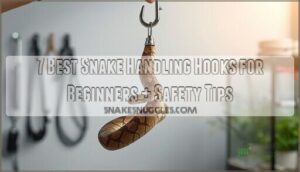
Your first snake won’t bite you because it’s angry—it’ll bite because your hands smell like food, you moved too fast, or you grabbed when you should’ve supported. Beginners make mistakes—that’s normal—but the right hook turns those learning moments from painful lessons into smooth, stress-free handling.
That’s where a good snake hook changes everything. It puts safe distance between you and defensive fangs while giving you the control to move your snake confidently. Whether you’re working with a chill corn snake or a jumpy ball python, the right beginner hook makes all the difference between building trust and getting tagged.
Table Of Contents
- Key Takeaways
- Why Beginners Need Snake Handling Hooks
- Key Features of Beginner Snake Hooks
- Top 7 Snake Handling Hooks for Beginners
- How to Use a Snake Hook Safely
- Tips for Choosing Your First Snake Hook
- Frequently Asked Questions (FAQs)
- What is the best beginner snake for handling?
- Are snake sticks recommended for beginners?
- How to handle snakes for beginners?
- Can you use hooks on all snake species?
- How often should beginners practice hook handling?
- What alternatives exist to traditional snake hooks?
- Are collapsible hooks as safe as fixed ones?
- When should you upgrade from a beginner hook?
- Conclusion
Key Takeaways
- Snake hooks keep beginners safe by providing distance and control during handling, preventing bites that typically happen from food-scented hands, sudden movements, or grabbing instead of supporting the snake’s body.
- The best beginner hooks balance 10-24 inches of reach (depending on snake size), weigh under 1.5 ounces to prevent fatigue, and use stainless steel construction with non-slip grips for durability and control.
- Proper hook technique requires slow approaches, mid-body support at multiple contact points, and reading snake behavior to avoid common mistakes like neck grabs, jerky lifting, or handling multiple snakes at once.
- Budget-friendly stainless steel hooks ($8-$18) work perfectly for beginners learning with corn snakes or ball pythons, with practice sessions of 15-20 minutes three to four times weekly building confidence and skill retention.
Why Beginners Need Snake Handling Hooks
You might think you can wrangle a snake with your bare hands, but that’s how beginners end up in the ER. A good hook keeps you at a safe distance while giving you full control—no grabbing, no panic, no bites.
If you do get bitten despite precautions, knowing how to identify snake bites and respond correctly could make all the difference.
A good snake hook keeps beginners safe by providing distance and control without the panic of bare-handed handling
Let’s break down exactly why this simple tool changes everything for both you and the snake.
Safety Benefits of Using Hooks
Hooks keep your fingers safe. That’s the bottom line. A secure grip means you won’t fumble and drop anything—including a jumpy snake. Self-locking features prevent accidental releases under load, lowering injury risk markedly.
Properly rated hooks match your snake’s weight, avoiding sudden failures. Plus, reinforced materials resist bending, giving you solid safety margins every time you lift.
Simple tools, serious accident prevention.
Reducing Stress for Snakes and Handlers
Beyond safety, you’re also protecting your snake’s mental state. Stress reduction works both ways—hooks give you distance, so your snake won’t feel trapped by grabbing hands. Handler safety improves when you stay calm, and a chill handler keeps the snake chill too.
Here’s how snake hooks cut stress during snake handling:
- Gentle handling without squeezing the body
- No sudden grabs that spike anxiety
- Mid-body support mimics natural movement
- Distance prevents defensive strikes
- Predictable routine builds trust over time
For more guidance on minimizing anxiety, check out these snake stress reduction techniques.
Snake calming starts with the right tool.
Common Beginner Mistakes Without Proper Tools
But skip proper tools and you’re asking for trouble. Tool selection matters—wrong hooks or bare hands cause sudden escapes, loose grips, and thrashing. Beginner risks multiply: you’ll drop the snake, expose yourself to bites, or stress it with rough handling.
Equipment failure from unchecked gear adds danger. Even non-venomous snakes strike when startled. Snake safety starts with the right snake hooks.
Key Features of Beginner Snake Hooks

Not all snake hooks are created equal, and picking the wrong one can make handling harder—or even unsafe. The best beginner hooks balance reach, control, and comfort without overwhelming you with features you don’t need yet.
Here’s what to look for when you’re shopping for your first hook.
Ideal Hook Length and Weight
Picking the right snake hook isn’t rocket science, but size matters. For small to medium snakes, start with a 10 to 14-inch hook—it keeps your hand safely distant without extra weight. Larger snakes? Go 16 to 22 inches for better reach.
Weight-wise, aim for 0.5 to 1.5 ounces. Anything heavier strains your wrist during handling sessions. Balance points near the handle give you smoother control and less fatigue.
Material Choices and Durability
Material selection separates reliable snake handling equipment from junk. Stainless steel snake hooks dominate for good reason—corrosion resistance holds up in humid environments, and proper hook maintenance keeps them sharp for over a year.
Your best bets for durability testing:
- Stainless steel: Won’t rust, maintains metal strength under daily use
- Aluminum alloys: Lighter weight reduces fatigue during extended sessions
- Hard anodized finishes: Scratch-resistant coating on snake tongs
- Fiber composites: Budget-friendly herpetology equipment with decent toughness
Grip Comfort and Handle Design
Your palm carries the work, so grip materials matter. Ergonomic grips reduce squeeze fatigue when you’re holding a snake hook steady—especially during those longer handling sessions.
Look for stainless steel snake hooks with gentle tapers (1.2 to 1.5 inches wide) and subtle texturing for control. Palm support spreads pressure, keeping your hand chill. Good weight distribution prevents wrist twist during precision handling techniques.
Portability and Storage Considerations
When you’re moving between sites or packing for field work, compact designs save the day. Beginners often forget that snake hooks need a home—one that won’t bend the shaft or dull the tip.
Smart storage cases and portability options include:
- Telescoping models that collapse from 36 inches down to 12, fitting backpacks easily
- Soft fabric cases protecting hook materials from rust in damp field conditions
- Carabiner clips for belt attachment during active snake handling sessions
- Hard shell carriers with foam inserts preventing travel damage
- Weatherproof zipper bags keeping protective clothing and handling techniques guides dry
Lightweight stainless steel hooks under one pound reduce fatigue. Travel solutions matter as much as the tool itself.
Top 7 Snake Handling Hooks for Beginners
You’ve got the basics down—now let’s talk gear. I’ve tested dozens of hooks over the years, and these seven won’t let you down when you’re starting out.
Each one brings something different to the table, whether you need reach, portability, or just solid everyday performance.
1. Aquaneat Reptile Snake Hook
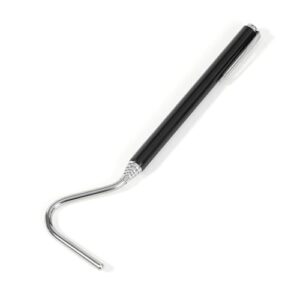
The Aquaneat hook stretches from 7 to 26 inches—perfect when you’re still figuring out your comfort zone. Built with stainless steel and aircraft-grade aluminum, it won’t rust or bend during those sweaty first encounters. The non-slip grip keeps your hand steady even when your nerves aren’t. At under 2 ounces, it’s lighter than your phone.
Just know it’s designed for small snakes. Bigger species or hot snakes? You’ll need something sturdier.
| Best For | Beginners and hobbyists handling small, non-venomous snakes who want an affordable, portable tool to build confidence. |
|---|---|
| Material | Stainless Steel |
| Maximum Length | 26 inches |
| Design Type | Extendable |
| Handle Type | Non-slip |
| Weight Capacity | Not specified |
| Price | Budget |
| Additional Features |
|
- Extends from 7 to 26 inches so you can adjust distance as you get more comfortable
- Lightweight at under 2 ounces and compact enough to toss in a bag
- Stainless steel construction resists rust and the non-slip grip stays secure
- Not built for larger or venomous snakes—strictly for small species
- Some users report it feels flimsy or twists under pressure
- Durability issues with breakage after limited use
2. AIUWIZO Snake Hook Tool
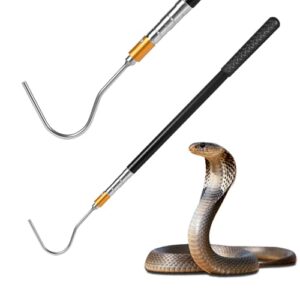
The AIUWIZO hook gives you about 61 inches of reach when fully extended—that’s over 5 feet between you and a jumpy snake. It collapses down to 16 inches, so you can toss it in your truck or field bag without hassle. The stainless steel construction won’t corrode in humid sheds or after outdoor use.
At $7.69, it’s ridiculously affordable for beginners testing the waters. The rounded hook head won’t scrape scales, and the non-slip handle stays put even when your palms sweat. Just don’t expect it to handle heavy lifting tasks.
| Best For | Budget-conscious beginners, casual hikers, or farm owners who need occasional snake relocation without breaking the bank. |
|---|---|
| Material | Stainless Steel |
| Maximum Length | 61 inches |
| Design Type | Retractable |
| Handle Type | Rubber |
| Weight Capacity | Not specified |
| Price | $7.69 |
| Additional Features |
|
- Extends to 61 inches for safe distance while collapsing to a compact 16 inches for easy storage
- Stainless steel construction resists rust and won’t scrape snake scales thanks to the rounded hook
- Unbeatable $7.69 price point makes it a no-brainer starter tool or backup option
- Not built for heavy-duty or frequent professional use
- Limited lifting capacity means larger snakes require extra caution
- Durability questions at this price point—expect to replace it after moderate wear
3. Repti Zoo Snake Hook Tool
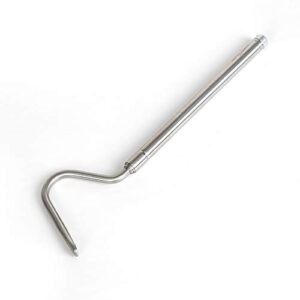
You won’t find a more pocket-friendly collapsible hook than the Repti Zoo. It extends from 7.8 inches to 23.6 inches—perfect for small to mid-size snakes in terrariums. The stainless steel won’t rust in humid conditions, and the duck-bill tip slides under snakes without scraping scales.
It’s great for cleaning tanks or retrieving your pet from tight spots. But don’t push it with heavy snakes—it gets wobbly when cantilevered out. For non-venomous beginners? Solid choice.
| Best For | Beginner snake owners with small to mid-size non-venomous snakes who need a compact tool for everyday tank maintenance and handling. |
|---|---|
| Material | Stainless Steel |
| Maximum Length | 23.6 inches |
| Design Type | Collapsible |
| Handle Type | Standard |
| Weight Capacity | 2.2 lbs |
| Price | Budget |
| Additional Features |
|
- Collapses down to 7.8 inches, making it easy to store or carry in a pocket or bag
- Stainless steel construction resists rust even in humid terrarium environments
- Duck-bill tip design slides smoothly under snakes without damaging their scales
- Not suitable for venomous reptiles or larger, heavier snake species
- Becomes unstable and wobbly when extended far out from your hand
- Wrist strap hole may be too small to use with standard straps
4. Stainless Steel Snake Hook Tool
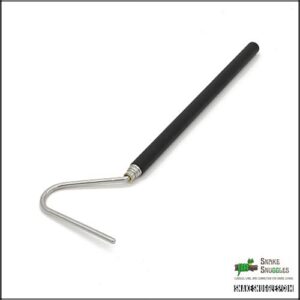
For a budget pick that doesn’t fold, the Stainless Steel Snake Hook Tool at $7.99 is hard to beat. It’s 39 inches long—plenty of reach for rattlers or corn snakes. The rubber grip stays put even when your palms sweat, and the U-shaped tip cradles mid-body without digging in.
The catch? Some users report wobble under two pounds. It’s fine for garter snakes or juveniles, but don’t trust it with anything chunky. Great starter tool if you’re careful.
| Best For | Budget-conscious handlers working with small to medium snakes like garter snakes, corn snakes, or juveniles where durability isn’t a top priority. |
|---|---|
| Material | Stainless Steel |
| Maximum Length | 39 inches |
| Design Type | Retractable |
| Handle Type | Rubber grip |
| Weight Capacity | 2 lbs |
| Price | $7.99 |
| Additional Features |
|
- Affordable at $7.99 with solid 39-inch reach for most common snake species
- Secure rubber grip prevents slipping even with sweaty hands during handling
- U-shaped hook design cradles snakes gently without pinching or causing stress
- Reported wobble and structural weakness under loads as light as 2 pounds
- Build quality concerns with some users calling it flimsy for long-term use
- Not reliable for larger or heavier snakes—strictly a lightweight-only tool
5. Telescopic Snake Hook Reptile Catcher Tool
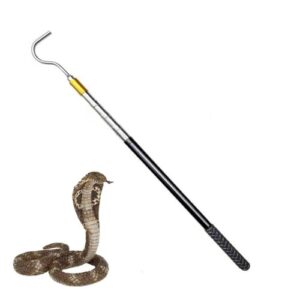
If you want more flexibility, the Telescopic Snake Hook Reptile Catcher Tool ($5.59) adjusts from 16 inches collapsed to 61 inches fully extended. That range lets you grab a corn snake in a vivarium or reach a copperhead hiding under deck boards. The stainless steel head has rivets for durability, and the rubber handle won’t slip.
Heads-up: Some buyers found the sections tight to lock, and a few got units with threading issues. Check yours before heading into the field.
| Best For | Reptile handlers and homeowners who need adjustable reach to safely catch and relocate snakes from tight spaces or at varying distances. |
|---|---|
| Material | Stainless Steel |
| Maximum Length | 61 inches |
| Design Type | Telescopic |
| Handle Type | Rubber |
| Weight Capacity | Not specified |
| Price | $5.59 |
| Additional Features |
|
- Extends from 16 to 61 inches, giving you serious range for different scenarios
- Stainless steel construction with riveted head holds up to regular use
- Dirt cheap at $5.59 for a tool that does the job
- Telescopic sections can be stiff and annoying to lock into place
- Quality control issues—some units arrive with threading problems on the hook
- Not built for heavy-duty professional work despite handling various snake species
6. Bytcew Snake Hook Catcher Pole
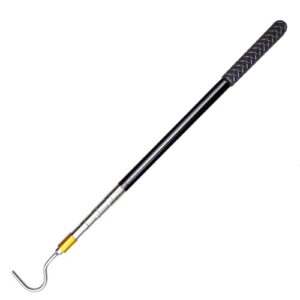
The Bytcew Snake Hook Catcher Pole ($18–$60) gives you an 18-to-60-inch reach with a rivet-reinforced head that won’t bend when you lift a garter snake or relocate a rat snake. The stainless steel shaft resists rust, and the rubber handle stays secure even when your palms are sweaty. It collapses for storage in your truck or field kit.
One catch: Some users report tight locks between sections. Test every joint before you carry it into the field.
| Best For | Reptile handlers and field researchers who need a collapsible tool to safely relocate small snakes without getting too close. |
|---|---|
| Material | Stainless Steel |
| Maximum Length | 61 inches |
| Design Type | Telescopic |
| Handle Type | Rubber |
| Weight Capacity | 2 lbs |
| Price | Budget |
| Additional Features |
|
- Extends from 18 to 60 inches so you can adjust your distance based on the snake and situation
- Rivet-reinforced head holds up when lifting lightweight snakes like garters or corn snakes
- Rust-resistant stainless steel construction with a non-slip rubber grip for wet conditions
- Hook size only works for smaller snakes—larger species won’t fit securely
- 2-pound weight limit means you can’t use it for heavier snakes or other objects
- Section locks can stick or require extra force to adjust in the field
7. Wamlet Snake Grabber Hook Tool
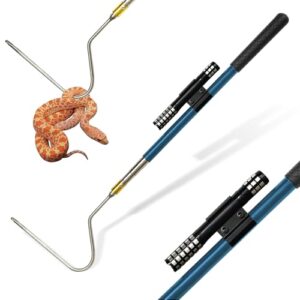
The Wamlet Snake Grabber Hook Tool stretches 38 inches—long enough to keep you safe without feeling awkward. Its stainless steel shaft won’t corrode after you rinse it down, and the rounded hook tip slides under a snake’s body without scraping scales. The rubber grip stays put even when your hands are damp.
At 1.8 pounds, it’s light enough for one-handed moves yet sturdy enough for most non-venomous snakes. The detachable hook lets you swap worn parts fast.
| Best For | Hikers, campers, and reptile owners who need a safe way to handle small to medium snakes without getting too close. |
|---|---|
| Material | Stainless Steel |
| Maximum Length | 39 inches |
| Design Type | Retractable |
| Handle Type | Rubber grip |
| Weight Capacity | 2 lbs |
| Price | Budget |
| Additional Features |
|
- Extends from 22.4″ to 64.9″ so you can adjust the reach based on the situation
- Built-in LED flashlight helps you spot snakes in dim trails or under rocks
- Flat hook design won’t cut or injure the snake during handling
- Can’t handle large snakes over 36 inches—it’ll bend or snap under the weight
- Flashlight needs batteries that aren’t included in the box
- At $9.99 it’s budget-friendly but feels more disposable than a serious field tool
How to Use a Snake Hook Safely
Owning a snake hook is one thing. Using it correctly is another. Here’s how to handle snakes safely with your hook, from the first approach to keeping your gear clean and ready for next time.
Approaching and Lifting Techniques

Reading snake behavior is key. You’ll need a slow approach—feet shoulder-width apart, one foot forward. Keep your snake hook at chest height and move in a calm arc.
Hook placement matters: aim for the snake’s midline, a few inches behind the head. Use smooth lifting, no jerky motions. Position the snake along the hook’s curve for body support. Pause if it hisses.
Supporting The Snake’s Body

A snake’s flexible spine demands careful weight distribution. You’ll cradle the body at multiple contact points—never just one spot. Use a gentle grip along the midsection, letting the snake hook glide beneath while your free hand holds the rear third.
Species girth varies, so adjust. Keep movements slow. This reptile handling equipment protects both you and your snake during safe snake handling.
Avoiding Common Handling Errors
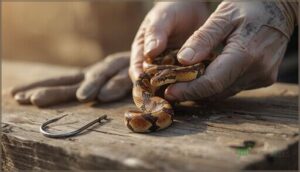
Mishandling costs you confidence—and can provoke defensive snake behavior. You’ll see beginners rush or fumble, triggering stress in both handler and animal. Here’s what to skip:
- Avoid neck grabs that force the head down; always support the body’s middle third with your snake hook instead.
- Prevent coiling around the tool by keeping the snake’s body straight and controlled.
- Limit force when lifting; pause if resistance appears, especially with venomous snakes.
Handle a single snake at a time for focused safety.
Cleaning and Maintaining Your Hook

Your tool won’t last if you ignore maintenance. Rinse the snake hook with warm water after each use, scrub with mild soap and a soft brush, then dry completely to prevent rust. Apply food-grade mineral oil to stainless steel snake hooks monthly for rust prevention.
Store in a dry, ventilated space—never near sinks. Regular tool maintenance and proper handle care keep your snake handling equipment reliable when it counts.
Tips for Choosing Your First Snake Hook
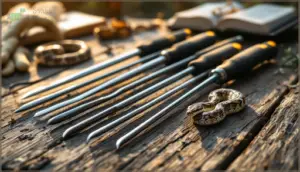
You’ve learned the basics—now it’s time to actually buy your first hook. The right choice depends on what kind of snakes you’ll be handling, how much you want to spend, and where you can find quality gear.
Let’s break down the key factors so you don’t waste money on the wrong tool.
Matching Hook Size to Snake Type
Your first hook should match your snake’s size—not your ambition. For hatchlings under 18 inches, grab a 12–14 inch hook. Medium snakes (2–4 feet) need 16–24 inch reach for safe snake handling. Big constrictors over 4 feet? Go 30–40 inches to keep distance from strikes.
Proper equipment selection prevents injuries and keeps handling techniques smooth, especially with venomous snakes requiring extra safety precautions.
Budget-friendly Options for Beginners
You don’t need to drop $50 on your first hook. Budget options run $8–$18 for aluminum or stainless steel builds that cover essential handling techniques and safety precautions.
A 10–12 inch hook with a T-handle gives solid equipment choices for snake handling without breaking the bank. Skip zinc-plated models—they rust fast.
Quality snake handling equipment and snake tongs start cheap, letting you master safety tips before upgrading.
Where to Buy Reliable Snake Hooks
Online retailers like Amazon show hook reviews from real handlers—helpful for comparing snake handling equipment. Manufacturer sites list warranty details on snake handling tongs and hooks.
Reptile stores let you test grip comfort before buying herping equipment. Pet expos offer hands-on demos of snake catching gear.
Local vets and zoos recommend professional suppliers for snake handling and safety tools you can trust. For a detailed look at snake hook specifications and types, explore expert recommendations before making a purchase.
Frequently Asked Questions (FAQs)
What is the best beginner snake for handling?
Corn snakes top the list for new keepers. They stay chill during handling, grow just 3–5 feet, and eat frozen prey without fuss. Plus, you’ll find tons of color morphs from trusted breeders.
Are snake sticks recommended for beginners?
Absolutely. Snake sticks—also called hooks—are essential beginner tools for safe snake handling and control. They keep you at arm’s length, reduce stress for both parties, and teach proper handling techniques before advancing to tongs or bare-hand methods.
How to handle snakes for beginners?
Think of a snake like a flowing river—you guide it, you don’t fight it.
Move slow from the side, use hooks or tongs, support its body, and keep calm to stay safe.
Can you use hooks on all snake species?
No, hooks aren’t universal. Small slender species need gentleness, while large constrictors require sturdier equipment. Venomous snakes demand specialized training beyond basic hooks. Some defensive species make hook handling impractical or unsafe altogether.
How often should beginners practice hook handling?
Start with three to four sessions weekly, fifteen to twenty minutes each. Consistent practice frequency builds skill retention and refines hook technique better than marathon drills, while safety protocols stay sharp through steady handling routines.
What alternatives exist to traditional snake hooks?
You don’t always need a traditional hook. Telescopic grabbers, soft capture nets, handheld grabbers with flexible poles, and snake handling tongs featuring ergonomic grips are solid wildlife management tools for snake capture and removal during herping equipment sessions.
Are collapsible hooks as safe as fixed ones?
Both designs work well when maintained properly. Collapsible hooks reduce injury risk by releasing under force, while fixed hooks offer steadier control and require less upkeep—your choice depends on portability needs and handling experience.
When should you upgrade from a beginner hook?
Like a dull blade, your hook might fail when larger snakes resist your grip or when you notice bending, rust, or insufficient control.
Upgrade before wildlife management demands professional-grade snake handling equipment for safety.
Conclusion
Ready to handle your snake without second-guessing every move? The right snake handling hooks for beginners turn nervous reach-ins into confident, controlled interactions—protecting both you and your snake from stress and mistakes.
Pick a hook that fits your snake’s size, practice your lifting technique, and you’ll build trust faster than you think. Your first bite-free handling session isn’t luck—it’s the right tool, used the right way.