This site is supported by our readers. We may earn a commission, at no cost to you, if you purchase through links.

A too-deep water dish can turn a safe hydration source into a drowning hazard for your snake. While most pet owners worry about keeping their snake’s water fresh, the depth of that water matters just as much—especially for smaller species and hatchlings that can tire quickly while soaking.
Most snakes thrive with just 1 to 2 inches of water depth, enough to drink comfortably and submerge during shedding without the risk of exhaustion. Getting this detail right protects your snake from unnecessary stress and potential accidents while ensuring they stay properly hydrated throughout every life stage.
Table Of Contents
- Key Takeaways
- How Deep Should a Snake Water Dish Be?
- Factors Influencing Water Dish Depth
- Choosing Safe Water Dish Materials
- Proper Water Dish Placement in The Enclosure
- Maintenance Tips for Snake Water Dishes
- Frequently Asked Questions (FAQs)
- What kind of water bowl is best for ball pythons?
- Is it normal for snakes to lay in their water bowl?
- Can snakes drown in their water dishes?
- How often should I refill the water?
- Do arboreal snakes need different water dishes?
- What temperature should the water bowl be?
- Should I add vitamins to my snakes water?
- Conclusion
Key Takeaways
- Most snakes need just 1 to 2 inches of water depth—enough to drink and soak during shedding without risking drowning or exhaustion, especially for hatchlings and smaller species.
- Bowls deeper than 3 inches create serious drowning hazards and invite water contamination, bacterial buildup, and skin irritation from prolonged soaking your snake can’t escape.
- Heavy ceramic or stainless steel bowls with wide bases prevent tipping and resist bacterial growth better than plastic or glass, which crack, harbor microbes, or leach chemicals into drinking water.
- Daily water changes and weekly deep cleaning with reptile-safe products stop bacterial growth that threatens your snake’s health, while adjusting bowl depth every 6 to 12 months keeps pace with your snake’s growth.
How Deep Should a Snake Water Dish Be?
Getting the water dish depth right is one of the easiest things to nail — and one of the easiest to overlook.
If your snake isn’t drinking much, watch for signs of dehydration in pet snakes like wrinkled skin or sunken eyes.
A dish that’s too deep can actually put your snake at risk, while one that’s too shallow won’t support healthy hydration or shedding. Here’s what you need to know before picking yours.
Recommended Depth Range for Most Snakes
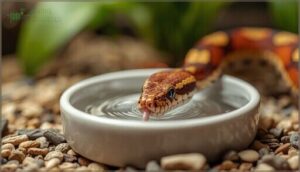
For most snakes, 1 to 2 inches is the sweet spot for water bowl depth. Hatchlings and smaller species do best at 0.5 to 1 inch, while medium-sized adults thrive around 1 to 1.5 inches.
This range facilitates proper snake hydration and reptile hydration without unnecessary risk. Think of it simply — your snake needs enough water to drink comfortably, not to swim in.
Importance of Shallow Bowls for Safety
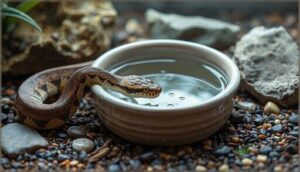
Drowning Prevention is the main reason you need shallow water bowls. A 1-to-2-inch water depth keeps your snake safe — it can drink, soak its head and neck for shedding, and exit easily without slipping on smooth sides.
Bowl Stability matters just as much; a wide base prevents tipping during Snake Escape attempts. Together, these Safety Features guarantee Reptile Hydration without risk, making Snake Water Dish Selection straightforward and Water Bowl Safety a non-negotiable priority.
For an overview of the difference between shallow and deep bowls, see this helpful resource on shallow bowl usage examples.
Risks of Excessively Deep Water Dishes
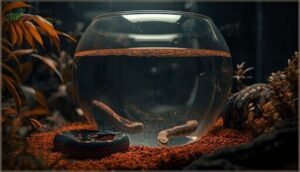
Once depth creeps beyond 3 inches, you’re inviting trouble. Drowning Hazards spike when your snake can’t find footing, and Water Contamination builds faster in deeper bowls.
Here’s what excessive bowl depth triggers:
- Skin Maceration from prolonged soaking irritates sensitive tissue
- Bowl Stability decreases, leading to spills and Snake Stress
- Bacterial biofilm forms along deep walls, compromising Reptile Hydration
- Young snakes struggle to surface, risking accidental submersion
- Water Bowl Safety drops as exit routes become harder to navigate
Smart Snake Water Dish Selection means staying shallow. Open water enclosures can present significant deep water risks that should be carefully considered for any animal’s safety.
Factors Influencing Water Dish Depth
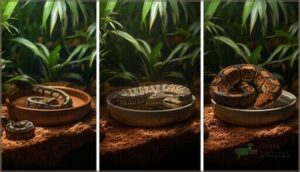
The right depth for your snake’s water dish isn’t one-size-fits-all. Your snake’s size, species, and natural behaviors all play a role in finding that sweet spot between hydration needs and safety.
If your snake is spending unusual amounts of time submerged, it could signal shedding issues, mites, or temperature stress—common reasons snakes soak in their water bowls that warrant a closer look at husbandry conditions.
Let’s break down the three main factors that should guide your choice.
Snake Size and Age Considerations
Your snake’s size and age aren’t just numbers—they’re essential age factors that directly shape bowl depth. Hatchlings facing rapid growth patterns need shallow dishes around 1 inch, while adults with slower development stages can handle 2 to 4 inches safely.
As snake size increases, adjust water bowl safety to match: smaller body width means shallower water, protecting reptile hydration without drowning risk.
Species-Specific Hydration Needs
Different species drink and soak in ways that demand customized reptile hydration strategies. Desert species sip frequently but prefer shallow bowls to limit moisture loss. Arboreal snakes need accessible surface water placed higher up. Moisture-loving species tolerate deeper dishes for extended soaking. Aquatic needs drive semi-aquatic snakes to demand sturdy stability and fresh water daily. Match your water bowl to your snake’s natural reptile behavior.
- Desert species drink often yet favor shallow water to maintain enclosure humidity.
- Arboreal hydration relies on accessible bowls positioned for vertical drinkers.
- Aquatic needs require deeper, stable dishes with consistently fresh water.
- Shedding cycles may temporarily increase soaking demand in certain species.
Shedding and Soaking Behaviors
You’ll notice more soaking when your snake’s eyes turn milky eyes—a classic shedding cue that signals it needs moisture support. Proper bowl depth helps it shed cleanly by keeping skin pliable.
If humidity control stays below 50 percent, incomplete molt patterns appear. A shallow dish that allows partial submersion delivers soaking benefits without drowning risk, supporting skin health and thermoregulation throughout the cycle.
Choosing Safe Water Dish Materials
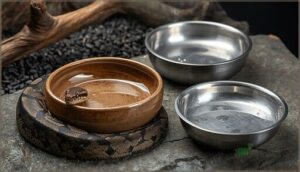
The material you choose for your snake’s water dish isn’t just about aesthetics—it directly impacts hygiene, safety, and how often you’ll be cleaning up spills.
Some materials resist bacteria better than others, while certain options tip over the moment your snake decides to take a soak. Here’s what works, what doesn’t, and why it matters for your snake’s health.
Benefits of Ceramic and Stainless Steel Bowls
In terms of water bowl safety and reptile hydration, ceramic and stainless steel bowls outperform all other options. Here’s why these non-toxic materials earn top marks for bowl stability and your snake’s health:
Ceramic and stainless steel bowls deliver superior safety, stability, and bacteria resistance for optimal snake hydration
- Ceramic durability resists bacterial buildup while heat retention keeps water temperatures steady longer
- Stainless steel withstands daily wear without cracking, warping, or harboring harmful microbes
- Both materials provide outstanding bowl size options with weighted bases that prevent dangerous spills
- Non-porous surfaces make deep cleaning simple and effective
Drawbacks of Plastic and Glass Dishes
While ceramic and stainless steel excel, plastic toxicity and glass fragility introduce real risks.
Plastic water bowls trap bacteria in scratches and may cause chemical leaching into drinking water—especially near heat sources. Glass dishes offer comparable bowl sanitation but crack under pressure, creating sharp edges.
For water bowl safety and material durability, these snake water bowls fall short in reptile care tips.
Stability and Spill Prevention Features
A water bowl with a wide base and non-slip feet anchors the dish even when your snake leans in to drink.
Look for stable base design paired with spill-proof edges that redirect splashes inward. Tipping prevention features like secure mounting or textured outer surfaces keep bowl depth consistent.
These safety features turn a simple dish into reliable hydration without constant cleanup.
Proper Water Dish Placement in The Enclosure
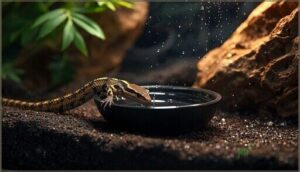
Where you put your snake’s water dish matters just as much as what kind you buy. The right spot keeps the water clean, maintains healthy humidity levels, and makes sure your snake can actually use it when needed.
Let’s walk through the three main placement factors that’ll keep both your snake and its enclosure in good shape.
Impact on Humidity and Thermoregulation
Your water bowl doesn’t just hydrate—it shifts the entire microclimate around it. Where you place that dish directly affects humidity control and thermoregulation in your snake’s enclosure.
Here’s what placement controls:
- Evaporative cooling rises from the water’s surface, creating moisture pockets that can disrupt your temperature gradient
- Ambient temperature near the dish drops slightly as water evaporates, giving your snake cooler retreat zones
- Microclimate management suffers when bowls sit near basking spots, mixing humid air with dry heat
- Humidity control stays stable when dishes rest on the cool side, away from heat lamps
Position matters for reptile health—even perfect water depth fails if placement throws off your thermal balance.
Preventing Contamination and Tipping
Even a well-placed bowl can become a hazard if it tips or collects debris. Stability matters—choose a heavy ceramic or stainless steel dish with a wide base to prevent spills that compromise enclosure hygiene. Daily water changes and weekly bowl sanitation with reptile-safe cleaners protect water quality and snake safety from bacterial threats.
| Risk | Prevention | Impact on Snake Health |
|---|---|---|
| Tipping | Wide-base bowls, weighted materials | Dehydration, stress |
| Debris contamination | Daily water changes, covered bowls | Bacterial infections |
| Biofilm buildup | Weekly sanitizing, smooth surfaces | Digestive issues |
| Substrate splash | Flat placement, catch trays | Respiratory irritation |
Accessibility for Drinking and Soaking
Your snake needs to reach the water bowl design without obstacle or strain. Position the dish low—level with the substrate—so your snake can simply glide in for drinking safety.
A well-designed setup facilitates snake hydration, soaking behavior, and thermoregulation needs through easy bowl access:
- Rim height matches your snake’s chin when relaxed
- No climbing required to reach water depth
- Bowl size allows comfortable head submersion for reptile hydration
Maintenance Tips for Snake Water Dishes
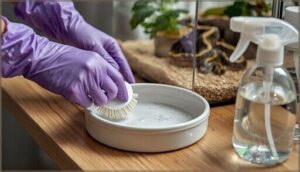
A clean water dish isn’t just about hygiene—it’s about keeping your snake healthy and safe from bacterial infections that can develop fast in standing water.
You’ll need to stay on top of daily checks and weekly deep cleans, plus adjust the dish as your snake outgrows it. Here’s how to maintain your snake’s water dish the right way.
Cleaning Frequency and Methods
Daily sanitizing starts with a complete water change every 24 hours and a quick rinse with warm water. Scrub your water bowl with a soft brush to remove slime, then thoroughly dry it before refilling. These hygiene practices prevent bacterial buildup that threatens reptile hydration.
Weekly, soak the dish in mild soap for deeper cleaning, rinsing at least three times until odor-free.
| Cleaning Schedules | Bowl Maintenance Steps |
|---|---|
| Daily | Remove debris, rinse with warm water, dry completely |
| Every 24 Hours | Replace water entirely to prevent algae and bacteria |
| After Soaking | Discard used water, rinse dish with hot water |
| Weekly | Sanitize with dilute bleach or snake-safe soap, rinse until odorless |
| Bi-Weekly to Monthly | Deep clean: soak 5 minutes, inspect for cracks, replace if damaged |
Water testing means checking for cloudy appearance, slimy film, or foul odor—signs you need more frequent cleaning. Track changes on a simple log to spot patterns and adjust your routine. Never use harsh chemicals like ammonia near the enclosure, and always rinse until there’s no detectable scent before returning fresh water.
Monitoring Water Quality and Levels
Beyond regular cleaning, you need to test your water bowl for real problems every two weeks. Check pH balance between 6.5 and 7.5 using a basic test kit, and watch for cloudy turbidity above 5 NTU—a sign bacteria are multiplying.
Bacterial monitoring means sniffing for odor and checking for slime. Evaporation management matters too: refill when depth drops below safe soaking levels to protect reptile health and hydration.
Adjusting Dish Depth as Your Snake Grows
As your snake matures, you’ll adjust the water bowl depth to match its body size—usually every 6 to 12 months during rapid growth. Track girth with a simple chart and make sure depth stays at one-third to one-half of body height submerged.
Growth Stage Considerations and Depth Adjustment Techniques:
- Juvenile snakes need shallower dishes to prevent drowning and control enclosure humidity
- Doubling in width signals it’s time to upgrade bowl size for safe soaking
- Measure depth against your snake’s diameter—never exceed half its body width
- Swap bowls when your snake’s head can’t comfortably break the surface
- Enclosure layout optimization prevents tipping as your reptile gains strength and weight
Frequently Asked Questions (FAQs)
What kind of water bowl is best for ball pythons?
A heavy ceramic or stainless steel bowl works best for ball pythons.
Choose one that’s 5 to 2 inches deep with a wide base to prevent tipping and support safe drinking and soaking.
Is it normal for snakes to lay in their water bowl?
Yes, it’s normal—snakes often soak to aid shedding or cool down.
However, prolonged water bowl soaking beyond a few hours may signal humidity imbalance, temperature stress, or health concerns worth investigating.
Can snakes drown in their water dishes?
While rare, snakes can drown in water bowls if the dish is too deep or has steep sides. Drowning risks increase when snakes can’t exit easily, emphasizing water safety through proper bowl design and shallow water depth.
How often should I refill the water?
Check your snake’s water bowl daily and refill it whenever the water level drops below two-thirds full.
During shedding cycles or hot weather, refresh the water twice daily to maintain ideal water quality and support proper reptile hydration.
Do arboreal snakes need different water dishes?
Arboreal snakes need shallow water dishes—about 1 to 2 centimeters deep—because vertical drinking and branch watering habits differ from terrestrial species.
Wide, stable bowls prevent tipping while supporting safe arboreal snake hydration without immersion risks.
What temperature should the water bowl be?
Your snake’s water should hover near room temperature—68 to 75 degrees Fahrenheit—to encourage cool drinks without thermal stress.
This temperature control promotes hydration needs, thermoregulation, and overall reptile health through consistent water quality.
Should I add vitamins to my snakes water?
You shouldn’t add vitamins to your snake’s water bowl. Water quality and hydration depend on clean, fresh water—not supplements.
Vitamin toxicity risks arise from incorrect dosing. Consult a reptile health veterinarian for proper snake nutrition and snake care guidance.
Conclusion
Picture your snake curled beside its dish, fully hydrated and safe—no stress, no risk, just steady access to clean water at the right depth. Now that you know how deep should a snake water dish be, you can sidestep drowning hazards and exhaustion while supporting healthy shedding and drinking habits.
Measure carefully, choose stable materials, and adjust as your snake grows. Small details like these don’t just prevent accidents—they build a lifetime of confident, thriving care.