This site is supported by our readers. We may earn a commission, at no cost to you, if you purchase through links.
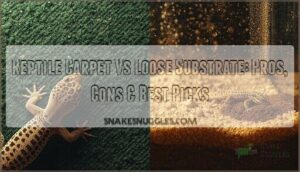
Your gecko’s substrate sits at the bottom of its enclosure, but it shapes everything—temperature gradients, humidity levels, even whether your pet will dig, burrow, or develop an intestinal blockage. Reptile carpet vs loose substrate isn’t just about aesthetics.
One option gives you a washable, reusable surface that eliminates impaction risk but can snag claws and harbor bacteria in its fibers. The other mimics natural terrain and lets your reptile express instinctive behaviors, yet it demands vigilant spot-cleaning and poses ingestion hazards for certain species.
Your choice affects your animal’s health, your maintenance routine, and your enclosure’s microclimate—so understanding what each substrate actually does (and what it can’t do) matters more than most keepers realize.
Table Of Contents
- Key Takeaways
- Reptile Carpet Vs Loose Substrate: Key Differences
- Pros and Cons of Reptile Carpet
- Pros and Cons of Loose Substrate
- Species-Specific Substrate Recommendations
- Top Substrate Products for Reptile Enclosures
- Frequently Asked Questions (FAQs)
- Is reptile carpet good or bad?
- Is reptile carpet just felt?
- What are the disadvantages of low pile carpet?
- What is the best flooring for reptiles?
- Can you mix reptile carpet with loose substrate?
- How often should you replace reptile carpet?
- Whats the best substrate for high humidity reptiles?
- Do loose substrates affect enclosure temperature regulation?
- Which substrate option is more cost-effective long-term?
- Conclusion
Key Takeaways
- Reptile carpet eliminates impaction risk and simplifies cleaning, but traps bacteria in fibers when moisture lingers and can snag claws during normal movement.
- Loose substrates like coconut coir or cypress mulch allow natural digging and burrowing while controlling humidity, though they increase impaction risk and demand more frequent spot-cleaning.
- Your substrate choice must match your species’ natural behavior—ball pythons need 60-70% humidity with coconut husk, while non-burrowing lizards do better on carpet or tile.
- Long-term costs favor reptile carpet at $2-5 per piece replaced every 6-12 months versus loose substrates running $5-15 monthly with ongoing purchases.
Reptile Carpet Vs Loose Substrate: Key Differences
Choosing between reptile carpet and loose substrate isn’t just about personal preference—it affects your reptile’s health, behavior, and how much time you’ll spend on maintenance.
Both options come with trade-offs in cost, cleaning effort, and environmental impact—comparing natural vs. artificial substrate for reptiles can help you decide which aligns best with your setup and your pet’s needs.
These two substrate categories differ fundamentally in material makeup, how you set them up, and what they bring to your enclosure’s overall look. Let’s break down the key differences so you can make an informed choice for your scaly companion.
Material Composition and Types
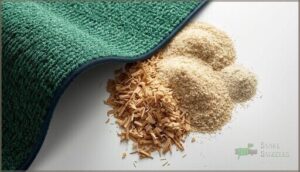
Your reptile substrate options start with material choices. Reptile carpet uses synthetic polymers like polyester or nylon, backed with PVC or latex for moisture resistance. Loose substrates blend natural fibers—coconut coir, wood shavings, or calcium sand—each serving different reptile habitat needs.
Fiber analysis reveals carpets prioritize material safety through anti-microbial coatings, while loose options focus on natural behavior support.
| Feature | Reptile Carpet | Loose Substrate |
|---|---|---|
| Primary Material | Polyester, nylon fibers | Coconut coir, wood, sand |
| Backing/Structure | PVC or latex base | Particle-based blend |
| Safety Additives | Anti-microbial agents | Dust-reduced formulas |
Installation and Setup Process
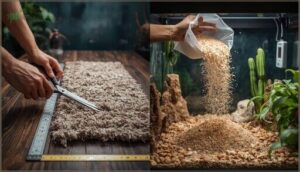
Once you’ve chosen your material, setup differs dramatically. Carpet requires measuring, cutting to fit your enclosure with a 1 cm edge trim, and securing without adhesive. Loose substrates demand gradual layering to prevent air pockets, moisture calibration for humidity control, and settling time before adding décor. Both need thermometer placement to track temperature gradients across warm and cool zones.
| Step | Reptile Carpet | Loose Substrate |
|---|---|---|
| Prep | Cut to fit floor dimensions | Sift and hydrate particles |
| Placement | Secure flat, vacuum edges | Layer gradually, 2-4 inches |
| Climate Setup | Monitor with digital gauges | Adjust moisture and heat zones |
Visual Appeal and Enclosure Design
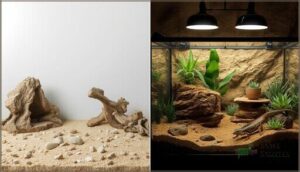
Beyond practical setup, your enclosure’s visual hierarchy matters for both viewing pleasure and your reptile’s comfort. Reptile carpet offers uniform texture options in neutral color schemes like beige or gray, creating a clean backdrop that highlights decor placement—hides, branches, and water bowls. Loose substrates add natural depth and shadow play, especially under proper lighting effects, making your terrarium design feel more authentic and engaging.
| Design Element | Reptile Carpet | Loose Substrate |
|---|---|---|
| Color Schemes | Solid neutrals, controlled tones | Earth tones, variable shading |
| Texture Options | Flat, consistent surface | Irregular, natural contours |
| Visual Hierarchy | Focused on décor pieces | Layered, organic appearance |
| Lighting Effects | Minimal shadows, bright viewing | Dynamic shadows, depth perception |
becomes
Beyond practical setup, your enclosure’s visual hierarchy matters for both viewing pleasure and your reptile’s comfort. Reptile carpet offers uniform texture options in neutral color schemes like beige or gray, creating a clean backdrop that highlights decor placement—hides, branches, and water bowls. Loose substrates add natural depth and shadow play, especially under proper lighting effects, making your terrarium design feel more authentic and engaging.
| Design Element | Reptile Carpet | Loose Substrate |
|---|---|---|
| Color Schemes | Solid neutrals, controlled tones | Earth tones, variable shading |
| Texture Options | Flat, consistent surface | Irregular, natural contours |
| Visual Hierarchy | Focused on décor pieces | Layered, organic appearance |
| Lighting Effects | Minimal shadows, bright viewing | Vibrant shadows, depth perception |
Pros and Cons of Reptile Carpet
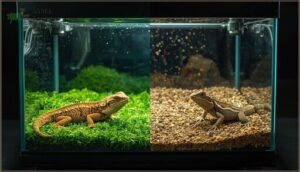
Reptile carpet sits somewhere between natural and practical—it won’t give your reptile the full wild experience, but it solves some real problems that loose substrates create.
It also reduces impaction risk—a major culprit behind reptile constipation warning signs that owners often miss until things get serious.
You’ll find it prevents impaction and makes cleaning more straightforward, though it brings its own set of challenges you need to know about. Let’s break down what works, what doesn’t, and what you should watch for.
Safety and Impaction Prevention
One of the biggest wins with reptile carpet is eliminating impaction—a serious digestive blockage that happens when your pet swallows loose substrate. Here’s why it matters for reptile health.
- No ingestion risk: Carpet can’t be accidentally eaten during feeding or exploring, protecting digestive health
- Safer environment: You won’t need emergency response plans for substrate hazards
- Peace of mind: Your setup prioritizes safety without sacrificing functionality
Ease of Cleaning and Maintenance
Washing carpet rolls doesn’t get much simpler—you lift it out, hose it down, and you’re done. This straightforward approach keeps your reptile enclosure fresh without complicated cage cleaning and maintenance routines.
While the carpet dries, check your snake cage security locks to prevent an easy escape.
| Task | Reptile Carpet | Loose Substrate |
|---|---|---|
| Daily spot cleaning | Wipe with reptile-safe cleaner | Skim surface waste |
| Weekly deep clean | Machine wash or scrub in place | Replace 25-50% of substrate |
| Drying time | Minutes after rinsing | Varies by depth and humidity |
| Sanitization methods | Disinfectant spray, hot water rinse | Full replacement recommended |
| Maintenance costs | Low—reusable for months | Moderate—ongoing substrate purchases |
Your hygiene standards stay high with minimal effort. Spot-clean spills immediately, rotate backups during wash cycles, and keep odor control manageable without breaking the bank on pet enclosure maintenance supplies.
Bacterial and Odor Risks
Hidden colonies of bacteria thrive in carpet fibers when moisture lingers, turning your tidy setup into a microbial playground. Humidity effects and organic waste fuel bacterial load faster than you’d expect, compromising reptile health and wellness.
- Warm enclosure temperatures accelerate bacterial growth within 24 hours under humid conditions.
- Trapped debris embeds deep in fibers, creating stubborn odor control challenges.
- Inadequate drying after cleaning methods allows persistent microbial communities to flourish.
- Moist pockets release sulfur and ammonia odors as microbes break down waste.
- Poor ventilation concentrates airborne bacteria near your pet enclosure maintenance zone.
Potential for Claw Injuries
Synthetic fibers can snag your reptile’s claws during normal movement, creating claw trauma that threatens reptile health and wellness. Those tiny loops trap toenails, causing circulation problems or outright breakage if your pet pulls free.
Injury prevention starts with choosing smooth substrate safety options and inspecting carpet daily for frayed spots. Proper reptile care and maintenance means monitoring claw health closely when using any reptile substrate.
Pros and Cons of Loose Substrate
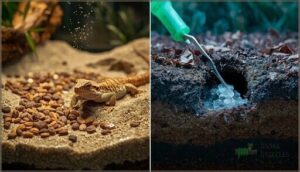
Loose substrates like sand, soil, and wood chips give your reptile a more natural environment, but they come with their own set of trade-offs.
They allow digging and burrowing behaviors while helping you control humidity, yet they pose real risks like impaction and trickier cleaning routines. Let’s break down what works and what doesn’t so you can decide if loose substrate fits your setup.
Natural Digging and Burrowing Behavior
Loose substrate unlocks your reptile’s instinct to dig and burrow, and create microclimates—behaviors reptile carpet simply can’t support. Fine particles shift easily under claws, enabling natural tunnel stability and chamber formation.
Soil texture influences digging mechanics, with softer materials letting species excavate efficiently. Burrowing behavior isn’t just entertainment; it’s thermoregulation, stress relief, and a core part of proper reptile substrate selection for many species.
Risk of Ingestion and Impaction
Accidental ingestion during feeding or grooming can turn loose substrate into a foreign object lodged in your reptile’s gut, and that’s a serious impaction risk you can’t ignore.
Fine particles—sand, wood chips, soil—may cause digestive blockage if swallowed repeatedly. Unlike reptile carpet, loose substrates increase intestinal obstruction potential, especially in species prone to tongue-feeding near the ground, threatening overall reptile health and substrate safety.
Microclimate and Humidity Control
You need microclimate management to keep your reptile healthy, and loose substrates excel at creating humidity pockets by holding moisture longer than reptile carpet. Thicker layers buffer evaporation rates, raising humidity levels near burrow chambers—essential for shedding and stress reduction.
Pair proper substrate depth with ventilation systems and temperature control to maintain stable RH between 40 and 60 percent without risking mold growth.
Cleaning Frequency and Challenges
Daily spot cleaning with loose substrate demands patience—you’ll spend time sifting through layers to find buried waste that reptile carpet keepers simply wipe away.
Deep wash methods aren’t necessary here, but full substrate changes every few months test your stamina when you’re hauling heavy, soiled material out of large tanks.
Odor control tips become critical as breakdown waste releases ammonia, signaling it’s time for cage maintenance and fresh bedding. Keeping your enclosure odor-free is just one aspect of proper reptile habitat cleaning.
Species-Specific Substrate Recommendations
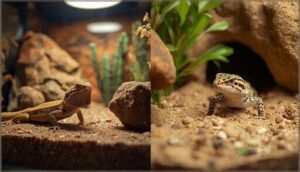
Not every reptile thrives on the same substrate—what works for a burrowing species can be completely wrong for a climber. Your reptile’s natural behavior and habitat should guide your choice, not just convenience or cost.
Choose substrate based on your reptile’s natural behavior and habitat needs, not just what’s easy or cheap
Let’s break down the best substrate options for specific species so you can match your setup to your pet’s needs.
Best Substrate for Ball Pythons
Ball pythons thrive with coconut husk or cypress mulch because these substrates support Humidity Control around 60 to 70 percent, essential for healthy shedding and Ball Python Behavior.
A Substrate Depth of 2 to 4 inches encourages natural exploration while minimizing substrate safety risks.
For species-specific guidance, review these snake substrate depth requirements before adding extra bedding.
You’ll maintain Enclosure Hygiene with weekly spot cleaning and full changes every 6 to 8 weeks, supporting ideal Reptile Health throughout your python’s life.
For a detailed look at the variety of substrate options, research and consider each one’s pros and cons for your pet’s safety.
Suitable Options for Corn Snakes
Corn snakes adapt well to several substrate choices, each offering distinct benefits for your Corn Snake Habitat. Aspen shavings prevent impaction and allow natural movement, while reptile soil blends support burrowing with excellent Humidity Control Methods.
Here’s what works best:
- Aspen bedding minimizes Snake Substrate Safety risks
- Coconut husk fiber allows digging enrichment
- Paper towels simplify Enclosure Maintenance Tips for hatchlings
- Reptile carpet offers reusable convenience
- Soil blends mimic natural terrain effectively
Tailoring Substrate for Burrowing and Climbing Species
Burrowing species need at least 6 inches of Substrate Texture that won’t collapse—blends with coconut fiber maintain Tunnel Stability while allowing natural digging.
For climbers, Climbing Surfaces require lighter, tackier materials that provide grip without dust buildup. You’ll achieve better Microclimate Control by layering deeper zones for humidity retention near burrows, while reptile carpet works well on basking platforms above loose substrate selection zones.
Top Substrate Products for Reptile Enclosures
You’ve narrowed down your substrate type, but choosing the right product matters just as much.
The market’s packed with options that vary wildly in quality, safety, and how well they actually work for your reptile.
Let’s look at four solid picks that consistently deliver for different species and setup styles.
1. Zoo Med Reptile Soil
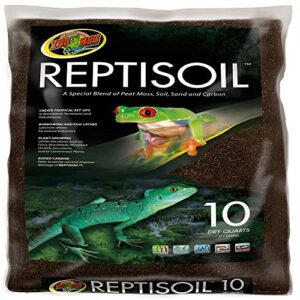
Zoo Med ReptiSoil brings the forest floor right into your terrarium. This blend of peat moss, organic topsoil, and sand mimics tropical soil texture, while coconut carbon keeps things aerated and helps beneficial bacteria thrive.
You’ll find it works exceptionally well for tropical species that dig and burrow—it holds tunnels without collapsing. The moisture retention aids live plants and maintains humidity, making it a solid pick for bioactive setups. Just remember, it’s designed for tropical environments, so skip it if you’re housing arid-dwelling reptiles.
| Best For | Tropical reptile and amphibian keepers who want a natural substrate that supports burrowing, holds humidity well, and works in bioactive setups with live plants. |
|---|---|
| Material Type | Coconut fiber/carbon |
| Ease of Cleaning | Moderate |
| Moisture Retention | High |
| Odor Control | Yes (carbon) |
| Natural/Bioactive | Yes |
| Suitable Species | Tropical/amphibians |
| Additional Features |
|
- Holds tunnels and burrows without collapsing, great for digging species
- Retains moisture effectively to maintain humidity and support live plants
- Contains coconut carbon that promotes beneficial bacteria and reduces odors
- Can contain large woodchips, splinters, and occasionally sharp debris
- Gets dusty when used alone—works better mixed with other substrates
- Costs more than many competing substrate options
2. Zilla Reptile Terrarium Bedding Liner
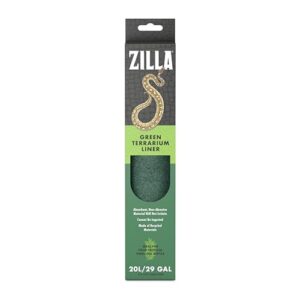
Zilla’s Terrarium Bedding Liner offers a fuss-free alternative if you want low-maintenance flooring. This polyethylene and polypropylene carpet comes pre-treated with a biodegradable enzyme that combats odors before they take over your room.
You can rinse it with cold water, let it air dry, and use it again—no complicated washing routines needed. It’s particularly useful for beginners and juveniles because it eliminates impaction risk from accidental substrate ingestion.
Just know you’ll need to spot-clean daily and trim it to fit your enclosure’s dimensions.
| Best For | Beginner reptile owners and those with juvenile dragons, snakes, or geckos who want a clean, safe substrate that won’t cause impaction if accidentally eaten. |
|---|---|
| Material Type | Polyethylene/Polypropylene |
| Ease of Cleaning | Easy |
| Moisture Retention | Low |
| Odor Control | Yes (enzyme treated) |
| Natural/Bioactive | No |
| Suitable Species | Various reptiles |
| Additional Features |
|
- Easy to clean—just rinse with cold water and reuse
- Enzyme treatment keeps odors under control
- Safe for reptiles since they can’t ingest it like loose substrate
- Daily spot-cleaning is necessary to prevent smell buildup
- Dried-on waste can be tough to remove
- Requires trimming to fit your specific tank size
3. Zoo Med Forest Floor Bedding
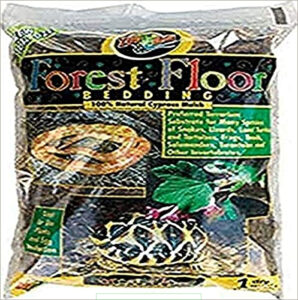
If you’re keeping tropical snakes, amphibians, or forest-dwelling tortoises, Zoo Med’s Forest Floor bedding gives you a natural cypress mulch that holds moisture beautifully. You can mist it to boost humidity, and it creates that authentic “woodland floor” look your animal would recognize in the wild.
The 24-quart bag weighs about 10.6 pounds, so you get plenty to work with. Just rinse it first—cypress can be dusty—and watch for larger chunks that might need removal before you spread it out.
| Best For | Keepers of tropical snakes, amphibians, or forest-dwelling tortoises who need a natural substrate that maintains humidity and mimics a woodland environment. |
|---|---|
| Material Type | Natural cypress mulch |
| Ease of Cleaning | Moderate |
| Moisture Retention | High |
| Odor Control | Moderate |
| Natural/Bioactive | Yes |
| Suitable Species | Snakes/amphibians/tortoises |
| Additional Features |
|
- Holds moisture well and can be misted to maintain humidity levels for tropical species
- Creates an authentic forest floor look that resembles natural habitats
- Large 24-quart bag provides plenty of substrate for most setups
- Tends to be dusty and requires rinsing before use to avoid respiratory irritation
- May contain large chunks that need to be sorted out manually
- Makes it difficult to spot waste, complicating regular cleaning
4. Zilla Alfalfa Meal Reptile Bedding
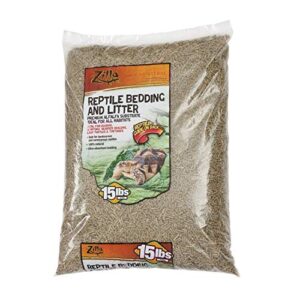
If you’re worried about impaction but still want a loose substrate, Zilla’s alfalfa pellets might be your answer. This 15-pound bag is digestible if your herbivore or omnivore accidentally eats some, which gives you peace of mind.
The pellets soak up moisture well and include a bacteriostatic agent to keep germs down. They work great for tortoises and iguanas, though you’ll need to replace soggy spots quickly—alfalfa can mold if it stays wet.
| Best For | Herbivorous and omnivorous reptiles like tortoises and iguanas, especially if you’re concerned about impaction from accidental ingestion. |
|---|---|
| Material Type | Alfalfa pellets |
| Ease of Cleaning | Easy |
| Moisture Retention | Moderate |
| Odor Control | Yes (bacteriostatic) |
| Natural/Bioactive | Yes |
| Suitable Species | Herbivorous reptiles |
| Additional Features |
|
- Digestible and safe if your reptile eats it, reducing impaction worries
- Includes a bacteriostatic agent that helps control bacteria and odors
- Made from 100% natural, biodegradable alfalfa pellets produced in the USA
- Gets moldy quickly if it stays wet, requiring frequent spot cleaning
- Strong farm or field smell that some owners find unpleasant
- More expensive than many other substrate options on the market
Frequently Asked Questions (FAQs)
Is reptile carpet good or bad?
Reptile carpet isn’t the holy grail, but it’s not a disaster either.
You’ll avoid impaction risks and get easy spot cleaning, though bacteria can build up fast if you don’t wash it weekly.
Is reptile carpet just felt?
No, reptile carpet isn’t felt. Most brands use nylon or polyester fibers bonded into a flat, washable mat.
Some feature microfiber surfaces, but true felt-style products are rare in the reptile carpet market.
What are the disadvantages of low pile carpet?
Low pile carpet wears fast in high traffic zones, shows dirt easily, and offers minimal cushion or insulation.
You’ll notice less comfort underfoot and higher noise levels compared to thicker options.
What is the best flooring for reptiles?
The best flooring depends on your species’ natural behavior.
Pythons and non-burrowing lizards thrive on carpet or tile, while diggers need loose substrates like cypress mulch or coco coir for proper enrichment.
Can you mix reptile carpet with loose substrate?
You can layer carpet over part of the floor and create a separate digging zone with loose substrate, but you’ll need clear borders to prevent mixing, moisture buildup, and accidental substrate ingestion.
How often should you replace reptile carpet?
You’ll want to swap it out every 1 to 3 months, or sooner if fibers fray, odors stick around after washing, or rough spots develop that could snag your reptile’s claws.
Whats the best substrate for high humidity reptiles?
Coconut coir holds moisture well, maintaining humidity above 70 percent for 24 hours. You can also mix sphagnum moss with coconut fiber to create humid microclimates around hides and basking spots.
Do loose substrates affect enclosure temperature regulation?
Yes, loose substrates directly affect temperature regulation. They absorb and retain heat differently than carpet, creating warmer microclimates below the surface.
You’ll need to adjust your heater settings to compensate for this insulation effect.
Which substrate option is more cost-effective long-term?
Carpet usually costs less over time. You’ll spend $2 to $5 per piece and replace it every 6 to 12 months, while loose substrates run $5 to $15 monthly.
Conclusion
Your enclosure isn’t a one-size-fits-all blueprint. Choosing between reptile carpet vs loose substrate means weighing impaction risk against natural behavior, convenience against biological authenticity.
Ball pythons thrive on coconut husk; leopard geckos need tile or paper. Don’t let marketing sway you—observe your animal’s species requirements, feeding response, and humidity needs.
The right substrate fosters thermoregulation, reduces stress, and prevents medical emergencies. Make your decision based on evidence, not trends, and your reptile will show you the difference.