This site is supported by our readers. We may earn a commission, at no cost to you, if you purchase through links.
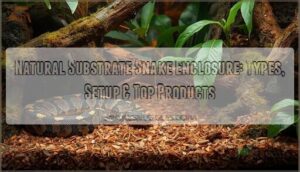
Your snake’s respiratory system operates at 70–85% humidity efficiency in tropical species—but drop that enclosure moisture below 50%, and you’re looking at potentially fatal respiratory infections within 72 hours. The difference between a thriving snake and a veterinary emergency often comes down to one non-negotiable factor: substrate choice.
Natural substrate snake enclosure setups don’t just mimic your snake’s wild environment—they actively regulate humidity, temperature gradients, and bacterial loads in ways paper towels and reptile carpet simply can’t replicate. Coconut fiber holds 3–4 times its weight in moisture; aspen shavings absorb ammonia at rates that reduce pathogen colonization by 60%; cypress mulch maintains antifungal properties for 8–10 weeks before requiring replacement.
You need substrate depth of 2–4 inches minimum for burrowing species, precise moisture monitoring, and species-specific material selection based on your snake’s native habitat parameters.
Table Of Contents
- Key Takeaways
- What is a Natural Substrate Snake Enclosure?
- Popular Natural Substrate Types for Snakes
- Choosing The Best Substrate for Your Snake
- Setting Up a Natural Substrate Enclosure
- Cleaning and Maintaining Natural Substrates
- Top 5 Natural Substrate Products for Snakes
- Frequently Asked Questions (FAQs)
- What is the best natural substrate for ball pythons?
- What can I use for snake substrate?
- What not to use for snake bedding?
- Can I mix multiple natural substrates together?
- How often should substrate be completely replaced?
- What substrates work best for breeding enclosures?
- Do natural substrates attract pests or insects?
- How deep should substrate be for burrowing species?
- Conclusion
Key Takeaways
- Natural substrates like coconut fiber, aspen shavings, and cypress mulch regulate humidity and temperature at rates that prevent respiratory infections, with tropical species requiring 70–85% humidity efficiency to avoid potentially fatal complications within 72 hours of moisture drops below 50%.
- Substrate depth of 2–4 inches minimum enables essential burrowing behavior that reduces stuck sheds by 15%, supports thermoregulation through self-excavated tunnels, and creates the microhabitats that paper towels and reptile carpet can’t replicate.
- Species-specific substrate selection is non-negotiable—ball pythons thrive with coconut fiber at 60% humidity, corn snakes need drier aspen, and matching your snake’s native habitat parameters directly determines whether you’re building a foundation for health or creating chronic stress.
- Complete substrate replacement every 6–12 months combined with daily spot cleaning and moisture monitoring prevents bacterial blooms and mold infestations that compromise your snake’s respiratory system, with materials like cypress mulch maintaining antifungal properties for 8–10 weeks before requiring refresh.
What is a Natural Substrate Snake Enclosure?
A natural substrate snake enclosure uses organic materials—coconut fiber, aspen shavings, cypress mulch, or soil—instead of newspaper or reptile carpet. These substrates mimic your snake’s wild habitat, allowing behaviors like burrowing and thermoregulation that artificial options can’t support.
Many keepers also add hides, branches, and water features to create a complete naturalistic setup that keeps snakes active and engaged.
Understanding what qualifies as “natural” and why it matters starts with three foundational concepts you can’t afford to overlook.
Definition and Key Features
Natural substrate for snakes is a loose organic material—coconut fiber, aspen shavings, cypress mulch, or soil mixes—that forms the foundational layer in your reptile substrate selection strategy. You’re creating a naturalistic setup that allows burrowing, digging, and exploration while regulating humidity control through absorbent properties.
Proper substrate depth (usually 2-3 inches for terrestrial species) facilitates natural snake behavior and mimics the enclosure design principles found in wild snake habitat design—non-negotiable for species-appropriate snake enclosures.
Differences From Artificial Substrates
Substrate comparison reveals a stark divide: artificial options like reptile carpet or paper offer easy cleanup but zero moisture control or natural enrichment. You won’t get texture variety or the humidity management your snake needs—synthetic surfaces don’t absorb, don’t permit burrowing, and can’t support the microhabitats that coconut husk and other substrate options create. For a deeper understanding of these differences, review this overview of types of substrate concepts.
Here’s what you’re missing:
- No substrate depth for thermoregulation or hiding behavior
- Zero moisture retention, forcing constant misting cycles
- Flat surfaces that eliminate climbing friction and naturalistic setup features
Why Natural Substrates Benefit Snakes
Why bother with loose substrates when paper towels are easier? Because Snake Health depends on burrowing behavior—nonvenomous snakes kept on natural media show 15% fewer stuck sheds and better thermal regulation through self-excavated tunnels. Enriched environments improve exploration and humidity control at the skin layer, critical for proper reptile husbandry.
Natural substrates enable burrowing behavior that reduces stuck sheds by 15% and improves thermoregulation through self-excavated tunnels
Providing enrichment can offer benefits such as for your snake.
| Natural Substrate Advantage | Impact on Snake |
|---|---|
| Substrate depth for burrowing | Reduces stress, facilitates natural tunnel construction |
| Moisture retention | Promotes one-piece sheds, prevents scale irritation |
| Temperature microclimates | Allows vertical thermoregulation through layering |
| Environmental enrichment | Improves habituation and cognitive function |
Popular Natural Substrate Types for Snakes
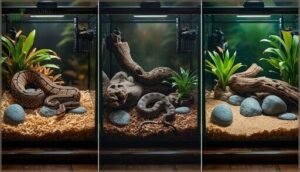
You can’t choose the right substrate until you understand what each material actually does for your snake’s health and behavior. Natural substrates fall into three primary categories—each with distinct moisture retention properties, humidity control capabilities, and species-specific applications that directly impact thermoregulation and stress levels.
Let’s break down the most effective options so you can match substrate performance to your snake’s non-negotiable biological requirements.
Coconut Fiber and Coconut Chips
You’ll find coconut husk products in two forms—fiber and chips—and both excel at humidity control through exceptional absorbency rates. The fiber compacts into a soft carpet that cushions your snake’s belly during movement, while chips create increased surface area for burrowing behaviors in species like ball pythons.
Here’s what makes coconut substrate options non-negotiable for humid-habitat species:
- Moisture retention matches tropical environments without becoming waterlogged or promoting bacterial growth
- Biodegradable composition breaks down naturally while resisting mold when kept at proper humidity levels
- Cost-effectiveness for large enclosures compared to commercial reptile substrate reviews
Both fiber types deliver thermal buffering—the substrate stays cool to the touch even under basking lights.
This makes both options ideal choices among safe substrate materials for ball pythons, especially for keepers prioritizing respiratory health.
Aspen Shavings and Cypress Mulch
You can’t afford to overlook aspen shavings and cypress mulch—two substrate options that dominate reptile husbandry for distinct environmental needs. Aspen absorbs moisture efficiently while minimizing bacterial buildup, and its shavings depth of 2-3 inches facilitates burrowing behavior in corn snakes and king snakes. Cypress mulch delivers humidity control for tropical species, maintaining stable substrate moisture without turning soggy—critical for a naturalistic setup.
| Substrate Type | Primary Strength | Ideal Species |
|---|---|---|
| Aspen Shavings | Outstanding absorbency, bacterial resistance | Corn snakes, king snakes, hognose snakes |
| Cypress Mulch | High-quality humidity retention without waterlogging | Rainbow boas, carpet pythons, blood pythons |
| Aspen | Allows natural burrowing with stable shavings depth | Ground-dwelling, arid-climate species |
| Cypress | Mulch benefits include earthy scent and mold resistance | Tropical, moisture-dependent species |
Sphagnum Moss and Soil Mixes
You need moss humidity control paired with soil depth management when housing species like green tree pythons or emerald tree boas—these natural substrate blends deliver moisture retention methods that outperform single-layer setups.
Here’s what substrate options accomplish:
- Sphagnum moss increases ambient humidity by 15-20% for smooth shedding cycles
- Soil mixes support burrowing behavior in hognose snakes and sand boas
- Coconut husk layered beneath soil creates drainage preventing bacterial growth
- Cypress mulch mixed with topsoil balances moisture without compaction
- Substrate selection combining moss and soil mimics forest floor conditions for ideal reptile husbandry
Choosing The Best Substrate for Your Snake
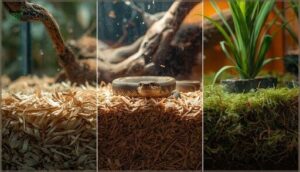
You can’t pick the right substrate choice without first understanding what your snake actually needs—and that means looking beyond what’s cheap or convenient. Your species’ natural habitat, humidity requirements, and behavioral patterns dictate which materials will support long-term health versus which ones create hidden risks like respiratory issues or ingestion hazards.
The three factors below determine whether your substrate choice becomes a foundation for thriving or a source of chronic stress.
Species-Specific Needs and Behaviors
Your snake’s natural behavior dictates everything—burrowing species like hognoses demand 2–3 inches of aspen or soil to tunnel and thermoregulate, while arboreal snakes need minimal substrate depth paired with vertical enrichment.
Species research is non-negotiable: ball pythons thrive with coconut fiber supporting 60% humidity, whereas corn snakes prefer drier aspen. Habitat design must mirror wild thermal gradients and species-specific needs to prevent stress-induced pacing and feeding suppression.
Humidity and Temperature Considerations
Thermal gradients aren’t optional—they’re the foundation of thermoregulation and humidity control in every enclosure. You must maintain 88–92°F basking zones and 75–82°F cool ends while managing humidity levels between 40–60% for most species, adjusting substrate moisture to support climate zones.
Check temperature and humidity control twice daily using digital probes at snake level—moisture management failures trigger shedding complications and respiratory distress you can’t afford to miss.
Safety and Non-Toxicity Factors
Ingredient purity is non-negotiable—substrates containing silica dust, aromatic cedar oils, or chemical preservatives cause respiratory distress and dermal irritation that compromise reptile health permanently. You must verify material selection through third-party certifications proving dust control standards, additive risks elimination, and microbial resistance without toxic sanitizers.
Substrate selection directly impacts animal welfare—choose products with documented non-toxic materials specifications at every processing stage.
Setting Up a Natural Substrate Enclosure
You can’t just toss substrate into your enclosure and call it done—the setup process determines whether your snake thrives or struggles with stress, improper thermoregulation, and health complications.
Getting the depth right, layering materials strategically, and adding the non-negotiable enrichment features requires precision you won’t find in guesswork. Here’s exactly how to build a natural substrate enclosure that caters to your snake’s physiological and behavioral needs.
Determining Proper Substrate Depth
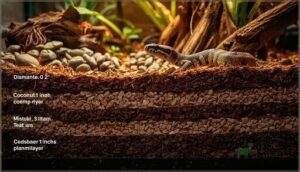
Depth isn’t arbitrary—it’s your first line of defense against anaerobic pockets and humidity collapse. You’ll need 2 to 4 inches for most terrestrial species, but burrowing needs demand 3 to 5 inches to support subterranean retreats without mold risk.
Depth variation across the enclosure creates microhabitats; uniform layers prevent waste traps while maintaining humidity control through strategic substrate selection and material compatibility.
Layering and Combining Substrate Materials
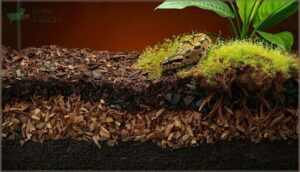
Layering isn’t optional—it’s your weapon against humidity swings and substrate collapse. Start with a 1 to 2 inch drainage base of coarse coconut chips; add a nutrient-rich core of composted leaf litter mixed with cypress mulch to buffer moisture at 60 to 70 percent; cap it with aspen or sphagnum moss for airflow and spot-cleaning efficiency.
Material mixing creates distinct humidity gradients and microhabitats your snake can’t get from single-layer setups:
- Coarse base prevents waterlogging and root suffocation
- Mineral-enriched mid-layer stabilizes ammonia without anaerobic pockets
- Top dusting resets texture after digging and activity
- Layered zones isolate fouled areas for targeted cleaning
- Gradual elevation offers natural basking and concealment spots
Adding Hides, Climbing, and Enrichment Features
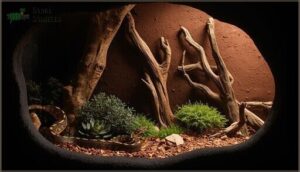
Once your substrate layers are dialed in, hide placement becomes non-negotiable—you need at least two hides (one warm, one cool) sized twice your snake’s girth with chamfered entries to prevent snags. Anchor climbing structures like cork rounds or sanded branches at varied heights (20 to 120 cm) to encourage exploration, and rotate sensory stimuli weekly to prevent habituation and maintain welfare.
| Feature Type | Specification | Purpose |
|---|---|---|
| Hide caves | 2× snake girth; chamfered entry | Stress reduction; secure coiling space |
| Climbing branches | 20–120 cm height; rough texture | Vertical exploration; grip support |
| Platforms | 15–25 cm spacing | Accessible movement routes |
| Scent enrichment | Non-toxic herbs; rotated weekly | Foraging stimulation; curiosity |
| Visual contrast | Matte plants; color backgrounds | Boundary awareness; activity boost |
Cleaning and Maintaining Natural Substrates
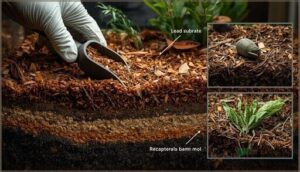
You can’t just set up a natural substrate and walk away—maintenance is non-negotiable if you want to prevent bacterial blooms, mold infestations, and respiratory infections in your snake.
The cleaning schedule you establish directly impacts your animal’s health, with spot cleaning protocols differing dramatically from full substrate replacement strategies. Here’s how to maintain ideal enclosure hygiene while preserving the natural environment your snake depends on.
Spot Cleaning Vs. Full Replacement
You’ll need to weigh spot cleaning against full replacement based on your snake’s real-time needs—quick localized touch-ups preserve existing humidity control and reduce stress, while complete substrate replacement resets moisture traps and eliminates entrenched odors.
Monitor your terrarium maintenance schedule closely: spot-clean minor spills immediately to extend substrate life, but shift to full replacement timing once stains reappear or substrate compacts despite repeated odor removal efforts.
Preventing Mold, Odors, and Bacteria
You can’t afford to miss mold prevention and bacteria management—keep humidity below 50 percent with active ventilation, and use enzyme-based cleaners during spot treatments to break down organic matter that feeds pathogens.
Bake or pasteurize substrate before use for substrate sanitization, replace layers showing visible mold immediately, and store unused material in sealed containers to block odor control issues before they start.
Monitoring Moisture and Humidity Levels
You need humidity sensors positioned at snake eye level—digital hygrometers with temperature gradients and hygrometer calibration every six months deliver non-negotiable accuracy for moisture control and thermoregulation.
- Track air exchange systems to prevent mold while stabilizing humidity levels between 50-70 percent
- Log daily readings near substrate surfaces to catch moisture resistance shifts before shedding problems emerge
- Compare basking-zone humidity with hide-area readings to verify gradient consistency
- Adjust substrate selection and maintenance schedules when sensors detect humidity control drift beyond species-specific targets
Top 5 Natural Substrate Products for Snakes
You can’t afford to compromise on substrate quality—your snake’s respiratory health, hydration, and behavioral wellness depend on it.
The products below represent field-tested options that consistently deliver on moisture retention, particle safety, and species-appropriate texture across a range of enclosure types. Each has been evaluated for absorbency rates, mold resistance, and compatibility with common temperature gradients to guarantee you’re making an evidence-based choice.
1. Zilla Coconut Husk Bedding
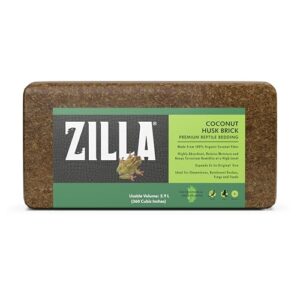
You can’t beat Zilla Coconut Husk Bedding for high-humidity setups—this 100% organic coconut fiber brick expands to five times its compressed size when you add hot water, covering a 55-gallon enclosure bottom at 1–2 inches deep. The soft, moldable texture facilitates natural burrowing while maintaining moisture retention for weeks without constant misting.
It’s non-toxic, biodegradable, and ideal for tropical species like rainforest geckos and frogs. Monitor with a hygrometer—overwatering leads to mold growth, which compromises respiratory health.
| Best For | Reptile owners maintaining tropical or high-humidity habitats for species like chameleons, rainforest geckos, frogs, and toads that need moisture-retaining substrate for burrowing and egg laying. |
|---|---|
| Material Type | Coconut Fiber |
| Humidity Control | Highly absorbent |
| Organic/Natural | 100% organic |
| Color | Brown |
| Suitable For | Tropical reptiles |
| Odor Management | Non-toxic |
| Additional Features |
|
- Expands up to 5 times its size when hydrated, covering large enclosures economically
- Retains moisture for weeks without constant misting, reducing daily maintenance
- 100% organic and non-toxic material that’s safe for sensitive tropical species
- Requires significant effort to properly rehydrate and break up compressed clumps
- Can become messy during the setup and fluffing process
- Needs careful moisture monitoring with a hygrometer to prevent mold growth
2. Zilla Reptile Terrarium Bedding
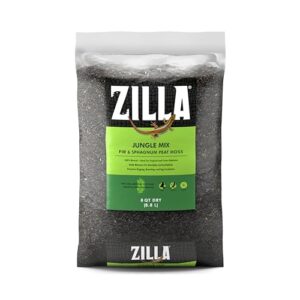
Zilla Reptile Terrarium Bedding brings together aged Douglas fir bark and sphagnum peat moss in a blend that holds moisture for days—critical for tropical species requiring 60–80% humidity. You’ll spread 1–2 inches across your enclosure, creating a soft, absorbent layer that encourages digging and nesting while buffering temperature fluctuations through thermal retention.
The earthy texture fosters natural behaviors without respiratory irritation, but you must monitor moisture levels with a hygrometer—dry conditions develop within 24–30 hours if misting lapses, compromising shed cycles.
| Best For | Keepers of tropical frogs, rainforest geckos, and humidity-loving reptiles who want an organic substrate that supports natural digging and nesting behaviors. |
|---|---|
| Material Type | Moss & Wood |
| Humidity Control | Highly absorbent |
| Organic/Natural | 100% organic |
| Color | Brown |
| Suitable For | Tropical/forest reptiles |
| Odor Management | Earthy scent |
| Additional Features |
|
- Holds moisture for extended periods when properly maintained, creating stable humidity for tropical species
- Soft, organic texture encourages natural behaviors like digging and egg-laying without causing respiratory issues
- Made from 100% organic materials (aged fir bark and sphagnum peat moss) that work well in bioactive setups
- Dries out quickly (24–30 hours) if you don’t stay on top of regular misting
- Contains larger bark pieces that can be sharp and may splinter if handled carelessly
- Often requires mixing with other substrates to maintain consistent moisture levels
3. Riare Natural Coconut Fiber Reptile Bedding
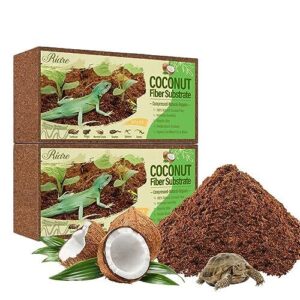
Riare Natural Coconut Fiber Reptile Bedding delivers compressed coconut husk bricks—each 7.8 × 3.9 × 1.97 inches—that expand into fluffy, moisture-retentive substrate when soaked, covering small to medium enclosures with organic coir free from chemical fertilizers or synthetic fragrances.
You’ll spread 2–3 inches to support burrowing species that demand stable humidity, because the porous fibers trap odors and release moisture gradually, preventing dry-shed failures.
Spot-clean soiled clumps weekly and replace every 8–12 weeks to block bacterial buildup—dusty handling is non-negotiable during dry-brick prep, so wet thoroughly before use.
| Best For | Reptile and amphibian owners who need affordable, eco-friendly bedding that holds moisture well for burrowing species like snakes, turtles, and hermit crabs. |
|---|---|
| Material Type | Coconut Husk |
| Humidity Control | Retains moisture well |
| Organic/Natural | Natural and organic |
| Color | Brown |
| Suitable For | Reptiles & amphibians |
| Odor Management | Odorless |
| Additional Features |
|
- Expands into a clean, fluffy substrate that retains humidity and absorbs odors naturally
- Made from organic coconut husk with no synthetic chemicals or fragrances
- Biodegradable and compostable, so you can toss used substrate into your garden as fertilizer
- Can be dusty when handling dry bricks, so you’ll need to wet them thoroughly before use
- Some users report the bricks are tough to break down even after soaking
- May attract flies when used with certain feeders like crickets
4. Fluker’s Cypress Reptile Bedding
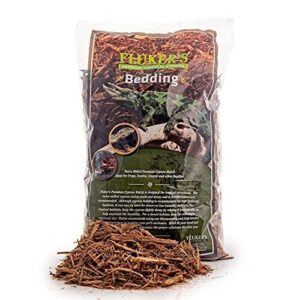
Fluker’s Cypress Reptile Bedding arrives as twice-milled cypress mulch—14 × 4 × 10 inches, 1.76 pounds—that resists mold in high-humidity enclosures where tropical snakes demand 60–80% saturation without fungal collapse.
You’ll spread 2–3 inches for burrowing colubrids and pythons, misting dry chips until they hold moisture without turning soggy, because the natural wood buffers temperature swings and absorbs ammonia odors that paper substrates can’t manage. Spot-clean waste daily and replace every 4–6 weeks—dusty handling and strong hay-wood scent are non-negotiable trade-offs for mold resistance.
| Best For | Reptile owners maintaining tropical or high-humidity enclosures for snakes, frogs, and lizards who need a substrate that won’t mold or get soggy. |
|---|---|
| Material Type | Cypress Mulch |
| Humidity Control | Maintains humidity levels |
| Organic/Natural | Premium natural |
| Color | Black |
| Suitable For | Frogs, snakes, lizards |
| Odor Management | Reduces odors |
| Additional Features |
|
- Holds moisture well for humidity control without turning moldy or waterlogged
- Absorbs odors naturally and makes spot-cleaning easy
- Works in both tropical and desert setups, and mixes well with other substrates
- Often arrives dry and needs misting before use
- Strong hay-and-wood smell that some people find overpowering
- Not great for heavy burrowers on its own, and some batches have had mite problems
5. ReptiChip Coconut Reptile Substrate Bedding
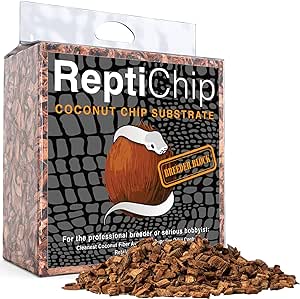
ReptiChip Coconut Reptile Substrate Bedding delivers a 72-quart compressed brick—expanding to 10 pounds when hydrated—that locks in steady 60–75% humidity for ball pythons and corn snakes while absorbing urates and odors through natural coconut-husk fibers.
You’ll hydrate the block with 1–2 gallons of water, spread 2–3 inches deep, and monitor moisture weekly because dust-free composition prevents respiratory irritation that wood shavings trigger.
Spot-clean waste immediately and replace substrate every 6–8 weeks—biodegradable material aids sustainable herpetology without synthetic dyes or chemical treatments.
| Best For | Reptile keepers who need reliable humidity control for tropical species like ball pythons, corn snakes, and tortoises in bioactive setups. |
|---|---|
| Material Type | Coconut Chips |
| Humidity Control | Retains humidity well |
| Organic/Natural | 100% organic |
| Color | Brown |
| Suitable For | Various reptile species |
| Odor Management | Odor-absorbing |
| Additional Features |
|
- Expands from a compact 72-quart brick to 10 pounds of substrate, making storage and handling easy
- Maintains 60–75% humidity naturally while absorbing odors through coconut-husk fibers
- Dust-free and biodegradable without synthetic chemicals, reducing respiratory risks for your reptiles
- Higher price point compared to aspen shavings or paper-based substrates
- Requires 1–2 gallons of water and time to fully hydrate the compressed block
- Not ideal for deep-burrowing species since it compacts when moistened
Frequently Asked Questions (FAQs)
What is the best natural substrate for ball pythons?
Coconut husk chips and cypress mulch dominate professional setups—not aspen—because ball pythons require 50-60% humidity for proper shedding.
You need 2-4 inches depth minimum, layered with sphagnum moss for moisture retention.
What can I use for snake substrate?
You can use coconut fiber, aspen shavings, cypress mulch, or soil-based mixes—each accommodates different humidity needs and burrowing behaviors.
Match substrate depth and moisture retention to your snake’s native environment.
What not to use for snake bedding?
Avoid cedar, pine, fine sand, printed newspaper, and synthetic carpets.
Cedar and pine release toxic phenols that damage respiratory systems—long-term exposure stresses kidneys and livers.
While sand causes impaction and dust-related eye irritation.
Can I mix multiple natural substrates together?
Yes—you can blend natural substrates to balance drainage and moisture retention. Combine coconut fiber with cypress mulch or sphagnum moss, ensuring compatibility and non-toxic formulations to support your snake’s humidity needs.
How often should substrate be completely replaced?
Think of substrate like your kitchen sponge—it eventually harbors what you can’t see. Replace natural substrates completely every 6 to 12 months, preventing bacterial buildup and maintaining your snake’s hygiene baseline.
What substrates work best for breeding enclosures?
Coconut fiber and cypress mulch dominate breeding setups—they hold stable humidity for egg incubation without becoming waterlogged.
Layer sphagnum moss over sterilized soil mixes to create nesting sites gravid females can’t resist.
Do natural substrates attract pests or insects?
Natural substrates can attract fungus gnats, mold beetles, and springtails when moisture levels climb above 70%—but proper ventilation, daily spot cleaning, and controlled humidity prevent most pest outbreaks before they start.
How deep should substrate be for burrowing species?
Give a snake an inch and it’ll dig a mile—burrowing species need 6 to 8 inches minimum for tunnel creation, with larger diggers requiring 12 inches or more to support deep, secure hiding systems.
Conclusion
Ironically, the most sophisticated piece of equipment in your natural substrate snake enclosure isn’t a digital hygrometer or radiant heat panel—it’s decomposed tree bark holding moisture at precisely 65% relative humidity.
Your substrate performs biochemical regulation no technology can replicate: ammonia sequestration, thermal buffering, microbial balance. Species-appropriate depth, humidity monitoring, and material selection aren’t optional refinements—they’re the foundation separating superior husbandry from chronic respiratory compromise.
Choose substrates like your snake’s survival depends on them, because it does.