This site is supported by our readers. We may earn a commission, at no cost to you, if you purchase through links.
A coiled snake hissing at you isn’t planning an attack. It’s running a cost-benefit calculation, and biting ranks near the bottom of its options.
Venom takes days to regenerate, and every strike burns energy better spent hunting. That’s why defensive snake posture meaning centers on bluff before battle: hooding, tail rattling, and fixed stares exist to make a threat back off, not provoke a fight.
Once you learn to read these signals, you’ll know exactly when to step back, when to relax, and when your snake genuinely needs help.
Table Of Contents
- Key Takeaways
- What Does Defensive Snake Posture Mean?
- Common Defensive Snake Postures and Signals
- How to Recognize Strike-Ready Body Language
- Why Pet Snakes Become Defensive
- How to Respond Safely
- Frequently Asked Questions (FAQs)
- What is a rattlesnake’s defensive posture?
- What are snakes’ defenses?
- Can a snake be defanged?
- What are the defense mechanisms of snakes?
- What is a defensive snake behavior?
- What are the defensive tactics of snakes?
- Why do Pentecostals do snake handling?
- Do all snake species use the same defensive postures?
- How do juvenile snakes differ in defensive behavior?
- What triggers a transition from freezing to striking?
- Conclusion
Key Takeaways
- Defensive postures like coiling, hissing, and hooding are bluffs meant to make you back off, not signs a snake is about to attack, since striking costs precious venom and energy it needs for hunting.
- Escalating signals such as tightening coils, a raised front body, locked-on gaze, and faster rattling or hissing mean you should freeze, then slowly back away at least six feet while keeping the snake in sight.
- Pet snakes usually turn defensive because of everyday triggers like rough handling, sudden overhead movement, missing hiding spots, wrong temperature or humidity, or underlying pain and illness, not because they’re naturally aggressive.
- If a bite does happen, especially from a venomous snake, get emergency veterinary care right away, since prompt treatment brings survival rates up to around 97%.
What Does Defensive Snake Posture Mean?
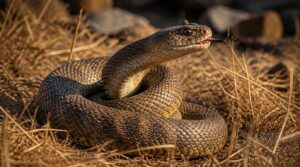
When you spot a snake coiled up, hissing, or holding its ground, it’s not gearing up for a fight, it’s telling you something important. That body language carries real meaning, built by evolution to prevent conflict rather than start it. Here’s what’s actually driving that behavior, broken down piece by piece.
If you notice a snake tightening its coils or flattening its body, these snake stress reduction techniques can help you back off calmly and ease the tension for both of you.
Purpose of Defensive Body Language
Watch a threatened snake closely and you’ll notice its body isn’t panicking, it’s calculating. Every coil, flare, and hiss is essential protection, shielding the head and torso while communicating clear boundaries.
This defensive posturing balances threat deterrence with energy conservation, since striking wastes precious venom and stamina better saved for hunting. It’s risk signaling, not warfare, aimed at convincing you to simply back off.
Warning Before Biting
Before any strike, you’ll catch a sequence: head tilt assessment as the snake gauges distance, neck muscles tightening with a slight sway, and tail tension testing through quick flicks. The body winds into a preparatory coil, mouth partly open with fangs glinting.
These warning signals aren’t random, they’re your cue to stop, freeze, and retreat immediately.
Defense Versus True Aggression
Once you spot those pre-strike cues, don’t mistake them for aggression. Snakes rarely pursue humans; they display to deter, not attack, since energy conservation and venom preservation matter more than confrontation.
Misreading defensive signaling as hostility raises your risk of provoking a bite. Recognizing this behavioral intent distinction, that threat display means "leave me alone," not "I’m hunting you," keeps you calmer and safer.
A snake’s threat display means leave me alone, not I’m hunting you
Escape and Energy Conservation
That deterrence-first strategy explains why defensive energy conservation shapes everything a threatened snake does. Retreat beats confrontation whenever an escape route exists, since fleeing costs far less than striking and healing.
Defensive immobility, staying frozen against cover, taps roughly 50% less metabolic output than active foraging. Escape route selection favors short, direct paths, minimizing exertion while avoiding costly lateral undulation altogether.
Common Defensive Snake Postures and Signals
Once you know why a snake postures defensively, the next step is learning to recognize what that posture actually looks like in the moment. Every species has its own dialect of warning signs, built from a handful of physical and behavioral cues that tend to show up together. Here’s what you’ll want to watch for.
Coiling and S-Curve Position

A coiled snake looks calm until you notice the geometry: two to three tight spirals, tail tucked for balance, head lifted off the coil’s edge. That’s coil tension building toward an S-curve readiness posture, muscles along the midline stiffening for stability.
That same coiled stillness often precedes the buzzing warning explained in what a rattling snake tail is really trying to tell you, a signal meant to end the encounter peacefully.
This coil stability isn’t resting behavior; it’s a controlled threat display preceding genuine defensive postures.
Raised Head and Fixed Gaze

Eyes lock, head lifts. That gaze lock signaling tells you the snake’s threat focus has shifted entirely onto you, tracking movement with precise, unhurried pivots. This head elevation readiness sharpens depth perception, aligning optic axis with target before any strike preparation cues emerge.
This intense, narrowed-eye focus mirrors what threat-assessment experts call a target stare in humans, a similar precursor to aggressive action. Don’t mistake stillness for calm; that visual fixation response means retreat, not curiosity, is your safest next move.
Hooding, Flattening, and Inflation
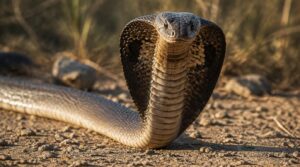
Volume changes everything. A snake facing you down may deploy hooding displays that spread neck skin into a broad, darkened sheet, or trigger body inflation by forcing air from the chest into the neck. Watch for:
- Hood spreading with contrast-edged margins
- Head flattening lowering profile
- Inflated, arched-back posture
Each amplifies apparent size, a bluff meant to end things before they start.
Hissing, Rattling, and Tail Vibration

Sound carries where sight fails you. Snakes force air through the glottis, producing a hissing sound without vocal cords, its intensity building as inflated lungs push more volume through.
Rattlesnakes escalate further: keratin segments strike each other up to 100 times per second, and each shed adds length, so tail rattling grows louder with age, while nonrattling species vibrate against leaf litter, mimicking the same defensive vibration.
Freezing, Head-Hiding, and Musking
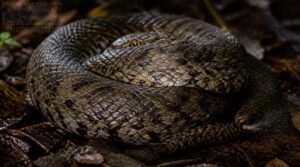
Not every threat gets a hiss or a strike. Sometimes a snake goes still, tucks its head, or releases musk, betting that stillness beats confrontation.
Threat assessment stillness slows heart rate and breathing while the snake gauges risk. Head hiding tucks important sensory organs into the coils. Musking energy conservation lowers metabolic output, buying time until the threat passes or escalation becomes unavoidable.
How to Recognize Strike-Ready Body Language
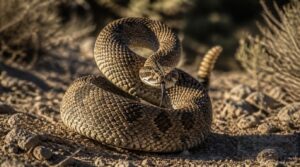
Once a snake shifts into full defensive mode, its body starts sending you a series of unmistakable, escalating signals that build toward a strike. Knowing what to watch for, and in what order those signals usually appear, gives you the split-second read you need to react correctly.
Here’s what that strike-ready body language actually looks like, sign by sign.
Tightening Coils and Muscle Tension
Watch the coils, not just the head: a snake bracing to strike tightens muscle in a wavelike pattern, compressing ribs, distributing tension along the spine, and anchoring the tail for stability.
- Skin looks stretched, almost armored
- Body sits unnaturally rigid
- Grip on ground tightens visibly
That’s tight coil bracing, a true defensive posture signaling imminent muscle tension release.
Elevated Front Body
Once coils tighten, the front third often rises next: neck and shoulder muscles contract, lifting the anterior while the rear stays coiled. This elevated front body shifts weight forward, priming a lunge, while improving threat visibility and doubling as predator deterrence. Height and duration vary by species, size, and prior handling stress.
Head Tracking The Threat
Once elevated, the head locks onto you with gaze stabilization, tracking distance while tensed neck muscles limit blur. Pupils adjust to ambient light for sharper threat perception.
The snout aligns toward your position, and between fixed stares, brief glances scan escape routes, a subtle but telling sign of active distance judgment and building strike readiness.
Escalating Sounds and Movement
Sound and motion escalate together as defensive threat builds. A soft hiss sharpens into rasping bursts, tail rattling quickens, and jerky lunges replace measured coiling, each cue timed tighter as the snake’s approach behavior shifts from cautious to committed.
That acceleration in sound intensity and movement speed tells you one thing: back away now, before defensive coiling gives way to something faster.
Relaxed Versus Defensive Posture
Once escalation fades, contrast becomes your best diagnostic tool. A relaxed stance shows evenly distributed weight, a tall but loose spine, and steady, unforced breathing. Compare that against body tension in defensive coiling, where muscles lock and weight shifts forward.
That posture contrast, calm versus coiled, tells you instantly whether you’re safe or facing genuine muscle readiness for a strike.
Why Pet Snakes Become Defensive

Your pet snake isn’t wired to be aggressive, but its environment can still push it toward defensive behavior when something feels off. Small, everyday mistakes in handling and habitat setup often trigger these reactions without you realizing it. Here’s what usually sets a captive snake on edge.
Handling, Feeding, and Shedding
Three routine moments trigger most defensive snake posture in captive animals: handling, feeding, and shedding. Grip too tightly or lift without supporting the full body, and you’ll provoke stress. Feed oversized prey or skip stress-free feeding practices, and defensive behaviors follow.
During the shedding cycle, cloudy eyes and reduced vision make snakes irritable, so postpone handling until it’s complete.
Overhead Movement and Sudden Touch
Watch your snake’s head drop the instant your hand appears from above; that’s overhead threat detection firing, mimicking predator behavior.
Sudden touch triggers the same defensive snake posture: tightened spinal muscles, a rapid tail flick checking distance, and a fixed gaze tracking your motion.
Always approach from the side, low and slow, to avoid this defensive response.
Missing Hides and Overexposure
An empty enclosure corner feels like open ground to a snake, and that perceived exposure fuels chronic environmental stress. Without secure retreat access, your snake lingers near glass fronts, adopting defensive posture more readily. Correct hiding spot placement matters:
- One hide per thermal zone
- Snug, body-hugging dimensions
- Opaque materials blocking sightlines
- Positioned away from foot traffic
Incorrect Temperature and Humidity
A snake outside its thermal comfort zone reads danger everywhere. Cold stress slows metabolism and dulls defensive readiness, while overheating drives dehydration and desperate escape attempts, both showing up as restlessness or refusal to eat.
Poor humidity control dries skin, complicates shedding, or invites respiratory irritation. Without an accurate thermal gradient and monitored microclimate, your snake stays chronically stressed, and tail flicking or startled coiling often follows rapid temperature swings.
Pain, Illness, or Injury
A defensive snake might actually be a hurting one. Respiratory infections raise the head to ease breathing; mouth rot triggers rapid strikes from oral pain; IBD causes disoriented "star-gazing." Trauma and dysecdysis force rigid, protective coiling.
Persistent defensiveness warrants veterinary examination, since roughly 87% of respiratory cases show posture mimicking aggression when it’s truly pain.
How to Respond Safely

Once you understand what a snake’s posture is telling you, the next question is what you actually do about it. Your response in that first moment, and in the days that follow, determines whether the situation resolves quietly or escalates into a bite. Here’s how to handle a defensive snake safely, from the initial encounter through longer-term care.
Freeze and Create Distance
Stillness buys time. When you spot a defensive posture, freeze immediately, gauging threat level through the snake’s head orientation before backing away slowly. Choose an escape route with cover, sliding back at least six feet while keeping visual contact. This mirrors the snake’s own defensive retreat, letting both of you disengage without triggering a strike response.
Never Corner or Provoke
Once you’ve backed away, resist any urge to close the gap again. Cornering a snake against a wall, tank edge, or enclosure corner eliminates its escape route and forces a choice between fleeing and striking.
Never toss objects or block retreat paths to "test" behavior. Provoking defensive behavior this way turns a manageable threat display into an avoidable bite.
Pause Handling Until Relaxed
Once distance is established, watch for head relaxation cues and jaw muscle release before resuming contact. These signal the threat assessment pause is ending.
The snake’s escape path evaluation matters too: within 2-5 seconds of a clear route appearing, normal movement resumes.
Post-threat reassessment shows in loosening tail coils and steadier breathing. Approach only after body language shifts from taut to fluid.
Reduce Enclosure Stressors
Once your snake settles, look at the enclosure itself. Correct the temperature gradient, balance humidity, and deepen substrate for burrowing.
Place hides where the snake feels concealed, not exposed. Cut noise near the enclosure, since vibration and foot traffic often trigger the same defensive posture you just worked to calm.
Seek Veterinary Help When Needed
Correcting husbandry solves most defensive behavior, but a bite still demands emergency vet care, especially if venomous. Watch for swelling, lethargy, or breathing trouble, then call ahead so the clinic preps antivenom administration and equipment.
Expect roughly eight hours of monitoring, blood work, and follow-up checks. Treated promptly, survival rates reach 97%, proof that quick veterinary judgment matters as much as reading defensive signals.
Frequently Asked Questions (FAQs)
What is a rattlesnake’s defensive posture?
Ever wonder why a rattlesnake coils instead of fleeing? It’s a calculated threat display: tight coil tension, raised head, and tail rattling combine as warning signals, telling you to back off before any strike occurs.
What are snakes’ defenses?
Your safety depends on reading their defensive mechanisms: coiling, hissing, hooding, tail rattling, musking, and freezing. These layered warning signals evolved to deter threats, not invite conflict, giving you every chance to back away before a strike becomes necessary.
Can a snake be defanged?
Fangs out, problem solved? Not quite. Defanging is surgically possible but widely condemned as inhumane. Fangs regrow, venom glands remain, and legal restrictions plus surgical complications make humane alternatives, like secure housing, the smarter choice.
What are the defense mechanisms of snakes?
Your snake’s toolkit includes venomous fang deployment, musking odor release, camouflage adaptation, and burrowing escapes, backed by coiling, hooding, and rattling threat displays. These layered warning signals let it avoid conflict entirely before ever resorting to a bite.
What is a defensive snake behavior?
A fear-driven survival strategy, defensive behavior relies on body language cues, warning signals, and threat displays, letting a stressed snake communicate "back off" through defensive signaling rather than wasting energy or venom on unnecessary confrontation.
What are the defensive tactics of snakes?
Like a rattling saber drawn before battle, a snake’s defense layers tail vibration, body inflation, head flattening, hissing, and strike posture, each escalating warning signal built to avoid contact, not invite it.
Why do Pentecostals do snake handling?
Rooted in faith and divine protection, believers cite Mark 16:17-18 as literal command. Handling serpents becomes spiritual empowerment demonstration, a test of faith obedience, and identity reinforcement, distinct from studying actual defensive postures or warning signals herpetologists observe in wild populations.
Do all snake species use the same defensive postures?
No, species variation shapes everything: rattlesnakes coil and buzz, cobras hood dramatically, hognoses fake death, while others simply freeze. Evolutionary pressures and local predators sculpted each lineage’s own defensive signaling system over millions of years.
How do juvenile snakes differ in defensive behavior?
Juveniles often reach strike readiness faster than adults, favoring rapid tail vibration and quick retreat preference over sustained confrontation, since smaller venom glands and higher predation risk push young snakes toward jumpy, reactive defensive displays rather than prolonged standoffs.
What triggers a transition from freezing to striking?
Once a threat enters strike range, roughly half your snake’s body length, defensive thresholds collapse fast. Neck muscle tension builds, the gaze locks on, and hiss escalation volume peaks, signaling that strike readiness has replaced hesitation entirely.
Conclusion
Reading the writing on the wall matters more than reacting to it. Once you grasp defensive snake posture meaning, that hiss stops feeling like an ambush and starts reading as a warning shot fired in self-preservation.
Give the animal space, respect the coil, and let it stand down on its own terms. Snakes don’t want confrontation any more than you do.
Trust the signals, respond with patience, and you’ll both walk away unharmed.