This site is supported by our readers. We may earn a commission, at no cost to you, if you purchase through links.
A snake that stops flicking its tongue is telling you something. Loudly.
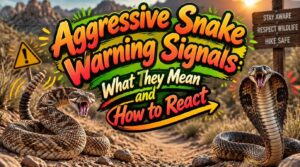
Watch for the tight S-curve, the raised head, the rigid body. That’s one of the clearest aggressive snake warning signals you’ll ever see, and it comes before the bite, not after. Hissing, flattened necks, a buzzing tail: each one is a request for space, not a declaration of war.
Most bites happen because someone missed the message. Your hand, your reflexes, your pet’s curiosity. All of it gets cheaper when you can read what the snake is saying.
Here’s how to decode those signals, and what to do next.
Table Of Contents
- Key Takeaways
- Aggressive Snake Warning Signals to Recognize
- Snake Defensiveness Versus Aggression and Feeding Responses
- Common Triggers Behind Defensive Snake Behavior
- How Snake Warning Signals Vary by Species
- How to Respond to Snake Warning Signals
- Frequently Asked Questions (FAQs)
- What does Clorox do to snakes?
- What month are snakes most active?
- How can you tell if a snake is dangerous?
- What are the subtle signs a snake is hiding in my yard?
- How to tell if a snake is aggressive?
- What is the saying to tell if a snake is poisonous?
- What is the snake symbol for emergency?
- Can snakes sense human fear or anxiety?
- How do pets react to nearby snake aggression?
- Are captive snakes less aggressive than wild ones?
- Conclusion
Key Takeaways
- A snake that goes rigid in a tight S-curve, raises its head, and stops flicking its tongue is warning you before it strikes, so back away slowly the moment you see it.
- Hissing, body flattening, gaping, and tail buzzing are all requests for space rather than aggression, and since harmless snakes mimic rattles and look-alikes fool people, you should read the whole body instead of relying on a single sign or on color patterns.
- Most defensive behavior in pet snakes has a fixable cause, like bad temperature or humidity, hunger scent on your hands, a disturbed enclosure, or pain and illness, so wash up, calm the setup, and keep handling sessions short.
- Keep 6 to 10 feet from any unfamiliar snake and never touch it, and if a venomous bite is even possible, go to the ER right away without waiting for symptoms.
Aggressive Snake Warning Signals to Recognize
A snake rarely strikes without warning. It tells you first, and you need to read it fast. Here are the four warning signals to recognize, so you can back off before things escalate.
If you work with venomous species, learning how to hold a venomous snake without getting bitten starts with understanding what these warnings mean.
Tight S-Curves and Rigid Posture

A tight S-Curve coil is one of the clearest aggressive snake warning signals. Watch for these:
- Head raised, pulled back over the neck.
- Rigid body, no loose slack.
- Tongue flicking stops.
- Frozen stillness.
These defensive postures are classic snake threat displays. Back away slowly. Don’t test it. Any jerky motion analysis belongs at a safe distance, never at arm’s length. Snakes usually escalate from freezing to hissing to coiling, so recognizing these escalating snake warning signals gives you time to retreat before a bite.
Hissing, Gaping, and Body Flattening

Once the coil tightens, sound follows. Hissing is air forced past the glottis. It’s a warning, not an attack. Sometimes loud, sometimes faint.
Next comes the openmouth display and the body flattening signal. Good defensive posture recognition buys you distance.
| Signal | Meaning | Your move |
|---|---|---|
| Hiss | Back off | Step away |
| Gaping | Last warning | Freeze, retreat |
That’s defensive snake behavior. Respect it.
Tail Vibrations and Rattling

Then the tail starts to move.
Tail vibrating is a blur of motion, and it’s your clearest warning sign. Rattlesnake tail vibration adds a buzz you can’t miss. Harmless snakes do it too. Gopher snakes and rat snakes shake their tails in dry leaves to fake a rattle.
If you’re hiking somewhere humid, it helps to know that venomous snakes in tropical rainforests have their own warning behaviors, so don’t rely on a rattle alone.
Hear rustling? Treat it as one of the aggressive snake warning signals. Stop. Back away.
Sudden Head Movements and Lunges

Now watch the head.
Rapid head movements mean the snake is deciding. Jerky, erratic movement patterns? That’s fear, not hunting. Rear up with a tight S-coil and you’re seeing strike preparation signals. Snake strike preparation looks like freezing, then a lunge.
Many lunges are closed-mouth bluffs. Still, a sudden fast slither toward your hand? Freeze. Back off slowly.
Snake Defensiveness Versus Aggression and Feeding Responses

Snakes don’t get angry. Period. What you’re seeing is instinct, not malice, and true aggressive behavior is extremely rare.
Snakes don’t get angry; what looks like aggression is simply instinct, and true malice is extremely rare
Defensive behavior is a fast, shallow strike meant to buy distance. Warnings come first: hissing, flattening. The strike is the last resort. Then the snake backs off.
If you’re unsure whether your snake is stressed or just curious, this guide to snake body language and stress signs can help you spot the subtler cues before a strike.
Feeding strikes are different. Distinguishing defensive from aggressive displays starts with what happens after contact:
- Defensive: quick bite, immediate release, retreat.
- Feeding: firm grip, coils wrapping, slow letting go.
- Pain or illness: odd, erratic strikes that need a vet.
Watch feeding times and hunger cues. Wash your hands, skip food-scented clothes, and stay calm. These safety tips for snake encounters keep you in control. Hesitation confirms the snake’s threat assessment. Move slowly, act confident.
Common Triggers Behind Defensive Snake Behavior

Most defensive snakes aren’t mean. They’re reacting to something specific, and you can usually find it. Start with the basics: improper temperature and humidity. A cool side that’s too cold or a shed that won’t come off cleanly leaves your snake irritable and jumpy. Trust your thermostat.
Hunger and feeding responses cause plenty of bites. A snake smelling prey on your hands will strike fast, then let go. That’s food drive, not rage. Wash up first.
Territorial disturbances matter too. Rearranging the enclosure, reaching in from above, or moving the tank feel like invasion. Pain, illness, or injury also lowers tolerance, so mites, burns, and respiratory trouble deserve a look. Each of these environmental triggers for aggressive behavior is fixable.
How Snake Warning Signals Vary by Species

One snake shouts. Another whispers. That’s the heart of species variations in aggressive warning signs, and ignoring it gets people hurt.
Interpreting snake body language means knowing who you’re facing. Here’s your quick field guide to aggressive snake warning signals:
- Cobras: flared hood, raised high.
- Rattlesnakes: buzzing rattle, pitch varies by size.
- Hognoses: loud hiss, flattened neck, then theatrical death-feigning.
- Puff adders: inflated, flattened body, heavy hissing.
- Coral snakes: banded colors, little movement.
Venomous versus nonvenomous displays can fool you. Hognoses mimic cobras but can’t truly hood. Harmless mimics often put red beside black, while real corals touch red to yellow.
Regional and habitat influences matter too. Local rattlesnakes sound different. Learn yours before hiking.
How to Respond to Snake Warning Signals

You’ve read the signals, so now comes the part that counts: what you actually do. The right move depends on whether the snake is in your hands, in your enclosure, or on your trail. Here are four clear steps to keep you and the snake safe.
Pause Handling and Give Space
Hear a rattle or a hiss? Stop. Right there. Locate the sound before you take another step.
You’ve just read the warning signs, so trust them. A frozen, coiled, or flattened snake is scared, not scheming. That fear response in reptiles is a plea for distance.
Back away slowly. No sudden moves. Give it room and let it breathe.
Reduce Stress Before Future Handling
Your snake isn’t stubborn. It’s stressed. Pause handling and give space, then rebuild trust through stress reduction:
- Fix temperatures and hiding spots.
- Wash your hands first.
- Keep sessions short, five minutes.
- Use gradual lowstress handling.
- End on calm.
Gentle interaction reducing stress beats force. Patience feels slow, but it’s your fastest route to a calm, confident snake you can trust.
Keep Clear of Unfamiliar Snakes
Spot a snake you don’t know? Freeze. Keep Clear of Unfamiliar Snakes, always.
Maintain a safe distance of 6 to 10 feet. A strike can reach two-thirds of its body length. Watch for warning signs, practice recognizing normal vs threatening postures, then use deescalation and nonprovocative actions. Back away slowly. Keep it in sight. Never touch, capture, or kill it.
When to Seek Professional Help
Walked away safely? Good. Now know when to call in backup.
Any suspected venomous bite means the ER, immediately. Don’t wait for symptoms. Bitten pets need a vet within 2 hours. Unsure of the species? Call poison control at 800-222-1222.
Seek veterinary or expert help for:
- Tight coils, gaping, and lunges that persist
- Defensive pet behaviors lasting over 72 hours
- Signs of pain, illness, or injury
- Respiratory infection signs
- Refusing food over two weeks
Frequently Asked Questions (FAQs)
What does Clorox do to snakes?
Undiluted Clorox burns snake tissue. Skin, eyes, lungs, gut. Fumes scramble chemical sensing too, so your snake can’t read its world. Pain, illness or injury follows. Watch for defensive body language, hissing warning, then seek veterinary or expert help.
What month are snakes most active?
Snakes love a quiet summer, apparently, because June and July are when you’ll meet them most. Long days, plenty of prey. Then September and October bring a second rush before winter.
How can you tell if a snake is dangerous?
Don’t guess from looks. Venomous snake identification is unreliable. Read snake body language instead.
A coiled, hissing defensive posture in snakes means back off. The difference between defensive and aggressive behavior? Aggressive snakes charge. Retreat.
What are the subtle signs a snake is hiding in my yard?
Scan for shed skins, tubular droppings with white streaks, and S-shaped tracks. Check thermal hiding spots: wood piles, decks, rock walls. A camouflaged snake body stays hidden, so watch for freeze-and-watch stillness near cover.
How to tell if a snake is aggressive?
Watch the body. Tight S-curve with a raised head? That’s a loaded strike. Hissing or tail buzzing follows. It’s defensive behavior, not rage. Give space now, and interpreting snake body language keeps you safe.
What is the saying to tell if a snake is poisonous?
It’s the coral snake rhyme: red touches yellow, kill a fellow. Don’t trust it. Colors vary by region, and look-alikes fool people. Snake body language, like a threat display in snakes, can’t separate venomous from nonvenomous.
What is the snake symbol for emergency?
Forget how a snake coils into an sshape ready to strike.
This one’s calm: the Rod of Asclepius, a snake on a staff, inside the Star of Life. It signals emergency care, not defensive behavior.
Can snakes sense human fear or anxiety?
Can snakes sense your fear? No. They react to physical anxiety indicators, like jerky motion, not emotions. That’s fearbased aggression’s trigger.
Scent recognition in snakes and chemosensory familiarity calm them. Emotional intelligence in reptiles? Myth.
How do pets react to nearby snake aggression?
Pets react fast. Pet stress shows: freezing, barking, retreating. Respect its flight zone, and your own.
Handler familiarity effects can calm animals, yet a sudden fast slither toward your hand demands maintaining a safe distance.
Are captive snakes less aggressive than wild ones?
Your wild-caught ball python strikes the moment you open the tank.
Captive vs wild aggression? Barely different. Handler familiarity matters more. Gradual trust building and habituation through handling calm snakes. Stress pheromone release? Go slow.
Conclusion
A coiled snake is a held breath, every muscle waiting on your next move. Learn to read aggressive snake warning signals, and that moment ends quietly.
Stop. Breathe. Step back slowly and give the animal room to leave. Most snakes want distance, not drama. Check your handling habits, keep unfamiliar snakes at arm’s length, and call a professional when the species or situation feels beyond you.
The snake always speaks first. Now you can listen.