This site is supported by our readers. We may earn a commission, at no cost to you, if you purchase through links.
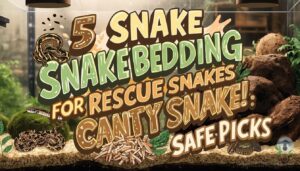
Rescue snakes arrive carrying more than a sad backstory—they often come with mites, respiratory infections, and substrate that’s been wrong for months or years. The bedding you choose on day one isn’t a minor detail; it’s the foundation of their recovery.
A snake already stressed by neglect can’t afford to also deal with cedar fumes, impaction risks, or a soggy enclosure that breeds bacteria.
Picking the right snake bedding for rescue snakes means balancing safety, hygiene, and the specific needs of an animal that hasn’t had either. The five options ahead make that choice straightforward.
Table Of Contents
- Key Takeaways
- Best Bedding for Rescue Snakes: Top 5 Picks
- How to Choose Bedding for Rescue Snakes
- Preparing and Sterilizing Substrate for Rescue Snakes
- Cleaning and Maintaining Rescue Snake Enclosures
- Frequently Asked Questions (FAQs)
- Do snakes need bedding?
- Why can’t I use pine shavings for my pet snake?
- What’s the best bedding for snakes?
- What two states are snake free?
- How often should rescue snakes be handled?
- Can multiple rescue snakes share one enclosure?
- What enclosure size suits a newly rescued snake?
- Which bedding works best for egg-laying snakes?
- How do I know if my rescue snake is stressed?
- Conclusion
Key Takeaways
- Rescue snakes come in already stressed, so your bedding choice on day one directly affects how fast they recover — get it wrong, and you’re adding problems to an animal that already has plenty.
- Paper substrate (like kraft packing paper) is the smartest starting point during quarantine because it’s non-toxic, easy to swap daily, and leaves zero room for ingestion accidents.
- Cedar and pine are genuinely dangerous for snakes — their natural oils cause respiratory irritation and skin toxicity, so avoid them entirely, no matter how convenient or cheap they seem.
- Once your snake clears quarantine (give it at least 30–60 days), match the permanent substrate to its species — burrowers need depth and loose texture, humidity-lovers need moisture-retaining materials like coconut fiber or cypress mulch.
Best Bedding for Rescue Snakes: Top 5 Picks
Not every bedding works for every rescue snake, and picking the wrong one can set back their recovery fast. The five options below cover different needs — from quarantine setups to long-term bioactive builds.
Knowing which materials to avoid is just as important as knowing what works — this guide to safe snake substrate bedding options helps you rule out anything that could slow a rescue’s progress.
Here’s what’s worth your attention.
1. Josh Frogs Tropical Bioactive Substrate
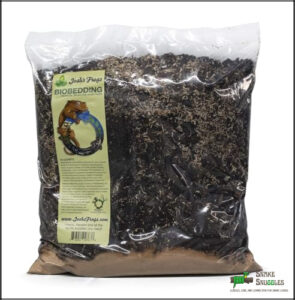
Building a living ecosystem right inside the enclosure — that’s exactly what Josh’s Frogs BioBedding does. This tropical substrate hosts springtails and isopods, tiny cleanup crews that break down waste naturally, so you’re not doing full substrate swaps every month.
It retains moisture well without waterlogging, which helps humidity-loving rescue snakes settle in comfortably.
One thing to know: it arrives dry, so you’ll need to rehydrate it with dechlorinated water before use.
For tropical rescues, it’s a genuinely smart long-term investment.
| Best For | Reptile and amphibian keepers who want a low-maintenance, self-sustaining tropical setup with live plants and a cleanup crew. |
|---|---|
| Brand | Josh’s Frogs |
| Price Range | $34.99 |
| Reptile Safe | Yes |
| Easy to Clean | Moderate |
| Humidity Support | High |
| Eco Friendly | Yes |
| Additional Features |
|
- Pairs with springtails and isopods to break down waste naturally, cutting down on full substrate swaps
- Holds moisture well without waterlogging — great for humidity-loving species like tree frogs and snakes
- Looks natural and supports live plants, making the enclosure feel like an actual slice of the tropics
- Arrives completely dry, so you’ll need to rehydrate it with dechlorinated water before it’s ready to use
- May contain hitchhikers like snails, which not every keeper wants in their setup
- A single 10 qt bag won’t go far in larger enclosures — bigger builds will need multiple bags
2. Zoo Med Forest Floor Bedding
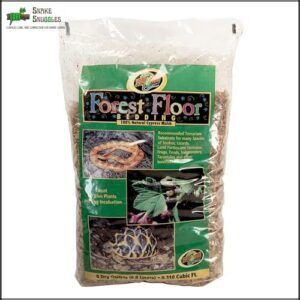
If you’d rather keep things simpler than a full bioactive setup, Zoo Med Forest Floor Bedding is a solid middle‑ground choice. It’s 100% natural cypress mulch, so it holds moisture well without going soggy — great for tropical rescue snakes like ball pythons that need steady humidity around 50–60%.
The texture stays loose and crumbly, which lets snakes burrow and feel at home.
Just a heads up: handle it in a ventilated space, since it kicks up a little dust.
| Best For | Reptile and amphibian owners who want a natural, moisture-retaining substrate that keeps humidity steady without a full bioactive setup. |
|---|---|
| Brand | Zoo Med |
| Price Range | Not listed |
| Reptile Safe | Yes |
| Easy to Clean | Easy |
| Humidity Support | High |
| Eco Friendly | Partial |
| Additional Features |
|
- Holds humidity well, making it a great fit for tropical species like ball pythons and tree frogs
- Low dust compared to most bark-based options, so it’s easier on sensitive respiratory systems
- Loose, crumbly texture lets snakes and other burrowers dig in and feel at home
- Costs more per volume than some alternatives, which adds up fast for larger enclosures
- Occasionally contains bigger mulch chunks that could be a hazard for smaller or more delicate animals
- Some batches may carry pests, so baking before use is a smart precaution if you’re being extra careful
3. Zoo Med Eco Earth Coconut Fiber Substrate
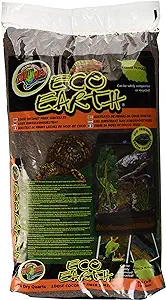
Zoo Med Eco Earth takes things a step further with coconut fiber made from renewable palm husks — no chemicals, no cedar, no pine.
It’s a go-to pick for keepers who want a natural burrowing substrate for snakes that’s both eco-friendly and safe.
It’s soft and loose straight from the bag, so there’s no brick-soaking required. That makes setup quick, which rescue situations often demand.
It holds moisture well enough to support humidity-loving snakes, and the texture lets them burrow naturally.
One small note: store leftovers in a sealed container, since the bag doesn’t reseal on its own.
| Best For | Reptile and amphibian owners who want a natural, chemical-free substrate that supports burrowing and humidity control across a range of species. |
|---|---|
| Brand | Zoo Med |
| Price Range | Not listed |
| Reptile Safe | Yes |
| Easy to Clean | Easy |
| Humidity Support | Moderate |
| Eco Friendly | Yes |
| Additional Features |
|
- Made from renewable coconut husk fibers — no chemicals, cedar, or pine, so it’s safe and eco-friendly
- Loose and ready to use straight from the bag, no soaking required
- Soft texture lets animals burrow naturally while helping retain moisture for humidity-sensitive species
- Doesn’t boost humidity on its own — you’ll still need a water source or misting routine
- The bag isn’t resealable, so you’ll need a separate container to store what’s left
- Loose fibers can stick to feeder insects or prey, which may mean feeding outside the enclosure
4. Zilla Reptile Terrarium Liner
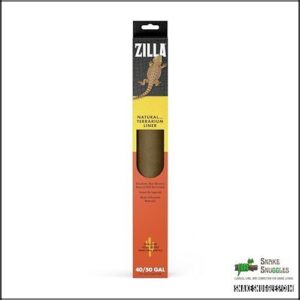
Sometimes you just need something foolproof. The Zilla Reptile Terrarium Liner is exactly that — a flat, washable carpet that sits on the enclosure floor with zero loose material for your rescue snake to accidentally swallow.
That’s a real plus for juveniles or stressed snakes that strike at anything. It’s enzyme-treated to reduce odors, cuts to fit any tank size, and rinses clean with cold water.
Just keep a second liner handy so the enclosure is never bare during laundry time.
| Best For | New reptile owners and anyone keeping juveniles or snakes who might accidentally swallow loose substrate. |
|---|---|
| Brand | Zilla |
| Price Range | Not listed |
| Reptile Safe | Yes |
| Easy to Clean | Easy |
| Humidity Support | Low |
| Eco Friendly | No |
| Additional Features |
|
- Rinses clean with cold water and is reusable, so upkeep is quick and easy
- Enzyme treatment cuts down on odors, keeping the habitat fresher between cleanings
- Cuts to fit any tank size and works well for leopard geckos, snakes, and bearded dragons
- Doesn’t hold humidity well, so it’s a poor fit for species that need a moist environment
- Edges can curl at first and may take a little time to lie flat
- Some owners notice a dip in enclosure temperature after putting the liner in
5. Bryco Goods Brown Kraft Packing Paper
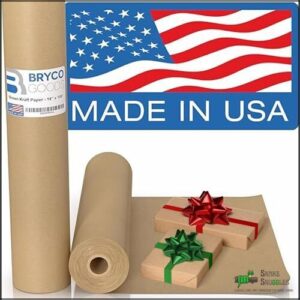
If budget is tight and you need something fast, Bryco Goods Brown Kraft Packing Paper is your best friend.
Tear off a sheet, line the enclosure, and you’re done.
It’s thick enough to absorb waste without falling apart, completely non-toxic, and easy to swap out daily — which matters a lot during quarantine.
No loose particles mean zero ingestion risk.
one roll stretches surprisingly far across multiple rescue setups.
| Best For | Crafters, teachers, and anyone who needs a flexible, no-fuss paper roll for wrapping, art projects, or light packing on a budget. |
|---|---|
| Brand | Bryco Goods |
| Price Range | $13.99 |
| Reptile Safe | Yes |
| Easy to Clean | Disposable |
| Humidity Support | None |
| Eco Friendly | Yes |
| Additional Features |
|
- 100 feet of paper for $13.99 — that’s a lot of coverage without spending much
- Works with pretty much any art medium kids throw at it, from crayons to finger paint
- Easy to cut, fold, and shape, so it fits whatever project you’re working on
- Too lightweight for heavy-duty packing or wet art techniques like watercolor washes
- The 18-inch width doesn’t always line up with standard poster or canvas sizes, so you’ll waste some
- Some buyers feel the price-to-weight ratio isn’t great compared to similar rolls
How to Choose Bedding for Rescue Snakes
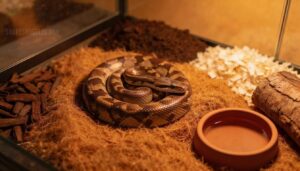
Picking the right bedding for a rescue snake isn’t complicated, but a few key factors really do matter.
Things like your snake’s species, humidity needs, and whether the substrate is actually safe can make a big difference in how well they settle in.
Here’s what to look for before you commit to any bedding.
Matching Substrate to Your Rescue Snake’s Species
Not every rescue snake thrives on the same bedding — a Kenyan sand boa needs a Desert Sand Blend to burrow and decompress, while a ball python does far better in Tropical Coconut Fiber or Forest Leaf Litter.
Tree-dwelling rescues prefer Arboreal Light Media with good airflow, and semi-aquatic species need Semi-Aquatic Moist Bedding.
Choosing snake substrate based on species-specific substrate requirements keeps impaction risk low and stress even lower.
substrate density for burrowing ensures stable tunnels and reduces stress.
Humidity and Moisture Control Needs
Getting humidity right can honestly make or break a rescue snake’s recovery. Most snakes do best between 40–60% humidity — too low and they dehydrate, too high and mold moves in fast.
Humidity can make or break a rescue snake’s recovery — aim for 40–60% or risk dehydration, mold, and setbacks
Smart Humidity Gradient Design means offering both a dry zone and a damp hide. Your Moisture Monitoring Tools checklist should include:
- A digital hygrometer placed at snake level
- Daily substrate checks for waterlogging or dryness
- A humid hide for shedding support
Condensation Prevention Techniques like gentle venting and a Dehumidifier Application in humid rooms keep things stable without stressing your snake.
Dust Levels and Respiratory Safety
Dust isn’t just an annoyance — it’s a real health risk. Respirable dust particles are tiny enough to travel deep into your snake’s lungs, causing irritation or worse over time.
That’s why dust-free bedding matters so much in rescue setups. Low dust substrates like aspen or coconut fiber are smart source control methods.
Good ventilation strategies help too. Always monitor for any wheezing — respiratory health in snakes depends on it.
Burrowing Support and Substrate Depth
Burrowing isn’t just a quirk — it’s how snakes self-regulate stress and temperature.
For burrowing substrate requirements, depth guidelines matter: medium burrowers like corn snakes need 4–6 inches, while larger species need 6–12 inches.
A layered substrate with coarser material below improves tunnel stability and compaction levels.
Coconut coir benefits for burrowing snakes include soft texture and species-specific depth support that mimics their natural environment beautifully.
Avoiding Toxic Materials Like Cedar and Pine
Did you know cedar and pine bedding can trigger breathing trouble in snakes? Plicatic acid effects, phenol irritation, and wood dust risks are real hazards.
For rescue setups, skip these hazardous bedding materials for snakes and reach for organic bedding materials or eco-friendly reptile bedding.
Non-wood alternatives like coconut fiber or paper pass material safety testing and protect your snake’s lungs.
Preparing and Sterilizing Substrate for Rescue Snakes
Before your rescue snake ever touches a new substrate, that bedding needs to earn its place in the enclosure. A few simple prep steps — freezing, baking, or rinsing — can mean the difference between a safe setup and an unexpected pest problem.
Here’s what to do before laying down a single scoop of bedding.
Quarantine Bedding: Starting Safe With Paper Substrates
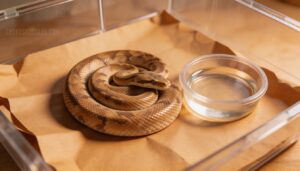
When a rescue snake first arrives, paper bedding is your best friend.
Its high paper absorption rate manages moisture quickly, and the quarantine setup simplicity can’t be beaten — no sterilizing, no prep drama.
Plain kraft paper is dustfree, low-maintenance, and maintains temperature stability in the enclosure.
Eco-friendly disposal is easy too. swap it out, and you’re done.
Freezing and Baking Natural Substrates to Remove Pests
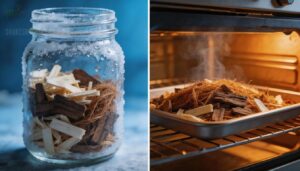
Once you move past paper, natural substrates need a little prep work before they go into any enclosure. Freezing makes pest life stage survival hard — keep substrate at 0°F for 48 hours, watching your temperature targets carefully.
For baking, batch thickness matters: thin layers mean better center heating.
Crack a window for ventilation management.
Neither method guarantees total sterilization, but both cut risk substantially.
Rinsing and Storing Bedding Before First Use
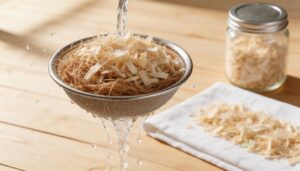
After freezing or baking, rinsing is next line of defense. Run a Cold Water Rinse until you see Clear Runoff Inspection — no cloudiness, no sediment. Then use the Air Drying Technique: spread it thin, let airflow do the work.
- Avoid direct heat during drying
- Label your Airtight Storage Container with a Processing Date Label
- Check stored substrate for bacterial growth before use
When to Transition From Quarantine to Permanent Bedding
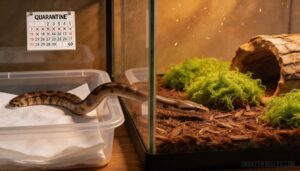
Once your snake has a clean bill of health — no mites, no respiratory wheeze, no stress indicators like constant hiding or refusal to eat — it’s time to move on.
A solid Quarantine Duration runs at least 30–60 days.
Run through your Observation Checklist and confirm Behavioral Readiness before switching to a species-appropriate, DustFree, no toxic oils permanent substrate.
Cleaning and Maintaining Rescue Snake Enclosures
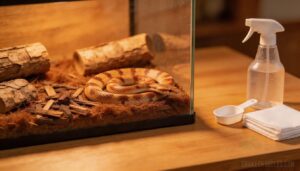
Keeping a rescue snake’s enclosure clean isn’t complicated, but it does take consistency. A good routine protects your snake from bacteria, mold, and stress — especially during those early weeks when their immune system may already be taxed.
Here’s what that routine actually looks like in practice.
Daily Spot-Cleaning Routines for Rescue Setups
Daily spot cleaning keeps rescue setups low-maintenance and stress-free for your snake.
Start with Zone Prioritization — hit the warm corner and water dish first, since that’s where waste concentrates.
Follow a simple Timing Schedule: check every morning, especially after overnight defecation.
Use Glove Protocol, keeping clean tools separate, and practice Tool Sanitization after each session.
Dust-free bedding helps you spot trouble fast, while smart Moisture Balance means removing wet clumps without over-drying the whole enclosure.
Full Substrate Replacement Schedule by Bedding Type
Each bedding type runs on its own clock.
Paper Bedding Turnover happens every few days — it’s your fastest cycle. Aspen Shaving Rotation works best every four to eight weeks.
Cypress Mulch Timing lands around every two to three months, while Coconut Fiber Frequency stretches to six months when moisture stays balanced.
Bioactive Substrate Cycle rarely needs full replacement unless something goes wrong.
Monitoring for Mold, Mites, and Bacterial Growth
Keeping a close eye on your rescue snake’s enclosure can catch problems before they spiral.
Humidity tracking is your first line of defense — a steady hygrometer reading helps you spot moisture spikes that invite mold. Do regular visual mold inspections for fuzzy patches or discoloration. A musty smell signals bacterial growth fast.
For mite detection techniques, gently disturb substrate and watch for movement. Use spore containment strategies by handling dirty bedding carefully during changes.
Adjusting Substrate Moisture to Support Rescue Snake Health
Moisture isn’t a set it and forget it thing — it shifts constantly. Use a digital hygrometer for substrate moisture monitoring, and aim for your species’ target range rather than guessing by feel. Create a moisture gradient by dampening just one corner, giving your snake real choice.
Avoid oversaturation risks, especially with aspen. Hydration support strategies like proper humidity also ease shedding and respiratory comfort.
Frequently Asked Questions (FAQs)
Do snakes need bedding?
Yes, snakes genuinely need bedding.
The right substrate promotes Natural Habitat Replication, aids Temperature Regulation Role, and provides real Stress Reduction Benefits — all of which have significant Long-Term Health Effects on any snake’s wellbeing.
Why can’t I use pine shavings for my pet snake?
Pine shavings release resin volatile oils and phenolic compounds that cause respiratory irritation, skin contact toxicity, and ingestion poisoning risk.
Like cedar, pine ranks among the most harmful materials you can put in a snake’s enclosure.
What’s the best bedding for snakes?
What’s the best snake bedding? It depends on your snake.
Top choices balance humidity control, odor control, and dustfree comfort — think coconut fiber for burrowing substrate needs or low-dust aspen for cost efficiency and substrate longevity.
What two states are snake free?
Alaska and Hawaii are the only two U.S. states with no native snakes.
By contrast, other regions host far more diverse coral snake relatives, like the genus Sinomicrurus, whose nocturnal habits and wide Asian range are detailed in this coral snake species profile with pictures and bite information.
Even without wild snakes to spot, Alaskans and Hawaiians can still enjoy keeping snakes as pets, with popular constricting snake species for beginners like ball pythons and corn snakes making great companions.
Alaska’s subarctic climate makes year-round survival impossible, while Hawaii’s island isolation and strict biosecurity laws keep wild snakes out entirely.
How often should rescue snakes be handled?
Keep handling minimal during the Initial Stabilization Period — the first week is for settling, not socializing. A Weekly Handling Schedule works best once stress fades.
Always respect Post-Feeding Interval and watch Handling Stress Indicators closely.
Can multiple rescue snakes share one enclosure?
Most rescue snakes do best on their own. Stress, disease risk, and feeding conflicts make cohabitation risky — even with Size Compatibility and Temperament Matching considered.
When in doubt, separate enclosures are always the safer choice.
What enclosure size suits a newly rescued snake?
For a newly rescued snake, match the snake enclosure size to Species Dimensions — the longest side should equal the snake’s length, with a Length-to-Width Ratio of roughly 3:1, supporting healthy Thermal Gradient Zones.
Which bedding works best for egg-laying snakes?
Coconut fiber and cypress mulch work best — both hold moisture well for stable humidity, support natural digging, and control odors without harmful dust during egg laying.
How do I know if my rescue snake is stressed?
escape pacing, hiding withdrawal, defensive body language, appetite changes, and breathing or shedding issues.
These are your clearest signals that something’s off with your rescue snake’s health and comfort.
Conclusion
Wrapping up your rescue snake’s journey to wellness means giving them a safe haven. By choosing the right snake bedding for rescue snakes, you’re laying the groundwork for their recovery.
The best substrates balance safety, hygiene, and comfort. With these top picks and care tips, you’ll be well on your way to creating a nurturing environment.
Your snake’s new home is just a bedding change away; make it a haven that fosters healing and happiness.