This site is supported by our readers. We may earn a commission, at no cost to you, if you purchase through links.
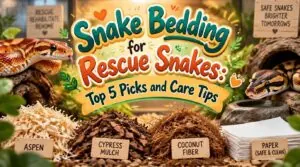
A rescue snake can arrive with mites hiding in its bedding, scale rot starting on its belly, or a stress response to a cage that feels all wrong. Many of those problems trace back to one choice you make on day one.
The right snake bedding for rescue snakes does more than line a tank. Too damp, and a corn snake faces mold and respiratory trouble. Too dry, and a ball python dehydrates. During quarantine, plain white paper lets you spot every mite and stool.
You’ll learn which substrate fits which species, how to set up a clean quarantine, and which five products earn a place in your rescue setup.
Table Of Contents
- Key Takeaways
- Choose Bedding for Your Rescue Snake
- Set Up Paper Bedding for Rescue Quarantine
- Top 5 Bedding Options for Rescue Snakes
- Clean and Replace Your Rescue Snake’s Bedding
- Frequently Asked Questions (FAQs)
- What is the safest bedding for snakes?
- What not to use for snake bedding?
- What can I use for bedding for a snake?
- What material can snakes not bite through?
- Do snakes need bedding?
- Why can’t I use pine shavings for my pet snake?
- What’s the best bedding for snakes?
- What two states are snake free?
- How often should rescue snakes be handled?
- Can multiple rescue snakes share one enclosure?
- Conclusion
Key Takeaways
- Start every new rescue snake on plain white, unscented paper towels, because they hide nothing and make mites and waste easy to spot during quarantine.
- Match your bedding to your snake’s species: coconut fiber or cypress mulch holds the humidity tropical snakes like ball pythons need, while dry aspen suits corn snakes and kingsnakes and helps prevent mold and respiratory trouble. If you’re unsure where to start, this guide to snake bedding for families compares safe, low-mess options for homes with kids.
- Avoid cedar, pine, fine sand, and gravel, and choose dust-free options, since oils, dust, and small particles can harm your snake’s lungs or cause impaction.
- Keep bedding fresh by spot cleaning daily, doing a full change weekly (every two to three days during quarantine), and disinfecting the enclosure with a reptile-safe product like F10SC.
Choose Bedding for Your Rescue Snake
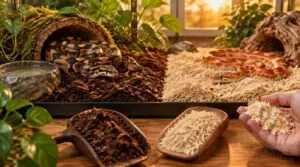
Match your rescue snake’s bedding to its species first, because the right reptile substrate keeps your new friend healthy from day one! Tropical snakes like ball pythons and boas need moisture retention, so coconut fiber or cypress mulch will hold humidity between 50 and 80 percent. Arid species like corn snakes and kingsnakes do better with aspen snake bedding, which stays dry and helps prevent mold and respiratory trouble.
For larger enclosures, layering a deep base of the right substrate keeps humidity steady and waste easy to spot-clean, as shown in this guide to substrate and bedding for large snake enclosures.
Why does this matter? Too much moisture can cause scale rot, while too little leads to dehydration. Aspen shavings are affordable and absorbent, but because they don’t retain moisture well, they can grow mold if not changed frequently.
Watch for impaction, too. Choose loose particles larger than your snake’s head, and skip fine sand or gravel. Juveniles and sick snakes are safest on non-particulate liners. Pick dust-free bedding to protect their lungs!
Set Up Paper Bedding for Rescue Quarantine
Every new rescue snake should start on plain paper bedding, and here’s why: it’s the easiest way to spot mites and feces during quarantine! Unlike loose reptile bedding or other substrates, paper never hides pests.
Start every new rescue snake on plain paper, because it hides nothing and makes mites and waste easy to spot during quarantine!
For your quarantine setup, clean the enclosure with F10SC or diluted bleach first. Then layer two to three sheets of thick, white, unscented paper towels across the entire floor and smooth them flat. Skip patterns, dyes, and lotions, which can irritate skin.
Place hides at the warm and cool ends, and set the water dish away from the heat. Spot clean right away, and replace everything every two to three days. Fresh paper doubles as odor reducing bedding. Disinfect the bowl and hides each time!
Top 5 Bedding Options for Rescue Snakes
Once your rescue snake is through quarantine, you’ll want a bedding that fits its species, health, and your daily routine. Here are five trusted bedding options that work well for rescues. Which one suits your new arrival best?
1. Josh Frogs Tropical Bioactive Substrate
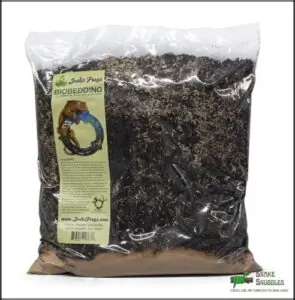
Picture a rainforest floor in miniature: damp, earthy, and quietly busy with tiny cleanup workers. That’s the world Josh’s Frogs Tropical Bioactive Substrate helps you build!
Its mix of cypress, coconut fiber, and clay holds humidity well without waterlogging, so your tropical rescue can burrow and settle in comfortably. Add springtails and isopods, and they’ll process waste for you. You’ll skip frequent substrate changes, since it only needs replacing after several years.
If odor is your main worry, this guide to reptile substrates that control odor explains why some mixes break down waste better than others.
Prep matters. It arrives dry, so moisten it with dechlorinated water until it clumps when squeezed but drips nothing. Then spread a 2.5 to 3 inch layer.
Quick heads up: it can carry hitchhikers like mites or snails, so quarantine your new arrival on paper first. Fungal growth is normal, and at $34.99, it’s a smart long-term pick!
| Best For | Hobbyists setting up a tropical bioactive terrarium with springtails and isopods who want a low-maintenance substrate that supports live plants and burrowing pets like geckos. |
|---|---|
| Material | Cypress, coconut fiber, clay |
| Price | $34.99 |
| Moisture Handling | Holds humidity, no waterlogging |
| Recommended Depth | 2.5 to 3 inches |
| Cleaning Method | Replace after several years |
| Main Drawback | May carry mites or snails |
| Additional Features |
|
- Holds humidity well without waterlogging, which suits tropical setups and burrowing pets.
- Works with springtails and isopods, so you can skip frequent substrate changes.
- Supports healthy live plant growth and a cleaner enclosure with less bacterial risk.
- May carry hitchhikers like mites or snails, so new animals may need quarantine.
- Arrives dry and must be moistened with dechlorinated water before use.
- Not ideal for long-term enclosures where mites are a risk, such as some snake setups.
2. Zoo Med Forest Floor Bedding
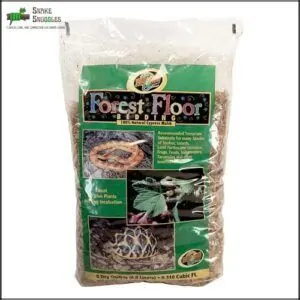
Want a simpler setup than full bioactive? Zoo Med Forest Floor Bedding is a great middle ground! It’s natural cypress mulch that holds moisture without turning soggy, which helps tropical rescues like ball pythons keep steady humidity around 50 to 60 percent.
Spread a 2 to 3 inch layer and stir the top weekly to keep it fresh. The soft, crumbly texture lets your snake burrow and settle in. It also works in bioactive setups if you change your mind later.
Rinse it before use, since it can produce dust, and work somewhere well ventilated. Because the dark color hides waste, check for droppings daily and spot clean quickly. Some keepers report pests too, so inspect new bags and quarantine your newcomer first. Ready to give your rescue a natural floor?
| Best For | Reptile and amphibian keepers, especially owners of tropical species like ball pythons, who want a natural, moisture-holding substrate that works for simple setups and bioactive terrariums alike. |
|---|---|
| Material | Natural cypress mulch |
| Price | N/A |
| Moisture Handling | Holds moisture, not soggy |
| Recommended Depth | 2 to 3 inches |
| Cleaning Method | Spot clean, stir weekly |
| Main Drawback | Dark color hides waste |
| Additional Features |
|
- Holds moisture without turning soggy, which helps keep humidity steady
- Soft, crumbly texture lets snakes burrow and settle in
- Easy to spot clean, and works in bioactive setups
- Dark color hides waste, so you need to check for droppings daily
- Some keepers report pest infestations
- Can be dusty, so it needs rinsing before use
3. Zoo Med Eco Earth Coconut Fiber Substrate
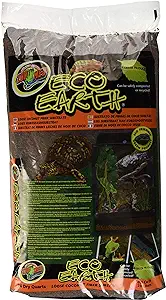
A natural pick like Zoo Med Eco Earth gives your rescue snake soft, chemical-free footing made from renewable coconut husk. It’s easy to pour, scoop, and spot clean, and it encourages burrowing!
It holds moisture for moderate humidity, and it helps absorb odor and waste when damp. The 24-quart size suits enclosures.
Watch feeding time. Fiber can stick to prey and get swallowed, so feed on a bare tile. Store leftovers in a sealed container, since the bag won’t reseal.
| Best For | Reptile, amphibian, and invertebrate keepers, including rescue snake owners, who want a natural, moisture-holding substrate that supports burrowing and is easy to spot clean. |
|---|---|
| Material | Coconut husk |
| Price | N/A |
| Moisture Handling | Holds moisture, absorbs waste |
| Recommended Depth | N/A |
| Cleaning Method | Pour, scoop, spot clean |
| Main Drawback | Can stick to prey |
| Additional Features |
|
- Made from renewable coconut husk and helps maintain proper humidity in terrariums
- Supports natural burrowing and digging behavior
- Absorbs and breaks down odor and waste when slightly damp, and is easy to pour, scoop, and spot clean without much dust
- The bag is not resealable after opening, so leftovers need a sealed container
- Deep substrate setups may require a large volume
- Can stick to prey items during feeding, which poses an ingestion risk
4. Zilla Reptile Terrarium Liner
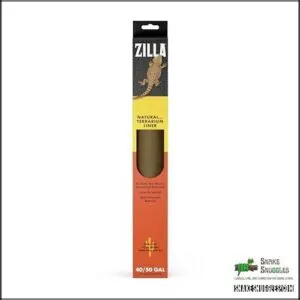
The Zilla Reptile Terrarium Liner is the foolproof pick when you need zero loose material on the enclosure floor. This flat, synthetic carpet is absorbent and non-abrasive, so it’s gentle on delicate skin, and nothing can be swallowed during a feeding strike. That makes it a great fit for juveniles and stressed snakes!
An enzyme treatment helps cut odors, and cleanup is simple: rinse it with cold water, let it dry, and reuse it. Keep a second liner on hand so the tank is never bare on laundry day.
Here’s the catch. Some keepers report claws snagging in the fibers, so watch your snake closely. Colors can look grayer than brown, and the roll (6.4 ounces) may run large for a 40-gallon, so measure and trim with scissors.
| Best For | Keepers of juvenile reptiles or stressed snakes who want a loose-free, reusable enclosure floor that can’t be swallowed during feeding. |
|---|---|
| Material | Synthetic carpet fiber |
| Price | N/A |
| Moisture Handling | Absorbent fiber |
| Recommended Depth | N/A |
| Cleaning Method | Rinse with cold water |
| Main Drawback | Claws may snag |
| Additional Features |
|
- Absorbent, non-abrasive synthetic fiber is gentle on delicate skin and can’t be accidentally ingested during feeding
- Enzyme treatment helps reduce habitat odors
- Rinses clean with cold water for easy reuse, and the roll can be cut to fit various tank sizes
- Some users report claws getting stuck in the fibers
- Color may look more gray than brown depending on the batch
- Sizing may not suit every tank, and some find it too large for a 40-gallon enclosure
5. Bryco Goods Brown Kraft Packing Paper
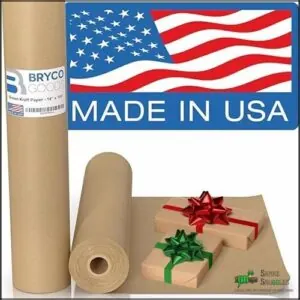
Think of Bryco Goods Brown Kraft Packing Paper as a plain notebook for your snake’s health, where every change shows up on the page.
Light paper makes feces, urates, and mites easy to spot, so you can catch problems early during quarantine. Tear off a sheet, line the enclosure, and you’re done!
At 65 GSM, the paper is thin, so layer two sheets where your snake soils most. Expect to swap it out every day or two, since it can’t hold humidity and tears when wet.
The roll is 18 inches wide and 100 feet long for $13.99, so one roll covers several setups. It’s unwaxed, uncoated, and recycled, with no loose particles to swallow. Isn’t that a truly great budget deal?
| Best For | Snake owners who want an inexpensive, light-colored liner for quarantine setups, where spotting waste and mites quickly matters most. |
|---|---|
| Material | Recycled kraft paper |
| Price | N/A |
| Moisture Handling | N/A |
| Recommended Depth | N/A |
| Cleaning Method | N/A |
| Main Drawback | May be too thin |
| Additional Features |
|
- The light color makes feces, urates, and mites easy to spot early.
- It is unwaxed, uncoated, and recycled, with no loose particles for your snake to swallow.
- One 100-foot roll costs $13.99 and covers several enclosures.
- At 65 GSM it is thin, so you need to layer two sheets where your snake soils most.
- It can’t hold humidity and tears when wet, so you’ll need to replace it every day or two.
- Some users find it too thin, and its width and transparency may not match expectations.
Clean and Replace Your Rescue Snake’s Bedding
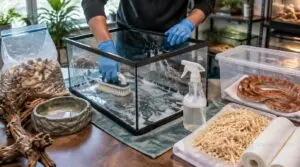
Picture a damp, clumped corner where mites crawl through stale paper and the air smells sour. That’s what neglected Snake Bedding looks like, and it’s no place for a recovering animal!
Here’s how to Clean and Replace it safely for Rescue Snakes:
- Glove up, then bag all soiled substrate and remove decor and the water dish.
- Scrub with hot soapy water, rinse well, then apply a reptile-safe disinfectant like F10SC.
- Lay fresh Reptile Enclosure Flooring only once everything’s completely dry.
Use dedicated brushes and cloths for quarantine only, and wash your hands before touching any other reptile. Good Bedding Maintenance means a full change weekly, with daily spot changes for soiled areas. Never reuse old material in your main collection!
Frequently Asked Questions (FAQs)
What is the safest bedding for snakes?
Picture a rescue snake arriving with mites you can’t see. That’s why paper towels are your safest bedding. They’re cheap, easy to disinfect, and show mites, odd feces, and regurgitation instantly. Swap them daily.
What not to use for snake bedding?
Skip cedar and pine shavings, since their oils harm your snake’s lungs. Choose aspen instead! Avoid sand, cypress mulch, backyard soil, and damp moss. Coconut fiber works only when it’s never left wet or soggy.
What can I use for bedding for a snake?
Most rescue snakes arrive on newspaper, and for good reason! You’ve got solid options: paper towels for quarantine, aspen shavings for burrowers, coconut fiber, cypress mulch, or a moss and soil mix for humidity lovers.
What material can snakes not bite through?
Snakes seem unstoppable, but stone, slate and tile beat fangs! Among Reptile Bedding Substrates, they’re tops for Reptile Substrate Safety and Reptile Bedding Odor Control, unlike Aspen Snake Bedding, they aren’t Burrowing Friendly Reptile Bedding.
Do snakes need bedding?
Absolutely, yes! The right Snake Bedding for Rescue Snakes helps with burrowing, calms stress, and steadies humidity. Aspen Snake Bedding suits dry species, while coconut fiber offers moisture retention for tropical ones.
Why can’t I use pine shavings for my pet snake?
Pine shavings release phenolic oils that inflame your snake’s lungs, irritate skin, and poison if swallowed. Like cedar, it’s among the worst choices!
Try Aspen, coconut fiber such as Eco Earth, Sphagnum Moss, or Reptisoil.
What’s the best bedding for snakes?
The best bedding depends on your snake! Aspen suits dry-loving species, while Zoo Med coconut fiber holds humidity for tropical ones. Add Moss or Incubation Medium for burrowers. Always choose low-dust options for healthy lungs.
What two states are snake free?
Alaska reports zero snake species, and Hawaii has none native! So Alaska and Hawaii are your snake-free states. Still, pet owners there happily keep corn snakes and ball pythons on fresh, cozy Aspen Snake Bedding.
How often should rescue snakes be handled?
Rescue snakes deserve a mountain of patience! Skip handling for week one, then try weekly.
Always lower your handling frequency if you see hissing or hiding. Dry Aspen helps bedding safety and substrate moisture control.
Can multiple rescue snakes share one enclosure?
Rescue snakes do best alone because stress, disease, and feeding fights make sharing risky.
Separate homes, then choose Aspen Snake Bedding, Reptile Bedding Substrates, Reptile Enclosure Flooring, Reptile Bedding Types Comparison, Reptile Substrate Moisture Control.
Conclusion
Most reptile vets recommend a quarantine of at least 90 days, and your bedding matters for every one of them. Plain paper shows mites and stool clearly, while the right substrate keeps humidity steady once your snake is cleared.
Choosing snake bedding for rescue snakes isn’t complicated when you match it to your species and keep it fresh. Spot clean often, replace it on schedule. Your clean, well-chosen setup is where a second chance begins!