This site is supported by our readers. We may earn a commission, at no cost to you, if you purchase through links.

A snake stuck in a bad shed isn’t just frustrating to watch—it can mean retained eye caps, scale damage, and a genuinely stressed animal that associates handling with discomfort.
Most keepers troubleshoot humidity at the enclosure level first, tweaking misters and swapping substrates, but the real fix sits in one small corner of the tank: a properly built humidity hide box.
Snakes don’t need uniform high humidity; they need access to it on demand, especially during the vulnerable window of a molt cycle.
Get the hide right—size, substrate, placement, moisture balance—and your snake does the rest.
Table Of Contents
- Key Takeaways
- Do Snakes Need Humid Hides?
- Choose The Right Hide Size
- Build and Fill The Hide
- Top 5 Humid Hide Boxes
- Frequently Asked Questions (FAQs)
- Do snakes need humid hides?
- Is 40 humidity too low for ball python?
- How often should you clean a humidity hide?
- Can you use a humidity hide for desert snakes?
- What humidity percentage is best for ball pythons?
- How do you store unused hide substrate properly?
- Can humidity hides cause respiratory problems in snakes?
- Conclusion
Key Takeaways
- Snakes don’t need high humidity everywhere—they need a small, moisture-rich hide they can retreat to on demand, especially in the days just before a shed.
- The hide’s size matters more than most keepers realize: it should press gently against your snake on all sides, since too much interior space breaks the humidity pocket entirely.
- gold-standard substrate is the gold-standard substrate because it holds up to 20 times its weight in water, but a 60/40 moss-to-coir blend gives you better mold resistance without sacrificing moisture retention.
- Poor ventilation turns a humid hide into a mold factory, so passive vents positioned away from the moss bed—with intake low and exhaust high—are essential to keeping the microclimate stable and safe.
Do Snakes Need Humid Hides?
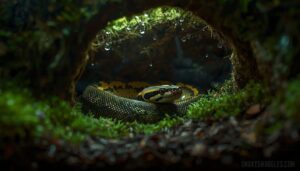
Yes, snakes genuinely need humid hides — and not just during shedding season. The right hide keeps respiratory health in check, aids digestion, and gives your snake a stress-free retreat that mimics what it would naturally seek out in the wild.
Choosing the right setup matters more than most people realize, so it’s worth browsing options like these snake hides designed for humid environments to find something your snake will actually settle into.
Here’s a look at what to think about when choosing one, plus five solid options worth your attention.
How Humid Hides Support Shedding
A humidity hide works by trapping moisture in a focused microclimate, often reaching 70–90% relative humidity, so your snake gets the skin hydration it needs exactly where it needs it. That concentrated moisture is what separates clean, one-piece sheds from frustrating retained eye caps and stuck tail tips.
It also eases stress reduction during shedding and enhances metabolic efficiency throughout the process.
For best results, use warm side placement to boost evaporation.
Species That Benefit Most From One
Not every snake needs one equally.
Ball pythons, tropical pythons, boa constrictors, and arboreal tree pythons rank highest on the list — their natural habitats are humid year-round, so a moisture hide just mirrors what they’d find in the wild.
Garter snakes and corn snakes benefit during shedding phases specifically.
Leopard geckos and crested geckos, while not snakes, follow the same logic.
Signs Your Snake Needs More Humidity
Your snake will show you when air is too dry — you just need to know what to look for. Dry nostril bubbling, cracked scales along the belly, and incomplete shedding are the clearest red flags.
Excessive soaking in the water dish, lethargic behavior outside normal rest periods, and dry skin in reptiles often signal that humidity monitoring has slipped, and respiratory infections in snakes or fungal infection risk can follow quickly.
When to Boost Humidity During Shed
Timing matters more than people realize. Watch for pre‑shed indicators like cloudy eyes and dull scales, then begin your humidity spike — targeting 70–90% inside the humidity hide — two to three days out, not earlier. That’s your shed timing window.
Keep the boost to four days max, then ease back to baseline within 24 hours for smooth post‑shed recovery.
Choose The Right Hide Size
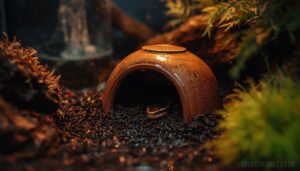
Getting the size right is honestly the most overlooked part of setting up a humid hide — and it makes a bigger difference than most people expect. A hide that’s too large won’t hold humidity well, and one that’s too small will stress your snake out rather than comfort it.
Here’s what to think about before you pick one.
Measure Your Snake’s Widest Body Point
Before selecting the right humid hide for snakes, you’ll need one foundational measurement: your snake’s midsection width.
Using the Girth Tape Method, wrap a flexible tape snugly — never compressing the skin — around the widest body point while your snake is calm and stationary, a technique called Calm Snake Positioning.
Record this in a Measurement Logbook, and always post-shed remeasure, since girth shifts noticeably after each shed.
Keep The Fit Snug on All Sides
A properly sized humidity hide works like a second skin — the box should press gently against your snake on all four sides, creating uniform wall pressure that concentrates moisture right where it’s needed.
Four wall contact isn’t just snug comfort; it’s functional design.
- Dimensional consistency prevents cold air gaps that drain humidity quickly
- Flexible edge design accommodates slight post‑shed girth shifts
- Side seal integrity keeps the secure humid hiding area stable
- Smooth inner and outer surfaces reduce friction and skin abrasion
- Avoid oversized hides — extra space breaks the humidity pocket entirely
Size The Entrance for Easy Access
The entrance is the gateway to a well-functioning snake hide box, so getting entry size right matters more than most keepers realize. Follow entrance width guidelines carefully — the opening should clear your snake’s widest body point without forcing compression.
Keep threshold height limits low, and smooth edge design consistent to protect scales.
Maintain a 300 mm clearance path space in front, and set placement height at your snake’s natural midbody resting level.
Pick Opaque or Clear Hide Materials
Material choice comes down to one question: Do you want visibility or security?
Opaque options — a plastic shoebox, terracotta bowl, coconut shell interior, or 3D-printed PLA shell — block light completely, retain humidity longer, and offer better scratch resistance over time.
Clear plastic containers cost less and simplify spot‑cleaning, but light transmission can stress nocturnal species.
Weight considerations are minimal either way.
Place The Hide in The Right Enclosure Zone
Where you place your humidity hide matters just as much as what’s inside it.
- Warm Corner Placement — Position the hide near the heat source but not directly under it, so your snake benefits from the thermal gradient while avoiding overheating.
- Cool End Accessibility — A secondary hide on the cool end facilitates behavioral thermoregulation.
- Corner vs Center — Corner placement improves stability and perceived security.
- Maintenance Accessibility — Keep hides reachable for easy substrate swaps.
Build and Fill The Hide
Once you’ve got the right size hide, it’s time to fill it properly — and what you put inside matters more than most people expect. The substrate, moisture level, and ventilation all work together to create that microclimate your snake actually needs.
Here’s exactly how to build it out, step by step.
Choose Sphagnum Moss, Coir, or a Blend
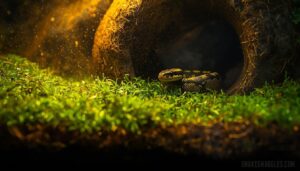
Your substrate choice sets the foundation for everything inside the humidity hide. Sphagnum moss delivers impressive moisture retention — holding up to 20 times its weight in water — making it ideal for preventing snake shedding problems.
Sphagnum moss holds up to 20 times its weight in water, making it the gold standard substrate for preventing shedding problems
Coconut coir brings mold resistance, pH buffering, and renewable materials with strong cost efficiency.
A 60/40 moss-to-coir blend gives you steady substrate moisture control without oversaturation.
| Substrate | Key Strength |
|---|---|
| Sphagnum Moss | Excellent moisture retention |
| Coconut Coir | Drainage and mold resistance |
| Moss/Coir Blend | Balanced humidity control |
| Coir Alone | Faster drying, less buildup |
| Moss Alone | Long-lasting dampness |
Pre-moisten Substrate to Damp, Not Soggy
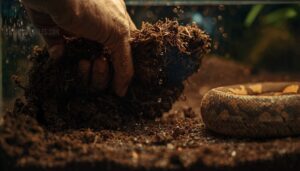
Once you’ve picked your substrate, getting the moisture level right is where things get precise. Think of the Squeeze Test as your dampness standard: grab a handful and squeeze firmly — a few drops should release, not a stream.
This substrate moisture control method ensures proper moisture distribution without saturation. Damp substrate fill facilitates microclimate creation within snake hides, so aim for that wrung-sponge feel every time.
Add Enough Depth for Burrowing
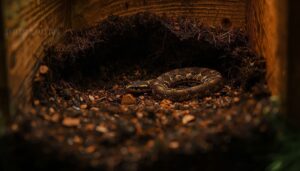
Depth matters more than most keepers realize. Aim for at least 2–3 inches of substrate medium inside your humidity box — enough that your snake can burrow and feel walls on all sides.
Coconut coir compresses well without collapsing, while vermiculite and perlite help the mix hold its shape under the snake’s weight.
Follow your Depth Guidelines, and do periodic Maintenance Checks to catch settling early.
Balance Moisture With Proper Ventilation
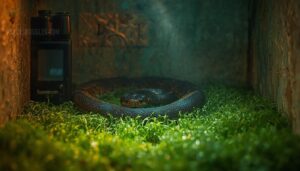
Moisture without airflow is just a recipe for mold. Good Ventilation Slot Design keeps your hide’s microclimate stable — aim for 0.5–1 air changes per hour using passive vents positioned away from the moss bed.
Smart Humidity Sensor Placement and Airflow Regulation make this manageable:
- Position intake vents low, exhaust vents high
- Keep slots away from the hide opening
- Monitor with a digital hygrometer daily during sheds
- Use Draft Prevention Techniques like angled baffles
- Apply Moisture Retention Strategies by zoning damp substrate centrally
Use Water Sponges or Reservoirs Carefully
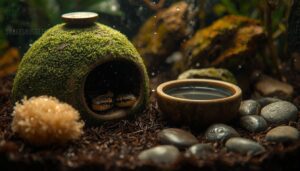
Sponges and reservoirs work best when you treat them like a slow drip, not a flood. Keep Sponge Saturation Levels modest — a lightly squeezed sponge holds enough moisture without creating standing water.
For Reservoir Overflow Prevention, use shallow tanks with a cap, and clean them weekly. Mind Placement Near Heat, since warmth dries sponges fast, throwing off your reptile humidity control entirely.
Top 5 Humid Hide Boxes
Now that you know what to look for, finding the right hide comes down to build quality, size, and how well it holds moisture over time. The five options below cover a range of budgets and snake sizes, so there’s a good chance one fits your setup.
what each one brings to the table.
1. Humid Snake Hide With Temperature And Humidity Sensor
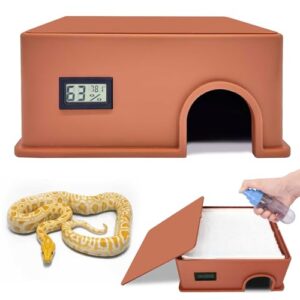
If you want one hide that does the monitoring for you, this 3D-printed PLA unit earns its spot.
The integrated temperature and humidity sensor sits right on the detachable lid, giving you real-time readings without disturbing your snake or cluttering the enclosure with external devices.
At 9.8 × 7.87 × 4.1 inches with a 2.36-inch entrance, it fits corn snakes and juvenile ball pythons well.
The removable mist-able top and non-porous surface make weekly cleanings quick, and at $32.99, it’s genuinely solid value.
| Best For | Small reptile owners—corn snakes, juvenile ball pythons, leopard geckos—who want built-in humidity and temperature monitoring without extra gadgets cluttering the tank. |
|---|---|
| Material | PLA plastic |
| Humidity Source | Manual misting via spray bottle |
| Dimensions (L×W×H) | 9.8×7.87×4.1 in |
| Weight | 1.39 lb |
| Ease of Cleaning | Removable top, non-porous surface |
| Price | $32.99 |
| Additional Features |
|
- Built-in sensor gives you live temp and humidity readings right on the lid—no separate thermometer needed
- Removable top and smooth PLA surface make cleaning fast and easy
- Great value at $32.99 for everything included (spray bottle, replacement cotton, sensor with batteries)
- Humidity depends entirely on manual misting, so retention can be hit or miss
- Active snakes can knock the sensor out of place, meaning you’ll need to reposition it now and then
- A bit snug for larger or adult snakes—best suited for smaller reptiles
2. Reptile Humidifier Hide Box
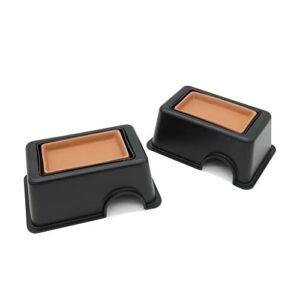
Budget-conscious keepers take note: at $11.99 for two hides, this black plastic reptile hide box delivers surprising value without cutting corners on functionality.
Each unit measures 6.7 × 4.3 × 2.75 inches, with a built-in sink basin doubling as a moisture reservoir and a hollow top that houses a removable water tank — a thoughtful combo that keeps internal humidity stable between refills.
The 1.7 × 1.2-inch entrance suits smaller snakes well, and the smooth non-porous interior wipes clean in minutes.
| Best For | Small reptile owners — especially those keeping geckos, snakes, or bearded dragons — who want an affordable, easy-to-clean hide that pulls double duty as a humidity booster. |
|---|---|
| Material | Black plastic |
| Humidity Source | Removable water tank |
| Dimensions (L×W×H) | 6.7×4.3×2.75 in |
| Weight | 14.39 oz |
| Ease of Cleaning | Smooth interior, disassembles easily |
| Price | $11.99 |
| Additional Features |
|
- Great value at $11.99 for two hides — hard to beat if you’re setting up multiple enclosures on a budget.
- The built-in water tank and sink basin work together to keep humidity steady, which is a real win during shedding season.
- Smooth plastic interior means cleanup is quick — just wipe it down and you’re done.
- The entrance (1.7" × 1.2") is tight, so anything bigger than a small snake or juvenile reptile probably won’t fit comfortably.
- Plastic doesn’t have the natural look or feel of wood or stone, which might not suit naturalistic setups.
- You’ll need to top off the water tank regularly to keep humidity levels where you want them.
3. Hamiledyi Leopard Gecko Humid Hide
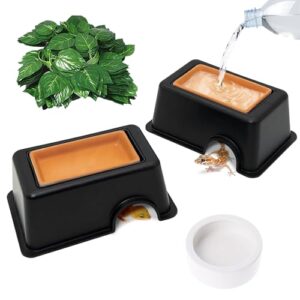
Designed with leopard geckos in mind, the Hamiledyi humid hide still works well for juvenile or slender-bodied snakes that need a cozy, moisture-stable retreat. At roughly 6 × 4 × 4 inches, it fits comfortably inside a standard 20-gallon terrarium without crowding the layout.
The removable top lid makes refilling and cleaning straightforward, and the textured exterior gives it a natural rock appearance.
Interior humidity can reach 70–90% when properly dampened — exactly the microclimate your snake needs during a shed cycle.
| Best For | Small reptiles like leopard geckos, juvenile snakes, and chameleons that need a humid hide to support healthy shedding and stress-free living. |
|---|---|
| Material | Plastic + ceramic |
| Humidity Source | Ceramic water sink |
| Dimensions (L×W×H) | 6.89×4.33×2.75 in |
| Weight | 8 oz |
| Ease of Cleaning | Rinse or wipe with damp rag |
| Price | $14.09 |
| Additional Features |
|
- The ceramic sink slowly releases moisture over 24–48 hours, keeping humidity steady without constant refilling.
- Comes with a plant, food dish, and two hides — solid value for the price at just $14.
- Easy to clean and compact enough to tuck into a travel carrier for vet visits.
- The interior is pretty small, so adult geckos or larger snakes will likely outgrow it fast.
- The ceramic sink is fragile — a few drops and it can chip or crack.
- Humidity output is limited on its own; you may need to add moss or a second moisture source during longer shed cycles.
4. Hypeety Reptile Humid Hide Box
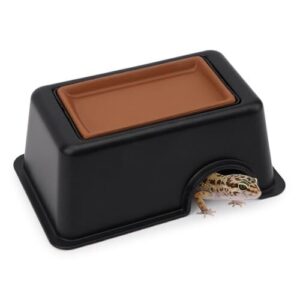
The Hypeety Reptile Humid Hide Box keeps things simple without cutting corners. Measuring 6.68 × 4.32 × 2.75 inches, it fits neatly into most 10- to 20-gallon setups and suits small-to-medium snakes comfortably.
The removable water basin sits beneath the hollow top section, slowly releasing moisture over 24–48 hours — no constant misting required. The textured interior also helps with shedding, giving your snake something to rub against.
Just rinse the basin every couple of days and add moss if your species needs a humidity boost.
| Best For | Small-to-medium reptiles like leopard geckos, ball pythons, and small lizards that need a reliable humid hide to support healthy shedding. |
|---|---|
| Material | High-grade plastic |
| Humidity Source | Removable water basin |
| Dimensions (L×W×H) | 6.68×4.32×2.75 in |
| Weight | 3.53 oz |
| Ease of Cleaning | Routine basin and interior cleaning |
| Price | Not listed |
| Additional Features |
|
- The removable water basin releases moisture gradually over 24–48 hours, so you’re not constantly misting the enclosure.
- The textured interior gives snakes and lizards a surface to rub against, making sheds cleaner and less stressful.
- Compact and easy to reposition, so you can drop it on the warm or cool side depending on what your reptile needs.
- The basin needs refilling every day or two, which can feel like a chore if you’ve got a busy schedule.
- At just under 7 inches long, it’s too small for larger snakes or adult reptiles beyond the small-to-medium range.
- The all-black plastic look won’t win any awards — it’s functional, but doesn’t blend naturally into a bioactive or naturalistic setup.
5. Tinton Life Ceramic Humid Hide Box
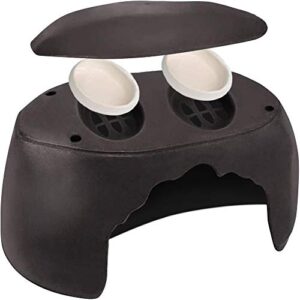
Ceramic builds a different kind of trust. The Tinton Life Ceramic Humid Hide Box uses fired, glazed ceramic rather than plastic, so it holds a stable microclimate without absorbing odors or warping over time. The smooth interior wipes clean in seconds, and the dense walls buffer sudden humidity swings that cheap hides can’t manage.
At 9.8 × 5.9 × 5.9 inches, it suits small-to-medium snakes well. Add damp sphagnum moss inside, and you’ve got a reliable shed station that practically runs itself.
| Best For | Small-to-medium reptiles and amphibians — like tortoises, tree frogs, chameleons, and smaller snakes — that need a humid hide to stay comfortable and stress-free. |
|---|---|
| Material | ABS plastic + ceramic |
| Humidity Source | Two ceramic water sinks |
| Dimensions (L×W×H) | 9.8×5.9×5.9 in |
| Weight | 1.18 lb |
| Ease of Cleaning | Removable top and sinks |
| Price | $20.97 |
| Additional Features |
|
- The hollow interior works as a built-in humidifier, slowly raising humidity over 24–50 hours without any extra gadgets.
- Two removable ceramic sinks make watering and cleaning easy — just pop them out, rinse, and you’re done.
- The rock-textured ABS body looks natural in any terrarium and holds up well against cracks and daily wear.
- The ceramic sink bowls can be fragile and may not sit perfectly in their openings, so handle them with care.
- Moisture output might not cut it for larger enclosures or species that need seriously high humidity levels.
- The interior is too small for bigger snakes or situations where you need to house more than one animal at a time.
Frequently Asked Questions (FAQs)
Do snakes need humid hides?
Yes, snakes do need humid hides — they create a localized moisture zone that softens old skin during shedding, reduces tearing, and lets your snake choose when to use the extra humidity.
Is 40 humidity too low for ball python?
At 40%, your ball python is running on empty — that’s below the 60–70% baseline they need daily. Raise it now, and bump to 70–80% during shed cycles.
How often should you clean a humidity hide?
Clean your humidity hide weekly under normal conditions. During active shedding, bump that up — replace substrate every 7 to 10 days and sanitize the container if moisture residue lingers after the shed.
Can you use a humidity hide for desert snakes?
Desert snakes can absolutely use a humid hide — not as a permanent fixture, but as a targeted shedding tool, keeping ambient enclosure humidity at 20–40% while the hide offers a 60–80% microclimate on demand.
What humidity percentage is best for ball pythons?
For ball pythons, aim for 55%–70% as your daily baseline. During shedding, bump that up to around 80% to help the old skin release cleanly and without stress.
How do you store unused hide substrate properly?
Store unused substrate in a sealed container, away from direct light and heat. This keeps it damp, fresh, and ready to use — no re-moistening required when you need it next.
Can humidity hides cause respiratory problems in snakes?
Yes, they can — but only when mismanaged. Soggy substrate, poor ventilation, and humidity levels too high for your species can encourage mold growth and trigger respiratory irritation over time.
Conclusion
Think of shedding like a snake stepping out of an old life—it should be smooth, not a struggle.
A well-built humidity hide box that snakes instinctively seek out does exactly that: gives them the microclimate they need, exactly when they need it. Nail the size, keep the substrate damp without drowning it, and position it thoughtfully.
When your snake emerges clean and intact, you’ll know the hide did its job.