This site is supported by our readers. We may earn a commission, at no cost to you, if you purchase through links.

A Children’s python can outlive your car, your mortgage, and possibly your first marriage. That tidy little hatchling in the pet store window will still be coiling around your wrist in 2046.
So do children’s pythons make good pets? For the right keeper, yes. They stay compact, calm, and forgiving of beginner mistakes. But they demand steady heat, careful humidity, and a vet who actually treats reptiles. Skip any of those, and a gentle snake turns into a stressed, sick one.
Here’s what size, temperament, daily care, and lifespan look like in real life, so you can decide before you buy.
Table Of Contents
- Key Takeaways
- Do Children’s Pythons Make Good Pets?
- How Big and Friendly Are Children’s Pythons?
- What Care Do Children’s Pythons Need?
- How Long Do Children’s Pythons Live?
- What Should You Consider Before Buying?
- Frequently Asked Questions (FAQs)
- What is the friendliest snake as a pet?
- Do children’s Python bites hurt?
- Are children’s pythons friendly?
- Do pythons like being petted?
- Are Childrens Pythons legal to own everywhere?
- How much does a Childrens Python cost?
- Can Childrens Pythons live with other snakes?
- Do Childrens Pythons bite frequently or aggressively?
- Where can I purchase a Childrens Python?
- Are Childrens Pythons safe around kids?
- Conclusion
Key Takeaways
- You’re signing up for a long commitment, since these snakes typically live 15 to 20 years and can reach 25 to 30 with good care, so plan your housing, budget, and life changes around that.
- Your python will stay a manageable 3 to 4 feet and tolerate brief, gentle handling at dusk, but it’s shy rather than cuddly, so build trust slowly and stop if it hisses or lashes its tail.
- Your snake’s health depends on steady care: a hot side near 90°F controlled by a thermostat, 50 to 60% humidity, secure hides and lid, appropriately sized thawed prey, and constant fresh water.
- You’ll need to line up an exotic vet before bringing one home, budget for setup costs on top of the $150 to $500 purchase price, and check your local laws, since ownership rules and permit requirements vary.
Do Children’s Pythons Make Good Pets?
Why do so many keepers ask about this snake? Because the Children’s python offers a manageable size and a docile temperament, which sounds like a recipe for easy ownership. It isn’t quite that simple.
Even calm snakes have quirks, so it helps to read this Children’s python temperament and care guide before bringing one home and setting up its enclosure.
This isn’t a beginner reptile in the strictest sense. The species is shy, and it needs a precise enclosure setup with a secure, ventilated lid, multiple tight-fitting hides, and a hot side near 90°F. Skip those details and you’ll face stress, poor sheds, or an escape.
Then there’s the commitment. With a 25 to 30 years lifespan, this snake could outlast your next three apartments.
A Children’s python can live 25 to 30 years, easily outlasting your next three apartments
That’s why preparation matters more than enthusiasm. Keepers who research, budget realistically, and handle gently find this python a rewarding companion.
How Big and Friendly Are Children’s Pythons?
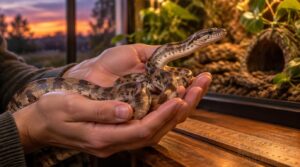
Bigger isn’t better here. Children’s pythons stay at a manageable size, with most adults reaching 3 to 4 feet, though large females can push past that.
Temperament is where that shy reputation meets reality. Their docile temperament is real, but it’s built on trust, not personality alone. Handle them gently and briefly, and a calm temperament usually follows. Their nocturnal behavior means evenings suit them best.
To keep sessions productive:
- Keep sessions to a few minutes, especially with young snakes.
- Handle at dusk, when your python is naturally alert.
- Support the body fully; never grab or restrain.
- Skip handling during shed or after feeding.
Patience pays off. A snake that trusts your hands is easier to care for and examine.
Once your snake is settled in, a ball python handling schedule can help you balance bonding time with the rest it needs to stay calm.
What Care Do Children’s Pythons Need?
Caring for a Children’s Python isn’t complicated, but it does demand consistent daily attention. Your snake’s health rests on three areas, and you’ll want to get each one right: enclosure, heat, and humidity, then feeding and hydration, then health checks and vet care. Here’s what you’ll need to know about each before you bring one home.
Enclosure, Heat, and Humidity

Picture a tiny desert canyon: sun-warmed stone at one end, cool shade at the other. That’s your thermal gradient. Nail the enclosure size, temperature gradient, humidity level, and substrate safety, and your python thrives.
Good husbandry pays off for years, and if you’re curious just how long a well-cared-for snake can stick around, here’s a look at how long ball pythons live.
| Setting | Target | Note |
|---|---|---|
| Juvenile enclosure | 24×18 in | Escape-proof lid |
| Basking | 88–92°F | Use thermostat |
| Humidity | 50–60% | Add humid hide |
| Substrate | Non-aromatic | No cedar |
Check both ends weekly.
Feeding and Hydration
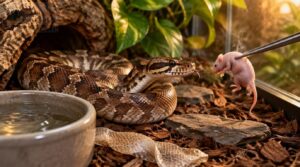
Once your enclosure holds steady, feeding is next. Offer thawed frozen rodents matched to your snake’s girth, since wrong prey size causes refusals and regurgitation. Juveniles need a higher feeding frequency than adults, so let growth guide you, not the calendar.
If you’re ever unsure what counts as appropriate prey, this guide to what snakes eat breaks it down by species and size.
Keep a clean water bowl filled at all times, especially during shedding. Skip handling after feeding for two days.
Health Checks and Veterinary Care

A new python needs a baseline exam, so find an exotic vet before you bring one home. Reptile veterinary care isn’t optional, and annual veterinary visits catch trouble early. Ask about:
- Fecal testing for parasite infestations
- Weight tracking and shed quality
- Respiratory infections and Salmonella transmission risks
Wash your hands after handling, and keep your vet’s after-hours number handy.
How Long Do Children’s Pythons Live?

How long should you plan on keeping one? Longer than most people expect. The typical captive lifespan for Childrens pythons runs 15 to 20 years, and well-kept older animals can reach 25 to 30 years. That isn’t a pet you outgrow with the school year.
Longevity comes down to husbandry, and you control most of it:
- Keep temperatures and humidity steady to prevent stress-related illness.
- Offer appropriately sized prey on a consistent schedule.
- Book regular vet checkups to catch respiratory and metabolic problems early.
- Start with a healthy animal from a breeder with sound genetics.
Treat a young hatchling as a two-decade commitment, because that’s what you’re signing up for. Longevity rewards owners who stay consistent through every single season.
What Should You Consider Before Buying?

Mark bought a juvenile python on a Saturday impulse, then spent that Sunday hunting for a heat mat, a thermostat and a tank that wouldn’t fit under his bed. Don’t repeat his mistake.
A children’s python isn’t a spontaneous purchase, it’s a two-decade commitment. With a 15 to 25 year lifespan, you’re signing up for rent changes, new jobs and probably a few moves.
Budget for initial setup costs before you buy the snake. Adults need an enclosure size of at least 90×45 cm, plus a thermostat, hides and a reliable temperature gradient, 28 to 32°C by day and 24 to 26°C at night.
Ask the seller about the snake’s feeding response, and find a reptile vet before trouble hits.
Frequently Asked Questions (FAQs)
What is the friendliest snake as a pet?
Many keepers theorize ball pythons top the friendliness charts, and honestly, the theory holds up. Their calm temperament and tolerance for gentle handling techniques make them famously docile. Children’s pythons rank close behind, though trust building takes patience.
Do children’s Python bites hurt?
Worried about venom? Don’t be. A children’s python bite isn’t venomous, it’s a pinprick. Expect brief puncture marks, maybe minor swelling. Pain depends on bite duration and your handling techniques. Watch for infection.
Are children’s pythons friendly?
Think of a children’s python as a shy librarian: quiet, curious, but easily startled. They’re tolerant, not cuddly. Juveniles show defensive behaviors, so read body language, keep interaction frequency low, and handle gently.
Do pythons like being petted?
Ironically, your snake doesn’t want affection; it wants to be left alone. Children’s pythons tolerate brief, gentle handling, but they don’t enjoy petting. Watch body language: hissing, tail lashing, or escaping means stop.
Are Childrens Pythons legal to own everywhere?
You might assume a harmless, non-venomous snake needs no paperwork, but reptile ownership laws vary widely. Some regions impose permit requirements, import restrictions, or bans, so check your local laws and regulations before buying.
How much does a Childrens Python cost?
Expect a reptile cost range of $150–$ Juveniles from breeders with solid reptile breeder reputation run $150–$300; adults and rare lines exceed $ Budget $30–$100 shipping and $150–$600 for setup.
Can Childrens Pythons live with other snakes?
Short answer: no. Housing multiple snakes together risks stress, feeding competition, and cannibalism. Children’s pythons are a solitary reptile species; keep yours alone with proper reptile enclosure size, heat, and escape prevention.
Do Childrens Pythons bite frequently or aggressively?
Here’s the irony: a snake named for a child is one of the least "bitey" pythons you’ll own. Biting behavior is rare, usually defensive behaviors in juveniles, triggered by improper handling, stress sensitivity, or startle, not aggression.
Where can I purchase a Childrens Python?
Picture a stall at a reptile expo, glass tubs glowing under lamps. Buy from reputable breeders with verified lineage, browse reptile expos, or check rescues. Always confirm legal restrictions and health records first.
Are Childrens Pythons safe around kids?
A small snake wrapped in a child’s palm symbolizes trust, and trust needs rules.
Yes, they’re safe: nonvenomous, too small to constrict. Supervise handling, practice reptile hygiene practices, and consult a reptile veterinarian to prevent Salmonella transmission.
Experts generally advise against any snake as a pet for children under eight years old, since young kids may not understand snake behavior.
Conclusion
Picture a small, patterned coil resting in your palm, warm from the heat lamp you checked twice this morning. That’s the best version of this hobby.
So, do childrens pythons make good pets? Yes, if you commit to steady heat, honest humidity checks, and a reptile vet you trust. The snake asks for little, but it asks every single day.
Decide now, while the hatchling is still behind glass. Twenty long years punish every shortcut.