This site is supported by our readers. We may earn a commission, at no cost to you, if you purchase through links.

A snake in a sealed box can still breathe fine for a while. That’s the trap. Nothing looks wrong until the lid comes off and the air has gone warm, stale, and damp.
Terrestrial snakes need only one to two air changes per hour, so a standard 6-quart box asks for very little. But "very little" isn’t "none," and an insulated bag slows that exchange even further. Your snake can’t tell you it’s struggling.
Getting ventilation requirements for snake travel containers right comes down to a few simple choices: where the holes go, how big they are, and what you check before the car starts.
Table Of Contents
- Key Takeaways
- How Much Ventilation Do Snake Travel Containers Need?
- Choose a Secure, Well-Ventilated Snake Travel Container
- Size and Position Ventilation Holes Safely
- Maintain Airflow Through Snake Bags and Insulation
- Check Container Ventilation Before and During Travel
- Frequently Asked Questions (FAQs)
- How much ventilation does a snake need?
- How hot is too hot for a snake enclosure?
- How cold is too cold for snakes to be out?
- Is 70% humidity too high for a ball python?
- Can snakes suffocate in sealed travel containers?
- How often should I check airflow during long trips?
- Does ventilation need change in hot weather?
- Should I ventilate a container carried in a car?
- Do baby snakes need smaller or fewer holes?
- Conclusion
Key Takeaways
- Your snake only needs one to two air changes per hour, so you’re aiming for enough airflow, not a lot, since too many holes cost you heat, strength, and escape-proofing.
- Keep holes small (under 3mm for hatchlings), drill them on opposite sides at both high and low points so air flows through, and always size them to your smallest snake.
- Pick an opaque, snug container with a latching lid, add a cotton or hessian bag, and make sure insulation, foam, or towels never block the holes.
- Test the airflow before every trip, then check for condensation, temperature (stay within roughly 75 to 85°F), and clear holes at every stop, about every two hours.
How Much Ventilation Do Snake Travel Containers Need?
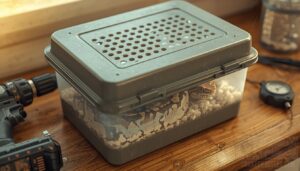
Airflow in a snake travel container is a modest requirement, and that’s good news. Most terrestrial snakes do fine with 1 to 2 air changes per hour. For a standard 6-quart box, that’s a tiny volume of air, so you’re not chasing big numbers.
Since too much ventilation dries out the box, these snake enclosure ventilation tips show how to balance airflow and humidity for your species.
The real job is ventilation versus airflow balance. Too few holes and air goes stale. Too many and you lose heat, weaken the walls, and give your snake escape routes. Your goal is enough, never more.
Insulated containers trap warmth and slow air exchange, so use temperature monitoring with a probe thermometer. Run container testing at home: close the lid, wait an hour, check heat and condensation. Keep every opening small to protect your escapeproof enclosure. Drill the holes from the inside outward to avoid sharp edges, and choose small, numerous ventilation holes over a few large ones.
Choose a Secure, Well-Ventilated Snake Travel Container

Once you know how much air your snake needs, pick a box that can actually hold it. A secure container is simple: solid walls, a lid that latches, and nothing fancy.
Look for these three things:
- Opaque plastic, so your snake isn’t watching the world rush by.
- A lid that clips, latches, or screws shut.
- A snug fit, only slightly bigger than your snake coiled.
Tight and dark feels safe to a snake. Roomy and bright doesn’t.
If your snake keeps soaking in its bowl, it may be hunting for a cozier hideout, so why a snake sits in its water dish is worth a quick read.
Skip anything with flimsy snap-on lids. Strong latches protect container integrity, and that’s your main escape prevention. Check for cracks before every trip, and tug the lid hard.
Add a cloth bag for a second layer, and plan temperature monitoring. Ventilation holes follow.
Size and Position Ventilation Holes Safely
Getting the holes right comes down to two things: how big they are and where they go. Skip either one and a great container turns into a risky one. Here’s how to handle both, so your snake gets steady airflow and stays put.
Since ventilation also affects humidity inside the hide, it helps to understand how to manage snake terrarium moisture levels before you settle on a final hole size.
Escape-Proof Hole Sizes for Your Snake

Picture a ball python hatchling, thin as a pencil, nosing along the edge of a deli cup. One hole punched a little too wide, and she’s gone before you’ve found your car keys.
One hole punched a little too wide, and a pencil-thin hatchling is gone before you’ve found your car keys
Size your ventilation holes to the smallest snake in the container, never the biggest. Keep them under 3mm for hatchlings, and cover larger openings with fine mesh. Escape-proof enclosure beats guesswork.
Hole Placement for Cross-Ventilation
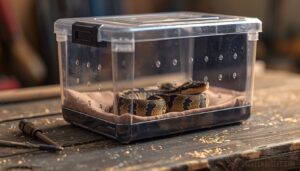
Small holes are only half the job. Placement finishes it.
Once the holes are in place, you can group your pots by light and spacing using this guide to arranging snake plants so water drains freely and air circulates.
- Drill ventilation holes on opposite vertical sides, directly across from each other.
- Set some high, some low, so warm air exits and cool air enters.
- Space holes two diameters apart, away from corners.
Good airflow balance aids temperature regulation, and smart container selection keeps secure containment simple.
Maintain Airflow Through Snake Bags and Insulation

Snake bags do more than keep your snake contained. They’re your first layer of airflow control, so choose one made from hessian or cotton. Natural fabric lets air pass through while holding your snake securely, and that’s exactly the job.
Next comes the outer container. Slip the bag inside an insulated box with ventilation holes, and you get airflow balance without overheating or chilling your animal. It’s a simple setup, and simple is what keeps snakes safe.
Here’s where people slip up during container preparation: they pack insulation tightly around the walls and block the holes. Don’t. Keep every hole clear, and check that foam, towels or a traction lining never cover them.
Air needs a path. Give it one, and your snake will do the rest.
Check Container Ventilation Before and During Travel
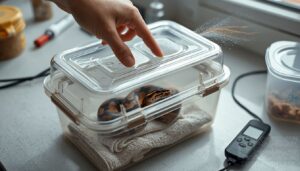
Check your ventilation holes before every trip, not just the first one. Debris, leftover substrate, or packing material can block them without you noticing. Close the lid, then feel for a steady breeze through the holes. No breeze, no trip.
While you travel, glance at the container walls. Condensation means poor airflow and a ventilation vs airflow balance that’s slipping. Watch the temperature too, since restricted air throws off thermal regulation fast. A snake that’s suddenly restless may be telling you the air isn’t right.
Run your fingers over the holes for sharp edges, and confirm screens or covers are still attached. Good container preparation also means an escape proof enclosure with latches that hold without sealing off airflow.
Keep a backup plan handy. Simple, but it matters.
Frequently Asked Questions (FAQs)
How much ventilation does a snake need?
Think of ventilation as a slow, steady breath. Your snake needs enough airflow balance to keep air fresh and CO2 down, not a gale. A secure container with modest ventilation holes does it. Simple.
How hot is too hot for a snake enclosure?
Think a warmer snake is a happier one? Nope. Above 90°F (32°C), overheating in captive reptiles begins, and vehicle heat buildup risk climbs fast.
Keep a steady temperature range for reptile thermoregulation and thermal stability.
How cold is too cold for snakes to be out?
Below 65°F, most snakes start sliding into cold stress in reptiles. Aim for a temperature range of 75 to 85°F.
An insulated cooler gives you thermal stability, and ventilation holes keep air moving as well.
Is 70% humidity too high for a ball python?
Seventy percent is a tightrope.
For ball pythons, it’s fine while shedding, but constant humidity above 70% can invite respiratory trouble. Use humidity control, smart container selection, and ventilation holes in your reptile transport boxes.
Can snakes suffocate in sealed travel containers?
A keeper once told me his corn snake rode home in a sealed lunchbox for ninety minutes and seemed fine. Lucky, not safe.
Yes, snakes can suffocate. Without ventilation holes, oxygen drops and carbon dioxide climbs.
How often should I check airflow during long trips?
Safety experts recommend a break every two hours, so that’s your rhythm. Make airflow monitoring part of every stop: clear ventilation holes, support temperature management, and keep secure transport simple.
Fewer surprises mean stress reduction.
Does ventilation need change in hot weather?
Think heat really changes nothing? It does. For crosscountry relocation, ventilation requirements for snake travel containers rise with heat risks. Enlarge holes in plastic storage containers, cover them with fine mesh, and prioritize temperature management.
Should I ventilate a container carried in a car?
A sealed box is a tiny room with no windows, and your snake still has to breathe in it. Yes, ventilate it. Add small holes for airflow, keep enclosure security tight, and favor minimal handling during transport.
Do baby snakes need smaller or fewer holes?
Smaller holes don’t mean worse airflow. Baby snakes need smaller, not fewer holes: 3 to 4mm each, melted with a soldering iron, spread evenly. Fewer, larger holes invite escapes, and your transport container’s ventilation stays fine.
Conclusion
Think of airflow as a quiet seatbelt: you only notice it when it’s missing. The ventilation requirements for snake travel containers aren’t complicated. Punch small, escape-proof holes on opposite sides, keep bags unzipped enough to breathe, and check the box before you drive.
Then check again at every stop. Your snake can’t complain, so you do the noticing for it. A few minutes of attention buys hours of calm. Fresh air is cheap. Spend it.