This site is supported by our readers. We may earn a commission, at no cost to you, if you purchase through links.

Your snake looks thinner every week, and you can’t figure out why. The appetite’s fine, the enclosure’s clean, yet those ribs keep showing more. Here’s the culprit hiding in plain sight: internal parasites in pet snakes.
They’re sneaky. Giardia, tapeworms, roundworms—these freeloaders move in quietly and drain your snake’s health from the inside out. Left alone, they don’t just cause weight loss; they can turn deadly fast.
Good news: spotting the red flags early and knowing your treatment options can turn things around before they spiral.
Table Of Contents
- Key Takeaways
- Can Pet Snakes Get Parasites?
- Signs Your Snake Has Parasites
- How Vets Diagnose Snake Parasites
- Treating Internal Parasites Safely
- Preventing Parasites in Pet Snakes
- Frequently Asked Questions (FAQs)
- How to treat internal parasites in snakes?
- What are two signs of internal parasites?
- How do I tell if my snake has parasites?
- Can snakes get intestinal parasites?
- How much does treating snake parasites typically cost?
- Can humans catch parasites from pet snakes?
- What medications treat Cryptosporidium infections in snakes?
- How long does fecal flotation testing usually take?
- Are mites considered internal or external parasites?
- Conclusion
Key Takeaways
- Watch for weight loss, poor appetite, abnormal poop, regurgitation, and lethargy since these red flags often signal internal parasites like Giardia, tapeworms, or roundworms.
- Always get a vet’s fecal sample analysis to correctly identify the parasite before starting any treatment, since worms and protozoa need completely different medications.
- Treat parasites only with vet-prescribed dewormers like Fenbendazole or Praziquantel, matched precisely to the diagnosis, and never attempt DIY dosing.
- Prevent infestations through 60-90 day quarantines for new snakes, frozen-thawed prey, quick feces cleanup, dedicated cleaning tools, and yearly routine fecal testing.
Can Pet Snakes Get Parasites?
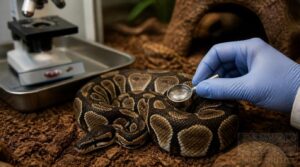
Yes, snakes can get parasites, and it’s more common than most owners realize. From worms to protozoa, these unwanted guests sneak in more ways than you’d think. Here’s what every snake owner should know about the culprits and the risks behind them.
In fact, studies suggest parasites affect up to 38% of captive snakes, which is why staying on top of proper snake skin care and hygiene can make a real difference in catching problems early.
Common Internal Parasites
Snakes pick up endoparasites more often than most owners expect.
Four culprits show up again and again:
- Giardia – a protozoan infecting the small intestine
- Cryptosporidium – causes watery diarrhea, tough to clear
- Cestodes – tapeworm segments visible in feces
- Nematodes – roundworms tied to poor body condition
Each thrives on ingested cysts or eggs from contaminated feces, quietly setting up shop inside your snake’s gut. These parasitic intestinal worms can cause significant health risks to the host.
Worms Versus Protozoa
Ever wonder why your vet asks for a poop sample before treating anything? It’s because worms and protozoa aren’t the same beast. Worms (like roundworms) are multicellular, spotted as eggs under the microscope. Protozoa are single-celled, identified as live forms in a fresh smear. Mixing up treatment plans means picking the wrong medication entirely.
How Parasites Spread
How does a parasite actually get from one snake to another? Mostly through poop. Contaminated feces dry out, break apart, and get ingested during feeding or cleanup.
- Dirty water bowls turning into contamination hubs
- Shared tongs and hides carrying hidden eggs
- Infected prey passing parasites at mealtime
- Damp substrate keeping parasites alive longer
Quarantine protocols and dedicated tools cut this cycle short fast.
Captive Snake Risk Factors
Captivity itself can tip the odds toward infection. Cleaning frequency matters a ton: skipped spot-checks let intestinal parasites recycle through the same enclosure.
Stress lowers immune defenses, so a snake fighting anxiety fights parasites worse too. Substrate moisture, sloppy biosecurity protocols, and skipping quarantine for new snakes stack the risk further.
Older snakes face higher age vulnerability—one study found 31% Cryptosporidium rates past age three. Solid husbandry, including prekilled frozen prey, breaks the parasite life cycle.
Signs Your Snake Has Parasites

So how do you know something’s off? Your snake can’t tell you in words, but its body and behavior will. Here are the top red flags to watch for.
Feeding issues often show up first, so it helps to check your routine against this guide to snake feeding schedules before assuming something’s wrong.
Weight Loss
A thinning body is a red flag, not just a weight number on a scale.
With intestinal parasites, energy gets stolen before it reaches your snake’s muscles.
- Ribs or spine showing through scales
- Sudden muscle loss despite normal feeding
- Slow, steady decline over weeks
This isn’t crash dieting: it’s parasites disrupting digestion. A fecal sample check catches it early, before anthelmintic therapy becomes urgent.
Poor Appetite
Skipping meals often means something’s off inside, not just pickiness.
Intestinal parasites disrupt normal hunger cues, but so do dehydration and poor thermoregulation. Stress from rough handling or a new enclosure can shut down feeding too.
Oral discomfort—like mouth rot—makes biting painful, so your snake avoids food altogether. Don’t wait weeks to investigate; a fecal sample check rules out parasites early.
Abnormal Poop
Ever peek in the tank and wince? Poop tells a story. Bloody stool signals intestinal parasites like Entamoeba invadans. Watch for these red flags:
- Greasy, pale stool (steatorrhea)
- Bright yellow, foul-smelling poop
- Green tint from fast bile transit
- Runny diarrhea or mucus
- Visible worms
Malabsorption indicators mean it’s time for fecal testing—don’t guess, get an exam.
Regurgitation or Vomiting
Not all "throw-up" is the same, and the difference matters. Regurgitation is passive: undigested food slides back up with little warning, often soon after eating. Vomiting is forceful, involving retching, nausea, and active muscle contractions to expel stomach contents.
Both raise aspiration risks. Either sign warrants a fecal sample analysis—intestinal parasites often hide behind these clinical symptoms, and proper anthelmintic therapy depends on catching them early.
Lethargy and Hiding
Your snake gone quiet on you? That’s your cue to pay attention.
Reduced responsiveness shows up first: slower reactions to handling, less tongue flicking, longer hiding stretches even at basking time. Watch for thermoregulation changes too—an ill snake often skips its warm spot entirely.
Combine that with weight loss, and intestinal parasites move up your suspect list fast. Don’t wait: grab a fecal sample for testing before starting anthelmintic therapy.
How Vets Diagnose Snake Parasites
So you’ve spotted the red flags: now what? Guessing won’t cut it here, so your vet turns to a few key steps to find the culprit. Here’s what that diagnostic process actually looks like.
Direct Fecal Smears

Direct fecal smears are quick and simple: a bit of fresh poop mixed with saline on a slide. Vets look for wiggly trophozoites (active protozoa) under the microscope. Sometimes iodine staining is used instead, which highlights cysts but stops movement. Thin samples matter—too thick, and you’ll miss everything hiding underneath.
Physical Exam Findings
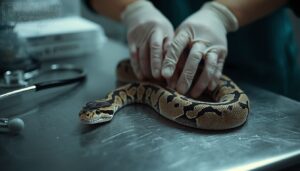
A microscope only tells half the story. Vets also use hands-on coelomic palpation, feeling the belly for lumps, fluid, or odd firmness.
They’ll check:
- Muscle wasting along the spine
- Sticky or dry mouth mucus
- Labored breathing or poor hydration
These red flags, paired with weight loss and appetite changes, help confirm what’s going on inside.
Follow-Up Rechecks

Palpation gives clues, but only a recheck fecal test proves the parasites are gone. Timing matters: too early, and eggs won’t show yet.
| Recheck Factor | Why It Matters |
|---|---|
| Sample freshness | Warm, fresh stool detects organisms best |
| Timing | Weeks post-treatment, not months |
| Weight recovery | Confirms healing alongside lab results |
| Reinfection risk | Clean enclosures prevent re-seeding |
| Result type | Guides next treatment steps |
Treating Internal Parasites Safely
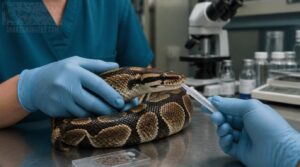
Got a diagnosis? Good, now comes the part that actually helps your snake. Treatment isn’t one-size-fits-all: the right plan depends on which parasite showed up. Here’s what safe, vet-guided treatment usually looks like.
Vet-Prescribed Dewormers
Got worms confirmed? Your vet won’t guess—they’ll match the drug to the culprit. Fenbendazole treats roundworms and hookworms. Praziquantel clears tapeworms. Some clinics use combination chews, pairing ingredients for broader coverage in one dose.
This anthelmintic therapy relies on accurate fecal sample analysis first. Never DIY dosing—internal parasites need precise, prescription-only treatment matched through proper veterinary diagnostics.
Protozoa Treatment Options
Worms are one thing, protozoa are another beast entirely: these single-celled parasites need different ammo. Nitroimidazole drugs treat Giardia well, but Cryptosporidium calls for Nitazoxanide to help with mitigating oocyst shedding. Dosing gets species-specific, and vets watch for neurological toxicity at high doses.
Treatment success depends on:
- Correct organism ID via fecal sample analysis
- Species-specific dosing precision
- Follow-up microscopic examination
Tapeworm and Fluke Care
Spot little rice-like segments near your snake’s vent? Those are proglottids, tapeworm segments packed with eggs. Praziquantel at 8 mg/kg clears both tapeworms and flukes.
Flukes involve intermediate hosts, meaning organ damage varies by species. Since cestode life cycles often need repeat dosing, don’t skip your recheck. Fecal testing confirms the parasitic infection is truly gone, not just quieter.
Supportive Husbandry Adjustments
Medicine only does half the job: recovery also depends on a calm, clean home. Keep the enclosure layout stable—no rearranging hides or decor while your snake heals. Minimize handling, maintain a consistent light cycle, and keep basking zones accurate. Secure hides matter too, so your snake can thermoregulate without stress.
Solid enclosure hygiene and sanitation protocols speed everything along.
Avoiding DIY Medications
That online dewormer looks tempting, right? Don’t grab it yet.
Dosing calculation errors are common since human or other-pet math doesn’t fit snake metabolism. Products also target specific parasites, so misidentified parasite types waste time while damage continues.
Add species-specific toxicity risks and shaky medication potency, and DIY treatment can mask bigger illnesses. Fecal testing first, always.
Preventing Parasites in Pet Snakes
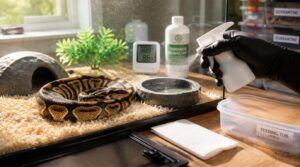
Treating parasites is good, but stopping them before they start is even better. An ounce of prevention really does beat a lifetime of fecal tests. Here are five simple habits that keep your snake parasite-free.
Quarantine New Snakes
Quarantine every new snake before it meets your collection: 60 to 90 days minimum, longer if eating or shedding seems off. Since rehoming stress and unstable humidity can quietly trigger illness, it helps to know the warning signs of a snake respiratory infection before quarantine even begins.
- Separate enclosures and tools
- Daily stool monitoring
- Early vet fecal screening
Handle quarantined snakes last, wash hands between animals, and don’t shortcut the quarantine period—one new arrival can restart the clock for everyone.
Choose Safe Prey
Ever wonder if that mouse is hiding more than just dinner? Live prey can carry parasites your snake didn’t order.
Frozen-thawed prey, kept solid 30+ days, kills off hidden invaders before they become your problem.
Buy from reputable suppliers only—random online sourcing raises parasite transmission risks fast.
Safe feeding isn’t just tidy husbandry; it’s frontline defense against unwanted hitchhikers.
Clean Feces Quickly
That poop pile is a ticking clock: the longer it sits, the more it spreads.
Every minute a poop pile sits in the enclosure, it spreads more parasites
Fresh waste means fresh microbe spread prevention—wipe it up before humidity turns it into a smear across substrate.
- Scoop immediately, don’t wait
- Disinfect the contact spot
- Let it dry fully first
- Keep water bowls splash-free
Quick action beats cross-contamination hazards and keeps fecal sample analysis accurate when your vet needs one.
Use Dedicated Tools
Grabbing the same scoop for every enclosure? That’s basically trading germs between cages.
Dedicated cleaning supplies keep each snake’s setup isolated, no cross-contamination shortcuts.
Label bowls, scoops, and brushes per enclosure. It’s a small habit that stops microscopic parasite detection from becoming a bigger headache during fecal testing later.
Schedule Routine Fecals
Labels on tools solve one problem. Timing solves another: fresh samples matter most, since parasites degrade fast outside the body.
Healthy snakes still need yearly fecal testing. Higher-risk feeders need more frequent checks.
Quarantine periods deserve their own testing schedule. After treatment, post-treatment rechecks confirm the parasite’s actually gone, not just quiet.
Frequently Asked Questions (FAQs)
How to treat internal parasites in snakes?
Treatment isn’t a magic wand: it’s precise deworming matched to the parasite, correct dosing to avoid toxicity, follow-up fecal tests, and supportive feeding, all guided by your vet, not a bathroom-cabinet guess.
What are two signs of internal parasites?
Two big red flags: visible weight loss despite normal feeding, and fluctuating appetite with occasional refusals. Watch for unusual hiding too. Catching these early, alongside stool changes or regurgitation, helps you act before lethargy and diarrhea signal a bigger problem.
How do I tell if my snake has parasites?
Watch closely, look carefully, notice quietly: your snake’s body often whispers before it shouts.
Track weight loss, appetite changes, lethargy, vomiting, or diarrhea. Check for mid-body swelling or odd stool consistency—subtle shifts matter more than dramatic ones when spotting hidden parasites.
Can snakes get intestinal parasites?
Yes, absolutely: intestinal helminthiasis and protozoal bugs both target snakes.
Fecal shedding spreads infectious stages fast, especially in crowded captive setups.
Some snakes look totally fine — subclinical shedding still risks host-to-host spread through environmental contamination.
How much does treating snake parasites typically cost?
Funny how a "cheap" pet can still empty your wallet: fecal testing runs $30–$60, exams $75–$ Add dewormers, rechecks, and maybe bloodwork, and total care hits $200–$400 yearly—so keep an emergency fund handy.
Can humans catch parasites from pet snakes?
Some snake parasites carry zoonotic risks, spreading through fecal-oral pathways to humans. Cross-contamination happens via unwashed hands after handling feces or enclosures. That’s why hand hygiene matters most for zoonosis prevention—it’s your simplest defense.
What medications treat Cryptosporidium infections in snakes?
Hope meets stubbornness here: paromomycin, nitazoxanide, and multi-drug combos (azithromycin-rifabutin, clofazimine-curcumin) have all been tried, but none reliably clear Cryptosporidium. It’s a tough bug — treatment eases symptoms, not a guaranteed cure.
How long does fecal flotation testing usually take?
Quick, usually: fecal flotation takes about 15–20 minutes for settling, plus 3-5 minutes if centrifuged. Add slide prep time, and most fecal examination results land within an hour—same-day answers for your snake’s peace of mind.
Are mites considered internal or external parasites?
Good news: snake mites are external parasites, not internal ones. They live on skin surfaces as ectoparasites, causing visible specks and irritation.
Unlike internal parasites needing fecal tests, snake mite treatment targets the body and enclosure through environmental mite control.
Conclusion
That thinning snake and that first fecal sample often land in the same week: pure coincidence, or your snake finally asking for help. Either way, internal parasites in pet snakes rarely announce themselves loudly.
They whisper through weight loss, runny poop, and low energy. Catch the whisper early, and treatment works fast. Ignore it, and you’re gambling with a life that depends on you. Stay sharp, schedule routine fecals, and trust your gut every single time.