This site is supported by our readers. We may earn a commission, at no cost to you, if you purchase through links.
You spot something moving near your snake’s eye and your stomach drops. Is it a mite, a tick, or just a fleck of shed skin catching the light? The answer matters more than you’d think, since one pest calls for a quarantine tank and the other for a pair of forceps.
Snake mites measure less than a millimeter and scatter like pepper across the scales. Ticks, by contrast, grow up to 29 mm and lock onto one spot until they’re swollen and done. Knowing the snake mites vs ticks difference helps you catch trouble early, before anemia, disease, or a full-blown infestation takes hold.
Here’s how to tell them apart, spot the symptoms, and remove them safely.
Table Of Contents
- Key Takeaways
- Snake Mites Vs Ticks: Quick Difference
- What Snake Mites Look Like
- What Ticks Look Like
- Symptoms on Your Snake
- Health Risks Compared
- Safe Removal and Prevention
- Frequently Asked Questions (FAQs)
- What kills snake mites instantly?
- How do you tell if you have snake mites?
- Can snake mites live on humans?
- Can snake mites spread to dogs?
- How long do snake mites survive without a host?
- Can snake mites spread from snakes to other pets?
- How many eggs do snake mites lay total?
- What temperature and humidity do snake mites prefer?
- How fast can an engorged snake mite travel?
- Conclusion
Key Takeaways
- Snake mites are tiny (under 1mm), scatter quickly across scales, and cluster near the eyes, nostrils, and water bowl, while ticks are much larger (up to 29mm), attach to one spot, and swell dramatically as they feed.
- Mites pose risks like anemia, Aeromonas bacteria, and Inclusion Body Disease in pythons, while ticks can transmit vector-borne illnesses such as Lyme disease.
- Watch for warning signs like frequent soaking, rubbing against enclosure surfaces, dull or pale scales, lethargy, and appetite loss, since these often signal a parasite problem before you spot the pest itself.
- Prevent infestations by quarantining new snakes for 60 to 90 days, using smooth easy-to-clean substrates, disinfecting bowls and hides regularly, and treating your snake only with vet-approved methods instead of homemade chemical solutions.
Snake Mites Vs Ticks: Quick Difference
Mites and ticks might seem like the same nuisance, but your snake’s health depends on telling them apart correctly. They differ in size, attachment sites, and feeding habits, and each poses its own risks to your pet. Here’s what sets them apart, side by side.
If left untreated, either parasite can lead to anemia, infection, or worse, which is why knowing effective snake parasite control methods matters so much.
Size and Body Shape
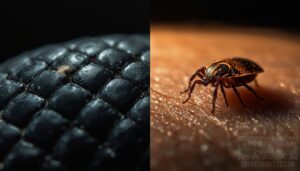
One glance rarely settles it: ticks and mites are both eight-legged arachnids, but size gives them away fast.
| Feature | Snake Mites | Ticks |
|---|---|---|
| Length | 0.08–1.00 mm | 3–29 mm |
| Shield | Partial dorsal shield | Full scutum (hard ticks) |
| Visibility | Often invisible | Easily visible |
Mites stay microscopic, while ticks swell to pea-sized after feeding, making visual detection far easier.
Where They Attach
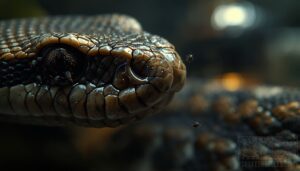
Where they attach tells you almost as much as size does. Snake mites favor facial crease hiding spots near eyes and nostrils, plus scale margin gaps and ventral skin contact zones. Ticks pick one exposed site and stay put.
| Location | Snake Mites | Ticks |
|---|---|---|
| Face/eyes | Common | Occasional |
| Scale margins | Frequent | Rare |
| Water bowls | Frequent | Indirect |
Movement and Visibility
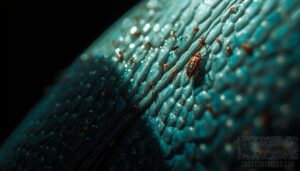
Once attached, snake mites keep moving, crawling fast between scale creases and vanishing at the head and neck. Tracking tiny specks takes patience. Ticks behave differently: they settle in and stay fixed.
| Trait | Snake Mites | Ticks |
|---|---|---|
| Speed | Fast | Slow |
| Pattern | Scattered | Fixed |
| Detection | Bright light | Direct view |
Feeding Behavior
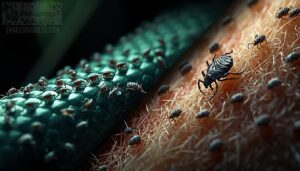
Ticks anchor with barbed mouthparts, cementing in for a long single meal that swells them dramatically. Snake mites feed briefly but repeatedly, using non-barbed mouthparts under scales.
| Trait | Snake Mites | Ticks |
|---|---|---|
| Frequency | Frequent, small meals | One long meal |
| Attachment | Loose, mobile | Fixed, cemented |
| Engorgement | Minimal | Dramatic |
Snake-specific Concerns

Your snake’s comfort hinges on catching mites early, since they trigger behavioral distress signs ticks rarely cause. Watch for restlessness, frequent soaking, and rubbing against décor.
| Concern | Snake Mites |
|---|---|
| Water bowl | Repeated re-exposure |
| Eyes/nostrils | Ocular irritation risk |
| Scales | Surface damage |
| Enclosure | Breeding cycle continues |
Cleaning your snake enclosure and bedding matters as much as treating the snake itself. Maintaining proper enclosure hygiene standards is key to preventing bacterial growth and further health complications.
What Snake Mites Look Like
Snake mites are tiny, but they leave clues your eyes can catch if you know where to look. Most owners spot the problem long before they spot an actual mite. Here’s what to watch for on your snake and around its enclosure.
Check your snake’s water bowl for tiny dark specks floating on the surface, since mites often drown there, and if you’re unsure what you’re seeing, this guide to spotting and treating snake mites breaks down exactly what to look for.
Tiny Pepper-like Dots
Ever spot dark specks scattered across your snake’s water bowl and wonder what they’re? Those aren’t dirt — they’re likely live snake mites, roughly pepper-flake sized. Look closely, and you’ll notice tiny movement: mites crawling along scale edges or floating after a soak. This is often the first visible clue of mite infestation, long before you’d spot anything resembling a tick.
Around Eyes and Nostrils
Right around the eyes, mites gather in facial skin folds and along the lower lid, causing eye margin irritation you’ll notice fast.
Nostrils attract them too, thanks to nostril moisture cues and scaly snout grooves nearby.
- Lid creases
- Nostril rims
- Snout grooves
- Scale junctions
- Head clustering patterns
This clustering helps you identify snake mites early, before broader skin irritation develops—key for prompt mite treatment.
Under Scales
The real hiding happens where you can’t easily look: scale crevice hiding gives mites microcavity protection from light and handling.
Gently part your snake’s scales under bright light and watch for moving skin specks along the edges. You may also spot sub-scute irritation or subtle attachment site inflammation—early clues that help you identify snake mites before infestation spreads through the enclosure.
In Water Bowls
Water bowls double as diagnostic tools. Tiny moving dots along the rim often mean active mite infestation, since mites climb smooth or scratched surfaces alike.
Check Rim Movement Patterns under bright light, and note Bowl Surface Texture—rough spots trap organic film. Daily rinsing, plus Splash Zone Sanitation:
- Wipe rims
- Replace water
- Dry fully
- Inspect debris
- Choose smooth materials
Ashy Scale Debris
A dusty, grayish film on your snake’s scales isn’t dirt—it’s often mite waste and shed skin buildup. This ashy debris signals mite droppings accumulating between sheds.
Run a finger along dry scales; residue clinging there means active infestation, not normal exfoliation.
Monitoring scale cleanliness regularly helps you catch snake mite problems before anemia sets in, distinguishing mites vs ticks by texture alone.
What Ticks Look Like
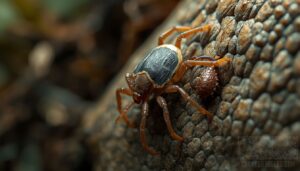
Ticks are a different animal entirely, and you’ll usually spot one without needing to look twice. They’re bigger, tougher-looking, and change shape dramatically once they start feeding. Here’s what to watch for so you can tell a tick from a mite at a glance.
Larger Oval Bodies
One glance tells you a lot: ticks show up as a larger, oval-shaped body, not a scattering of dots like snake mites.
- Clear outline you can actually see
- Bulkier profile against the scales
- Distinct shape, not clustered specks
That visible bulk is your quickest clue when comparing ectoparasites and confirming a mite infestation versus a tick attachment.
Flat Before Feeding
Ticks begin with a flat, unfed body profile, hugging the skin or scales. Early attachment signs look like a small dark speck, often mistaken for debris or a freckle. You’ll spot their mouthparts anchored in, but without swelling. This subtle silhouette makes pre-engorgement identification tricky, especially compared to snake mites, which cluster and move rapidly.
Skin irritation from tick bite can signal their presence.
Swollen After Feeding
Once a tick starts feeding, its abdomen expands dramatically, shifting from flat to a distended, pea-like shape. This blood meal volume can multiply the tick’s size several times over. Unlike snake mites, which stay pinpoint-small, a fed tick becomes an obvious swollen bump.
Feeding stage identification comes down to shape:
- Flat and small = unfed
- Rounded, teardrop-shaped = actively feeding
- Full and taut = engorged, ready to detach
Visible Attached Mouthparts
Look closely at a swollen tick and you’ll often spot the mouthparts still buried in the skin — a small dark point surrounded by mild inflammation. This embedded feeding structure anchors the tick firmly, which makes forced removal risky. Pulling too hard can leave mouthparts behind, worsening skin irritation.
Identifying this attachment site helps you distinguish a tick bite from scattered mite bites left by these eight-legged parasites.
Hard Versus Soft Ticks
Not every ectoparasite plays by the same rules. Hard ticks carry a rigid scutum, feed for days, and often mate on the host—raising pathogen transmission risk with prolonged attachment. Soft ticks skip the shield, feed in quick bursts, and cycle repeatedly off-host.
- Scutum present vs. absent
- Days-long vs. minutes-long feeding
- Fewer vs. many blood meals
- Host-based vs. nest-based mating
- Higher vs. lower Lyme disease risk
Symptoms on Your Snake
Your snake can’t tell you it’s uncomfortable, but its body and behavior will. Mites and ticks leave clues you can catch early if you know what to watch for. Here are the signs that mean it’s time for a closer look.
Frequent Soaking
Soaking on repeat is a clue, not a cure. If you notice your snake heading back into the water bowl again and again, that’s often a sign of mite irritation, not just dry skin.
Betadine baths help with detection, but skin needs proper drying afterward, and the right water temperature (75–85°F) prevents added stress or over-hydration.
Restlessness or Rubbing
Rubbing against décor or glass often signals parasite attachment discomfort rather than simple exploring. Watch for repeated contact near hides or water bowls, where mites and ticks cluster most.
This friction raises skin abrasion risks, especially on rough surfaces. Left unchecked, reptile skin irritation can worsen quickly, reducing feeding interest and adding real behavioral stress—signs your snake’s ectoparasite management needs attention now, before snake mite treatment becomes more complicated.
Pale or Dull Color
A washed-out snake often signals trouble long before other symptoms appear. Compare your snake to its own baseline, not another snake’s, when checking for pattern contrast loss or scale luster reduction from ectoparasites.
- Grayish, matte scales instead of glossy sheen
- Tissue color changes along the belly or jaw
- Dulling that persists beyond normal shedding
Unlike shedding, which resolves naturally, persistent dullness suggests bites from snake mites or ticks and warrants snake mite treatment.
Lethargy From Anemia
A sluggish snake isn’t being lazy — it may be running low on oxygen-carrying blood cells.
A sluggish snake isn’t lazy—it may simply be running low on oxygen-carrying blood cells
Heavy blood loss from mites causes anemia, which limits energy metabolism and strains the heart’s compensation efforts. Reduced oxygen delivery to the brain leads to drowsiness and poor responsiveness.
Sudden lethargy signals worsening blood loss and demands urgent veterinary evaluation, especially alongside pale coloration.
Irritated Bite Areas
Small red bumps at feeding sites reveal bite pattern recognition in action: snake mites and ticks each leave distinct marks. Expect itching, localized swelling, and sometimes darker centers or blisters.
Watch for:
- Raised welts or lumps
- Crusting after blisters break
- Allergic reactions with spreading hives
- Fever or worsening redness (emergency red flags)
Secondary skin pathogens can follow repeated scratching, so manage itch carefully.
Health Risks Compared
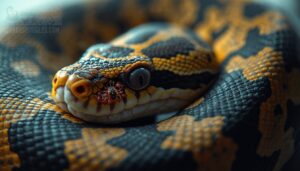
Spotting mites or ticks on your snake is only half the picture. Each parasite carries its own set of health risks, some mild and some serious enough to need a vet right away. Here’s what you should watch for, and when it’s time to make that call.
Snake Mite Disease Risks
Danger hides in the details with snake mites — these parasitic mites carry real disease risks beyond simple itching.
They spread Aeromonas bacteria and are linked to Inclusion Body Disease in pythons, a serious viral concern. Feeding causes severe blood loss and mite-induced dermatitis, while humans handling infested snakes can develop itchy human skin lesions. Effective snake mite treatment protects both your snake and your snake enclosure.
Tick-borne Infections
Ticks pose a very different threat: they’re vectors for actual vectorborne diseases like Lyme, transmitted through a tick bite via a bullseye rash and incubation of 3-30 days. Watch for:
- Fever and chills
- Joint pain
- Rash near bite site
- Flu-like fatigue
Diagnostic testing confirms exposure, especially during peak seasonal risk months when ectoparasites are most active outdoors.
Anemia Warning Signs
Fever and joint pain suggest an infection, but blood loss tells a quieter story. Watch your snake’s mouth and skin for pale mucous membranes—a sign of anemia from heavy mite feeding.
Lethargy, weakness, and slowed responses signal oxygen deprivation. Some snakes show faster heart rates, compensating for thinner blood. These changes build gradually, so weigh and inspect your snake regularly during any ectoparasite infestation.
Stress and Appetite Loss
A snake carrying heavy mite or tick loads often stops eating, and the reason isn’t just physical discomfort. Cortisol released during fight-or-flight slows digestion and dulls hunger cues through the gut-brain connection. Chronic infestations keep this stress response switched on, so appetite loss lingers. If your snake refuses meals alongside other symptoms, don’t assume it’s simply being picky.
When to Call a Vet
How do you know it’s gone past home care? Watch for these red flags:
- Respiratory distress — open-mouth breathing or wheezing
- Severe lethargy, collapse, or unresponsiveness
- Abnormal waste output or blood loss symptoms
- Suspected poisoning or rapid symptom progression
Any of these warrant same-day veterinary intervention. In exotic pet health, delayed care shortens the window for safe parasite eradication and full recovery.
Safe Removal and Prevention

Knowing what you’re dealing with is only half the battle, since getting rid of mites and ticks for good takes the right approach. You don’t need fancy products or guesswork, just a few proven steps done in the right order. Here’s what actually works, starting with your new snake and ending with what to avoid entirely.
Quarantine New Snakes
Quarantine every new snake, ideally 60 to 90 days, in a space physically separate from your main collection. Use dedicated tools, disposable substrate, and repeat fecal screening throughout—since parasite shedding comes and goes. Feed quarantined snakes last, with separate equipment, preventing cross-contamination.
This biosecurity workflow protects your exotic pet health long before mites or ticks ever get the chance to spread.
Clean Simple Enclosures
Simple enclosure design cuts mite survival odds fast. Choose smooth, solid substrates over textured bedding—mites and eggs can’t hide deep in crevices they can’t reach.
Spot clean waste daily, and swap paper liners often to break the mite lifecycle before eggs hatch. Keep drainage points dry, since standing water lets both snake mites and ticks linger longer in your reptile parasite control routine.
Treat The Snake Safely
Pull your snake before touching any chemical treatment—handling stress adds up fast during a reptile parasite control routine.
- Betadine soak, 75–85°F, 20–60 minutes
- Mineral oil dabbed on with a Q-tip
- Vet-prescribed Ivermectin for stubborn cases
- Sealed container for parasite disposal
For a lingering tick bite, ask your vet before applying anything unlabeled for reptiles.
Disinfect Hides and Bowls
Mites hide in every crevice of a snake enclosure, so disinfecting hides and bowls matters as much as treating your snake.
Wash bowls with detergent to remove organic load, then soak in 2 tablespoons bleach per gallon of hot water for 10 minutes. Boil metal utensils instead—bleach darkens them. Dishwasher-safe items need 140°F heat cycles. Toss porous hides and bedding; mites nest deep in wood and can’t be fully removed.
Avoid Toxic DIY Chemicals
Whipping up a homemade mite spray might feel proactive, but it’s one of the fastest ways to hurt your snake instead of helping.
- Hazardous vapor inhalation from mixed cleaners
- Chemical mixing dangers (ammonia plus bleach)
- Reptile skin sensitivity to concentrated oils
- Improper dilution risks causing burns
- Residual disinfectant toxicity left on surfaces
Insecticide toxicity, including organophosphate poisoning, is real—stick to vet-approved pyrethroids instead of guesswork.
Frequently Asked Questions (FAQs)
What kills snake mites instantly?
No single trick, no instant fix, no magic spray. Effective acaricide contact with fipronil or carbaryl powder, paired with povidone iodine soaks and thorough drying, kills mites fastest without harming your snake.
How do you tell if you have snake mites?
Look for tiny pepper specks near the eyes, nostrils, or water bowl, ashy scale residue, and quick, scattering movement when disturbed. No microscope needed—these visible clues confirm ectoparasites before an infestation spreads unchecked.
Can snake mites live on humans?
Funny how a parasite devoted to snakes still finds your arm interesting: direct or indirect contact with an infested enclosure can cause temporary skin reactions, though snake mites can’t establish true acariasis on human hosts long-term.
Can snake mites spread to dogs?
Dogs aren’t a natural host, so true infestation is rare. Contact happens indirectly, through fur brushing infested bedding or enclosure items. Watch for mild skin irritation, and reduce risk with strict reptile-to-pet hygiene after handling.
How long do snake mites survive without a host?
Off a host, survival ranges from 5 to 40 days, driven by humidity and temperature. Warmer conditions speed desiccation; cooler, humid enclosures extend it. Eggs may hatch later too, which is why strategic climate control breaks the infestation cycle fastest.
Can snake mites spread from snakes to other pets?
Picture your cat sporting a snake’s mite problem—unlikely, but not impossible. Snake mites rarely establish on dogs or cats since they’re host-specific ectoparasites, but shared bowls, tools, or hands can still cause indirect transfer, so quarantine and cleaning matter.
How many eggs do snake mites lay total?
A single female lays 60 to 80 eggs total, usually in batches of about Warm, humid microhabitats speed up this reproductive lifecycle, so egg production and infestation growth can accelerate faster than you’d expect.
What temperature and humidity do snake mites prefer?
Warmth and moisture drive their thermal preferences: 68–77°F with 70–90% humidity helps rapid reproduction. Higher heat speeds their life cycle, but low humidity raises desiccation risk, slowing egg-hatching success inside a snake enclosure.
How fast can an engorged snake mite travel?
An engorged snake mite can cover up to 11 inches per minute, roughly 55 feet an hour. Warmer, humid conditions speed this up, letting mites climb walls and bowls fast, raising rapid infestation risk across your snake’s enclosure.
Conclusion
One pest scatters, one pest clings. One causes mild irritation, one causes anemia. Once you understand the snake mites vs ticks difference, that flicker near your snake’s eye stops being a mystery. A steady look tells you whether you need forceps or a quarantine tank.
Check your snake often, keep the enclosure clean, and act fast when something seems off. Small habits now prevent bigger problems later. Your snake can’t speak up, so your eyes do the work.