This site is supported by our readers. We may earn a commission, at no cost to you, if you purchase through links.

Grab a corn snake with bare hands and it’ll thread through your fingers like water. Grab a boa the same way, and you might end up with a bite mark and a bruised ego. That gap is exactly why snake hooks for beginners matter more than most new keepers realize.
The right hook isn’t about looking professional. It’s about keeping your snake calm and your fingers intact, whether you’re pulling a ball python from its hide or handling a jumpy hatchlings during a routine tank clean.
Six tools stand out from the rest, each built for a different size, grip style, and skill level.
Table Of Contents
- Key Takeaways
- 6 Best Snake Hooks for Beginners
- How to Choose a Snake Hook
- Snake Hook Sizes by Species
- How to Use Snake Hooks Safely
- Beginner Mistakes, Care, and Alternatives
- Frequently Asked Questions (FAQs)
- How to use a snake hook correctly?
- What to use instead of a snake hook?
- Should you grab a snake by the tail or head?
- How long should a snake hook be?
- Are snake hooks legal to own everywhere?
- Can snake hooks work on venomous snakes safely?
- How much do quality beginner snake hooks cost?
- Where can beginners buy snake hooks locally?
- Do snake hooks require any special certification?
- Conclusion
Key Takeaways
- Your hook length has to match your snake’s size—12-18 inches for hatchlings, 24-36 for mid-size species like corn snakes, and 40+ inches for big constrictors like boas.
- Grab the mid-body, never the head or tail, since neck grabs spike stress and provoke strikes while tail grabs just get you slapped.
- Slow, smooth movements beat speed every time—approach from the side, lift over 2-3 seconds, and skip the jerky yanks that spook snakes.
- Material matters as much as size: stainless steel holds up better for bigger, heavier snakes, while aluminum keeps things light for beginners handling smaller ones.
6 Best Snake Hooks for Beginners
Picking your first snake hook shouldn’t feel like defusing a bomb. You need something sturdy, the right length, and easy on your wrist after an hour of use. Here are six solid picks worth your money, from foldable tongs to stainless steel classics.
Not sure which length fits your snake’s size and temperament? This snake handling hook size guide breaks it down so you can match the tool to the task.
1. Foldable Snake Tongs Grabber 47 Inch
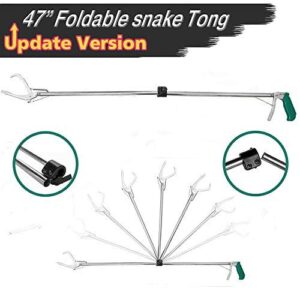
Forty-seven inches of reach, folded down to just 26. That’s the whole pitch for these tongs, and it works.
Stainless steel keeps them light but tough, while the rubber-coated handle stops slipping mid-grab. The wide jaw opening controls mid-size snakes without a fight.
Heads up though: some users report the folding joint gets wobbly under stress, and a few units shipped without the lock pin. Fine for casual handling. Not your tool for anything heavy-duty.
| Best For | Reptile enthusiasts, campers, hikers, and wildlife rescue workers who need a safe, foldable way to handle mid-size snakes or other outdoor grabbing tasks. |
|---|---|
| Material | Stainless steel |
| Length | 47 in |
| Weight | 0.89 kg |
| Handle Grip | Rubber-coated |
| Portability | Foldable |
| Intended Use | General/rescue use |
| Additional Features |
|
- Folds down from 47" to 26" for easy, compact storage
- Lightweight stainless steel resists corrosion while staying durable
- Rubber-coated handle and wide jaw opening give a secure, slip-free grip
- Folding joint can feel wobbly or weak under heavier stress
- Some units are missing the lock pin, affecting secure operation
- Not built for heavy-duty or industrial snake handling
52 Pro Snake Tongs Reptile Grabber
If you’re after reach and reliability, the 52 Pro Snake Tongs do both. The wide serrated jaw grabs without squeezing, locking automatically so you don’t tire your grip. Stainless steel means corrosion resistance—no rust after fieldwork. Pistol grip handle fits snug, even with sweaty hands. Spring mechanism closes jaws smooth, not jerky. Perfect for keeping safe distance.
These tools are designed for safe reptile handling equipment.
2. DocSeward Copperhead Snake Hook 43 Inch
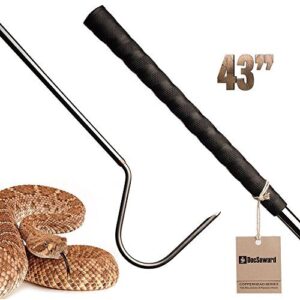
If you’re serious about safe handling, the DocSeward Copperhead Snake Hook 43 Inch stands out. Balanced by a copper ferrule, this hook weighs just 8 ounces—easy on your wrist, but tough enough for snakes up to 9 feet.
Stainless steel construction shrugs off corrosion, while the rubber grip stays secure, even when your hands sweat. The 43-inch shaft gives you distance, so you won’t get bitten.
Made in the USA, it’s precise, rugged, and built for beginners.
| Best For | Hobbyists, reptile handlers, and outdoor enthusiasts looking for a sturdy, easy-to-use snake hook for safe handling of non-venomous snakes. |
|---|---|
| Material | Aluminum |
| Length | 52 in |
| Weight | 15.9 oz |
| Handle Grip | Contoured pistol grip |
| Portability | Fixed length |
| Intended Use | Yard/pond handling |
| Additional Features |
|
- Durable stainless steel and copper construction built to withstand frequent field use
- Lightweight and well-balanced for comfortable, controlled handling
- Rubber grip offers secure, non-slip hold even in sweaty or damp conditions
- Not suitable for venomous snake handling without proper training
- Rubber grip may degrade over time with prolonged sun exposure
- Lacks collapsible or retractable features for compact storage
3. Dutypro Snake Hook Catcher Stick
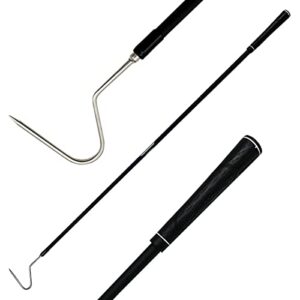
The Dutypro Snake Hook Catcher Stick takes beginner safety up a notch. You get telescoping reach—from 38 to 62 inches—so you won’t need to crowd a nervous snake.
The shaft blends carbon fiber for light weight with a stainless steel duckbilled hook, giving you both strength and finesse. The rubberized handle holds steady in sweaty hands. It’s portable, easy to collapse, and tough enough for fieldwork.
Just remember, it’s built for small to medium snakes, not giants.
| Best For | This snake hook is best for reptile enthusiasts, campers, and hikers who need a lightweight, reliable tool for safely handling or relocating small to moderate-sized snakes. |
|---|---|
| Material | Stainless steel |
| Length | 43 in |
| Weight | 8 oz |
| Handle Grip | Rubber grip |
| Portability | Fixed length |
| Intended Use | Field/reptile handling |
| Additional Features |
|
- Durable stainless steel construction resists corrosion and wear
- Lightweight at just 0.25 kg, reducing fatigue during extended use
- Rubberized, non-slip handle for secure and confident control
- Not suitable for large or highly aggressive snakes
- Requires proper technique and experience for safe use
- Doesn’t come with gloves or other protective gear
4. Veemoon Extensible Snake Catching Tool
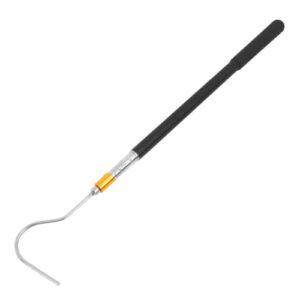
When reach really matters, the Veemoon steps up. This extendable tool stretches close to 60 inches, letting you handle snakes from a genuinely safe distance without creeping closer than you should.
Once you’ve got a snake safely under control, pairing that handling routine with the right snake hide boxes for first-time owners helps keep them calm afterward.
Stainless steel construction means it shrugs off rust and rough field conditions, while the non-slip grip keeps things steady even in wet gloves. The curved capture head cradles the snake’s body instead of squeezing it, which beginners appreciate.
It’s lightweight enough for one-handed use too. Solid pick for humid climates.
| Best For | Beginners and reptile enthusiasts who need a simple, reliable way to handle small to large non-venomous snakes from a safe distance. |
|---|---|
| Material | Stainless steel |
| Length | 44 in |
| Weight | 0.25 kg |
| Handle Grip | Rubberized handle |
| Portability | Compact/portable |
| Intended Use | Distance handling |
| Additional Features |
|
- Telescopic shaft extends to nearly 59 inches for safe, hands-off handling
- Durable stainless steel build holds up well outdoors and resists bending
- Arrives fully assembled, so it’s ready to use right out of the box
- Not suitable for venomous snakes without proper professional training
- Maximum weight capacity for larger, heavier reptiles isn’t specified
- Hook design may be less precise in tight or confined spaces
5. Aquaneat Extendable Stainless Steel Snake Hook
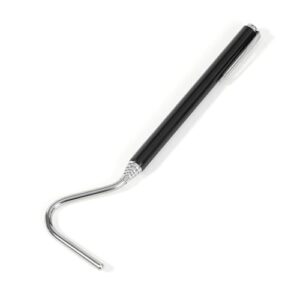
When you want compact control but don’t want to sacrifice reach, the Aquaneat extendable hook delivers. Adjustable from 7 to 26 inches, it’s built from rust-resistant stainless steel—sturdy enough for most small snakes but not for heavy or venomous ones.
The round-headed tip minimizes skin damage, while the non-slip handle keeps your grip steady. At just 1.76 ounces, it won’t tire your wrist.
Collapses small enough to pocket, ideal for terrarium work and quick field grabs.
| Best For | Hobbyists and reptile keepers who need a lightweight, portable tool for safely handling small snakes or reaching items in tight spaces. |
|---|---|
| Material | Stainless steel |
| Length | 58.95 in |
| Weight | 5.12 oz |
| Handle Grip | Standard grip |
| Portability | Telescopic retract |
| Intended Use | Beginner handling |
| Additional Features |
|
- Adjustable length offers flexibility for different tasks and enclosures
- Lightweight and easy to carry, fits in most pockets for field use
- Non-slip handle and round-headed hook reduce risk of injury and improve control
- Not suitable for large, heavy, or venomous snakes due to limited strength
- Some users report the hook can feel flimsy under moderate force
- Collapsed size may still be bulky for very tight pockets or small hands
How to Choose a Snake Hook
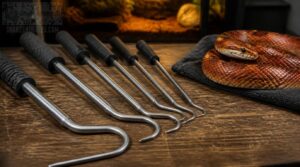
Not every hook fits every snake, and grabbing the wrong one can turn handling into a wrestling match. The right pick comes down to a few key specs, not guesswork. Here’s what to check before you buy.
Match Length to Snake Size
Size matters here, plain and simple. Grab a hook too short and you’re leaning over a snake that could reach you first — not a great trade.
Choose a hook too short, and you’re leaning over a snake that can reach you first
Hatchlings under 18 inches need 12 to 18 inch hooks. Medium snakes want 24 to 36 inches. Big constrictors over 4 feet? Go 40 inches, minimum. Match length first, everything else falls into place.
Check Weight Capacity
A struggling snake weighs more than it looks, and that’s where hooks fail. Every hook has a rated maximum load — stay well below it.
Longer hooks spread weight over a longer arm, easing the load at the tip. Check for bending before each use. Never max out capacity with a stressed snake fighting you.
Compare Shaft Materials
Not all shafts are built the same. Steel vs aluminum comes down to one trade: strength versus weight. Aluminum wins for beginners.
- Anodized aircraft grade aluminum: light, corrosion resistant
- Stainless steel: heavier but sturdier
- Composite options: pricier, great strength-to-weight
Aircraft grade tubing resists dents. Titanium and aluminum construction costs more but shaves ounces your wrist will thank you for.
Choose a Non-Slip Grip
Ever try holding a hook with sweaty palms? Bad news fast.
Go with textured rubber over bare metal. Diamond or crosshatch patterns beat smooth grips every time, wet or dry. Nitrile coatings shrug off cleaning agents and body oils, so your stainless steel shaft stays trustworthy for years. Look for grip comfort rated across temperature swings, not just room conditions—your hook shouldn’t slip just because it’s humid out.
Consider Collapsible Designs
Grip sorted, now think storage. A collapsible hook shrinks up to 60% for compact transport, no tools needed for setup. Telescoping shafts lock at your maximum length in seconds—quick deployment when a snake bolts. Balanced weight stays put even folded down, so nothing pops open in your bag. Beginner mistakes? Skipping collapsible options and hauling a rigid stainless steel shaft you can’t stash anywhere.
Snake Hook Sizes by Species
Not every snake needs the same hook, and that’s where a lot of beginners get tripped up. A ball python and a boa constrictor have completely different builds, so their gear should too. Let’s break down what size actually works for your specific snake.
Ball Python Hook Sizes

Ball pythons are the gateway snake for most beginners, and hook sizing follows their calm, compact build.
Juveniles do best with 12 to 14 inch hooks, adults with 14 to 16 inches. Big ball pythons over 4 feet? Bump up to 18 inches for reach.
Adjustable hooks (12-24") save you from buying multiples as your snake grows.
Corn Snake Hook Sizes
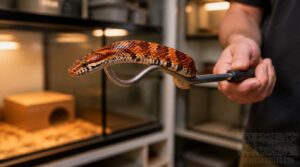
Corn snakes grow longer and leaner than ball pythons, so your beginner snake hook needs more reach. Go with a 24 to 36 inch hook, 30 inches hits the sweet spot for most home setups.
Stick with a slow approach, hook placement a few inches behind the head, and steady midbody support. Aluminum shafts stay light; non-slip grips matter once hands sweat.
Boa Constrictor Hook Sizes
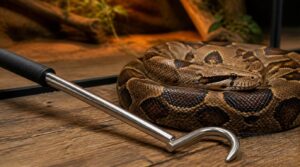
Boas are a different beast. You’re looking at a 52-inch snake hook as the sweet spot for mid-sized boas, with beginner options ranging 40-60 inches for max reach.
Stainless steel shafts win here for weight capacity. Grip texture matters more too, boas mean business at 1.2-2.5 pounds of tool weight. Balance keeps your wrist happy.
Juvenile Versus Adult Snakes
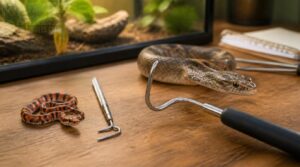
Tiny snake, tiny hook—simple as that. A hatchling under 30cm needs a light, short hook; don’t oversize the tool for a small body.
- Faster growth in year one
- Smaller prey preference
- Brighter juvenile colors that dull with age
- More secretive, nocturnal habits
As adults grow bolder and bigger, your hook length and grip needs scale right alongside them.
Indoor Versus Field Handling

Where you’re handling changes everything. Indoors, tight space means safe distance shrinks fast—stay smooth, watch stress cues.
Outdoors? Terrain awareness matters more. Grab a telescopic, collapsible hook with nonslip rubber handle, stainless steel shaft. Scout escape routes first. Equipment durability counts double outside—mud and moisture wreck cheap gear quick.
How to Use Snake Hooks Safely
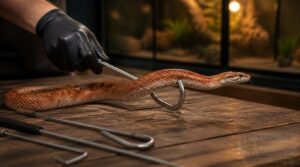
Owning the right hook is only half the battle. How you actually use it decides whether you get a smooth pickup or a defensive strike. Here are the five moves that separate confident handlers from nervous beginners.
Approach Slowly From The Side
Snakes read straight-on movement as a threat. That’s why Side Approach Technique beats charging in head-on every time.
- Slower heartbeats, calmer snake
- Fewer defensive strikes
- Steadier hands, real handler confidence
- Less thrashing, less stress
- Safer retreat path if things go sideways
Lateral movement tips: shallow angle, small steady bends, no jerky jabs. Stress-free entry builds trust—yours and theirs.
Position Behind The Head
Here’s your head control technique in short: hook a few inches back, head free but watched.
Nonslip grip and rubber handle keep your wrist steady while you track tongue flicks and eye dilation.
This spinal alignment guide setup means stress-free handling—quick retreat ready if the snake thrashes. Solid herpetology equipment, solid snake safety.
Support The Mid-Body
Ever tried balancing a broom on your palm? That’s mid body stabilization in short.
Cradle the trunk gently, no pinching. Proper cradle technique spreads weight evenly, easing grip pressure adjustment on the fly.
Your snake hook’s nonslip grip helps here—stress-free support means less curling, better control, and safer reptile handling all around.
Use Smooth Lifting Motions
Jerky lifts spook snakes fast. Keep it slow and steady instead.
- Rise over 2-3 seconds, controlled ascent pace
- Exhale as you lift, breath coordination lift
- No stopping mid-way, steady continuous motion
- Pause and reassess grip before final placement
That’s proper technique for beginner safety. Smooth beats fast, every single time.
Watch for Stress Signals
Good lifts mean nothing if you miss the warning signs. Recognize stress cues before they escalate: tighter coils, faster tongue flicks, hissing.
Watch body tension and breathing rate closely.
| Signal | Meaning |
|---|---|
| Rapid breathing | Fight-or-flight kicking in |
| Rigid coiling | High stress, back off |
| Erratic movement | Overstimulated, pause now |
Notice these shifts, and you’ll prevent bites before they happen.
Beginner Mistakes, Care, and Alternatives

Good gear only gets you so far if your technique’s still rough around the edges. Even solid hooks won’t save you from bad habits, so let’s fix those first. Here’s what trips up most beginners, plus a few tips to keep your hook (and your snake) in good shape.
Avoid Head and Tail Grabs
Grabbing the neck feels natural. It’s also a rookie mistake that spikes stress and provokes strikes.
Target mid-body instead, 3+ inches behind the head, using hook curvature to guide placement:
- Snake coiling defensively
- Tail whipping sideways
- Head pulling back sharply
- Body tensing mid-grab
Neck grabs force the head down. Skip that. Let hook length and angle do the work.
Prevent Jerky Handling
Sudden yanks scare snakes worse than the hook itself. Smooth, continuous motion keeps things calm.
| Motion Style | Snake Response | Fix |
|---|---|---|
| Jerky lift | Thrashing | Slow arc |
| Rapid stop | Tension | Steady pace |
| Twisting pull | Defensive coil | Straight path |
| Sudden start | Startle | Gradual lift |
Practice controlled drills. Keep the snake close, weight distributed evenly, until smooth feels natural.
Practice With One Snake
One snake at a time. That’s the whole rule. Two hooks, two snakes, double the mistakes.
- Focused control builds real trust
- Slow, deliberate motions beat rushed ones
- Side approach keeps stress low
- Balanced stance sharpens your grip
Short practice sessions, same snake, steady reps. Confidence grows fast when you’re not juggling chaos.
Clean and Inspect Hooks
Your hook works hard. Treat it right.
Wipe it down with warm water and mild detergent after every field trip, then dry it fully before storage—wet metal invites corrosion.
Run a quick visual inspection: check the latch, look for pitting or bent shafts. Test the latch operation by hand. Log any wear you find. Replace damaged gear immediately.
Consider Safe Hook Alternatives
Not every snake needs a stiff steel hook. Some do better with gentler gripping tools:
- Silicone-tipped grabbers that spare delicate scales
- Spring-loaded jaws for a soft, controlled hold
- Telescoping shafts reaching 60 inches for extra distance
- Composite heads that skip the cold-metal shock
Stress reduction matters as much as grip comfort—your snake will thank you.
Frequently Asked Questions (FAQs)
How to use a snake hook correctly?
Approach slowly from the side, then slide the hook behind the head for control. Use gentle mid-body support, smooth lifting motion, and avoid neck grabs or jerky lifting. Watch stress signals; sudden movements spike anxiety fast.
What to use instead of a snake hook?
No hook handy? Try surgical forceps, snake tongs, or a towel lift method. Non-slip gloves add grip. For skittish species, a flexible tube barrier or transport container approach works great too.
Should you grab a snake by the tail or head?
Neither. Grab the head and you risk a defensive bite. Grab the tail and you’ll get whip-slapped or slip your grip entirely. Mid-body support wins every time, stainless steel snake hook or bare hands, for real stress reduction.
How long should a snake hook be?
Length depends on the snake and setting: 12-18 inches works indoors for small to medium species, while field or outdoor handling calls for 24-36 inches. Collapsible designs give you both without cluttering your gear closet.
Are snake hooks legal to own everywhere?
Funny thing: the same week you’re picking a hook, Hawaii’s still banning every snake, period. Federal law stays quiet on snake hooks, but state permit rules vary wildly, and venomous species always mean extra paperwork.
Can snake hooks work on venomous snakes safely?
Yes, but only with proper training and a second handler nearby. Even hooked, a spooked snake can strike, so hook placement control, mid-body support, and rock-solid emergency response planning aren’t optional—they’re what keeps venomous handling actually safe.
How much do quality beginner snake hooks cost?
Budget options start around $10 to $20 for basic aluminum builds. Stainless steel or coated models run $20-$40, offering better weight capacity and durability. Heavy-duty, portable designs climb to $60+, but for beginners, mid-range value comparison usually wins.
Where can beginners buy snake hooks locally?
Don’t want to wait on shipping? Check local reptile stores, vet clinics, or specialty boutiques first. Hardware stores stock cheap basics too. No luck nearby? Amazon and online pickup options fill the gap fast.
Do snake hooks require any special certification?
Nope, no official certification needed in most places. Some wildlife courses or zoos require safety training first, though. Rules vary by state and species, especially for venomous handling. Check local regulations before you start.
Conclusion
Roughly 7,000 snakebites hit U.S. keepers every year, and most trace back to bare-handed grabs gone wrong.
That’s not a scare tactic, it’s math you can fix with a few bucks of steel and steady practice.
The right snake hooks for beginners turn nervous fumbling into smooth, confident handling.
Pick your hook, match it to your snake, and let calm technique replace shaky luck.
Your fingers will thank you.