This site is supported by our readers. We may earn a commission, at no cost to you, if you purchase through links.

A snake’s bite force can hit 30 newtons, plenty to puncture the soft mucosa lining its own mouth. That small wound, left in a damp enclosure with a dirty water bowl, gives bacteria like Aeromonas everything they need to take hold.
This is how most cases of swollen mouth in snakes begin, not with a single dramatic injury but a chain of small failures in husbandry. Gums shift from pale pink to an angry, glossy red. Drool changes texture. Feeding response drops.
Catching these changes early separates a five-day recovery from a surgical emergency, and knowing exactly what to watch for makes that difference.
Table Of Contents
- Key Takeaways
- What Causes Mouth Swelling in Snakes?
- When a Swollen Mouth is Urgent
- Veterinary Diagnosis and Treatment Options
- Recovery Care and Future Prevention
- Frequently Asked Questions (FAQs)
- Do snakes have mouth rot?
- Is mouth rot a serious infection in pet snakes?
- What is stomatitis in snakes?
- How long does it take a snake to recover from mouth rot?
- What are the signs of a sick snake with an open mouth?
- What does mouth rot look like in snakes?
- Can snake mouth rot go away on its own?
- What does sepsis look like in snakes?
- Can swollen mouth in snakes spread to humans?
- Is mouth rot contagious between snakes in the same collection?
- Conclusion
Key Takeaways
- Most mouth swelling in snakes starts small—dirty water bowls, poor humidity, or a feeder bite—and builds into infection when husbandry gaps go unnoticed.
- Rapid facial swelling, pus or black necrotic tissue, open-mouthed breathing, or weeks of food refusal are urgent signs that mean it’s time to call your vet, not wait and watch.
- Diagnosis relies on a real exam—oral inspection, X-rays, bloodwork, and cultures—so treatment can target the exact bacteria and damage involved rather than guessing.
- Recovery depends on finishing the full antibiotic course, tracking healing at home, and fixing the root causes—tank hygiene, temperature swings, and live-prey bites—to keep it from coming back.
What Causes Mouth Swelling in Snakes?
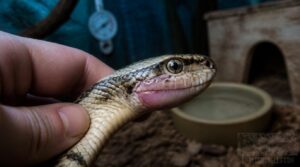
A swollen mouth rarely comes from just one thing. Usually, it’s a mix of husbandry gaps, stress, and physical damage working together against your snake’s defenses. Here are the main culprits you’ll want to rule out first.
If you catch the early signs, this guide on treating snake mouth rot at home walks you through soothing the swelling before it worsens.
Poor Enclosure Hygiene
A surprising number of mouth infections trace back to one thing: a dirty tank. Poor enclosure hygiene breeds bacterial infection through several routes:
- Dirty water bowls growing Aeromonas
- Unclean substrate trapping Clostridium
- Mold growth releasing mycotoxins
- Ammonia buildup irritating gums
Neglected hide disinfection adds oral lesions and necrotic tissue risk. Routine habitat sanitation isn’t optional — it’s your snake’s first line of defense.
Temperature and Humidity Stress
A dirty tank isn’t the only hidden stressor. Improper temperature and humidity swings trigger mucosal edema too — fluctuations over 5°C raise swelling risk 1.8x. Below 22%, oral tissue cracks within hours; above 32°C, vasodilation sets in fast.
Thermal Gradient Control and Humidity Monitoring aren’t optional extras.
| Condition | Effect | Risk |
|---|---|---|
| 32°C | Vasodilation | 27% |
| A gaping mouth isn’t a yawn — it’s often a snake fighting to breathe as swelling closes off its airway |
Left untreated, infection spreads into the lungs, causing bacterial pneumonia and aspiration pneumonia. Bacteria entering the bloodstream risk septic shock, secondary abscess formation, and respiratory failure.
This stage demands emergency oxygen therapy monitoring.
When a Swollen Mouth is Urgent
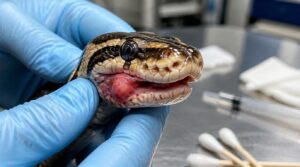
Not every case of mouth rot needs a same-day vet visit, but some do. Certain signs tell you the infection has moved past a wait-and-see situation. Here’s what tells you it’s time to act now, not tomorrow.
If your reptile also stops eating alongside these symptoms, it’s worth reading about why ball pythons refuse food and when it signals a bigger problem.
Rapidly Increasing Facial Swelling
A jaw that balloons 2–3 cm within twelve hours signals active bacterial infection, not simple irritation. Watch for taut, glossy skin, purplish discoloration, and swelling reaching the ventral facial groove by 18–24 hours.
If the eye narrows to a slit, vision impairment follows fast. Head tilting and repeated wall-rubbing show real pain—get veterinary care immediately.
Pus, Blood, or Black Tissue
Once facial swelling escalates, check what’s actually inside the mouth. Thick yellow or greenish pus signals active bacterial infection—Aeromonas and Pseudomonas are common culprits. Fresh blood clots look dark red and gelatinous, often from tissue trauma. Black, leathery necrotic patches mean tissue death requiring surgical debridement.
Any of these findings warrants same-day veterinary evaluation, not a wait-and-see approach.
Open-Mouthed Breathing or Head Elevation
Necrotic tissue in the mouth isn’t the only red flag. Watch how your snake breathes, too.
Open-mouthed breathing with a 15–20 degree head tilt signals real distress, not normal behavior. This raises airway resistance concerns and often means swollen gums or oral lesions are blocking normal airflow from bacterial infection in snakes.
- Persistent gaping beyond 30 minutes
- Head elevation during rest
- Labored breathing with visible strain
Call your vet immediately.
Severe Lethargy and Food Refusal
Breathing trouble isn’t the only warning sign—watch your snake’s energy and appetite, too.
Food refusal beyond 21 days drops blood sugar below 50 mg/dL in most cases, triggering severe lethargy. Weight loss compounds fast: roughly 0.8 grams daily at first, then muscle wasting.
Reduced tongue flicking, prolonged hiding, and ignoring offered prey signal advancing illness. Don’t wait—stimulate feeding early or contact your vet.
Why Home Treatment is Risky
When it’s tempting to treat mouth rot yourself, resist. Disinfectant chemical burns from wrong bleach ratios damage oral tissue, while antibiotic misuse breeds resistant bacteria without ever reaching therapeutic levels.
Handling a swollen jaw risks fractures. Delayed vet intervention past 48 hours invites septicemia—hidden abscesses need imaging, not guesswork. Only veterinary diagnosis catches what home care can’t.
Veterinary Diagnosis and Treatment Options
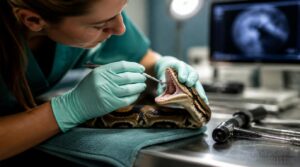
Once you’re at the vet, treatment follows a clear path built on real findings, not guesswork. Your vet will examine your snake’s mouth closely, then may order tests to see what’s happening beneath the surface. From there, a treatment plan takes shape based on exactly what your snake needs.
Reptile Vet Oral Examination
A thorough oral exam is where diagnosis really begins. Your vet performs a visual oral inspection with a dental mirror and headlamp, checking gum color and retained shed.
Jaw palpation assesses range of motion and swelling. A dental assessment scores enamel wear and looseness.
Swab cytology and culture check discharge for bacteria, guided by a formal grading protocol.
X-Rays, Bloodwork, and Parasite Screening
Once the exam is done, diagnostics tell the fuller story. X-rays reveal bone involvement and tooth root abscesses. Bloodwork flags infection through elevated white cell counts and low albumin from protein loss. Fecal testing and skin scrapes screen for parasites weakening immunity.
Vets usually run these within 24 hours, then repeat X-rays at day seven and bloodwork at two weeks to track healing.
Antibiotics, Pain Relief, and Debridement
Treatment targets three fronts at once. Culture results guide antibiotic selection—enrofloxacin, amoxicillin-clavulanate, or doxycycline—while meloxicam helps with pain and inflammation.
Debridement removes dead tissue under sedation, followed by chlorhexidine solution rinses. Vets watch for drug interactions and monitor side effects like GI upset or kidney stress throughout the two-week course.
Surgery, Fluids, and Assisted Feeding
Severe abscesses need more than antibiotics—surgical removal of infected tissue under isoflurane anesthesia, with a sterile gum-line incision, gets ahead of bone damage.
Three pillars follow:
- Fluid therapy (lactated Ringer’s, subcutaneous)
- Assisted feeding via esophageal tube
- Daily postoperative monitoring
Vets track weight, glucose, and wound healing closely, adjusting nutritional support until your snake resumes eating on its own.
Recovery Care and Future Prevention
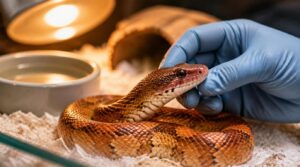
Getting a diagnosis and starting treatment is only half the battle. What happens in the weeks after determines whether your snake fully recovers or faces setbacks like reinfection or pneumonia. Here’s what to expect and watch for during recovery, along with the changes that keep mouth rot from coming back.
Expected Recovery Timeline
Recovery follows a fairly predictable arc. Swelling drops 30-40% within 48 hours, pain scores fall from 7 to 3 by day one, and discharge usually stops by day 5.
| Point | Timeframe |
|---|---|
| Redness improves | Day 3 |
| Discharge ceases | Day 5 |
| Breathing normalizes | Day 4 |
Medication and Wound-Care Follow-Up
That improvement curve only holds if you stay on schedule. Give enrofloxacin twice daily, full 14 days, even after symptoms fade — stopping early invites resistant bacteria.
Clean wounds every 48 hours with chlorhexidine solution, then apply silver sulfadiazine cream. Watch for sedation from pain meds, and photograph the mouth weekly for your vet’s follow-up checks.
Monitoring Pneumonia and Jaw Abscesses
Photos matter, but two complications need closer tracking: pneumonia and jaw abscesses.
Watch breathing every 2 hours for 48 hours — over 30 breaths per minute signals trouble. Open-mouthed breathing or head-lifting means respiratory distress. Your vet compares chest X-rays from day 1 and day 7, tracking infiltrates.
For jaw swelling, ultrasound measures abscess size weekly; oral swab cultures on day 3 and 14 confirm clearance.
Improving Hygiene, Climate, and Nutrition
Once breathing and jaw swelling stabilize, prevention becomes the real medicine. Poor hygiene and temperature swings caused this in the first place, so fix them.
- Scrub enclosures weekly with dilute bleach; swap substrate monthly
- Hold basking spots at 88-92°F, cool zones at 75-80°F
- Disinfect water bowls daily; add calcium/D3 supplements monthly
Balanced diet formulation and correct humidity keep mucosal tissue resilient against reinfection.
Preventing Prey Bites and Reinfection
Live prey caused this bite in many cases. Switch to pre-killed prey whenever your snake accepts it. If not, use tongs and a feeding barrier, then check its mouth within 30 minutes.
| Method | Reduces Bites | Effort |
|---|---|---|
| Pre-killed prey | High | Low |
| Feeding tongs | Moderate | Low |
| Acrylic barrier | High | Moderate |
Frequently Asked Questions (FAQs)
Do snakes have mouth rot?
Yes — like rust creeping across metal, snake mouth rot (infectious stomatitis) spreads quietly at first. Bacteria such as Fusobacterium necrophorum cause gum inflammation, tissue death, and, without antibiotics or debridement, jaw damage requiring urgent veterinary care.
Is mouth rot a serious infection in pet snakes?
Infectious stomatitis is genuinely serious, not a cosmetic issue. Left untreated, necrotic stomatitis can destroy tissue, spread systemically, and prove fatal. With prompt debridement, antibiotics, and pain management, most snakes recover fully—treatment urgency matters more than owner panic.
Proper husbandry, including temperature control and feeding pre-killed prey, plays a key role in preventing infectious stomatitis in snakes.
What is stomatitis in snakes?
That redness isn’t just irritation — it’s your snake’s immune system fighting back. Stomatitis is inflammation of the gums and mouth lining, often driven by bacterial infection like Aeromonas, ranging from mild irritation to necrotic tissue destruction.
How long does it take a snake to recover from mouth rot?
Mild cases often clear in one to two weeks with antibiotics and supportive care; severe infections involving bone or abscesses can take months. Recovery timeline depends on severity, immune status, and consistent follow-up monitoring to prevent relapse.
What are the signs of a sick snake with an open mouth?
A gaping mouth is like a warning light on a dashboard. Watch for open mouth breathing, drooling, red swollen gums, foul smell, loss of appetite, blood in saliva, or labored respiratory distress—each signals your snake needs prompt veterinary attention.
What does mouth rot look like in snakes?
Picture red swollen gums, pinpoint bleeding, and gum line changes progressing to pus discharge, foul smell, and jaw swelling patterns.
Severe cases show oral ulcers, visible dead tissue, loss of appetite, and early oral discoloration—grayish patches signaling necrosis your vet must address quickly.
Can snake mouth rot go away on its own?
Hope isn’t a treatment plan. Bacteria don’t quit because you cleaned the tank. Snake mouth rot rarely resolves alone—husbandry helps, but a weakened immune system usually needs antibiotics, debridement, and real veterinary supportive care to actually recover.
What does sepsis look like in snakes?
Sepsis signals a full bloodstream infection: fever, pale or dusky ventral scales, rapid breathing, and a weak pulse. You’ll notice lethargy, dehydration, sunken eyes, and lab markers like elevated white blood cells confirming immune system overload.
Can swollen mouth in snakes spread to humans?
Yes, though rarely. Bacteria from oral discharge can enter through broken skin or bites, creating real transmission risk. Wash hands promptly, avoid touching your face, and immunocompromised individuals should take extra precautions around infected snakes.
Is mouth rot contagious between snakes in the same collection?
It’s absolutely contagious. Direct contact, shared water bowls, and even blowflies spread bacteria between enclosures.
Strict quarantine protocols, dedicated feeding tools, and prompt cross-contamination cleanup protect your whole collection’s immune system and lower recurrence risk a lot.
Conclusion
Don’t let a snake’s smile turn into a snarl—swollen mouth in snakes rarely stays minor for long.
You hold the real cure: clean water, correct humidity, and a watchful eye at feeding.
Catch red gums early, and recovery takes days, not surgery.
Miss those warning signs, and infection reaches bone fast, spreading beyond what home remedies can fix.
Your snake can’t tell you it’s hurting. Its mouth will, if you know how to read it.