This site is supported by our readers. We may earn a commission, at no cost to you, if you purchase through links.
A water bowl can push a terrarium’s humidity in the wrong direction while hygrometer looks fine. Set a wide, shallow dish near heat, and it becomes an evaporative engine, dampening substrate and eroding thermal gradient.
Effective terrarium water bowls for humidity control depend less on volume than geometry, material, and placement. A narrow bowl on cool side loses water slowly; a broad bowl exposes water to air. That distinction matters when a snake needs a 10–15% RH difference between its dry retreat and humid zone before shedding. Bowl dimensions, safe depth, and stable placement make water a controlled husbandry tool.
Table Of Contents
Key Takeaways
- Control humidity with bowl shape and placement: wide, shallow bowls evaporate faster, while narrow, deeper bowls on the cool side preserve a usable dry-to-humid gradient.
- Match bowl size and depth to your snake, keeping water shallow enough for safe entry—under 1 cm for hatchlings and about 1–2 cm for most snakes.
- Choose smooth, nonporous, weighted bowls made from glazed ceramic, safe plastic, or cured resin, and replace any dish with cracks, rough edges, or persistent odor.
- Prevent spills and contamination by using a stable base or tray, changing water daily, checking humidity at both enclosure ends, and removing wet substrate immediately.
How Water Bowls Control Terrarium Humidity
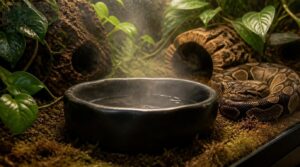
A water bowl does more than hydrate your snake — it actively shapes the humidity inside the enclosure. Get the basics right, and it becomes one of your most reliable tools for stable, species-appropriate conditions. Here’s how it works.
For climbing species, water bowl placement in arboreal snake enclosures also affects airflow, humidity gradients, and access.
Surface Area and Evaporation
Reptile water bowl sizing starts with one principle: surface area. A wider, shallower bowl drives evaporation rate faster than a narrow deep one holding the same volume. Width-to-depth ratio is the variable that matters. In fact, evaporation rate scales directly with the number of liquid molecules exposed at the air interface, which is why bowl shape has such a measurable impact on enclosure humidity.
- Wide bowl: high evaporation, more humidity
- Narrow bowl: slower evaporation, drier air
- Multiple bowls: greatest combined surface area
Bowl shape directly controls your enclosure’s humidity gradient.
Humidity Gradients and Snake Health
Bowl shape drives evaporation rate, but reptile enclosure humidity only works for your snake when it actually forms a true gradient. A 10-to-15 percent RH difference between the humid and dry sides lets your snake self-regulate, shifting zones as its reptile hydration needs change.
Consistent reptile water bowl placement is what keeps that gradient reliable across your reptile terrarium setup.
Shedding and Hydration Support
That gradient becomes most valuable when your snake enters blue. Reptile water bowls for humidity control provide steady evaporation, supporting skin moisture between shed cycles without forcing the entire enclosure damp.
For reliable reptile shedding support, keep clean water available and let your snake choose the more humid zone. Correct reptile water bowl placement cool side helps meet changing reptile hydration needs while preserving balanced reptile enclosure humidity.
Avoiding Excess Moisture
Support shedding without turning the enclosure into a swamp. For steady humidity control, use one shallow bowl, under 2 cm deep, and monitor the evaporation rate with a digital gauge.
Keep coolside placement away from lamps to preserve a usable humidity gradient. Place the bowl on a waterproof tray, remove wet substrate immediately, and change water daily for biofilm prevention.
Choose Safe, Hygienic Bowl Materials
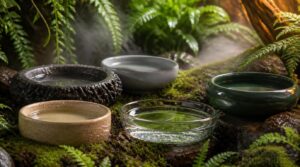
In a humid terrarium, bowl material affects more than appearance. You need a surface that stays stable, resists contamination, and holds up to frequent cleaning. Start with these material features before choosing a bowl for your enclosure.
Ceramic Thermal Stability
Heat turns a poor water dish into a humidity problem. Ceramic thermal stability keeps a bowl dimensionally steady near heat sources, so its evaporation rate stays predictable.
- Choose glazed, nonporous materials.
- Use a weighted base design.
- Inspect for chips or craze lines.
- Perform daily water changes.
Ceramic cleans, but replace cracked bowls: fractures shelter biofilm and leak into substrate.
Choose a bowl large enough for soaking, since snake dehydration symptoms and treatment often begin with inadequate water access.
Food-Safe Plastic Options
Choose certified food-contact plastic, not random storage tubs. foodsafe polypropylene tolerates warm water; HDPE works too. For a reliable option, choose a food-safe polypropylene reptile bowl with a smooth, weighted design that resists tipping and cleans easily.
| Plastic | Best use |
|---|---|
| PP | Warm water |
| HDPE | Cool-side use |
| PET | Short-term use |
| PVC | Avoid |
Select a reptile water bowl material with a reptile water bowl nonporous surface. Confirm a reptile water bowl weighted base, then perform reptile water bowl daily maintenance at every refill.
Resin Hygiene Benefits
Because cured resin resists staining, it keeps mineral rings, pigments, and odors from settling into the bowl. A nonporous resin reptile water bowl material leaves fewer microcrevices for mold and biofilm to establish.
Use a reptile water bowl nonporous surface with a smooth finish, then complete reptile water bowl biweekly disinfection. Properly cured resin also tolerates bright enclosures without rapid UV surface breakdown.
Non-Porous Easy-Clean Surfaces
Smooth surfaces turn reptile water bowl cleaning into a controlled routine, not a contamination gamble. Glazed ceramic and nonporous resin repel splashes, waste, and dissolved minerals, so residue stays on top rather than soaking in.
- Water beads instead of staining
- Biofilm wipes away faster
- Odors don’t linger
- reptilesafe disinfectant contacts evenly
Rinse daily, disinfect on schedule, then air-dry before refilling.
Avoiding Cracks and Rough Finishes
Damage starts small, then turns a water bowl into a bacteria trap. Inspect glazed ceramic weekly; reject chips, pinholes, and rough rims. Smooth surfaces protect scales and simplify disinfection.
| Check | Risk | Response |
|---|---|---|
| Hairline crack | Mold pocket | Replace |
| Rough rim | Scale abrasion | Replace |
Confirm reptile water bowl width, reptile water bowl depth, and reptile water bowl stability suit snake before buying.
Match Bowl Size to Your Snake
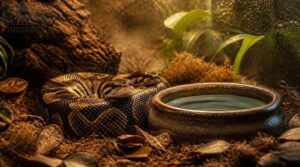
A water bowl should fit your snake’s body, behavior, and stage of growth. Size affects safe soaking, hydration, and the humidity it contributes to the enclosure. Use the following guidelines to choose the right dimensions for your snake.
Ball Python Bowl Dimensions
A proper adult bowl measures 4 to 6 inches across, holds 8 to 12 fluid ounces, and stands 1.5 to 2.5 inches deep. This reptile water bowl size permits soaking without turning the enclosure into a swamp.
- Steady humidity
- Secure footing
- Clean, accessible water
Prioritize reptile water bowl stability: a broad base and balanced widthtodepth ratio prevent spills. Rounded rims reduce snagging.
Sizing by Snake Length
After choosing an adult bowl, scale reptile water bowl size to body length rather than age. Snakes under 60 cm need 5–7 cm width; 60–90 cm need 7–9 cm; 90–120 cm need 9–12 cm; adults over 120 cm need 12–16 cm. Maintain width-to-depth ratio; adjust reptile enclosure bowl size within reptile enclosure bowl placement strategy and reptile enclosure temperature gradient.
Safe Water Depth
After matching bowl width to body length, set safe water depth at 1–2 cm. Your reptile water bowl should let the snake drink while keeping its nostrils well above the surface.
- Keep hatchlings below 1 cm.
- Refill daily for steady humidity control.
- Check nearby substrate for damp pockets.
A shallow reptile water dish preserves reptile enclosure water access without soaking bedding.
Width Versus Depth
With water depth set, adjust width versus depth for evaporation control. A wide, shallow bowl exposes more water, raising humidity near its edge but requiring faster refills.
A narrower, deeper reptile water bowl shape slows evaporation and limits splashing. Use wider bowls to strengthen a local humidity gradient; use deeper bowls where steadier moisture and cleaner substrate matter.
Hatchling Exit Safety
For hatchling geckos and young pythons, a standard adult bowl is a drowning risk.
Your reptile water bowls should stay under 1.5 cm deep, with sloped walls no taller than 2 cm. That slope functions as a built-in safety exit step. Pair it with a raised substrate edge, a reptile enclosure safety feature, to support humidity control without trapping them.
Place Bowls for Steady Humidity
Where you set the bowl matters just as much as what you put in it. A few placement decisions can mean the difference between stable humidity and a tank that swings between bone-dry and sopping wet. Here’s what to get right.
Cool-Side Placement Benefits
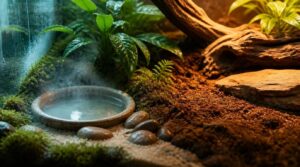
Cool-side placement is the simplest way to stabilize enclosure humidity without chasing spikes all day. Positioning the bowl there slows surface evaporation to roughly 1.5 to 2.5 milliliters per hour, keeping moisture levels consistent rather than volatile.
The cooler ambient air tempers humidity rise from the bowl, so you get a reliable humidity gradient across the enclosure without soaking the substrate.
Distance From Heat Sources
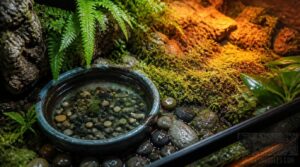
Heat travels farther than you’d expect. Follow these clearances to maintain humidity control:
- Keep bowls at least 20 cm from heat mats
- Allow 15 cm clearance around radiant heaters
- Cool-side placement stabilizes humidity gradients
- A heat shield deflects radiant energy from the bowl
- Verify thermometer readings at the bowl, not nearby
Balanced thermal gradients keep humidity levels steady.
Managing Evaporation Rate

Controlling evaporation is about pace, not elimination. A wide, shallow bowl evaporates faster than a narrow deep one at the same volume, giving you a practical lever for reptile evaporation control.
Water near 85-95°F releases vapor quickly. Shift your bowl toward the cool side, or add a partial cover, cutting evaporation rates by up to 50% for steadier humidity control.
Preventing Substrate Saturation

Saturated substrate is a slow, preventable failure. Place your bowl on a ceramic or rock riser to break direct contact with the surface, preventing capillary wicking from spilled water.
A shallow drip tray underneath catches overflow before it soaks in. Target 60 to 70 percent substrate moisture, and let the top inch dry out fully between refills to avoid waterlogging.
Supporting Moisture Gradients
[ORIGINAL TEXT]
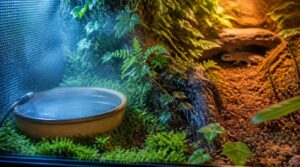
Build humidity gradients, not a wet box. Strategic placement keeps humidity levels higher near the bowl while allowing drier retreat zones.
Create a humidity gradient with moist and dry zones, not an enclosure that stays wet everywhere
- Set the bowl beside, not inside, the humid hide.
- Keep it on the cool side, 6–12 inches from ventilation.
- Check humidity control with probes at bowl level and the opposite end.
This enclosure humidity management helps shedding without creating fungal-prone corners.
[/ORIGINAL TEXT]
Keep Water Bowls Clean and Stable
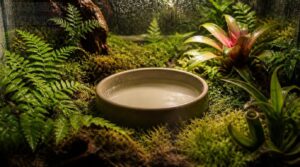
A water bowl should stay where you place it and remain clean between service intervals. In humid enclosures, even small lapses can turn standing water into a source of contamination. Use the following checks to keep the bowl stable, sanitary, and safe.
Weighted Tip-Resistant Bases
Choose weighted tip-resistant bases with a low, circular footprint. They resist a snake’s body pressure and stay level on coconut husk, mulch, or uneven liner, protecting reptile enclosure moisture balance from sudden spills.
Use corrosion-resistant ceramic, resin, or stainless-steel weighted inserts. During reptile water bowl weekly cleaning, inspect for cracks and loose inserts. Replace bowls when damage traps debris; reptile enclosure evaporation control fails when spilled water saturates substrate.
Anti-Slip Mounting Options
Even weighted bowls creep across damp substrate. Fit reptile water bowls with a nonslip base ring, or set them on a 2 to 3 mm rubberized mat; both preserve thermal stability without raising the rim enough to impair safety entryexit steps.
For wall-mounted bowls, use suction cups or humidity-resistant Velcro. Test mounts under bowl weight, because secure anchoring protects humidity control.
For reliable attachment in humid enclosures, choose waterproof heavy-duty Velcro strips rated for sustained moisture exposure.
Daily Water Changes
A secure bowl still needs daily water changes. Empty, rinse, and refill it before waste, shed skin, or substrate turns the water into a humidity problem.
- Use conditioned water within 2 to 4°F of ambient temperature.
- Rinse with hot water and mild soap.
- Inspect for cracks during your reptile enclosure cleaning routine.
This reptile water quality control helps with reptile bacterial growth prevention and guides reptile water bowl replacement frequency.
Biofilm and Bacteria Prevention
Cloudy film, slick residue, or a stale odor means bacteria have started building a biofilm matrix. Daily rinsing helps, but reptile biofilm control requires soft-bristle scrubbing of the bowl’s bottom and rim.
Use a mild enzyme cleaner, then rinse completely. This helps reptile bacterial growth prevention and reptile water quality control without scratching the surface. Keep reptile water bowl cleaning part of routine reptile enclosure hygiene.
Deep Cleaning and Replacement
Deep cleaning removes what daily scrubbing misses. Soak the dish in 3% hydrogen peroxide for five minutes, rinse thoroughly, then air-dry on a clean rack to stop biofilm formation.
For reptile water dish cleaning, replace water daily and log deep cleans. Replace bowls every 6 to 12 months, sooner if chips, rough edges, odor, or mineral scale persist. This protects reptile enclosure hygiene and keeps reptile water evaporation predictable.
Frequently Asked Questions (FAQs)
Should I use dechlorinated water in terrarium bowls?
Like a clean filter in a closed system, use dechlorinated water in reptile water bowls. It protects skin and mucous membranes, helps humidity control, and keeps reptile water dish cleaning and reptile soaking bowl maintenance more predictable.
Can multiple water bowls improve enclosure humidity?
Yes. Multiple water bowls increase exposed surface area, raising humidity levels more evenly. Place bowls across warm and cool zones to reduce humidity gradients, but monitor humidity control with a hygrometer to prevent condensation.
How often should I monitor humidity with a hygrometer?
Check humidity levels twice daily, morning and evening, because enclosure RH can shift 20% between readings. During seasonal changes, inspect every 4–6 hours. Humidity control helps reptile enclosure setup, maintenance, and ventilation when monitored closely.
Is filtered water safe for snakes and reptiles?
Filtered water is safe when it is dechlorinated and free of contaminants. Confirm your reptile disinfection method, maintain reptile enclosure water depth, monitor reptile water temperature, and refresh reptile water bowls for humidity control daily.
What should I do when my snake spills water?
Remove the snake, blot water, replace saturated substrate, and dry under liners. Refill bowl. Daily changes, mold prevention, stable weighted bowls, and anti-slip features strengthen substrate care and enclosure safety after every spill long term.
Conclusion
When a bowl gets a little too ambitious, it can quietly turn an enclosure into a damp problem. Terrarium water bowls for humidity control work best when you control exposed surface area, water depth, material, and distance from heat.
Keep the dish stable, refresh it daily, and measure humidity at both retreats rather than trusting one reading. Your snake needs options, not uniform moisture. Set the bowl deliberately, and the enclosure holds its gradient reliably.
- https://www.animalsathome.ca/how-to-increase-humidity-in-a-terrarium
- https://www.reptilecentre.com/blogs/reptile-blog/5-ways-to-increase-humidity-for-reptiles
- https://www.evolutionreptiles.co.uk/blog/how-to-lower-humidity-in-vivarium
- https://www.lllreptile.com/library/care-and-husbandry-articles/increasing-cage-humidity
- https://www.gcshop-sg.com/blogs/bugs-and-slimes/understanding-humidity-needs-in-a-bioactive-terrarium