This site is supported by our readers. We may earn a commission, at no cost to you, if you purchase through links.

A single Burmese python can stretch 16 feet and swallow a deer whole, yet you could walk past one in the Everglades and never know it. That’s the strange reality of python snake distribution: these giants thrive from Senegal’s woodlands to Indonesia’s islands, and increasingly, where they don’t belong.
Where a python lives isn’t random. Temperature, prey density, floodplains, and human sprawl all shape the map. Understanding that map matters, whether you’re tracking an invasion that wiped out 90% of some Florida mammals or protecting native species back home. Here’s how it all fits together.
Table Of Contents
- Key Takeaways
- Global Python Snake Distribution by Continent
- Python Habitats From Forests to Wetlands
- What Determines Where Python Snakes Live?
- Invasive Python Distribution and Ecological Impacts
- Climate Change, Habitat Loss, and Python Conservation
- Frequently Asked Questions (FAQs)
- Why is Florida overrun with pythons?
- Which animal kills a python?
- What snake has a 100% fatality rate?
- What is the distribution of the python snake?
- How much does Florida pay for captured pythons?
- What is the Burmese pythons current distribution?
- Where do python snakes live?
- How are Python snakes classified?
- What is a python snake?
- Are there pythons in Africa?
- Conclusion
Key Takeaways
- Pythons naturally live across three continents—sub-Saharan Africa, southern/Southeast Asia, and Australia—occupying warm habitats near water where temperature, prey density, and floodplain connectivity overlap.
- Burmese pythons released as pets have colonized over 1,000 square miles of Florida’s Everglades, wiping out up to 90% of some mammal populations, while targeted removal programs and community reporting have cut their numbers by up to 60%.
- Human-caused habitat fragmentation and irrigated croplands pull pythons toward villages and increase road mortality, while climate change shrinks foraging windows and drought crashes water-dependent prey by as much as 60%.
- Conservation hinges on habitat corridors, protected headwater wetlands, and thermal refugia, plus long-term occupancy surveys to separate climate signals from land-use noise and predict range shifts before they become invasions.
Global Python Snake Distribution by Continent
Ever wonder why pythons show up on three different continents? That’s the question we’re tackling here. Let’s break down their ranges across Africa, Asia, and Australia, one continent at a time.
Before diving in, it helps to know that pythons and boas never share territory in the wild—a key point in this pythons vs. boas comparison.
Pythons in Africa

Picture the African rock python, sub-Saharan Africa’s heavyweight champion. You’ll find it stretching from Senegal east to Tanzania, favoring Sahelian woodlands and tropical lowlands. Females hit 3–4.5 meters, occasionally topping 5 in prey-rich habitats.
What’s on the menu? Duikers, antelope, and opportunistic snacks like primates and pigs. This habitat distribution hinges on savannas and riverine forests, where basking ledges meet abundant prey.
Pythons in Asia

If Africa’s rock python is the heavyweight, pythons in Asia bring the numbers game. The reticulated python spans Myanmar to Indonesia, while the Burmese python rules India’s floodplains.
Monsoon rains flood forests, boosting rats and frogs, so prey density dictates occupancy.
Want to predict them? Habitat suitability modeling tracks each species range shift, from lowland swamps up to 1,500-meter montane forests.
Pythons in Australia

Asia’s pythons thrive on monsoon pulses, but Australia plays a different game entirely. Here, you’ll find endemic species like the carpet, olive, and black-headed pythons, all evolved in isolation. No invasive species have gained a foothold yet, which is rare globally. Three range-shapers matter:
The carpet python’s knack for settling into everything from rainforest to suburban rooftops makes it Australia’s ultimate habitat generalist — this carpet python care guide breaks down what makes it so adaptable.
- Floodplain connectivity corridors
- Wet-season prey pulses
- Habitat loss from river diversion
Python Habitats From Forests to Wetlands

So you know where pythons live, but what kind of real estate are they actually shopping for? Turns out their taste runs from dense pine and mangrove forests to soggy wetland habitats, and each zone offers something specific.
In forests, pythons use thick understory as ambush cover, coiling near game trails waiting for a meal. Wetlands? Those floodplain corridors connecting seasonal streams to lakes are basically python highways, expanding home ranges by 1–3 km during peak floods.
Riparian edges are the sweet spot: shade for resting, sunlit patches for basking, and rodent-rich foraging during wet seasons. Even rice paddies can temporarily support sizable populations.
Watch the humidity, though. Above 70% humidity and 24–30°C temps, digestion and movement peak. Degrade those reedbeds through habitat loss, and pythons get pushed into exposed margins. That matters when you’re tracking Burmese pythons in Florida, an invasive species thriving in exactly these conditions.
What Determines Where Python Snakes Live?

Ever wonder why a reticulated python thrives in Asian rainforests while a carpet python shrugs off the Australian outback?
It comes down to three big forces: climate and thermoregulation, prey and water availability, and human-caused habitat changes.
Let’s break down each one so you can see exactly what draws pythons to a spot and what pushes them out.
Climate and Thermoregulation
Ever wonder why pythons vanish at noon? Thermal regulation is the answer.
These snakes bask in sunlit clearings to hit their 28–32°C sweet spot, then retreat to shade before overheating. Larger individuals, thanks to thermal inertia, need longer warm-ups.
Warm climates matter, but so do humidity levels, which dampen radiant heat gain. Digestion? It stalls in the cold.
Prey and Water Availability
Follow the food and you’ll find the snake. Prey density thresholds decide everything: no biomass, no pythons, period. Think of water as the dinner bell.
- Monsoon pulses of rodents and frogs in Asian grasslands
- Floodplain corridors teeming with small vertebrates after seasonal floods
- Eel-rich streams feeding rainforest giants in Australia
- Crocodilian nurseries along West African aquatic habitats
Floodplain connectivity and reliable water availability stretch a python’s range; dry spells shrink it fast.
Human-Caused Habitat Changes
Picture a rainforest road at dawn: tire tracks through mud where a python’s trail ends. That’s habitat fragmentation in action.
When you clear forests for farms, you shrink hunting grounds and boost road mortality. Irrigated croplands attract rodents, pulling pythons toward villages, fueling human-wildlife conflict.
Logging, pesticides, and habitat loss reshape where these snakes can survive.
Invasive Python Distribution and Ecological Impacts

Ever wonder what happens when a pet snake gets loose in paradise? That’s the story of the Burmese python in Florida, and it’s not a happy one. Here’s what you need to know about how these giants spread, the damage they cause, and the population control strategies fighting back.
Burmese Pythons in Florida
Here’s the uncomfortable truth: Burmese pythons in Florida likely number in the tens of thousands, and they’ve reshaped the Everglades food web. Consider what these invasive species have done: For readers who want the full story, a good Everglades wildlife book captures just how thoroughly these pythons have upended the ecosystem.
- Wiped out up to 90% of some mammal populations.
- Swallowed prey from rabbits to alligators.
- Spread across 1,000+ square miles of wetland habitat loss zones.
- Resisted detection, hiding in plain sight.
That’s wildlife management‘s toughest puzzle.
Population Control Strategies
Here’s the hard truth: you can’t catch your way out of a python problem alone. Effective population control layers tactics.
Targeted removal programs cut invasive python numbers by up to 60% within a few years. Add sterile male releases, habitat modification, and prey management. Then track everything with Bayesian population models, escalating when densities spike.
Community reporting boosts detection by 40–60%.
Climate Change, Habitat Loss, and Python Conservation
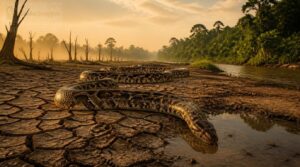
Here’s the uncomfortable truth: climate change and habitat loss are squeezing pythons from both ends. Warming summers cut foraging windows by up to 3 hours daily, while droughts crash water-dependent prey, dropping local populations by as much as 60%.
So what actually works? Habitat corridors top the list, connecting fragmented rainforest so pythons can shift ranges as conditions change. Protecting headwater wetlands keeps prey communities alive. And smart reserve design includes thermal refugia, cool, moist microclimates where snakes can beat the heat.
You can help, too. Support long-term occupancy surveys, because right now we can’t cleanly separate climate signals from land-use noise. Better data means better conservation efforts. Pythons are survivors, but even survivors need somewhere to live.
Support long-term occupancy surveys—better data drives better conservation, because even pythons need somewhere to live
Frequently Asked Questions (FAQs)
Why is Florida overrun with pythons?
Why is Florida overrun with pythons? Burmese pythons in Florida arrived as escaped or released pets, then thrived. The warm, wet Everglades habitat offers abundant prey and few predators, making this invasive species nearly unstoppable.
Which animal kills a python?
Kingsnakes and large constrictors can kill pythons where their ranges overlap. Monitor lizards take juveniles, and crocodilians ambush adults near water. These predator-prey relationships matter for wildlife management and invasive population control.
What snake has a 100% fatality rate?
Picture a herper in Kenya spotting a black mamba in a tree: untreated bites kill nearly 100% of victims, often within hours. Without antivenom, the black mamba’s venom delivers that grim, near-perfect fatality rate.
What is the distribution of the python snake?
Where do pythons live? Their distribution spans three continents: sub-Saharan Africa, southern and Southeast Asia, and Australia. You’ll find them thriving in forests, savannas, wetlands, and river edges, wherever warmth and prey overlap.
How much does Florida pay for captured pythons?
Wondering about the payout? Florida’s Python Elimination Program pays hunters $13 per hour, plus $50 to $200 bonuses per snake, scaled by length. It’s a clever incentive scheme targeting invasive species across the Everglades environment.
What is the Burmese pythons current distribution?
The Burmese python is a shadow, stretching across continents. Native to Southeast Asia, it now rules Florida’s Everglades as an invasive species, thriving in tropical forests and wetlands while geographic migration and habitat loss push it farther.
Where do python snakes live?
Where do python snakes live? Across sub-Saharan Africa, South and Southeast Asia, and northern Australia. They favor warm climates near water: forests, savannas, wetlands, and river basins, adapting readily to varied terrain.
How are Python snakes classified?
Scientists classify pythons under family Pythonidae, class Reptilia, order Squamata, suborder Serpentes. You’ll find roughly 8 genera and 32 species, all Old world pythons, defined by paired lungs, heat-sensing pits, and vestigial hind limbs.
What is a python snake?
You’re looking at a non-venomous constrictor that subdues prey with sheer muscle. These powerful predators thrive across forests and wetlands, using sharp heat-sensing abilities to ambush mammals, birds, and reptiles.
Are there pythons in Africa?
Yes, Africa hosts pythons. The African rock python thrives from savannas to rainforests, hunting mammals and birds. Understanding this python snake distribution aids conservation efforts against habitat loss and invasive species threats.
Conclusion
Sure, go ahead and spot a python in the wild. Good luck with that. These masters of camouflage prove that python snake distribution isn’t just trivia, it’s a warning label.
A map tells you where a species is, but it also tells you where it’s headed next. Read the map, and you can predict the invasion before it happens. The Everglades taught us that lesson the hard way. Your backyard might be next in line.