This site is supported by our readers. We may earn a commission, at no cost to you, if you purchase through links.

A retained eye cap can blind your snake if it tightens over successive sheds, cutting off blood flow to the tissue beneath. That’s one of the most common complications keepers report, and it traces back to one variable: inadequate ambient humidity.
During a shed, a thin mucous layer forms between old and new skin. When the air is too dry, that layer desiccates, keratin stiffens, and the old epidermis grips instead of slips. Reptile foggers let you control that humidity window precisely, and knowing how to use them makes the difference between a clean shed and a vet visit.
Table Of Contents
- Key Takeaways
- Why Humidity Matters for Snake Shedding
- How Do Reptile Foggers Help Shedding?
- Match Fogging to Your Snake Species
- When Can Foggers Harm Shedding Snakes?
- Choose, Set Up, and Maintain Foggers
- Frequently Asked Questions (FAQs)
- What helps a snake shed faster?
- How to help a snake get shed off?
- What is a good fogger for snakes?
- What triggers a snake to shed?
- Can a moist hide replace a reptile fogger?
- How do I safely remove stuck shed skin?
- Should hatchlings use foggers differently than adult snakes?
- How often do healthy snakes typically shed skin?
- Do foggers cause stress or behavioral changes in snakes?
- Conclusion
Key Takeaways
- A retained eye cap is among the most preventable shedding complications — and inadequate humidity is almost always the root cause.
- Foggers outperform passive moisture sources by dispersing ultra-fine droplets that hydrate scales directly, keeping the mucous layer between old and new skin fluid long enough for a clean release.
- Humidity targets aren’t universal: tropical species need 70–90% RH during a shed, while arid species like ball pythons do best at 20–40%, since sustained moisture above 50% risks fungal growth and respiratory infections.
- Overfogging is just as harmful as underfogging — damp scales, mineral deposits from tap water, and poor airflow can all cause skin maceration, scale rot, or stress behaviors that derail the shed entirely.
Why Humidity Matters for Snake Shedding
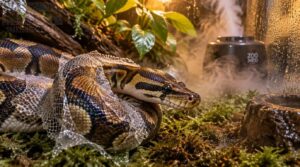
Because shedding depends directly on skin hydration, humidity levels in your reptile enclosure can mean the difference between a clean, single-piece shed and a frustrating, incomplete one. Getting this right is foundational to good reptile husbandry.
Maintaining consistent humidity also helps you catch early warning signs of trouble — a full breakdown of reptile shedding problems and what to watch for can help you intervene before minor issues become serious skin damage.
When a snake enters its shed cycle, a mucous layer forms between the old skin and the new epidermis beneath it. This film needs ambient moisture to stay fluid. Without it, the old skin dries out, stiffens, and clings, making retained patches on the tail or eye caps far more likely.
Without ambient moisture, the mucous layer between old and new skin dries out, turning a clean shed into a stubborn, clinging ordeal
Dry air also stiffens keratin, raises shedding friction, and disrupts the gradual hydration gradient your snake’s body relies on to slip free cleanly. Consistent humidity control makes most shedding problems far less common.
How Do Reptile Foggers Help Shedding?

Foggers address exactly the humidity gap that causes stuck sheds. By dispersing fine mist into your reptile enclosure, they raise ambient moisture quickly, keeping the mucous layer between old and new skin fluid long enough for a clean release.
Ultrasonic waves break water into droplets as small as 0.5 micrometers, which your snake absorbs through surface scales within minutes. That’s what separates foggers from passive water sources when shedding problems appear.
Here’s what foggers do during a shed cycle:
- Raise RH rapidly during the critical shedding window
- Hydrate scales directly, reducing friction against old skin
- Minimize stuck sheds on tail tips and eye caps
- Run short fog cycles without saturating the substrate
- Pair with proper ventilation to prevent condensation buildup
Match Fogging to Your Snake Species
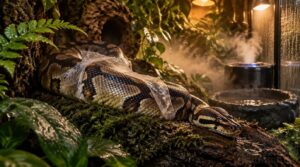
Not every snake needs the same humidity levels, so fogging strategies can’t be one-size-fits-all. Your snake’s natural habitat is the clearest guide to how much mist is appropriate. The categories below break down targets by species type so you can dial in your setup correctly.
Getting the balance right takes some practice, but proper misting technique for snake enclosures can make all the difference between a thriving habitat and one prone to mold or respiratory issues.
Tropical Snake Humidity Targets
Most tropical snakes need 70–90% relative humidity during shedding, but that range isn’t universal. Large boas tolerate 80–90%, while smaller tree snakes perform best at 70–80% pre-shed, rising to 85% at completion. These species-specific needs matter.
A fogger helps you maintain this humidity gradient. Without it, dry pockets form and shedding problems follow, including retained eye caps and partial sheds.
Arid Snake Humidity Limits
Unlike tropical species, desert snakes don’t need much humidity during a shed. Arid species like ball pythons and sand boas do best at 20-40% RH, with spikes to 50% during misting.
For a deeper look at why species-specific ranges matter, snake shedding humidity guidelines by species break down exactly how getting it wrong leads to retained eye caps and stuck skin.
Sustained humidity above 50% encourages fungal growth in substrate and can cause respiratory infections. Use your fogger only in timed bursts and let the enclosure dry fully between sessions.
When Can Foggers Harm Shedding Snakes?
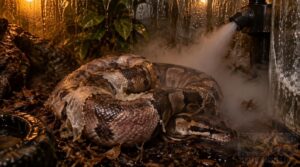
Although foggers are valuable tools, running yours too aggressively during the shedding window creates real problems. Excessive fogging keeps scales damp for too long, which can cause skin maceration and incomplete sloughs. Humidity swings from intermittent fogging stress mucus membranes and may delay shed initiation entirely.
Water quality matters more than you’d expect. Tap water often leaves mineral deposits on scales, affecting the integrity needed for a clean slough. Biofilm in an uncleaned reservoir introduces irritants that can trigger scale rot or dermatitis.
Poor air circulation compounds these risks considerably. Stagnant fog pockets raise localized humidity to levels that, over days, may contribute to respiratory infections. Desiccation in your snake’s basking zone remains a problem when fogging creates uneven microclimates.
A ventilated reptile enclosure screen top helps break up stagnant fog pockets and keep airflow consistent across both the cool and basking zones.
Choose, Set Up, and Maintain Foggers
Getting the right fogger into your snake’s enclosure is only half the work. Choosing, installing, and maintaining the unit correctly determines whether it actually helps a safe shed. Here’s what to keep in mind across three key areas.
Ultrasonic Versus Thermal Foggers
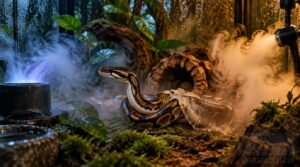
Picking the right fogger directly shapes how well your snake sheds.
- Ultrasonic units create fine 1-5 micron droplets, lifting humidity levels gradually.
- Thermal foggers generate warmer, larger droplets for fast, intense pre-shed boosts.
- Ultrasonic suits continuous use; thermal works better for brief misting windows.
- Misusing either one risks damp spots that can harm reptile respiratory health.
Safe Water and Cleaning
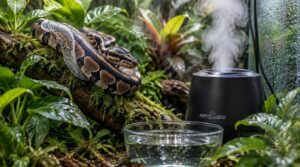
Grayish mineral crust on your fogger’s nozzle quietly throttles mist output over time. Distilled water solves most of that problem before it starts.
| Task | Frequency | Method |
|---|---|---|
| Reservoir cleaning | Daily | Empty, rinse, refill |
| Vinegar descaling | Monthly | Diluted soak, rinse |
| Nozzle maintenance and cleaning | Weekly | Soapy water, air-dry |
Monitoring water quality and scheduling these tasks keep your fogger reliable through every shed.
Humidity Monitoring and Airflow
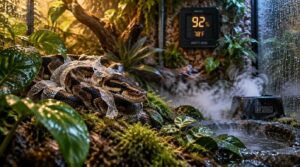
Think of your enclosure as a live weather station. Without humidity monitoring devices, you’re flying blind during shedding.
Place a dual-point hygrometer at mid-height, away from airflow and mist distribution zones. Pair it with proper enclosure ventilation to prevent gradient buildup.
- Log hourly RH and temp
- Set alerts at 45% and 85%
- Review 24-hour fog trends
- Perform biannual humidity calibration
Frequently Asked Questions (FAQs)
What helps a snake shed faster?
Sustained humidity above 60% softens retained skin, making separation easier. Regular fogging cycles in your snake enclosure keep moisture consistent, reducing snake shedding issues before they start.
How to help a snake get shed off?
Raise enclosure humidity to 70–80% RH for 24–48 hours before shedding. A brief warm soak also loosens stubborn retained patches. Keep temperatures stable and avoid disrupting your snake’s heat and light cycles during the process.
What is a good fogger for snakes?
For reliable humidity control, an ultrasonic reptile fogger with a 1-2 L tank and anti-calcification protection is your best choice. Use distilled water. It’s among the foggers good for reptiles that won’t overheat your enclosure.
What triggers a snake to shed?
Picture old skin pulling tight across a growing body. Shedding triggers when epidermal growth outpaces the existing skin and reduced skin hydration loosens the old layer from underneath, setting the entire molting process in motion.
Can a moist hide replace a reptile fogger?
A moist hide is a life raft, not a ship. It concentrates local moisture but can’t raise relative humidity across your enclosure microclimate.
For full reptile shedding support, a fogger reaches where humid hides can’t.
How do I safely remove stuck shed skin?
Stuck shed grips like old tape on crinkled glass.
Soak your snake in lukewarm 80-85°F water for 15 to 30 minutes, then gently wipe with a damp cloth, moving in the direction of the scales.
You can also try increasing enclosure humidity levels to help resolve mild stuck shed cases without the added stress of handling.
Should hatchlings use foggers differently than adult snakes?
Hatchlings need more deliberate fogging schedules than adults do. Time your sessions carefully to their specific shed window, using short, controlled bursts to raise humidity without oversaturating the enclosure or stressing their still-developing respiratory systems.
How often do healthy snakes typically shed skin?
Juveniles shed roughly every 2–4 weeks due to rapid growth. Adults settle into a 4–6 week cycle under stable conditions. Your snake’s species-specific needs may shift this, with arid snakes stretching intervals to 8 weeks.
Do foggers cause stress or behavioral changes in snakes?
Yes, foggers can trigger humidity-related stress behaviors like restlessness, increased tongue-flicking, and hiding. Sudden humidity swings are the main culprit.
Using gradual ramp rates and syncing fog cycles with inactive periods minimizes reptile stress effectively.
Conclusion
Think of proper humidity as the lubricant in a machine: without it, every moving part grinds. Understanding how reptile foggers help with snake shedding gives you real control over that process, turning a biological vulnerability into a manageable variable.
Monitor your readings, keep your fogger clean, and match your setup to your species. Do that consistently, and complete, clean sheds become the rule rather than the lucky exception.