This site is supported by our readers. We may earn a commission, at no cost to you, if you purchase through links.
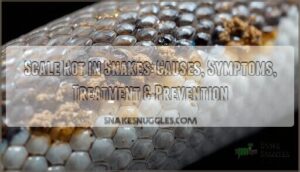
You notice the discoloration first—small patches on your snake’s belly scales that weren’t there last week. Within days, those patches darken, blister, and begin to smell. This is scale rot, a bacterial or fungal infection that can progress from a minor skin issue to a life-threatening systemic infection in a matter of weeks.
Unlike respiratory infections or parasites that develop gradually, scale rot moves fast, especially in snakes living in damp, poorly maintained enclosures. The infection breaks down the protective barrier of your snake’s scales, leaving tissue vulnerable to deeper bacterial invasion and potential septicemia. Catching it early makes the difference between a straightforward treatment and an emergency requiring injectable antibiotics—or worse.
Table Of Contents
- Key Takeaways
- What is Scale Rot in Snakes?
- Causes of Scale Rot in Snakes
- Early Signs and Symptoms of Scale Rot
- Treating Scale Rot at Home
- Preventing Scale Rot in Your Snake
- Top 5 Products for Scale Rot Care
- Frequently Asked Questions (FAQs)
- What happens if scale rot is left untreated?
- What is scale rot in snakes?
- What is scale rot?
- Is scale rot a bacterial infection?
- Can scale rot be cured?
- How to prevent scale rot in snakes?
- Is Scale Rot Contagious to Other Animals?
- Are There Any Over-the-counter Treatments for Scale Rot?
- Are There Any Home Remedies for Scale Rot?
- Are There Any Long-term Effects of Scale Rot?
- Conclusion
Key Takeaways
- Scale rot progresses rapidly from minor discoloration to life-threatening septicemia within weeks if untreated, making early detection and immediate intervention critical for survival.
- High humidity above 60%, poor temperature regulation, unsanitary conditions, and physical trauma create the perfect storm for bacterial invasion through compromised scales.
- Home treatment with betadine, antibiotic ointment, and immediate enclosure correction works for early cases, but advanced infections require injectable antibiotics and veterinary care.
- Prevention through proper humidity (40-60%), temperature gradients (75-88°F), weekly deep cleaning, and daily health checks eliminates scale rot before it starts.
What is Scale Rot in Snakes?
Scale rot isn’t just one condition—it’s a catch-all term for several bacterial skin infections that affect your snake’s scales, including vesicular dermatitis and ulcerative dermatitis. What starts as minor discoloration can quickly spiral into blisters, open sores, and in the worst cases, a life-threatening blood infection called septicemia.
One common form is blister disease in pet snakes, which creates fluid-filled lesions that can quickly turn into a medical emergency if left untreated.
Even low-maintenance species like ball pythons can develop scale rot if their environment isn’t right, which is why understanding this condition matters for every snake owner.
Definition and Overview
Scale rot is a bacterial or fungal skin infection that attacks your snake’s outer scales, creating discolored patches, ulcers, and crusty lesions. It’s not just one condition—veterinarians diagnose various forms of snake dermatitis under this umbrella.
Without prompt veterinary care and disease diagnosis, scale rot basics show this reptile skin health crisis can spread quickly:
- Starts with small discolored patches on belly scales
- Progresses to blisters that rupture into open sores
- Emits foul odor as infection deepens
- Can lead to fatal blood infection in severe cases
Commonly Affected Snake Species
Your ball python and corn snake face higher risk than most species. Ball pythons (also called royal pythons) develop infections easily when humidity keeps their tanks too moist.
Corn snakes struggle after shedding problems or skin injuries. King snakes suffer when substrates stay dirty, and boa constrictors kept in unclean, persistently damp cages show the most scale deterioration.
Why Scale Rot is Dangerous
Bacterial infection spreads beneath the skin and enters your snake’s bloodstream. Septicemia develops when scale rot advances untreated, causing systemic failure that kills small snakes quickly.
Untreated scale rot turns into septicemia, a blood infection that spreads fast and kills small snakes quickly
Ulcerative dermatitis weakens immune defenses while lesions deepen into muscle tissue. You’re watching a surface problem become fatal—reptile mortality jumps once dermatitis turns invasive and internal organs shut down from overwhelming bacterial infection.
Causes of Scale Rot in Snakes
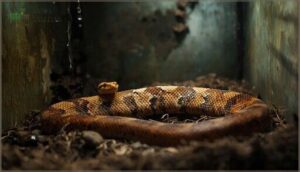
Scale rot doesn’t happen on its own—it’s almost always the result of mistakes in how you’re keeping your snake. Most cases come down to problems with the environment, physical injury, or gaps in nutrition.
Let’s look at the specific causes you need to watch for.
High Humidity and Moisture
When relative humidity climbs above 60 percent in your reptile enclosure, you’re creating conditions that invite scale rot. Excess moisture softens scales, promotes bacterial growth, and slows healthy shedding.
Wet bedding wicks water onto your snake’s belly, and poor airflow traps humidity in damp corners. Environmental factors like condensation near warm spots repeatedly expose vulnerable skin to infection-causing moisture.
Inadequate Temperature Regulation
Without a proper heat gradient—usually 32 to 34 degrees Celsius at the basking zone and 24 to 28 elsewhere—your snake can’t maintain healthy thermoregulation. Chronic cold stress weakens immune function, slowing wound healing and making bacterial infections easier to establish. Poor enclosure design or faulty thermostats create thermal profiling problems that directly contribute to snake health issues like scale rot.
Key thermoregulation issues include:
- Uncontrolled heat sources causing wild temperature swings
- Inadequate monitoring of basking and cool zones
- Substrate or ventilation choices that disrupt the gradient
Unsanitary Enclosure Conditions
Among the leading contributors to scale rot, filthy substrates rank high—moldy bedding and accumulated feces create breeding grounds for bacterial infections in reptiles. Dirty water dishes fuel bacterial growth and fungal infections within 48 hours.
Poor ventilation traps humidity above 70 percent, which accelerates disease. Your snake’s enclosure demands rigorous reptile care and maintenance: weekly disinfection, proper airflow, and consistent substrate replacement prevent scale rot.
Notably, unsanitary dwelling conditions can also lead to environments unfit for healthy habitation.
Physical Trauma and Damaged Scales
Rough substrates, sharp cage furniture, and mishandling can all lead to scale damage that opens a doorway for dermatitis.
Abnormal scales with cracks or raised sections trap moisture and bacteria, turning minor scrapes into full-blown scale rot in snakes.
Studies of bacterial skin infections in reptiles highlight the importance of prompt treatment to prevent serious complications.
Prioritize injury prevention with these steps:
- Remove any sharp decor or abrasive surfaces from the enclosure.
- Handle your snake gently to avoid accidental trauma response.
- Inspect daily for micro-tears that signal early wound healing needs.
- Maintain proper conditions to support natural skin regeneration.
Nutritional Deficiencies
Your snake’s diet directly affects its immune defenses—vitamin deficiencies like low vitamin A or C compromise skin integrity and disease resistance. Malnutrition risks from mineral imbalance weaken the body’s ability to fight bacterial infections that cause scale rot.
Make sure proper reptile nutrition through varied prey items and dietary supplements when needed. Poor nutrient absorption creates vulnerability to dermatological conditions in reptiles that healthy, well-fed snakes easily resist.
Early Signs and Symptoms of Scale Rot
Catching scale rot early makes all the difference between a quick fix and a serious health crisis.
Your snake won’t tell you something’s wrong, so you’ll need to watch for physical changes that signal infection is taking hold. Here are the key warning signs that should send you straight into treatment mode.
Discoloration of Scales
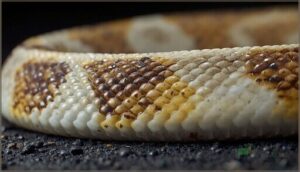
One of the first warning signs you’ll notice is belly color changes on your snake’s ventral scales. Watch for brown, yellow, or white discoloration where the body contacts substrate—these ventral hues signal bacterial infection taking hold.
Color progression usually starts faint, then darkens as skin conditions worsen. Check your snake’s underside regularly, especially if you’ve adjusted humidity or noticed moisture accumulation in the enclosure.
Blisters and Ulcerations
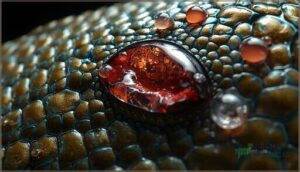
As infection advances, you’ll see small fluid-filled blisters developing beneath or between scales. These blisters signal ulcerative dermatitis—a serious skin condition requiring immediate wound care and infection control.
When blisters rupture, they leave raw ulcerative lesions that leak yellowish or greenish discharge. Without proper ulcer treatment, these skin lesions expand rapidly, especially in persistently moist environments where bacteria thrive.
Raised or Cracked Scales
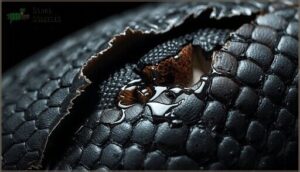
As ulcerations worsen, you’ll notice visible scale damage—scales appear lifted, fractured, or jagged around affected areas. Cracked scales develop along tissue breakdown sites, while raised scales indicate fluid or blood pooling beneath the surface.
Watch for these dermatological conditions:
- Scales lifting away from skin surface
- Cracking along scale edges
- Leathery or rubbery texture changes
- Glossy wet appearance in moist patches
- Fractured scale patterns in localized areas
These skin conditions in reptiles require immediate scale repair intervention.
Foul Odor and Fluid Leakage
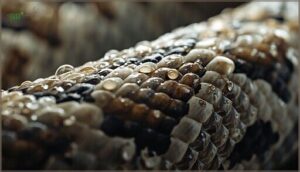
Beyond visible scale damage, a persistent foul smell signals bacterial overgrowth—your clearest warning of advancing infection. You’ll notice clear to cloudy fluid seeping from affected sites, creating wet patches that intensify with handling. This fluid buildup causes localized swelling under scales, particularly noticeable after shedding cycles.
| Odor Indicator | Fluid Characteristic | Action Required |
|---|---|---|
| Faint musty smell | Clear thin discharge | Begin daily monitoring |
| Moderate odor during handling | Cloudy fluid leakage | Initiate cleaning protocol |
| Strong persistent stench | Yellow-green discharge | Seek veterinary care |
| Intensifies with enclosure disturbance | Thick pus formation | Emergency treatment needed |
| Smell persists after cleaning | Blood-tinged fluid | Immediate veterinarian consultation |
Don’t ignore these dermatitis warning signs—odor management and infection control start the moment you detect unusual moisture or smell on your snake’s belly.
Behavioral Changes in Snakes
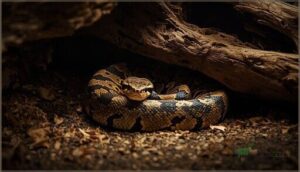
Physical discomfort drives behavioral shifts you can’t ignore. Your snake may rub its body against surfaces to relieve itching, hide more frequently, or refuse food altogether—classic reptile hiding and feeding changes signaling pain.
Watch for lethargy, social withdrawal from normal basking spots, and unusual shedding delays. Snake stress manifests differently than visible scale rot symptoms, but these behavioral cues demand immediate attention to prevent worsening infection.
Treating Scale Rot at Home
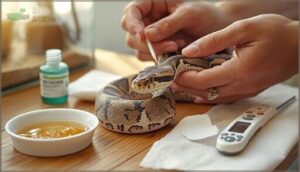
If you catch scale rot early, you can often treat it at home without rushing to the vet. The key is acting fast and staying consistent with your care routine.
Here’s what you need to do to give your snake the best chance at a full recovery.
Quarantining The Affected Snake
When your snake develops scale rot, your first move is snake isolation—a dedicated quarantine setup prevents disease transmission to other reptiles. Use a separate enclosure with minimal substrate for easier reptile hygiene and enclosure cleaning.
Monitor temperature and humidity daily, handle this animal last, and use dedicated tools. This simple disease prevention step protects your entire collection while you focus on reptile care and veterinary treatment.
Cleaning The Infected Area
Rinse infected scales with sterile saline for fifteen to thirty seconds—rinsing techniques matter because harsh scrubbing reopens fragile tissue. Pat dry gently with clean gauze to avoid disrupting healing.
Apply a thin layer of Betadine or Vetericyn to reduce bacterial infections without irritating damaged skin. Safe drying and controlled antiseptic use prevent scale rot from worsening into deeper skin infections.
Applying Topical Antibiotic Ointments
Triple antibiotic ointment gives you a broad defense against bacterial infections once scales are clean and dry. Apply a fingertip-sized amount directly to affected areas one to three times daily—antibiotic treatment works best when consistent.
Wash your hands before and after to prevent cross-contamination. Watch for skin irritation or worsening symptoms; prolonged topical treatment can trigger antibiotic resistance, so consult your veterinarian if scale rot doesn’t improve within seventy-two hours.
Monitoring Healing and Progress
Daily documentation keeps your recovery metrics sharp—photograph wounds from the same angle to track tissue regeneration across healing stages. Measure wound dimensions with calipers, noting any shrinkage or expansion. Infection control depends on spotting trouble early: watch for new discharge, persistent odor, or spreading discoloration. Treating reptile skin conditions requires patience—true healing unfolds over weeks, not days.
- Record appetite changes and activity levels as behavioral recovery indicators
- Monitor shedding cycles; clean sheds signal improved reptile health and wellness
- Track inflammation reduction by comparing redness and swelling daily
- Document when veterinary treatment for reptiles might be necessary
- Note time between cleanings as wound tracking shows healing progress
Preventing Scale Rot in Your Snake
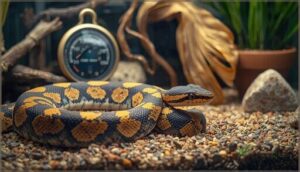
Prevention is always easier than treatment in the case of scale rot. Most cases develop because of simple husbandry mistakes that you can fix with a few straightforward adjustments to your snake’s environment and care routine.
Here’s what you need to focus on to keep your snake’s scales healthy.
Maintaining Proper Humidity and Temperature
Prevention starts with dialing in your environment: keep relative humidity between 50 and 60 percent using a hygrometer placed at snake level, and establish temperature gradients with a basking spot at 88 to 92°F and a cooler retreat around 75 to 80°F.
Proper heat sources, ventilation systems, and moisture management create the foundation for reptile care—protecting snake health and wellness by stopping scale rot before it starts.
Regular Enclosure Cleaning and Disinfection
A spotless enclosure isn’t optional—it’s your frontline defense against scale rot. Follow these cleaning schedules and disinfectant protocols to maintain proper enclosure sanitation:
- Spot-clean waste daily to reduce microbial load and manage humidity.
- Deep-clean weekly using EPA-approved reptile disinfectants on all surfaces.
- Scrub nonporous areas with a stiff brush before applying disinfectant.
- Rinse thoroughly and dry completely before reintroducing your snake.
- Use dedicated tools per enclosure to prevent cross-contamination.
Consistent habitat maintenance and hygiene practices protect your snake from bacterial infections that trigger scale rot—making veterinary care less urgent and reptile care more successful.
Safe Habitat Setup to Prevent Injury
A poorly designed enclosure invites injury, and damaged skin opens the door to scale rot. Use smooth vinyl or textured reptile carpet to prevent abrasion.
Remove sharp furnishings that can scrape scales. Install thermostats to maintain a stable temperature gradient from 75 to 88°F and keep humidity management between 40 and 60 percent.
Support your snake’s entire body during handling to minimize stress and trauma.
Monitoring Diet and Nutrition
Nutrient balance and calorie intake directly affect your snake’s immune defenses against scale rot. Feed juveniles every five to seven days and adults every seven to fourteen days, adjusting for body condition.
Offer whole prey to supply calcium and essential fatty acids. Track feeding frequency, dietary variety, and hydration management in a simple log. Fresh water aids shedding and metabolic health—change it daily.
Routine Health Checks
Beyond feeding, schedule quarterly eye exams, weight tracking, and skin inspections to catch scale rot before it spreads. Watch for discoloration, cracks, or raised scales during each handling session.
Behavioral checks—shifts in appetite, hiding patterns, or defensive strikes—often signal early reptile diseases. Consistent health monitoring and prompt veterinary care for reptiles turn minor concerns into manageable fixes, protecting your snake’s long-term wellness.
Top 5 Products for Scale Rot Care
Having the right products on hand makes treating and preventing scale rot much simpler. You don’t need an overwhelming collection—just a few essential items that address the core problems of infection, hygiene, and environmental control.
Here are five veterinary-recommended products that belong in every snake keeper’s toolkit.
1. Digital Reptile Thermometer Hygrometer
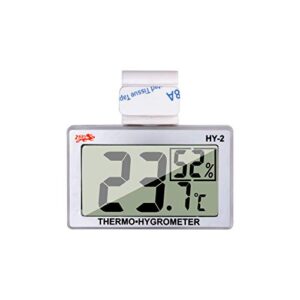
You can’t treat scale rot if you don’t know it’s happening, and a digital reptile thermometer hygrometer gives you the early warning system you need. This device monitors both temperature and humidity in real time, displaying readings in Celsius or Fahrenheit on a clear LCD screen.
Most models include dual probes—one internal, one external—so you can track different zones in your enclosure. Set alarms to alert you when conditions drift into the danger range, preventing the moisture buildup and temperature drops that trigger bacterial infections.
| Best For | Reptile owners who need reliable real-time monitoring of temperature and humidity to prevent health issues like scale rot in terrariums, snake tanks, and other enclosures. |
|---|---|
| Primary Use | Environmental Monitoring |
| Form | Digital Device |
| Safety Profile | Non-toxic |
| Target Animals | Reptiles |
| Size | 2.08×1.3×0.67 inches |
| Ease of Use | User-friendly Interface |
| Additional Features |
|
- Tracks both temperature and humidity simultaneously with a clear LCD display that switches between Celsius and Fahrenheit
- Compact, space-saving design with multiple mounting options (hook or adhesive) that blends into any habitat
- Battery-powered with low energy consumption, making it easy to place anywhere without worrying about cords
- Some users report the humidity readings aren’t always accurate, which could be a problem for sensitive reptiles
- The adhesive backing doesn’t stick well on all surfaces and may need extra support for certain angles
- Switching between Celsius and Fahrenheit can be tricky, and battery life is limited (though replacements aren’t frequent)
2. Vetericyn Reptile Wound Care Spray
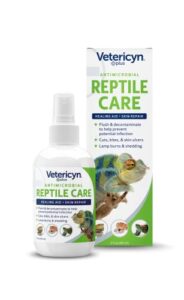
Once you’ve spotted the problem, Vetericyn Reptile Wound Care becomes your go-to treatment tool. This hypochlorous acid formula acts as an antimicrobial without the sting of alcohol or betadine, making it safe around your snake’s eyes, nostrils, and mouth.
The pH-balanced, non-toxic spray kills surface bacteria while keeping the wound moist—exactly what damaged scales need to heal. Apply it directly to affected areas daily, or use it as a pre-treatment step before antibiotic ointment. It won’t stain your hands or enclosure surfaces either.
| Best For | Snake owners dealing with scale rot, burns, or shedding issues who want a vet-recommended first aid spray that’s safe for daily use around sensitive areas. |
|---|---|
| Primary Use | Wound Treatment |
| Form | Spray |
| Safety Profile | Non-toxic |
| Target Animals | Reptiles |
| Size | 3 ounce |
| Ease of Use | Ready-to-use Spray |
| Additional Features |
|
- Non-stinging hypochlorous formula that’s safe around eyes, nostrils, and mouth—no harsh chemicals like betadine or alcohol
- Works as both a standalone treatment and prep step before antibiotic ointment, keeping wounds moist for better healing
- Won’t stain your hands or enclosure, making cleanup easier than traditional wound care products
- Works best when paired with antibiotic ointment for serious wounds, so you’ll likely need to buy both products
- Results depend on wound severity—might not be strong enough for advanced infections without vet intervention
- Small 3-ounce bottle may run out quickly if you’re treating multiple reptiles or larger affected areas
3. F10 Veterinary Disinfectant Cleaner
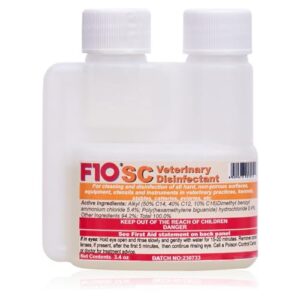
Prevention starts with killing bacteria before they colonize your enclosure. F10SC Veterinary Disinfectant tackles viruses, bacteria, and fungi without leaving toxic residue—critical when your snake’s belly drags across every surface.
This concentrated formula dilutes down for routine cage cleaning or ramps up for deep decontamination after scale rot outbreaks. It’s odorless, biodegradable, and EPA-registered for veterinary use. Mix fresh batches weekly since potency fades, and always remove your snake before spraying.
Use it on water bowls, hides, and substrate trays to eliminate pathogen reservoirs.
| Best For | Snake owners who need a veterinary-grade disinfectant that kills bacteria, viruses, and fungi without leaving toxic residue on surfaces their pets contact. |
|---|---|
| Primary Use | Disinfection |
| Form | Liquid Concentrate |
| Safety Profile | Biodegradable |
| Target Animals | Reptiles & Birds |
| Size | 100 ml |
| Ease of Use | Requires Dilution |
| Additional Features |
|
- EPA-registered and safe for reptile enclosures when used correctly—odorless and biodegradable formula won’t harm snakes after surfaces dry
- Concentrated solution stretches your budget since you dilute it for routine cleaning or use stronger ratios for deep decontamination
- Works on all enclosure surfaces including water bowls, hides, and substrate trays to stop scale rot and other infections before they start
- Requires weekly mixing since the diluted solution loses effectiveness over time, adding an extra prep step to your cleaning routine
- Concentrated form can harm animals if you don’t follow dilution ratios carefully, and you must remove snakes during application
- Not ideal for porous surfaces unless you thoroughly rinse afterward, which limits use on certain wooden hides or decor
4. Reptile Tank Cleaner Spray
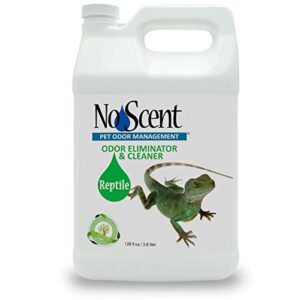
Daily cage maintenance prevents scale rot better than emergency interventions.
Reptile tank cleaner sprays target organic waste at the molecular level using probiotic formulas that digest fecal compounds instead of masking them.
Look for pH-balanced, no-rinse options safe for glass, substrate, and decor—you won’t need to relocate your snake during application. Spray bedding and high-contact zones after spot-cleaning waste.
These products work best when you’re already removing soiled substrate promptly, not as a substitute for proper husbandry.
| Best For | Reptile owners who want a safe, daily-use spray to neutralize odors and maintain a fresh tank environment without relocating their pets during cleaning. |
|---|---|
| Primary Use | Odor Control |
| Form | Spray |
| Safety Profile | Natural |
| Target Animals | Reptiles |
| Size | 1 gallon |
| Ease of Use | Ready-to-use Spray |
| Additional Features |
|
- Probiotic formula breaks down waste at the source instead of just covering up smells
- Safe to use around animals—no need to remove your reptile while treating the enclosure
- Works on multiple surfaces including substrate, glass, decor, and even carpet if accidents happen outside the tank
- Pricey for a gallon, especially if you’re maintaining multiple enclosures
- Needs regular reapplication to stay effective—not a one-and-done solution
- Won’t fix deeper odor problems if you’re not keeping up with waste removal and substrate changes
5. Betadine Antiseptic Solution
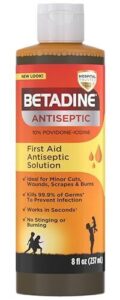
Diluted povidone-iodine solutions soak infected scales without the sting of alcohol-based products. Betadine Antiseptic Solution delivers 10% povidone-iodine in a no-alcohol formula—dab it on minor ulcerations with a cotton swab or dilute it 1:10 for gentle wound soaks. The golden-brown color shows exactly where you’ve applied it, preventing missed spots.
Use it after cleaning the area with chlorhexidine, then follow with antibiotic ointment once the scales air-dry. Don’t apply undiluted solution to large body areas without veterinary guidance.
| Best For | Reptile owners who need a gentle, non-stinging antiseptic to treat minor cuts, scrapes, or ulcerations on their pet’s scales without causing additional irritation. |
|---|---|
| Primary Use | Antiseptic Treatment |
| Form | Liquid |
| Safety Profile | No-sting Formula |
| Target Animals | General Use |
| Size | 8 ounce |
| Ease of Use | Ready-to-use |
| Additional Features |
|
- No-sting, alcohol-free formula makes it safer and more comfortable for use on sensitive reptile skin
- Golden-brown color lets you see exactly where you’ve applied it, so you don’t miss any spots
- Trusted antiseptic that kills germs and prevents infection in minor wounds when used properly
- Can stain surfaces, clothing, and possibly your reptile’s enclosure if not applied carefully
- Large 8-ounce bottle may expire before you finish it if you only need it occasionally
- Cap tends to leak, which can create messy spills and waste product
Frequently Asked Questions (FAQs)
What happens if scale rot is left untreated?
Ignoring infection mirrors a slow-burning wildfire—damage spreads quietly, then explodes.
Bacteria invade deeper tissues, causing septicemia. Your snake weakens, loses appetite, and faces potential death without veterinary intervention and antibiotics.
What is scale rot in snakes?
Scale rot is a bacterial skin infection that targets your snake’s scales and underlying tissue, most often appearing as cracked, discolored patches on the belly and sides.
What is scale rot?
You’ll notice red, brown, or black discoloration on your snake’s belly scales—that’s the hallmark of this bacterial or fungal skin infection, which worsens when moisture lingers too long.
Is scale rot a bacterial infection?
Yes—bacteria like Pseudomonas and Aeromonas usually drive the infection, though fungi can also invade damaged tissue. Think of it as an opportunistic invasion when your snake’s defenses are down.
Can scale rot be cured?
With prompt treatment, most cases heal completely within one to four weeks. You’ll need consistent wound care, environment adjustments, and sometimes antibiotics to support recovery and prevent complications.
How to prevent scale rot in snakes?
Keep your snake’s enclosure clean, maintain humidity levels between 30-50%, and make certain proper temperatures of 82-88°F.
Use absorbent substrate, provide good ventilation, and inspect scales weekly for early warning signs.
Is Scale Rot Contagious to Other Animals?
Direct contact between snakes can transfer bacteria, but scale rot doesn’t spread to mammals or birds. Shared equipment, contaminated substrates, and poor hygiene increase risk among reptiles housed together.
Are There Any Over-the-counter Treatments for Scale Rot?
Over-the-counter options include topical antibiotic creams labeled for veterinary use, antiseptic solutions like povidone iodine for cleaning, and reptile wound care sprays containing gentle bactericidal agents for mild lesions.
Are There Any Home Remedies for Scale Rot?
Your snake’s dull scales and reddened belly don’t always require a vet visit.
You can start treatment at home by quarantining your snake, gently cleaning affected areas with diluted betadine, and monitoring daily progress.
Are There Any Long-term Effects of Scale Rot?
Yes. Chronic infections can permanently scar scales, disrupt shedding, and weaken your snake’s immune system. Long-term damage increases susceptibility to secondary infections and may cause ongoing appetite and mobility issues.
Conclusion
An ounce of prevention beats a pound of cure—especially with scale rot. Keep your enclosure dry, clean substrate weekly, and inspect your snake’s belly after each handling.
Catch discoloration early and you’ll treat it with betadine and better husbandry. Ignore it, and you’re looking at injectable antibiotics or worse. Your snake’s skin is its first line of defense. Maintain that barrier, and scale rot won’t get a foothold in the first place.