This site is supported by our readers. We may earn a commission, at no cost to you, if you purchase through links.
 Every spring, Texas emergency rooms see a sharp uptick in venomous snake bites, with most occurring between April and October when temperatures climb above 70°F. Snake season in Texas doesn’t follow a strict calendar—it shifts with temperature fluctuations, rainfall patterns, and regional climate variations across the state’s diverse ecosystems.
In South Texas, mild winters mean some species never fully enter brumation, while northern regions experience a more defined dormant period.
Understanding when snakes emerge from their winter shelters and what drives their activity patterns isn’t just academic curiosity—it’s practical knowledge that helps you protect your family, pets, and property during the months when encounters spike.
Table Of Contents
- Key Takeaways
- When is Snake Season in Texas?
- Why Do Snakes Become Active in Texas?
- Where Are Snakes Most Common in Texas?
- What Snake Species Are Found in Texas?
- Which Snakes in Texas Are Venomous?
- Identifying Non-Venomous Texas Snakes
- How Do Snakes Behave During Snake Season?
- Reducing Snake Encounters at Home
- Staying Safe During Texas Snake Season
- What to Do if Bitten by a Snake in Texas
- Frequently Asked Questions (FAQs)
- When does snake season begin in Texas?
- When are snakes most active in Texas?
- When do snakes come out of hibernation in Texas?
- When do snakes mate in Texas?
- When do rattlesnakes mate in Texas?
- Are some snakes in Texas nocturnal?
- What months are snakes active in Texas?
- What month are snakes most active?
- What part of Texas has the most snakes?
- What time of year are snakes most aggressive?
- Conclusion
Key Takeaways
- Snake season in Texas runs from late February through October, with peak activity occurring April through June when temperatures consistently stay between 77–86°F and up to 80% of annual snake bites occur during this window.
- Texas hosts over 115 snake species across diverse climate zones, but only 15 are venomous—most encounters involve harmless species like rat snakes and garter snakes that adapt well to suburban environments.
- You can dramatically reduce snake encounters at home by keeping grass below 8 inches, removing wood piles and debris, sealing foundation gaps as small as 1/4 inch, and controlling rodent populations that attract snakes.
- If bitten by a snake, call 911 immediately, keep the affected limb immobilized at or below heart level, and avoid common myths like tourniquets or ice—prompt medical attention with proper antivenom treatment ensures the best outcome.
When is Snake Season in Texas?
Snake season in Texas doesn’t follow a strict calendar, but you can expect heightened activity starting in late February and extending through the warmer months. The timing shifts based on temperature, rainfall, and where you live in the state.
Understanding when snakes are most active helps you prepare and stay safe throughout the year.
Typical Start and End Months
Snake season in Texas follows a predictable rhythm tied to temperature. Understanding these seasonal patterns helps you prepare for encounters and protect your family. Here’s what you need to know about timing:
- Season begins: Late February to early March, when snakes emerge from winter dormancy
- Peak activity: April through October, with highest snake activity statewide
- Season ends: November through February, when colder temperatures reduce movement markedly
Climate influence and regional variations mean South Texas may see year-round activity during mild winters. It’s essential to learn about snake prone areas to stay safe.
Peak Activity Periods
Knowing when you’re most likely to encounter snakes helps you plan safer outdoor activities. Snake season in Texas runs from February to early March through October, with activity patterns showing clear peaks worth noting:
| Time Period | Activity Level |
|---|---|
| April–June | Highest encounters, up to 80% of bites occur |
| July–August | Moderate, with increased nocturnal behavior |
| September–October | Declining activity as temperatures drop |
| Late spring | Peak season for breeding and foraging |
Late spring and early summer bring the greatest risk, with May and June recording the most snake sightings statewide. Temperature effects drive these patterns—snakes move most actively when temperatures reach 77–86°F, then shift to nocturnal behavior as summer heat intensifies. Understanding rattlesnake behavior is essential for minimizing encounters.
Factors Influencing Snake Season
While timing matters, what actually sets snake season in motion? Several environmental drivers work together to trigger snake activity across Texas:
- Temperature fluctuations above 70°F signal emergence from brumation
- Spring rainfall boosts rodent populations, drawing snakes to food sources
- Climate shifts now extend active periods and increase nocturnal movements
- Habitat changes from development alter snake migration patterns
- Ecosystem balance links warm weather cycles to prey availability in snake habitats in Texas
Why Do Snakes Become Active in Texas?
Snakes don’t follow a calendar—they respond to their environment. Temperature and rainfall act as the main triggers that pull them from winter shelters and send them searching for food, water, and mates.
Temperature and rainfall pull snakes from winter shelters, driving them to search for food, water, and mates across Texas
Texas’ varied climate zones create different activity patterns across the state, making some regions more active than others.
Impact of Temperature and Rainfall
Temperature and rainfall work hand in hand to wake snakes from their dormancy. You’ll notice snake season in Texas kicks off when daytime temperatures consistently exceed 70°F, paired with spring rainfall that brings prey out of hiding. Heavy rain can boost urban encounters by 25%, while heat over 95°F sends venomous snakes into nocturnal mode.
| Climate Factor | Snake Response | Your Risk Level |
|---|---|---|
| Temps 80–90°F + Rain | Peak daytime activity | High encounter risk |
| Temps above 95°F | Nocturnal hunting | Evening caution needed |
| Heavy rainfall events | 4–5x more sightings | Watch flood zones |
Role of Texas Climate Zones
Across Texas, your local climate zone dictates which snakes you’ll encounter during snake season and when they’ll be most active. The state’s 10 climate divisions create everything from humid forests to arid deserts, each supporting distinct snake populations and activity patterns that directly affect your outdoor safety.
- Eastern humid zones foster water snakes and cottonmouths with nearly year-round activity
- Arid western regions host rattlesnakes that shift to nocturnal behavior during extreme heat
- Semi-arid central brushlands support diverse species adapting to fluctuating moisture levels
- Climate shifts are driving zone migration, expanding southern snake ranges into traditionally cooler areas
These habitat changes mean you can’t rely on old assumptions about where snakes live. Weather patterns are extending active seasons, and ecosystem balance is shifting as temperatures warm. Understanding your specific Texas climate zone helps you predict when and where snake encounters are most likely, giving you the knowledge to stay safe throughout the season.
Where Are Snakes Most Common in Texas?

Texas isn’t uniform regarding snake populations—some regions see far more activity than others due to variations in habitat, climate, and terrain. Understanding where snakes concentrate most helps you assess your own risk level, whether you’re in the city or out in the countryside.
Let’s break down the geographic hotspots and how urban versus rural settings influence your chances of crossing paths with a snake.
Snake-Prone Regions by Geography
Texas snake diversity follows distinct ecoregions, each presenting unique geographic risk factors. The Piney Woods of East Texas hosts Eastern Diamondback Rattlesnakes in humid forests, while Big Bend National Park’s desert terrain shelters Mojave and Black-Tailed Rattlesnakes.
Central Texas and the Hill Country’s rocky Edwards Plateau harbor Western Diamondbacks and Coral Snakes.
You’ll find water moccasins thriving in Gulf Coast marshes, where terrain analysis reveals higher venomous species concentrations across these climate zones.
Urban Vs. Rural Snake Encounters
In suburban neighborhoods across Texas, you’ll encounter non-venomous species like Texas Rat Snakes and Garter Snakes most often, as these adapt readily to urban habitat features.
Rural encounters usually involve more venomous species near water bodies and undeveloped land.
Human conflict has increased 54% recently, with urban areas reporting higher snake adaptation rates due to abundant rodent prey and dense vegetation providing shelter.
What Snake Species Are Found in Texas?
Texas boasts more than 115 species and subspecies of snakes, giving it the greatest snake diversity in the United States. This variety stems from the state’s vast wilderness areas, warm climate, and range of ecosystems that support different snake populations.
You’ll find everything from harmless garden snakes to venomous species, with distributions that vary markedly across the state’s diverse regions.
Overview of Snake Diversity

You’ll encounter an impressive range of snake species across Texas, with approximately 68 documented types calling the state home. This diversity breaks down into several key groups:
- Vipers (Viperidae) – rattlesnakes, copperheads, cottonmouths
- Coral snakes (Elapidae) – brightly banded, potent venom
- Colubrids – rat snakes, water snakes, most nonvenomous species
- Specialized species – blind snakes, hognose snakes
- Endemic varieties – Harter’s water snake, Trans-Pecos rat snake
Understanding species classification helps with snake identification and appreciation of their ecological role in controlling rodent populations.
Regional Variations in Species

Geography plays a significant role in determining the types of snakes you may encounter across Texas, creating distinct regional communities. West Texas rattlesnakes, for example, thrive in the arid terrain near El Paso, while eastern cottonmouths are more commonly found patrolling humid waterways. Species distribution closely follows habitat preferences, with population density varying based on microhabitat variations and regional factors.
| Region | Dominant Venomous Species | Common Non-Venomous Species |
|---|---|---|
| West Texas | Western Diamondback Rattlesnake, Western Hognose | Bull Snake, Coachwhip |
| Central Texas | Copperhead, Prairie Rattlesnake | Texas Rat Snake, Rough Earth Snake |
| East Texas | Copperhead, Cottonmouth | Water Snakes, Garter Snakes |
| South Texas | Coral Snake, Western Diamondback | Milk Snake, Texas Indigo Snake |
| Coastal Areas | Cottonmouth, Coral Snake | Diamondback Water Snake, Graham’s Crayfish Snake |
Understanding snake habitats and distribution is crucial for anticipating encounters based on your location. This knowledge not only enhances safety but also fosters a greater appreciation for the diverse ecosystems found throughout Texas.
Which Snakes in Texas Are Venomous?
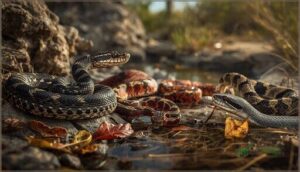
Texas is home to 15 venomous snake species, and knowing how to identify them can make the difference between a safe encounter and a dangerous one.
These snakes aren’t evenly distributed across the state—some prefer rocky terrain, while others stay near water or hide in dense vegetation.
Let’s break down which species pose a threat and where you’re most likely to cross paths with them.
Venomous Species Identification
You’ll need sharp observation skills to identify Texas’ four venomous snake groups. Watch for these telltale signs when you’re practicing venomous snake identification in Texas:
- Copperhead markings – hourglass-shaped crossbands in tan or brown on a heavy body (20-40 inches)
- Cottonmouth posture – dark coloring with a white mouth interior displayed when threatened
- Rattlesnake rattle – triangular head with heat-sensing pits and the characteristic tail rattle
- Coral bands – “red touches yellow, kills a fellow” encircling pattern
- Venom potency varies by species, with coral snakes carrying neurotoxic venom
Understanding these features helps distinguish venomous vs nonvenomous species reliably.
Venomous Snake Habitats
Now that you can identify venomous snakes, knowing where they live matters just as much. Cottonmouths stick to riparian snake zones along eastern Texas waterways, while copperheads prefer forested snake cover in rocky woodlands. Western diamondbacks dominate prairie snake types across grasslands and use rocky outcrop habitats in canyons.
Urban snake risks increase when copperheads seek shelter near homes, representing over 60% of residential venomous encounters.
Identifying Non-Venomous Texas Snakes
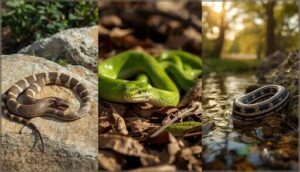
Most snakes you’ll encounter in Texas aren’t dangerous, but you need to know how to tell the difference.
Learning to recognize common non-venomous species can give you confidence when you spot a snake in your yard or on a trail.
Let’s look at the harmless snakes you’re most likely to see and the features that help you identify them.
Common Non-Venomous Species
You’ll encounter five major groups of harmless snakes across Texas. The Texas rat snake ranks as the most widespread, inhabiting urban and rural areas statewide. Bullsnakes occupy prairies and grasslands throughout North and Central Texas.
Coachwhips prefer sandy soils and open fields, feeding primarily on lizards and small mammals.
Garter snakes thrive near water sources, while plain-bellied and diamondback water snakes are common lookalikes for venomous cottonmouths.
Key Identification Features
Recognizing non-venomous species requires attention to several physical traits that distinguish them from venomous snakes. Look for these reliable indicators:
- Head Morphology: Rounded heads that blend smoothly with the neck, unlike the triangular shape of pit vipers
- Pupil Shape: Round pupils rather than the vertical slits common in many venomous species
- Scale Patterns: Smooth dorsal scales and divided anal plates, contrasting with keeled scales of pit vipers
- Coloration Bands: Patterns where red touches black indicate harmless mimics, not coral snakes
How Do Snakes Behave During Snake Season?

Understanding how snakes move and behave during their active season helps you anticipate when and where you’re most likely to cross paths with them. Their patterns shift with temperature changes throughout the day and across the seasons.
Let’s look at their daily rhythms and when they emerge from winter dormancy.
Daily and Seasonal Activity Patterns
Snakes are masters of timing, adjusting their schedules like clockwork to match temperature swings and food availability. In spring, you’ll encounter them during daylight hours, hunting and mating as temperatures climb into the ideal 80°F to 90°F range. By late summer, though, nocturnal shifts dominate—over 50% of snake activity moves to nighttime hours when August heat exceeds safe daytime limits.
| Season | Activity Pattern | Primary Driver |
|---|---|---|
| Spring (March-May) | Daytime (75% diurnal) | Post-brumation feeding, mating seasons |
| Summer (June-August) | Dawn/dusk shifting to night (50%+ nocturnal) | Temperature influence, extreme heat avoidance |
| Fall (September-November) | Increased daytime foraging | Pre-brumation caloric intake, cooling temps |
Rainfall effects also shape snake behavior and habitats dramatically. Heavy summer storms flood burrows, forcing snakes onto higher ground and into yards where you’re more likely to cross paths. Every 10% increase in rainfall over 18 months correlates with a 4% rise in snake encounters, highlighting how moisture drives both prey abundance and snake movement. Rattlesnakes peak in August, aligning with prey surges and heightened mating activity, making snake season awareness critical during this window.
Understanding these daily and seasonal rhythms helps you anticipate when and where snake activity intensifies. As temperatures soar above 90°F, expect snakes to retreat into shade, burrows, or dense vegetation until evening coolness returns. Conversely, spring mornings bring basking snakes to trail edges and sunny rocks. Recognizing these patterns gives you the upper hand in avoiding unwanted encounters and respecting the natural cycles that govern snake behavior throughout Texas.
Brumation and Emergence Timing
As winter approaches, brumation triggers metabolic slowdown when temperatures drop below 60°F, usually between late October and November across Texas. Den selection—rock crevices, burrows, or communal sites—determines survival through cold months.
Emergence cues arrive in late February or early March as consistent warmth above 60°F signals males to exit first, establishing territories before females emerge. Regional variations mean southern Texas snakes may brumate only briefly, keeping snake season awareness year-round essential.
Reducing Snake Encounters at Home

Your home doesn’t have to roll out the welcome mat for snakes. A few strategic changes to your property can make it far less appealing to these reptiles looking for food, shelter, or a place to cool down.
Let’s walk through the most effective ways to snake-proof your space.
Yard Maintenance Tips
Your lawn’s upkeep is your first line of defense against unwanted snake visitors. Mowing frequency matters—keeping grass below 8 inches removes hiding spots that snakes favor.
Brush removal, perimeter clearing, and clutter reduction around your foundation eliminate shelter, supporting snake prevention and rodent control. Sealing gaps under sheds and trimming low branches improve snake safety for people and pets while disrupting snake habitats naturally.
Removing Food and Shelter Attractants
Controlling what draws prey to your property disrupts the food chain that maintains snake populations. Store pet food and birdseed in sealed containers—spilled feed attracts rodents from 100 to 300 feet away, which then draws snakes.
Remove wood piles, rock stacks, and yard debris that shelter both rodents and snakes.
Eliminate standing water and switch to yellow outdoor lights to reduce insect populations that support the prey base.
Sealing Entry Points
The smallest gap becomes an open door—snakes can slip through openings just 1/4 inch wide. Foundation sealing with mortar closes holes in masonry, while hardware cloth blocks wooden siding gaps. Install door sweeps and protect vents with steel mesh for thorough snake avoidance.
Material selection matters: use silicone caulk, expanding foam, and heavy galvanized screen.
For fence installation, bury barriers six inches deep and angle outward at thirty degrees to support rodent control and effective snake removal methods.
Staying Safe During Texas Snake Season
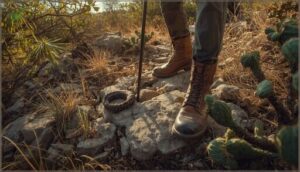
When you’re spending time outdoors during snake season, a few simple precautions can make all the difference between a safe outing and a dangerous encounter. The right clothing, smart habits on the trail, and extra vigilance with kids and pets form your best defense against unwanted snake interactions.
Here’s what you need to know to protect yourself and your loved ones.
Protective Clothing and Gear
Your best defense against snake bites starts with the right gear. Official recommendations from Texas Parks & Wildlife emphasize you should wear boots and long pants in snake-prone areas.
Quality snake gaiters using ballistic nylon can stop fangs from common venomous species, while loose-fitting denim reduces venom penetration by 60–66%.
Usage trends show outdoor workers increasingly adopt this protective equipment during peak snake season.
Safe Outdoor Practices
Trail awareness and habitat avoidance form the foundation of snake bite prevention during outdoor activities. Remaining on established paths decreases snake encounters by up to 90%, while venturing into tall grass or rocky areas dramatically increases risk.
Most bites happen when people handle or disturb snakes rather than simply passing by.
- Stick to cleared trails where visibility remains high and snakes avoid foot traffic
- Keep your distance of at least the snake’s body length if you spot one
- Use a flashlight after dusk to reduce nighttime snake encounters by 60%
Snake Safety for Pets and Children
Pets and children face heightened snake bite risks during Texas’ active season, with an estimated 150,000 animals bitten annually nationwide.
You can reduce danger by keeping grass short, supervising outdoor time, and teaching kids to report snake sightings immediately.
Training pets with “Leave It” commands and maintaining leashed walks provides effective bite prevention, while prompt emergency treatment ensures favorable recovery rates for both groups.
What to Do if Bitten by a Snake in Texas
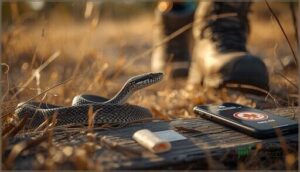
A snakebite can happen in seconds, and how you respond in those first moments matters. Knowing the right steps to take—and which common myths to ignore—can make a real difference in your outcome.
Here’s what you need to do if you or someone else gets bitten by a snake in Texas.
First Aid Steps
If a snake bites you, stay calm and call 911 immediately—quick medical attention makes all the difference.
Wash the bite wound gently with soap and water, then apply a clean, dry dressing. Remove any jewelry or tight clothing near the bite before swelling starts.
Keep the affected limb immobilized and at or below heart level to slow venom spread while waiting for emergency responders.
When to Seek Medical Help
While all snake bites warrant immediate medical attention, certain bite symptoms demand urgent care. Seek help right away if you notice:
- Rapid swelling spreading from the bite site
- Severe pain, nausea, or difficulty breathing
- Fang marks with discoloration or tissue damage
- Any bite affecting vulnerable groups like children
Delayed risks include tissue necrosis and systemic complications, which medical professionals assess through physical examination and lab tests to determine appropriate treatment.
Emergency Contact Information
When you need medical help for snake bites, call 911 immediately for Emergency Services. The Texas Poison Control Center (1-800-222-1222) provides medical advice for snake bites and locates facilities with antivenom.
Your local Fire Department can assist with snake removal. In rural areas with limited access, Air Ambulance transport may be necessary, though response times average over 90 minutes in remote locations.
Frequently Asked Questions (FAQs)
When does snake season begin in Texas?
You’ll notice increased snake activity beginning in late February to early March across Texas, when temperatures climb above freezing and these reptiles emerge from their winter brumation period.
When are snakes most active in Texas?
Texas snake species show peak activity from April through October, with heightened movement during spring and summer months. Most are active when temperatures range between 73°F and 95°F, shifting to nocturnal patterns during extreme heat.
When do snakes come out of hibernation in Texas?
Like clockwork, snake emergence from brumation in Texas begins late February through early March when temperatures consistently reach 60°F. This triggers winter activity and marks the start of active snake season.
When do snakes mate in Texas?
Most snake species in Texas begin their snake reproduction and mating activities in late winter to early spring, usually from late February through May. Warming temperatures trigger reproductive cycles across venomous and non-venomous populations.
When do rattlesnakes mate in Texas?
As winter’s grip loosens, Texas rattlesnakes begin their mating rituals in late February through early March, with some species like Timber Rattlesnakes breeding later in mid-summer from July to September.
Are some snakes in Texas nocturnal?
Yes, many species actively hunt at night, particularly during summer heat. Rattlesnakes, Texas Night Snakes, and water snakes shift to nocturnal patterns to avoid daytime temperatures, optimizing hunting when prey is most active.
What months are snakes active in Texas?
In Texas, snakes are active from late February through November, with peak activity occurring April through October when temperatures consistently stay above 60°F and environmental conditions favor movement.
What month are snakes most active?
June stands as the peak month when snake activity reaches its summit in Texas, aligning with warm weather patterns and ideal temperature thresholds.
This seasonal emergence demands heightened snake safety awareness across Texas ecosystems.
What part of Texas has the most snakes?
Central Texas, particularly the Hill Country, hosts the greatest snake diversity with over 68 species.
West Texas regions like Big Bend National Park also show high snake densities, especially rattlesnakes in prairie habitats.
What time of year are snakes most aggressive?
Snakes exhibit heightened defensive mechanisms during warmer months when thermal regulation elevates activity levels. Peak venomous encounters occur May through September, as increased temperatures trigger more aggressive defensive behaviors, making seasonal awareness essential for snake safety tips.
Conclusion
While you can’t eliminate every risk, you can dramatically reduce it. Knowing when snake season in Texas peaks—and which species share your region—transforms vague worry into actionable awareness.
The snakes aren’t invading your space; they’re moving through their own survival alongside yours. By adjusting your habits during high-activity months and recognizing warning signs, you’re not just protecting yourself—you’re respecting the boundaries that keep both species safe in Texas’s shared landscape.
- https://tpwd.texas.gov/education/resources/texas-junior-naturalists/be-nature-safe/venomous-snake-safety
- https://www.britannica.com/animal/copperhead-snake
- https://www.wildliferemoval.com/identifying-snakes-the-good-and-the-bad/
- https://www.inaturalist.org/guides/7148
- https://thetexasinsider.com/snake-season-in-texas-what-you-need-to-know/