This site is supported by our readers. We may earn a commission, at no cost to you, if you purchase through links.
You step off a hiking trail in the Hill Country, and a Western Diamondback coils three feet ahead, tail buzzing. That moment isn’t bad luck. It’s timing.
Snake season in Texas peaks from March through May, with a second surge in September and October as temperatures swing. Warm nights pull snakes onto roads and open ground, and spring rains boost rodent populations, pushing them to expand their hunting range within days. With over 115 species statewide, including pitvipers and coral snakes, knowing when and where activity spikes changes how you hike, work, and maintain your property.
Here’s what drives those patterns, and how to stay ahead of them.
Table Of Contents
- Key Takeaways
- When is Snake Season in Texas?
- What Makes Snakes More Active in Texas?
- Where Are Snake Encounters Most Likely Across Texas?
- How Can You Identify Common Texas Snakes?
- How Can You Stay Safe During Texas Snake Season?
- Frequently Asked Questions (FAQs)
- What keeps snakes away in Texas?
- What month are snakes most active in Texas?
- Where in Texas has the most snakes?
- Is killing a rattlesnake in Texas illegal?
- When does snake season begin in Texas?
- When are snakes most active in Texas?
- When do snakes come out of hibernation in Texas?
- When do snakes mate in Texas?
- When do rattlesnakes mate in Texas?
- Are some snakes in Texas nocturnal?
- Conclusion
Key Takeaways
- Snake activity in Texas peaks from March through May with a second surge in September–October, driven by warm temperatures and spring rains that boost rodent prey and push snakes to expand their hunting range within 24–72 hours.
- Encounter risk is highest in the Hill Country and Edwards Plateau, South Texas brush country, Gulf Coast marsh edges, and East Texas Piney Woods, while suburban woodpiles, culverts, and debris near homes also attract snakes.
- Accurate identification matters: Texas has over 115 species, with venomous ones split between pitvipers (like the Western Diamondback) and coral snakes, and nonvenomous lookalikes are best distinguished by narrower heads and a lack of heat-sensing pits rather than color alone.
- If bitten, call 911 immediately, keep the victim calm with the limb immobilized at heart level, remove tight clothing before swelling starts, and skip cutting, sucking, or icing—antivenom works best within six hours.
When is Snake Season in Texas?

When does snake season in Texas actually peak? Snakes are ectothermic and rely on external heat to function. Winter brumation keeps them dormant, but you’ll notice peak activity returning as early as late February.
Expect the highest encounter rates from March through May, with a second surge in September and October when temperature fluctuations signal renewed foraging across the state.
For a closer look at how these reptiles behave after dark, this guide to where snakes go at night breaks down their hunting patterns and hiding spots.
What Makes Snakes More Active in Texas?
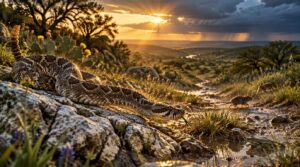
The timing isn’t random. Several environmental forces drive peak activity in Texas, and understanding them lets you anticipate where and when encounters are most likely.
Ectothermic behavior means snakes rely entirely on external heat to regulate body temperature. When summer temperatures rise, their metabolic rate climbs and movement spreads from dawn through dusk. Temperature fluctuations following cold fronts also trigger crepuscular surges, especially in fall.
Spring rainfall acts as a multiplier. After heavy rains, rodent and amphibian populations spike, and snakes expand their home ranges within 24 to 72 hours to follow prey. In drought years, food concentrates in fewer pockets, pushing snakes to cover more ground.
Warm nights extend this window, increasing nocturnal behavior along roads and open terrain.
Where Are Snake Encounters Most Likely Across Texas?

Those environmental triggers shape not just when you’ll see snakes but also where.
If you’re curious about how these patterns play out, the guide to snake mating rituals breaks down the seasonal cues species by species.
Hill Country and the Edwards Plateau carry the highest encounter rates. Rocky terrain, limestone outcroppings, and brushy pasture borders give Texas snake species ideal cover. Mesquite-flat savannas near streams push activity even higher during active months.
Along the Gulf Coast, sandy soils and marsh-edge habitats near Corpus Christi and Brownsville bump up your risk. Riparian corridors near bays spike further after rainfall.
In East Texas’s Piney Woods, dense undergrowth, fallen timber, and slow-draining wetland bottoms sustain high snake densities through warm months.
Suburban fringes aren’t exempt from snake season in Texas. Wood piles, culverts, and debris near homes act as urban wildlife corridors, pulling snakes into your yard.
How Can You Identify Common Texas Snakes?
Texas is home to over 115 snake species, so knowing what you’re looking at matters. A few key traits separate the dangerous ones from the harmless majority. Here’s what to look for across both venomous groups and their lookalikes.
A good Texas snake identification field guide makes comparing head shape, pupil, and pattern details much easier.
Venomous Snake Groups
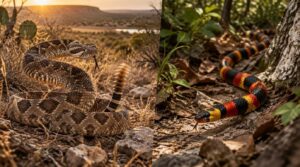
A coiled rattlesnake in dry brush, tail raised and rattling, is what most people picture. Accurate venomous snake identification starts with knowing Texas’s two groups: pitvipers and coral snakes.
The Western Diamondback Rattlesnake is the most common pitviper you’ll encounter, identified by its triangular head and banded tail. The Coral Snake, found in sandy southeastern habitat, carries potent neurotoxic venom.
Nonvenomous Lookalikes
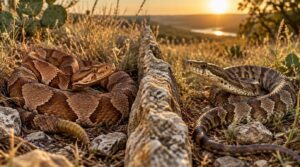
Although several harmless species in Texas mimic venomous coloration, head shape and tail structure distinguish them reliably. Nonvenomous lookalikes usually show a narrower head relative to their neck and lack heat-sensing pits.
Species mimicry is most common in grasslands and rocky edges, where encounters peak during spring and fall. For accurate venomous snake identification, don’t rely on color patterns alone.
How Can You Stay Safe During Texas Snake Season?
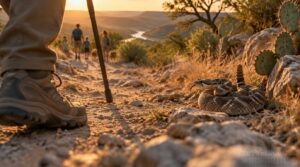
Staying safe during snake season comes down to preparation and awareness across a few key areas. Whether you’re managing your property, heading outdoors, or keeping an eye on kids and pets, each situation calls for a specific approach.
Here’s what you need to know to reduce your risk and respond effectively if a bite occurs.
Snake-Proofing Your Property
means blocking access before snakes move in. Sealing entry points and Habitat Modification are your top priorities.
- Use 1/4-inch mesh along your foundation
- Add door sweeps to exterior doors
- Clear ground cover close to walls
- Remove firewood stacks within 3 feet
- Screen all foundation vents
Eliminate Food Sources and Reduce Shelter Opportunities to discourage snakes all season.
Outdoor Safety Practices
Most Texas snake bites happen when someone accidentally steps on or reaches close to a hidden snake. Stick to clear, open trails and don’t step over logs or brush without looking first. Wear ankle-high boots and long pants when moving through dense cover.
If you spot a snake, back away slowly and give it room to retreat on its own.
Knowing which venomous species live in your area — like the rattlesnakes and copperheads native to Louisiana — helps you stay calm and make smart decisions during an unexpected encounter.
Protecting Children and Pets
Dogs naturally push their noses into the exact spots snakes use for cover. Keep your pets leashed in the yard and remove woodpiles or brush where snakes hunt rodents.
Dress kids in closed-toe shoes and long pants when they’re outdoors. Supervise both near rocks and log edges, since their curious approaches to resting spots account for most close snake encounters.
Responding to Snake Bites
Most snake bites are survivable if you act fast. Call 911 immediately, and keep the victim calm: a rising heart rate accelerates venom spread. An immobilized limb at heart level slows that process. Remove jewelry and tight clothing before swelling starts. Skip cutting, sucking, and ice, because these first aid steps are myths. Antivenom treatment works best within six hours.
Most snake bites are survivable if you call 911 fast, stay calm, and skip the myths
In fact, pit viper envenomation causes progressive edema, coagulopathy, and systemic effects that make rapid medical care essential.
Frequently Asked Questions (FAQs)
What keeps snakes away in Texas?
Every year, Texas hospitals treat hundreds of snake bites, most near homes. What keeps snakes away comes down to four tactics: rodent population control, habitat modification for snakes, yard maintenance for pests, and wildlife exclusion through home sealing techniques.
What month are snakes most active in Texas?
Roughly 7,000 snake bites are reported across Texas annually, most between April and October. You’ll see peak activity in April and May, when warm, humid weather conditions intensify snake activity patterns statewide.
Where in Texas has the most snakes?
If you’re mapping risk, South Texas leads. The brush country below San Antonio, especially the lower Rio Grande Valley, holds the state’s highest snake diversity, with dense scrub and citrus habitat boosting encounters.
Trans-Pecos and Gulf Coast areas follow.
Is killing a rattlesnake in Texas illegal?
In most cases, no. You can legally kill nongame rattlesnakes on your private property without a hunting license. But you can’t kill protected species like the timber rattlesnake, and local firearm ordinances still apply.
If you’re unsure what you’re looking at, a guide to Texas snake species and how to identify them can help you tell protected rattlesnakes from nongame ones before acting.
When does snake season begin in Texas?
Snake season in Texas starts the moment temperatures top 60°F, and you’ll see it late February through early March, when snakes leave brumation. Southern regions emerge earlier; northern climate zones lag slightly behind.
When are snakes most active in Texas?
Think you’ll only meet snakes at high noon? Wrong. Peak activity runs April through October, with movement strongest at 73–95°F. When summer heat soars, snakes shift to dawn, dusk, and nighttime foraging.
When do snakes come out of hibernation in Texas?
You might assume snakes vanish until summer, but they don’t. Brumation ends in Texas by late February to early March, when daytime highs consistently reach 60°F. Peak activity follows through May.
When do snakes mate in Texas?
Picture a male rattlesnake tracking a female’s scent trail across warm spring soil. That’s breeding season beginning. Most Texas snakes mate from late February through May, as warming temperatures kickstart their reproductive cycle.
When do rattlesnakes mate in Texas?
Rattlesnakes in Texas mate primarily from late February through early March, as warming temperatures trigger courtship and male combat. Timber Rattlesnakes differ, breeding mid-summer, July through September. Females store sperm, delaying fertilization until conditions support gestation.
Are some snakes in Texas nocturnal?
Twilight settles over a Texas ranch, and rattlesnakes begin hunting. Yes, many species show nocturnal behavior. When daytime heat exceeds 80°F, rattlesnakes, night snakes, and water snakes make a nocturnal shift, hunting when rodents and lizards emerge.
Conclusion
That buzzing tail three feet ahead doesn’t have to be your story. Now you know when is snake season in Texas, which species command respect, and how to keep your yard, trail, and pets out of harm’s way.
Watch warm nights after rain. Check before you reach. Act fast if bitten.
Texas hosts over 115 snake species, but only a handful pose real danger, and you’re now equipped to tell the difference.