This site is supported by our readers. We may earn a commission, at no cost to you, if you purchase through links.

Snakes hide illness better than almost any other pet. By the time your ball python stops eating or your corn snake starts wheezing, the problem has often been developing for days, sometimes weeks.
That’s what makes early signs of snake illness so difficult to catch, and so critical to recognize. A subtle behavioral shift, a slightly off shed, or a faint clicking sound during breathing can be the difference between a quick vet visit and a life-threatening emergency.
Knowing what to look for gives you a real chance to act before your snake’s condition deteriorates beyond easy treatment.
Table Of Contents
- Key Takeaways
- Appetite and Digestive Changes That May Signal Illness
- Lethargy, Hiding, and Unusual Behavior in Sick Snakes
- Early Respiratory Distress Signs in Snakes
- Skin, Shedding, Mouth, and Hydration Warning Signs
- What to Do When Your Snake Shows Illness Signs
- Frequently Asked Questions (FAQs)
- Will a snakes respiratory infection go away on its own?
- What are the signs that my snake is unhealthy?
- What does sepsis look like in snakes?
- What is the most common cause of death in snakes?
- What are four signs of illness or disease in a reptile?
- What are the signs of respiratory disease in snakes?
- What are signs of discomfort in snakes?
- Can a snake respiratory infection go away on its own?
- How often should I check my snakes health?
- Can snakes show signs of aging and decline?
- Conclusion
Key Takeaways
- Snakes instinctively conceal illness, so subtle early changes — like reduced tongue-flicking, extra hiding, or a single regurgitation — often signal a problem that’s been developing for days or weeks before it becomes obvious.
- Appetite loss, abnormal stools, and digestive irregularities are among the first measurable warning signs, and they’re frequently triggered or worsened by incorrect enclosure temperatures rather than disease alone.
- Respiratory infections almost never clear up on their own and can escalate from faint wheezing to life-threatening pneumonia fast, making audible breathing, open-mouth posture, or nasal discharge a reason to contact a reptile vet the same day.
- Systemic sepsis is the leading killer of captive snakes, and it typically starts as a pattern of refused meals and creeping lethargy — catching and acting on those early behavioral shifts is what separates a manageable vet visit from a fatal outcome.
Appetite and Digestive Changes That May Signal Illness
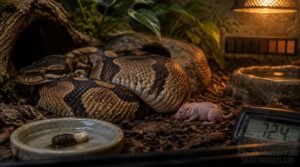
A snake that’s consistently refusing meals is sending you a message. Decreased appetite over multiple days, when it’s not tied to a seasonal cycle or a recent shed, commonly indicates illness rather than a normal fast. Don’t dismiss it just because snakes are known to skip meals occasionally.
Tracking hunger cues alongside behavioral changes can help you tell the difference, and recognizing early signs of snake hunger and illness gives you a clearer baseline before problems escalate.
Watch for digestive issues alongside any changes in feeding behavior. Watery or foul-smelling stools, unusual feces color, or no output at all are abnormal. Snake regurgitation after feeding, especially if it happens more than once, points strongly to gastrointestinal or systemic disease.
Your enclosure temperature gradient matters here too. Snake digestion depends entirely on heat, and a cool gradient slows it, which shows up first as appetite loss and abnormal fecal output.
Lethargy, Hiding, and Unusual Behavior in Sick Snakes

Appetite changes often arrive alongside subtler shifts you might overlook. If your snake is retreating more than usual, that extra hiding isn’t comfort-seeking. It’s an early warning sign worth tracking seriously.
Lethargy in snakes shows up as reduced exploration, less tongue-flicking, and prolonged stillness during periods when your animal normally moves. A sick snake may stop cycling through temperature zones and park in one spot for hours. Reduced responsiveness to handling or feeding cues can appear before appetite fully drops.
Watch for unusual positioning or coordination issues, like difficulty righting itself or repetitive stuck postures. These behavioral changes can signal neurological or systemic snake illness early.
If your snake begins stargazing, head-tilting, or losing muscle control, these are hallmark signs covered in detail at snake brain damage symptoms and neurological warning signs.
If enclosure conditions are stable and behavior shifts suddenly, that’s reason enough to act.
Early Respiratory Distress Signs in Snakes

Behavioral changes can overlap with physical ones. When a snake that was already lethargic starts showing audible breathing at rest, that’s a red flag you can’t afford to ignore.
Early warning signs of respiratory issues are often subtle at first. Listen for wheezing, clicking, or a faint gurgling sound during normal rest. Open-mouth breathing is more obvious but usually means things have already gone far.
Watch for visible effort in the body wall while your snake breathes. Healthy snakes breathe quietly and without obvious struggle. If yours is working to move air, or holding its head tilted upward to clear the airway, snake pneumonia may already be developing.
High humidity with poor ventilation speeds this up. Check your setup first.
Skin, Shedding, Mouth, and Hydration Warning Signs
Respiratory symptoms aren’t the only signals worth tracking. The outside of your snake’s body can tell you just as much.
Incomplete or stuck shed is a common early warning. When retained skin sits on the toes, tail tip, or eyes, humidity is likely too low or your snake isn’t well enough to complete the cycle. Cloudy eyes that don’t clear after the shed phase need attention. A shedding aid or humid hide can make a real difference if your snake consistently struggles to shed cleanly on its own.
Watch for discolored or crusted patches on the scales too. These can signal early scale rot, especially on the belly, before the infection spreads deeper. Catching scale rot early gives you time to treat it — a reptile antiseptic wound spray can help clean affected areas before the infection works its way beneath the scales.
Check the mouth for redness, swelling, or excessive mucus and foam. That points to mouth rot. Dehydration shows as wrinkled, loose skin and dry urates. Both get serious fast.
What to Do When Your Snake Shows Illness Signs

Spotting the warning signs is only half the battle. What you do next determines whether your snake recovers or declines. These three steps will walk you through the immediate actions to take.
Check Enclosure Conditions
Before calling the vet, check your setup. Many signs resolve once enclosure environment management improves.
Confirm your temperature gradient first. One side warm, one cooler; without it, digestion stalls and lethargy sets in. Then review humidity. Too low causes stuck sheds; too high breeds bacteria. Check the substrate for wet spots or mold, and make sure there’s reliable hide access.
A reptile thermometer hygrometer combo lets you monitor both temperature and humidity at a glance, making it easier to catch problems before they affect your snake.
Contact a Reptile Veterinarian
Reaching a reptile veterinarian quickly is the best move once you’ve noticed snake symptoms. Have these details ready when you call:
- Last feeding date
- Onset and duration
- Temperature and humidity changes
- Early warning signs that appeared first
- Respiratory issues like wheezing
Ask whether veterinary care is needed today. Veterinary attention now prevents a manageable issue from becoming a serious emergency.
Isolate and Monitor Safely
One contaminated water dish once spread cryptosporidiosis through three animals in a single collection. Move your sick snake to a separate room or enclosure immediately, and always handle it last. Never share equipment between setups.
One contaminated dish spread cryptosporidiosis through three snakes — isolate sick animals immediately and never share equipment
Track feeding refusals, posture, and breathing daily, noting the date each change started, because it’s exactly that timeline your vet needs to triage cases effectively. A dedicated reptile health tracking journal makes logging those daily observations far easier and keeps everything your vet needs in one place.
Frequently Asked Questions (FAQs)
Will a snakes respiratory infection go away on its own?
Unlike a cold that runs its course, respiratory infections in snakes almost never resolve without targeted treatment. Bacteria don’t retreat on their own. If you’re seeing open-mouth breathing or discharge, get veterinary attention right now.
What are the signs that my snake is unhealthy?
Early warning signs include appetite loss, regurgitation, open-mouth breathing, mucus around the nose or mouth, retained shed, and unusual lethargy or hiding. Catching these subtle changes early gives your snake the best chance at recovery.
What does sepsis look like in snakes?
Septicemia doesn’t announce itself with fanfare. Your snake will show early warning signs first: persistent lethargy, refusing food, and sticky saliva lining the mouth.
Once systemic illness takes hold, rapid deterioration can follow within hours.
What is the most common cause of death in snakes?
A snake that stops eating, then grows lethargic, is often losing ground fast. Systemic sepsis is what kills most captive snakes, driven by respiratory infections that advance before you notice open-mouth breathing or dehydration signs.
What are four signs of illness or disease in a reptile?
You might think subtle changes don’t matter, but early stages of illness show up well before things turn critical. The four key clinical signs in reptiles: marked lethargy, appetite loss, abnormal shedding, and open-mouth breathing.
What are the signs of respiratory disease in snakes?
Imagine your snake slowly lifting its head, mouth gaping, struggling to breathe. Open-mouth breathing and wheezing signal respiratory distress. Mucus at the nostrils points to respiratory infections. These issues worsen fast, so see a vet.
What are signs of discomfort in snakes?
Watch for abnormal coiling patterns, excessive hiding, or sudden defensiveness. A snake in discomfort will often refuse food, move restlessly, or hold an unnatural resting position. These subtle behavioral shifts are your earliest warning clues.
Can a snake respiratory infection go away on its own?
Rarely. Even seemingly mild cases tend to relapse because respiratory pathogens persist in the tissue. Without antibiotics and corrected husbandry, your snake’s infection can spread from the upper airways to the lungs and become life-threatening.
How often should I check my snakes health?
Check your snake once or twice daily, focusing on eyes, breathing, and waste. Use feeding time as your baseline. If a meal is refused or behavior suddenly shifts, don’t wait to do a full exam.
Can snakes show signs of aging and decline?
Snakes do age, but aging-related changes are very gradual. Sudden appetite loss, reduced movement, or duller scales appearing quickly over days aren’t natural aging signs; they point to illness, not just your snake getting older.
Conclusion
A snake curled perfectly still in its hide can be fighting for its life. These animals are built to hide weakness. That’s exactly why catching the early signs of snake illness while they’re still subtle is your single greatest advantage as an owner.
Trust your instincts when something feels off. Act early, ask questions, and don’t wait for certainty before calling a reptile vet. Your snake will never speak, but it’s always showing you something.