This site is supported by our readers. We may earn a commission, at no cost to you, if you purchase through links.

Your snake hasn’t touched food in three weeks, and your mind jumps straight to worst-case scenarios. Here’s what most owners don’t realize: skipped meals rank among the most normal behaviors in reptile care, not the alarming exception they seem to be.
Snakes evolved to survive lean stretches. A ball python can fast for months without harm, while a corn snake might simply be shedding, breeding, or adjusting to a season shift. So why is your snake not eating right now, and how do you tell a harmless pause from something that needs a vet’s attention? The answer starts with understanding your snake’s habitat, instincts, and body language.
Table Of Contents
- Key Takeaways
- Why is My Snake Not Eating?
- Check Your Snake’s Habitat Setup
- How to Encourage Your Snake to Eat
- When is Snake Fasting Normal?
- When Should You See a Veterinarian?
- Frequently Asked Questions (FAQs)
- What do you do if your snake won’t eat?
- How can I encourage my snake to eat?
- How long will my snake go without eating?
- What happens if snakes don’t eat?
- How long can a snake go without eating?
- Is it normal for a snake to not eat for a month?
- Why isn’t my snake eating the mouse?
- How do I know if my snake is overweight?
- What are the signs of dehydration in snakes?
- How often should I handle my snake?
- Conclusion
Key Takeaways
- Skipped meals are usually normal, not a crisis—most snakes fast for weeks or months due to shedding, brumation, breeding, or simple pickiness, so watch your snake’s body condition rather than the calendar.
- Before assuming illness, check your habitat setup first: incorrect temperature gradients, humidity, lack of hides, or too much handling are common, fixable causes of appetite loss.
- If your snake still won’t eat once the habitat checks out, try warming prey to 98-100°F, offering food after dark, using tong movement, or scent transfer to trigger its natural feeding instincts.
- See a vet promptly if you notice significant weight loss, lethargy, labored breathing, mouth sores, vomiting, or swelling, since these signs point to real illness rather than normal fasting.
Why is My Snake Not Eating?

A snake turning down food can feel alarming, especially if you’re not sure what’s normal and what’s not. The truth is, there are several common reasons behind it, some harmless and some worth watching closely. Let’s walk through the most likely culprits, one by one.
If you’d like a deeper dive into feeding schedules and prey size, this guide to feeding a ball python breaks down what a healthy routine actually looks like.
Natural Fasting Cycles
Often, a skipped meal is simply biology, not worry. Natural fasting cycles tied to shedding, brumation, or breeding cause temporary metabolic slowdown as your snake conserves energy.
- Shedding suppresses appetite 1-2 weeks
- Brumation triggers seasonal appetite shifts
- Breeding season fasting affects gravid females
Adults tolerate weeks of fasting duration easily. This energy conservation state rarely signals illness. During this time, snakes may show reduced metabolic activity triggered by seasonal temperature and photoperiod changes.
Stress and Insecurity
Not every fasting snake is riding a natural cycle, though. Sometimes it’s fear. If your snake feels exposed, it won’t eat.
Watch for stress indicators: glass surfing, tight coiling, striking at movement.
| Stressor | Fix | Result |
|---|---|---|
| No hides | Add 2+ hides | Feels secure |
| Handling | Reduce contact | Calms down |
| Open tank | Add barriers | Eats again |
Incorrect Habitat Conditions
Fear isn’t the only culprit, sometimes it’s the setup itself. A weak temperature gradient, off humidity levels, or bare substrate choice can quietly shut down appetite.
Your snake needs 75-85°F ambient with an 88-92°F basking spot, plus proper hiding spots and a steady lighting cycle. Get one wrong, and feeding stops.
Prey Preference Problems
Sometimes the setup is fine, but the menu is wrong. Some snakes are picky by nature, not habit.
- Queen snakes favor crayfish
- Rainbow snakes prefer eels
- Some species only take bird eggs
- Captive-bred snakes may reject live prey after frozen-thawed feedings
Try scenting or size adjustments before assuming illness.
If those simple fixes don’t help, check hide placement and temperature zones—our guide to creating the ideal snake habitat setup breaks down warm and cool hide ranges in detail.
Illness or Digestive Issues
When the habitat checks out and prey isn’t the issue, illness deserves a hard look. Watch for mouth rot (redness, sores), open-mouth breathing or wheezing (respiratory infection), loose stool (parasites), or repeated regurgitation.
Unexplained weight loss and lethargy often signal a metabolic disorder or adenovirus. These aren’t fasting, they’re red flags needing veterinary diagnostics soon.
Check Your Snake’s Habitat Setup
Before you try anything fancy to spark your snake’s appetite, take a hard look at the enclosure itself. Small setup mistakes cause a surprising number of feeding problems, and they’re often the easiest to fix. Here’s what to check first.
Verify Temperature Gradient

Get the thermal map wrong, and food often stays untouched. Aim for 88-95°F basking and 75-80°F cool zones, checked with two thermometers at snake level.
- Verify basking accuracy
- Confirm cool zone stability
- Check heat source placement
- Validate gradient weekly
If readings flatten out, adjust heater placement to restore proper thermoregulation.
Measure Species-Specific Humidity

How humid is too humid? A digital hygrometer at snake level, away from water sources, gives accurate readings for humidity control.
| Species | Humidity Range |
|---|---|
| Ball Python | 50-60% |
| Corn Snake | 40-50% |
| Boa Constrictor | 50-60% |
Calibrate with a salt solution, and track daily fluctuations to match species-specific needs.
Provide Warm and Cool Hides

A snake with nowhere to hide is a snake on edge, and edgy snakes don’t eat. Offer a snug warm-side hide and a cool-side retreat so your snake can regulate temperature while feeling secure.
Hide placement strategy matters: warm hide near the heat source, cool hide away from it. This mirrors natural burrows, easing stress and supporting warm hide thermoregulation during digestion.
Review Substrate and Enclosure

What’s under your snake’s belly matters more than you’d think. Substrate choice affects both humidity retention and respiratory health, so skip pine or cedar (their oils irritate airways) and avoid loose sand, which risks impaction if ingested during feeding.
Corn snakes need 3+ inches of depth for burrowing. Spot-clean waste daily; replace substrate fully every 3-4 months.
Reduce Handling and Disturbances

Too much attention can be as stressful as too little food. Over handling raises stress and suppresses appetite, especially amid new environment stress.
- Limit handling sessions to 2-3 weekly, none within 48 hours of feeding
- Maintain quiet environment; reduce foot traffic near the enclosure
- Avoid sudden movements; minimize enclosure access during adjustment weeks
How to Encourage Your Snake to Eat
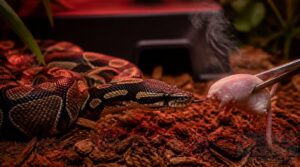
If your habitat checks out and it’s still not eating, a few small tricks at feeding time can make a real difference. Snakes hunt with their nose, their body heat sensors, and their instincts, so you’re really just working with what they already respond to. Here are five ways to make that next meal harder to resist.
Choose Properly Sized Prey
If your snake keeps refusing food, size may be the culprit before anything else. Match prey width to girth at the thickest point, never exceeding 1.5x that measurement. Oversized prey risks regurgitation.
| Snake Size | Prey Type | Weight |
|---|---|---|
| Hatchling | Pinky mouse | 5-10g |
| Adult | Adult mouse | 19-30g |
Warm Frozen-Thawed Prey
Right size isn’t enough if the prey feels cold. Ball pythons rely on heat pit activation, sensing warmth like a live rodent.
Warm thawed prey to 98-100°F, checking with a thermometer, never touch alone. Skip the microwave; it cooks outsides while cores stay frozen. A prey item too cold simply won’t trigger a strike.
Offer Food After Dark
Timing matters as much as temperature. Ball pythons show their strongest night feeding response between 8 PM and 2 AM, when vertical pupils widen and heat-sensing pits switch on.
Offer meals after dark to match this natural nocturnal feeding rhythm. Daytime attempts often fail simply because the hunting instinct hasn’t switched on yet.
Create Movement With Tongs
If darkness alone doesn’t spark interest, movement often seals the deal. A gentle tong wiggle technique mimics rodent breathing, while slow prey dragging and a tight circular movement pattern simulate escape attempts. Add pulsing motion and gradual speed changes from slow to quick bursts, and you’ll trigger the feeding response even stubborn snakes can’t resist.
Try Safe Scent Transfer
When prey looks right but still gets refused, scent is often the missing piece. Try:
- Rubbing GSF on a regular feeder
- Soaking prey, then lightly scenting it
- Touching frozen rodents to live prey or bedding
- Scenting with lizard shed or scrambled egg
- Using a scent-preserving thaw in a sealed bag
Rotate sources to avoid fixed preferences.
When is Snake Fasting Normal?

Not every skipped meal means something’s wrong. Snakes fast for plenty of normal reasons, tied to their age, biology, or even the calendar. Here’s what healthy fasting actually looks like.
Seasonal and Breeding Fasts
Breeding season brings its own hunger strikes. Females fast 1-2 weeks pre-ovulation, losing 5-10% body weight, then refuse food for up to 6 weeks post-laying to recover. Summer breeders may skip meals 3-8 weeks during peak heat, while winter hormonal fasts run 4-12 weeks.
Food cycling synchronizes meals with these natural rhythms instead of fighting them.
Brumation Behavior
What flips the switch into brumation? Temperature cues and shorter daylight cycles trigger it, slowing heart rate and pausing digestion. Body condition matters too, thinner snakes are less likely to brumate safely.
This isn’t illness. It’s a seasonal drive, hardwired into your snake’s biology, and appetite naturally returns once warmth and light stretch back out.
Juvenile Versus Adult Needs
A hungry hatchling and a fasting adult aren’t playing by the same rules. Juveniles run a metabolic rate 2-3 times higher than adults, so skipped meals worry you more at that age.
Adults comfortably stretch feedings to 1-4 weeks, but a juvenile refusing food for that long needs closer attention and likely a vet visit.
Species-Specific Feeding Patterns
Not every snake reads the same menu. Ball pythons are notoriously picky, sometimes refusing rodents outright. Corn snakes and king snakes stay reliable eaters. Boa constrictors slow down with size and age. Garter snakes favor fish and amphibians over standard prey.
Understanding your species’ natural habits, paired with habitat optimization, helps you tell normal prey pickiness from real concern.
When Should You See a Veterinarian?

Most fasting resolves on its own, but not always. Some signs mean it’s time to stop waiting and call a vet. Here’s what to watch for.
Significant Weight Loss
A snake shouldn’t feel like a bag of bones. If ribs or spine become visible, or skin folds hang loose, that’s a body condition score crisis, not a diet.
Visible ribs or loose skin folds mean it’s a body condition crisis, not just a picky eater
Losing more than 5% of body weight in a week is dangerous. Weigh your snake biweekly, and if you’re seeing consistent drops, don’t wait. Book a vet visit for bloodwork and diagnostics.
Lethargy or Abnormal Behavior
Weight loss paired with lethargy is a bigger red flag than either alone. Watch for decreased activity, odd movement, or a snake that stays hidden far more than usual.
Unresponsiveness during normal active hours often points to neurologic trouble or systemic illness. If your snake feels "off" rather than just picky, trust that instinct and schedule an exam.
Breathing or Mouth Symptoms
Open-mouth breathing, wheezing, clicking, or bubbles at the nostrils point to respiratory infection. Normal breathing is silent, so any sound near 30 cm away is a warning sign.
Respiratory infections in corn snakes are usually triggered by cold or damp conditions, and our guide to common corn snake health issues explains how to spot and treat them early.
Watch for mouth discharge, gum swelling, or a foul smell too, classic signs of mouth rot. Paired with lethargy, these symptoms need prompt veterinary attention, not a wait-and-see approach.
Vomiting, Swelling, or Impaction
Bringing up food and losing it minutes later isn’t just messy, it’s often a sign of digestive blockage. Add a firm belly bulge or visible swelling, and you’re likely looking at impaction.
Your vet may recommend an x-ray or ultrasound to confirm it. Don’t wait this one out, even with enclosure temperatures correct.
Prolonged Refusal With Symptoms
A month without eating, paired with any warning sign, means it’s time to stop waiting. Check your habitat first, then call your vet if issues persist.
Watch for:
- Weight loss combined with lethargy
- Breathing or mouth symptoms
- Vomiting, swelling, or impaction
Poor health, respiratory infections, and parasite infestations rarely resolve alone. Seek vet care after a month, sooner if symptoms appear.
Frequently Asked Questions (FAQs)
What do you do if your snake won’t eat?
Start simple: check habitat temps and humidity, reduce handling stress, and offer food evenings using scent transfer or different prey. Warm prey properly to 100°F. Monitor weight loss, and seek vet care after a month of refusal.
How can I encourage my snake to eat?
Think of it as coaxing, not forcing. Warm prey to body temperature, wiggle it with tongs for movement simulation, add a scent transfer, and feed after dark in a quiet, dim space.
How long will my snake go without eating?
Many healthy adult snakes can miss meals for weeks or months, depending on species, size, and season. Juveniles need food sooner. During brumation, fasting lasts longer. Worry if weight loss exceeds 15% or symptoms appear.
What happens if snakes don’t eat?
Picture a ball python fasting six weeks: its body triggers metabolic shutdown, burns fat reserves, and slows organs.
Left too long, energy depletion causes weight loss combined with lethargy, a prominent spine, and health deterioration requiring veterinary care.
How long can a snake go without eating?
Fasting duration varies widely by species. Ball pythons often go 4 to 6 months, corn snakes closer to two weeks, and Kenyan sand boas up to a year, thanks to metabolic slowdowns of roughly 70% during fasting.
Is it normal for a snake to not eat for a month?
Funny how a "starving" snake is often just fine. Yes, a month-long fast is normal, especially in adult boas and pythons during brumation or seasonal shifts. Their slow metabolism copes it easily, just watch body condition and shedding.
Why isn’t my snake eating the mouse?
A cold mouse, wrong size, or stale presentation often explains refusal. Try a Prey Temperature Check (warm to 98-100°F), Mouse Size Match to body width, Scent Transfer Technique, the Tongs Movement Method, and Evening Feeding Time for better results.
How do I know if my snake is overweight?
Run your fingers along the spine. If it’s buried under fat with skin visible between scales, your snake’s overweight. A body condition score of 3 is ideal, use monthly checks to track trends over time.
What are the signs of dehydration in snakes?
You’ll notice sunken eyes, dry mouth tissue, and wrinkly skin that stays tented after a pinch test. Cracked eyecaps, lethargy, and shedding troubles often follow, so check your snake’s water bowl and hydration levels regularly.
How often should I handle my snake?
Corn snakes and kings do well with three sessions weekly, ten minutes each. Ball pythons need two to three. Skip handling for 48 hours after feeding and during shedding, avoiding stress-induced anorexia and habitat disturbance.
When you’re unsure whether your snake is relaxed or stressed after a session, reading your snake’s body language and muscle tension helps you fine-tune your handling schedule over time.
Conclusion
Somewhere between your snake’s last meal and its next one, the answer is quietly waiting.
Why is my snake not eating rarely signals crisis. Most often, it’s biology doing what it evolved to do. Watch the body, not the calendar. A snake with clear eyes, steady weight, and normal movement can simply wait it out.
One with sunken skin or labored breathing needs a vet, fast. Trust the signs. They rarely lie.