This site is supported by our readers. We may earn a commission, at no cost to you, if you purchase through links.

Most ball python owners discover the hard way that a snake refusing food has nothing to do with stubbornness. It’s almost always a technique problem, and the fix is simple once you know where to look.
Prey temperature, size, and presentation each play a role in whether your snake eats or turns away. Get one of those factors wrong and you can trigger weeks of food refusal, or worse, a regurgitation that forces a two-week recovery before you can try again.
Knowing how to feed a ball python correctly means fewer surprises and a healthier snake.
Table Of Contents
- Key Takeaways
- How to Feed a Ball Python Safely
- Choose The Right Ball Python Prey
- Prepare and Present Frozen-Thawed Prey
- Follow a Healthy Feeding Schedule
- Troubleshoot Ball Python Feeding Problems
- Frequently Asked Questions (FAQs)
- Should you feed ball pythons in their cage?
- How long can a ball python go without feeding?
- How do you tell if a ball python is hungry?
- How often should a ball python be fed?
- How do I properly feed my ball python?
- How to tell when a ball python is hungry?
- What not to do when feeding a snake?
- How often do you feed a ball python snake?
- How do you know if your ball python is hungry?
- How much should my ball python eat?
- Conclusion
Key Takeaways
- Frozen-thawed prey warmed to 98–105°F is the safest choice — it can’t fight back, carries fewer parasites, and a ball python’s heat-sensing pits simply won’t register anything colder.
- Prey size is the single biggest variable you control: stay within 1.0–1.5x your snake’s widest body point, and you’ll avoid most regurgitation problems before they start.
- After a successful feeding, hands off for a full 48 hours — your snake’s organs swell up to 40% during digestion, and disturbing it even briefly can trigger regurgitation and esophageal damage.
- When your python stops eating, check the enclosure first (temperature, humidity, hides) before assuming illness — most food refusals trace back to a habitat problem, not a sick snake.
How to Feed a Ball Python Safely

Feeding a ball python feels intimidating the first time, but it’s really just a series of small, simple steps. If you follow the right order and take a few safety precautions, you’ll protect both you and your snake. Here are the five steps I recommend for every safe feeding.
Understanding whether to use live or frozen mice for ball pythons is a great starting point before you even pick up the tongs.
Choose Frozen-Thawed Prey
Start with frozen-thawed prey, and you’ve already solved half your feeding safety problems. Frozen-thawed rodents can’t bite, scratch, or injure your ball python the way live rodents sometimes do. They also carry fewer parasites and cause less feeding stress overall.
If you’re making the switch from live prey, go slowly. Your snake will thank you eventually. When making the switch, be sure to warm thawed prey to 98–99°F, since cold prey can cause regurgitation or digestive shutdown, and keep in mind that gradual transition strategies recommend changing only one variable at a time.
Select The Correct Prey Size
Frozen-thawed is only half the equation. Prey size matters just as much for safe feeding.
Measure your snake’s widest point, then offer prey no bigger than 1.5 times that width. A snake 2 inches wide takes prey about 1 inch wide.
For more on building healthy feeding habits from the start, baby snake care and nutrition tips can help you dial in sizing as your snake grows.
By weight, aim for 10–15% of body weight. A 250-gram python eats 25–37 gram prey.
Oversized meals cause regurgitation, so size carefully.
Thaw and Warm Prey
You’ve picked the right prey size. Now let’s thaw it safely.
Move frozen prey to the refrigerator overnight. This slow thaw stops bacteria from growing. Never thaw at room temperature or in the microwave. The microwave partially cooks prey, creating a horrifying mess and a digestive hazard.
Once thawed, warm it to 95–100°F using a temperature gun. Ball pythons use heat pits to sense warmth, so cool prey often gets ignored.
For quick thawing:
- Seal prey in a BPA-free bag, then submerge in warm water for 15–30 minutes
- Change the water as it cools
- Rotate prey so heat spreads evenly
Check for icy centers before feeding. Cold spots can deter striking and upset digestion. If prey sits uneaten, discard it. Reheating invites bacteria, so never save it for later.
Present Prey With Tongs
Your prey is warm and ready. Now it’s all about feeding tongs.
Never offer prey by hand. Tongs keep your fingers far outside striking distance, which is the whole point of feeding safety. Aim for tongs at least 18 inches long with smooth gripping ends.
Hold the prey gently behind the head, then present it near your snake’s head area, slightly off to the side. Small, slow movements work best.
Allow Undisturbed Digestion
Congratulations, the hard part is over. Your snake struck, constricted, and swallowed. Now the real feeding tips begin with what you don’t do.
- Wait 48 hours before any handling
- Keep the feeding enclosure quiet and dim
- Check that the warm side stays 88-92°F
- Watch for the bulge to shrink, not grow
Here’s why the wait matters. During digestion, your snake’s digestive tract and organs swell up to 40% larger than normal. That’s a huge workload. Disturbing the snake can trigger regurgitation, which damages the esophagus and wastes the meal. Resist the urge to show off your pet.
If your snake refuses even after the wait, scenting frozen mice for picky ball pythons can make all the difference between a stubborn refusal and a clean, stress-free strike.
Choose The Right Ball Python Prey

Getting the prey right is where most feeding problems start—and where they’re easiest to fix. The size, type, and condition of what you offer affects everything from your snake’s willingness to eat to how safely it digests. Let’s walk through the key rules, so you can pick prey with confidence every time.
Prey Width and Weight Rules
Getting prey size right is the single most important feeding guideline you’ll follow. Measure your snake’s girth at the widest point, usually mid-body, using a flexible tape measure while the snake is relaxed.
Two rules guide everything:
- Width rule: Prey should match the snake’s thickest body part, never exceeding 1.5 times that width.
- Weight rule: Prey should weigh about 10% of body weight.
| Measurement | Safe Range | Risk |
|---|---|---|
| Prey width | 1 to 1.5x girth | Regurgitation above 1.5x |
| Prey weight | 10 to 15% | Danger above 20% |
| Visible lump | Slight bulge only | Overstretching risk |
| Below 5% weight | Under 5% | Poor nutrition |
A small lump after feeding is normal and healthy. A prey item wider than 1.5 times the girth strains the snake physically, and regurgitation within 24 to 48 hours often follows. If that happens, wait two full weeks before offering food again so the digestive system recovers.
Feeder Sizes by Life Stage
Four life stages, four different feeder sizes. Match prey to your snake’s stage and you’ll avoid most feeding problems before they start.
Hatchlings (under 100 grams) need small prey, about 1 to 2 grams per inch of body length. A ten-inch hatchling takes a pinky or fuzzy mouse. Feed weekly and adjust as it grows.
Juveniles do best on prey around 60 to 75 percent of their body diameter, usually 5 to 15 gram mice or rat pups. Watch weekly weight gain. Move up one size tier at a time, never two.
Sub-adults handle 15 to 40 gram prey, roughly two-thirds of mid-body girth. Track weight monthly and stay consistent with prey type.
Adults eat 40 to 150 gram rats, sized near their girth mass. Increase sizes gradually over weeks, not suddenly.
Why Frozen-Thawed Prey is Safer
A live rat can kill your ball python. That’s not fearmongering, it’s a risk I’ve seen firsthand in practice.
A live rat can and will kill your ball python — that is not fearmongering, it is fact
Frozen-thawed prey cannot bite, scratch, or fight back. It also carries far fewer parasites and bacteria than live rodents, and it won’t introduce mites into your enclosure.
For feeding safety, thawing frozen prey in the refrigerator overnight keeps bacteria down. Then warm it to 98-100°F before offering it with long tongs.
Alternative Prey Options
Rats and mice aren’t your only options. Ducks and quail work well for larger pythons, offering balanced nutrition in a bigger package. Geese and turkeys suit mature adults thanks to their mass and thicker bones. Guinea fowl provide a bony, gamey alternative some snakes tolerate well. If whole prey isn’t available, chicken wings or drumettes can fill in. Whatever you choose, match prey size to your snake’s girth.
Foods and Prey to Avoid
Just because a snake can swallow something doesn’t mean it should.
Never offer live rodents; bites can cause painful infections requiring veterinary care. Skip wild-caught prey entirely, since parasites and pesticides travel with it. Fireflies are especially deadly, so keep them far away. Also avoid avocado, citrus, and seasoned human foods.
When in doubt, stick to properly sized frozen-thawed rodents offered with feeding tongs.
Prepare and Present Frozen-Thawed Prey
Thawing a rodent the right way matters more than most new keepers expect. Do it wrong, and you risk bacteria growth, uneven heating, or a snake that simply refuses the meal. Here’s how to prepare and present frozen-thawed prey safely, step by step.
Refrigerator Thawing Method

The refrigerator method is the safest way to thaw frozen-thawed rodents. Place the prey on a clean plate, then set it in a fridge kept at or below 40°F. A stainless steel feeding prep plate keeps things hygienic and won’t absorb odors between feeding sessions.
Most items thaw in 12 to 24 hours, while larger prey may need extra time.
Never refreeze thawed prey, and always check for off smells before feeding.
Safe Warm-Water Thawing
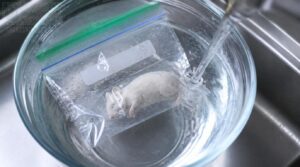
Warm-water thawing is okay when you keep water cool and your prey sealed. Put frozen prey in a leak-proof bag, then submerge in water 70°F or less. Use strong flow so bits wash to the overflow drain. Change the water every 30 minutes.
Thaw times vary by size, but keep it submerged. That’s steady feeding safety for thawing rodents.
Target Prey Temperature

Once thawed, your prey needs warming to 98-105°F, matching live rodent body heat. Ball pythons hunt with heat-sensing pits, so cool prey often gets ignored. Use an infrared thermometer aimed at the prey’s body and head. A quick wrist touch works as backup. Never microwave, which risks a horrifying mess.
For picky feeders, try warming to 109°F on your feeding tray.
Long Tongs and Safe Handling

Warm prey means nothing if your fingers are in the strike zone. Use feeding tongs at least 10-12 inches; 24-inch tongs suit adult pythons taking jumbo rats. Grip the rodent by its neck or tail with rubber-coated stainless steel tips, and never squeeze tightly. Once your snake strikes, release immediately. Never offer food by hand, and disinfect tongs after every feeding.
Inside-Enclosure Feeding Technique

Feeding inside the enclosure keeps your snake calm and secure. Follow these steps:
- Place prey on a clean paper towel or slate tile to prevent substrate ingestion
- Offer prey in the evening, matching natural nocturnal hunting
- Warm prey to 98-100°F so heat-sensing pits detect it
- Use your long tongs, then close the enclosure
Your snake learns enclosure cues mean dinner. Leave it undisturbed for 24-48 hours afterward.
Follow a Healthy Feeding Schedule

Feeding a ball python isn’t just about how you offer the meal — it’s also about how often.
Feed too frequently and you risk obesity and digestive strain; feed too rarely and growth stalls, especially in young snakes.
The right schedule depends on your snake’s age and weight, so let’s walk through each life stage one step at a time.
Hatchling Feeding Frequency
Hatchlings eat like teenagers, and for good reason. Daily feeding helps their rapid early growth and calcium needs. Offer one appropriately sized prey item every 24 hours, keeping prey size small to match their slender bodies.
Follow this simple feeding guide:
- Feed once daily, roughly the same time each evening.
- Weigh weekly, in grams.
- Track each meal in a log.
- Adjust frequency if growth slows.
- Resume feeding promptly after a missed meal.
A steady feeding schedule keeps weight gain consistent. If appetite drops, don’t panic. Just return to daily feedings once your hatchling shows interest again. Overfeeding risks obesity and tummy trouble, so those weekly weigh-ins really matter.
Juvenile and Sub-Adult Schedules
By 3 to 12 months, your snake’s growth settles into a rhythm. Feed every 7-10 days, offering prey about 10-15% of body weight.
As your snake grows, knowing its sex becomes increasingly relevant—ball python sexing methods can help you track development and plan for future breeding considerations.
Sub-adults (1-3 years) slow down, so stretch intervals to every 10-14 days. Weigh juveniles biweekly, sub-adults monthly.
Watch for a triangular body shape, not round. Offer prey with long tongs, and adjust schedules as growth changes.
Adult Ball Python Schedule
Once your ball python hits three years old, feeding frequency drops. Every 10 to 14 days is standard.
- Feed every 10 to 14 days
- Offer prey warmed to around 100°F
- Watch for a healthy feeding response
Prey size stays consistent at this stage. If your snake refuses once or twice, don’t panic. Adult ball pythons naturally fast, especially near shed.
Post-Feeding Heat and Rest
After your snake eats, the real work begins inside its digestive tract. Keep the warm side at 88-92°F and make sure the basking spot reaches up to 95°F. A solid temperature gradient lets your python choose exactly where it needs to be.
Don’t handle your snake for 48 hours. Disturbing it sooner risks regurgitation.
Weight and Digestion Tracking
A simple log reveals what memory can’t. Weigh your python before each feeding and note the date. A digital gram scale for reptiles gives you the precision you need to catch even small weight shifts that might otherwise go unnoticed.
Log these each session:
- Weigh-in date and time
- Last feeding date and prey size
- Feeding accepted or refused
- Regurgitation or stool timing
- Percent weight change
Consistent records help you catch problems early and give your vet real data.
Troubleshoot Ball Python Feeding Problems

Even the most carefully managed ball pythons go through phases where they simply won’t eat, and that doesn’t always mean something’s wrong. Before you worry, it helps to know what’s actually driving the refusal — because the fix depends entirely on the cause. Here are the most common feeding problems and exactly what to do about each one.
Habitat Causes of Food Refusal
When your python stops eating, check the enclosure first. A basking spot below 88°F slows digestion and makes food unappealing. Humidity below 50% dulls their sense of smell, so they can’t locate prey properly.
If hides are missing or the tank feels too open, stress alone can shut feeding down completely. Fix the habitat before assuming something is medically wrong.
Shedding and Seasonal Fasting
Once the habitat checks out, shedding is often the answer. During the blue phase, cloudy eyes signal full food refusal ahead.
Watch for:
- Cloudy, milky eyes before shedding
- Dull skin in the days prior
- Breeding season fasting in adult males (October to March)
- Appetite returning once the shed completes
Adjust your feeding schedule around these cycles.
Scenting and Prey-Switching Methods
If your ball python’s shed is complete but it’s still refusing food, scenting might be the fix. Rub a small piece of lizard skin or a feather across the frozen-thawed mouse before offering it with tongs. This transfers a familiar scent trigger.
Warm prey to 100-110°F first to boost scent intensity. Reduce scenting gradually over 2-3 feedings to avoid dependency.
Regurgitation and Breathing Warnings
When prey-switching fails and your snake vomits up a full meal, that’s regurgitation. It signals a real problem, often oversized prey or cool temperatures disrupting the whole feeding process.
- Wait two full weeks before refeeding
- Check that warm-side temps reach 88-92°F
- Watch for wheezing or open-mouth breathing
Those last two symptoms point to respiratory infection, not a typical feeding refusal.
When Veterinary Care is Needed
Some symptoms go beyond typical feeding refusal solutions. If your snake hasn’t eaten in eight or more weeks, schedule a vet check for anorexia to rule out parasites or infection.
Seek care immediately for visible bleeding, ongoing vomiting, weakness, or trouble passing waste. Your vet will also assess body condition scoring to catch slow weight loss before it becomes a serious snake health crisis.
Frequently Asked Questions (FAQs)
Should you feed ball pythons in their cage?
Yes, feeding inside the enclosure is the better approach for most keepers. It keeps your snake calm, encourages natural feeding behavior, and simplifies your husbandry routine. Your python eats, retreats, and digests without unnecessary stress.
How long can a ball python go without feeding?
Some females have fasted for nearly 10 months without harm. Healthy adults can tolerate 4 to 6 weeks without food, while juveniles shouldn’t go beyond 2 weeks. A visible spine means it’s time to act.
How do you tell if a ball python is hungry?
A hungry ball python will often become more active, tongue-flick frequently, and track your movements near the enclosure. Some roam restlessly or hold a strike-ready posture, signaling genuine feeding interest.
How often should a ball python be fed?
Ball pythons don’t graze. Think of your feeding schedule like a doctor’s growth chart: hatchlings eat every 4-7 days, juveniles every 7-14 days, and adults every 3-6 weeks. Feeding frequency drops as body weight rises.
How do I properly feed my ball python?
Think of it like cooking for a very specific guest. Get prey size, temperature, and feeding technique right, and your snake’s nutrition practically takes care of itself. The details are simpler than you’d expect.
How to tell when a ball python is hungry?
A contented python stays tucked in its hide. A hungry one prowls with purpose. Watch for evening restlessness, rapid tongue flicking, and an alert posture, the clearest feeding cues your snake is ready to eat.
What not to do when feeding a snake?
Never offer live rodents. Even one bite can cause a serious infection. Don’t microwave prey, and match prey size carefully. Reluctant eaters often worsen when basic feeding safety rules are skipped or digestion gets disturbed.
How often do you feed a ball python snake?
Your snake’s feeding schedule depends on age and size. Hatchlings need food every 5-7 days, juveniles every 7-10 days, and adults only need a meal once every 2-3 weeks as their growth rate slows down.
For guidance on prey temperature and warming techniques, ball python feeding tips and prey preparation best practices walks you through everything from thawing frozen mice safely to checking your hot spot before each meal.
How do you know if your ball python is hungry?
Reading between the scales is easier than you’d expect. Your ball python signals hunger through increased night activity, rapid tongue flicking, and glass surfing, all reliable feeding triggers to watch before your next scheduled meal.
How much should my ball python eat?
Aim for prey weighing 10 to 15% of your ball python’s body weight per meal. Juveniles eat every 7 to 10 days, while adults do fine on a meal every 2 to 3 weeks.
If your snake skips meals, understanding how long a ball python can safely go without eating helps you tell normal fasting from a cause for concern.
Pairing a consistent feeding schedule with a well-maintained habitat is key—check out these reptile habitat maintenance tips to make sure your ball python’s environment supports healthy digestion and comfort.
Conclusion
The irony of truly mastering how to feed a ball python is that the snake almost never causes the real problem. You usually do.
Prey temperature, size, and presentation each carry genuine weight, and getting all three right takes only minutes of careful preparation, not years of expertise. Miss one single detail, and you’ll spend weeks troubleshooting what a simple, deliberate adjustment would have fixed entirely. Stay consistent, and your snake will meet you halfway.