This site is supported by our readers. We may earn a commission, at no cost to you, if you purchase through links.
A bearded dragon can’t tell you its enclosure is wrong. It just stops eating, or starts rubbing its nose raw against the glass. Most health problems in pet reptiles trace back to habitat issues, not bad luck or bad genes.
The good news: reptile habitat maintenance follows a predictable rhythm once you know the steps. Get the enclosure secure, the heat gradient right, the UVB dialed in, and a cleaning routine locked in, and your animal thrives. These five steps cover everything from escape-proof lids to spotting dehydration in your gecko’s urates.
Table Of Contents
- Key Takeaways
- Choose a Secure, Species-Appropriate Reptile Enclosure
- Maintain Proper Temperature and Humidity Gradients
- Provide Species-Appropriate UVB and UVA Lighting
- Select Safe Substrate, Hides, and Enrichment
- Follow a Consistent Reptile Habitat Cleaning and Health-Check Routine
- Frequently Asked Questions (FAQs)
- Where should you not touch a bearded dragon?
- What is the hardest reptile to care for?
- Do lizards need to be fed every day?
- What is the most low maintenance reptile?
- How do I Keep my reptiles happy and healthy?
- What makes a good reptile habitat?
- How do you care for a reptile?
- What is a substrate for a reptile?
- How do you keep reptiles dry?
- How do I protect my reptiles from heat?
- Conclusion
Key Takeaways
- Most reptile health problems stem from habitat issues, so getting the enclosure right—secure lid, proper size, and good ventilation—prevents escape attempts and stress-related illness.
- Build a proper thermal gradient by placing heat on one side with a thermostat and cooler retreat, then verify it with thermometers and a hygrometer at your reptile’s level.
- Match UVB output and distance to your species, run UVA and UVB on a 12:12 timer cycle, and give 10–12 hours of true darkness with no colored night lights.
- Combine daily spot cleaning with scheduled deep cleans and health checks—watching posture, skin, eyes, and urates—so you catch dehydration or illness early.
Choose a Secure, Species-Appropriate Reptile Enclosure
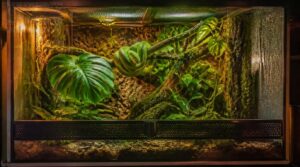
Your reptile’s enclosure is its whole world, so getting it right matters. Before you buy anything, you’ll want to think through size, ventilation, and security. Let’s break down what makes a species-appropriate enclosure work.
For a deeper dive into keeping your snake calm and comfortable, these snake stress reduction techniques pair perfectly with the right enclosure setup.
Your reptile’s enclosure is its entire world, so choose size, ventilation, and security carefully before buying anything
Enclosure Size and Ventilation
Two rules govern a great reptile habitat setup: enclosure size and airflow. Aim for length at 1.5–2 times your animal’s total length, with room to thermoregulate.
Ventilation types matter, so remember:
- Cross-draft grilles on opposite ends
- 5–15 air changes per hour
- 10% open-air floor space
- Adjustable vents for habitat optimization
Measure gradients with a hygrometer. Smart habitat maintenance starts here.
Pair your readings with a solid shedding environment setup guide so you can fine-tune humidity before problems appear.
Escape-Proof Lids and Locks
Good airflow means nothing if the lid pops off. Your escape prevention starts with a locking mesh lid using snap-fit edges and recessed hinge pins. Add cam-locks or a coated steel cable hasp, and stagger locks at multiple heights. Recess screws with washer backing.
Then run a 24-hour lock-test: push hard everywhere. If it lifts, reconfigure.
Reptile enclosure security saves lives.
Maintain Proper Temperature and Humidity Gradients
Reptiles can’t make their own body heat, so your habitat has to do it for them. Getting the temperature and humidity gradients right keeps your pet healthy, active, and eating well. Here’s what you need to know about heat placement and monitoring tools to nail it.
Pairing your heat setup with a solid routine — like the steps outlined in these reptile enclosure maintenance tips — ensures temperature and humidity stay consistent long-term.
If you’re weighing a humidifier against your heating setup, this guide to reptile humidifiers for beginners explains why moisture can’t replace a proper basking spot.
Safe Heat Source Placement
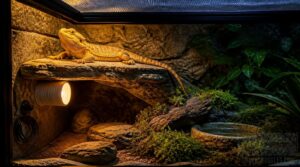
Here’s a stat worth remembering: improper heating causes a large share of reptile burns and fires each year. So placement matters.
Put your heating elements on one side, 2–3 inches below the basking spot, never inside substrate. This builds a proper thermal gradient with a cooler retreat. Use a thermostat with a cutout, keep cords away from water, and check wiring often. A secure lid stays cool and safe.
Thermometer and Hygrometer Setup
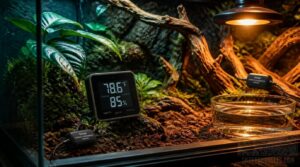
Your heating only works if you can measure it. Place a reptile tank thermometer under the heat source and another at the cool end, probes half an inch below the substrate. Add a hygrometer at your reptile’s level, away from water bowls.
Log readings often, keep the temperature gradient steady, and recalibrate sensors monthly for reliable humidity control.
For extra peace of mind during those pre-shed humidity spikes, this guide to snake hiding and shedding behavior covers what to watch for.
Provide Species-Appropriate UVB and UVA Lighting

Three things matter when you set up lighting: the right spectrum, the right distance, and the right schedule. Start by matching your UVB lighting to your species. Iguanas need high output around 2.0–3.0 W/m², while Uroplatus geckos thrive on gentle 0.5–1.0 W/m² tubes. Check the basking zone with a calibrated UV index meter, and keep lamps 15–30 cm above the spot. Just as you’d verify UV output with a meter, a digital vs analog humidity gauge comparison helps you pick monitoring gear that actually reads true.
Don’t skip UVA lighting, either. It fuels foraging and social behavior, so pick broad-spectrum bulbs and run them 12–14 hours daily alongside UVB. Use a timer for a 12:12 light cycle with gradual dawn and dusk ramps, then give your animal 10–12 hours of true darkness. Skip colored night lights entirely.
Select Safe Substrate, Hides, and Enrichment
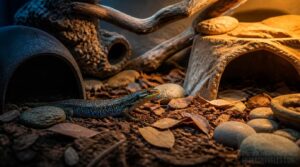
Two hides minimum, and make them different. Give your reptile one cool, dark retreat and one warm, bright option so it can pick its comfort zone. Size each hide so the interior clearance is 1.0 to 1.5 times your animal’s body width. Choose solid, non-porous hides you can disinfect easily; skip fabric, which traps bacteria.
For safe substrate, think tile, reptile carpet, or cypress mulch rated for reptiles. Avoid fine sands that cause impaction, and keep moisture in check to stop mold.
Your reptile enrichment should invite natural behavior:
- Rotate scent-marked foraging objects weekly
- Add branches, ramps, and cork bark for climbing
- Include movable items that spark hiding or hunting instincts
Inspect everything weekly for sharp edges, then log substrate replacement and behavioral changes to sharpen your reptile habitat hygiene.
Follow a Consistent Reptile Habitat Cleaning and Health-Check Routine

Picture your reptile enclosure gleaming under morning light, water dish sparkling, every surface fresh and safe. That’s what a solid habitat cleaning schedule gives you, and it’s easier than you think.
Start with daily spot cleaning. Remove waste, shed skin, and soiled bedding right away. Toss porous decor you can’t fully clean instead of reusing it.
Schedule deep cleaning on a consistent interval, always working clean-first, dirty-last to stop cross-contamination. Do a full cleanout after any retained shed or suspected contamination.
Weave in reptile health monitoring during each check. Watch posture, gait, and alertness. Examine eyes, nostrils, and skin for discharge or dryness. Track feces and urates, since changes signal dehydration or illness.
Frequently Asked Questions (FAQs)
Where should you not touch a bearded dragon?
Where should you not touch a bearded dragon? Never touch the eyes, throat, or belly. These delicate, low-armor areas stress your dragon quickly. Follow proper reptile handling guidelines: support the body, avoid wet hands, and skip lotions.
What is the hardest reptile to care for?
What is the hardest reptile to care for? The adult saltwater crocodile. You’ll need a 15–20 meter enclosure, seawater filtration, and secure inundation zones. Unless you’re a licensed professional zookeeper, admire them from afar.
Do lizards need to be fed every day?
Do lizards need to be fed every day? Usually not. Adults often eat every 2–3 days, while juveniles need daily meals. Watch body condition during reptile behavior observation, and adjust portions as needed.
What is the most low maintenance reptile?
The leopard gecko wins for beginners. It needs no UVB, eats every few days, and thrives with simple paper towel substrate. Pair that with an easy habitat cleaning schedule, and your maintenance stays minimal.
How do I Keep my reptiles happy and healthy?
Picture your reptile thriving in a palace, not a shoebox. Give it space, proper heat gradients, UVB lighting, and safe substrate. Follow a solid reptile habitat setup guide, clean regularly, and track reptile health indicators.
What makes a good reptile habitat?
What makes a good reptile habitat? Think of it as a mini environment: proper space, a temperature gradient, steady humidity control, UVB lighting, safe substrate, and hides. Match each element to your species’ natural needs.
How do you care for a reptile?
How do you care for a reptile? Treat your reptile enclosure as a tiny living world. Set a proper temperature gradient, manage humidity control, provide UVB lighting, clean substrate regularly, and weigh monthly. Small rituals, big rewards.
What is a substrate for a reptile?
A substrate is the material lining your reptile’s tank floor. Think of it as your pet’s flooring and bedding combined. Choosing the right substrate means matching it to your species: coconut fiber holds humidity, reptile carpet suits delicate climbers, and newspaper stays clean. Whatever you pick, plan regular substrate replacement.
How do you keep reptiles dry?
How do you keep reptiles dry? Think of water as a slow leak in a dam: stop it early. Use good ventilation, absorbent substrate, quick spill cleanup, and leak-proof water dishes.
How do I protect my reptiles from heat?
How do I protect my reptiles from heat? Use a thermostat on all heating elements, verify your basking spot with a reliable thermometer, keep a cool retreat in the temperature gradient, and never place the tank in direct sunlight.
Conclusion
Every enclosure is a small promise you make each morning. The thermostat reads true, the water is clean, the light comes on, and your animal quietly trusts you kept it.
That’s the heart of reptile habitat maintenance: not one big effort, but steady, small ones. Master the rhythm, watch your gecko’s urates and your dragon’s appetite, and you’ll catch problems early.
Keep the promise daily, and your reptile will thrive for years.