This site is supported by our readers. We may earn a commission, at no cost to you, if you purchase through links.
Most people can’t tell a harmless garden snake from a dangerous viper at first glance, and that uncertainty keeps many from appreciating the scaled neighbors living in their backyards. The reality might surprise you: roughly 85% of all snake species worldwide pose no threat to humans whatsoever.
These non-venomous snakes come in stunning varieties—from the glossy black racer darting through grasslands to the boldly patterned kingsnake that actually hunts venomous species for dinner. Understanding the physical traits, behaviors, and habitats of different non venomous snake types transforms fear into fascination.
Whether you’re hoping to identify that serpent sunbathing on your garden path or simply curious about these misunderstood creatures, recognizing the safe species around you opens the door to confident coexistence.
Table Of Contents
Key Takeaways
- About 85% of snake species worldwide pose no threat to humans, with non-venomous types identifiable by slender bodies, narrow oval heads, and uniform rows of small teeth rather than specialized fangs connected to venom glands.
- Major non-venomous families include Colubrids (rat snakes, kingsnakes, gopher snakes), Boas and Pythons (constrictors using pressure instead of venom), and Garter snakes (widespread semi-aquatic species found in gardens and wetlands across North America).
- These harmless snakes serve as natural pest control by consuming dozens of rodents and insects each season without chemicals, while also maintaining ecosystem balance as both predators and prey in complex food webs.
- Safe coexistence requires simple strategies like sealing foundation cracks, removing debris piles, and allowing snakes to pass through yards undisturbed rather than attempting to handle or kill them out of unfounded fear.
What Makes a Snake Non-Venomous?
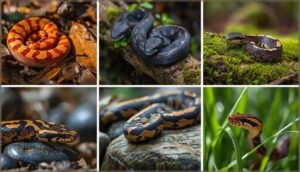
When you’re trying to tell if a snake is non-venomous, keep an eye out for a few clear signs. Certain physical features, behaviors, and even the way a snake moves can give you useful clues.
If you notice unusual behavior in any snake, whether venomous or not, check for behavioral symptoms of a sick snake to catch health issues early.
Let’s walk through some of the main ways you can spot the difference.
Using the right tools and placement strategies—like those covered in this guide to measuring reptile tank heat—helps you avoid common pitfalls that lead to inaccurate readings.
Key Physical Characteristics
Let’s take a closer look at what sets nonvenomous snakes apart. Most have slender bodies, narrow, oval heads, and smooth snout structure. Their head shape isn’t distinctly wider than the neck, and you’ll often spot double rows of subcaudal scales or distinctive scale patterns.
When feeding these gentle species, always choose prey based on proper thickness relative to your snake’s girth rather than just overall length.
From subtle browns to vivid stripes, their coloration types make snake identification a fascinating adventure. Understanding snake body characteristics is essential for accurate identification and safe coexistence.
Behavioral Traits
Beyond looks, you’ll notice nonvenomous snakes display fascinating behavioral traits that set them apart. Their foraging strategies range from patient ambush hunting to active searching, while antipredator behavior includes tail vibration, body coiling, and bluff strikes rather than envenomation.
Thermoregulation drives daily patterns—you’ll spot them basking or retreating to regulate body temperature. Some species even show surprising social interactions during courtship rituals, challenging old assumptions about snake behavior. Understanding snake feeding ecology is essential for appreciating these complex creatures.
Venomous Vs. Non-Venomous Differences
The clearest difference lies in fang structure and venom delivery systems. Venomous snakes possess specialized hollow or grooved fangs connected to venom glands, while harmless snakes have uniform rows of small teeth designed for gripping.
Snake venom evolution produced neurotoxins and hemotoxins in dangerous species, but nonvenomous snake characteristics include constriction methods for subduing prey. Defensive behaviors also differ—venomous snakes warn with rattles or hoods, whereas most harmless species flee or bluff.
Major Non-Venomous Snake Families

Understanding the major families of non-venomous snakes helps you make sense of the remarkable diversity you’ll encounter in nature and backyards.
Each family shares distinct traits that set them apart, from body structure to hunting methods. Let’s explore the three most important groups you’re likely to come across.
Colubrids
You’ll encounter more colubrid species than any other snake family—nearly 2,000 harmless snakes call this group home. Their habitat diversity spans every continent except Antarctica, showcasing outstanding wildlife ecology across forests, deserts, and even your backyard.
Common Colubrid Characteristics:
- Rat snakes – excellent climbers controlling rodent populations
- Gopher snakes – often mistaken for rattlesnakes despite being harmless
- Kingsnakes – immune to venom, prey on other snakes
- Sleek bodies – adapted for diverse nonvenomous snake characteristics
- Varied colors – species-specific patterns aid identification
Understanding snake behavior helps reptile conservation efforts.
Keepers should also understand proper feeding distances and safety protocols to minimize stress and prevent defensive strikes during routine care.
Boas and Pythons
When you think of powerful constrictors, boas and pythons top the list—these impressive reptile conservation ambassadors showcase fascinating snake species across tropical regions worldwide. Their constricting methods subdue prey through gradual pressure rather than venom, making safe snake handling possible with proper training.
| Feature | Boas | Pythons |
|---|---|---|
| Distribution | Americas, Madagascar, Pacific islands | Africa, Asia, Australia |
| Max Size | Up to 13 feet (most species) | Up to 23 feet (reticulated python) |
| Reproduction | Live birth | Egg-laying |
| Snake Habitats | Rainforests, savannas, semi-arid zones | Forests, grasslands, wetlands |
| Boa Behavior & Python Conservation | Arboreal and terrestrial hunters | Ambush predators, threatened by habitat loss |
Understanding these constrictors’ unique adaptations helps you appreciate their ecological roles and conservation needs.
Providing appropriate reptile substrates for tropical snakes creates environments that support their natural behaviors and physiological requirements.
Garter Snakes and Kin
You’ll find gartner snakes among the most widespread harmless snakes in North America, representing the Natricidae family—semi-aquatic reptiles thriving in gardens, grassy fields, and wetland garter snake habitat. These slender, striped snake species display green, brown, or yellow patterns, making snake identification straightforward during wild encounters.
Their kin species inhabit streams and ponds across Eurasia, emphasizing reptile conservation efforts and snake behavior studies supporting reptile conservation.
Popular Non-Venomous Snake Species
Now that you understand the major families, let’s look at some specific snakes you’re most likely to encounter.
These eight species represent the most common non-venomous snakes across North America, from backyard visitors to popular pets. Each has unique traits that make identification straightforward once you know what to look for.
Ball Python
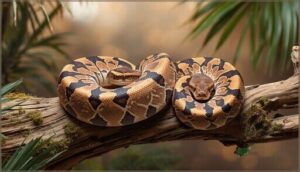
Ball pythons are ideal first pets if you’re curious about snake handling and pet snake safety. These harmless snakes from West Africa reach 3 to 4 feet and feature hundreds of python morphs from selective breeding.
Here’s what makes ball pythons special:
- Docile temperament perfect for beginners learning constrictor behavior
- Manageable size and calm nature
- Wide availability from breeders
- Exceptional color variety
- Simple ball python care requirements
Corn Snake
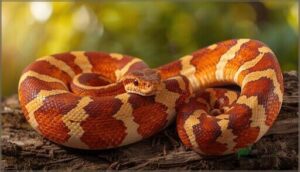
Corn snakes make excellent companions if you’re exploring harmless snakes for the first time. These slender, 4-to-5-foot natives of the southeastern United States thrive with proper corn snake care and snake habitat design.
You’ll appreciate their docile nature and stunning color morphs, from classic patterns to hobbyist-bred varieties. Feeding techniques involve offering appropriately-sized rodents, while gentle handling methods and selective breeding programs continue expanding this popular snake species‘ appeal.
Kingsnake
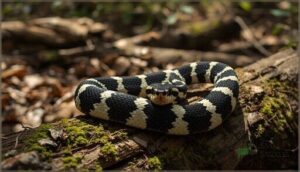
Kingsnakes stand out among harmless snakes for their exceptional defensive traits—they’re immune to venom from other snake species. You’ll encounter these 2-to-6-foot constrictors across North America’s diverse habitats, from forests to grasslands.
Understanding kingsnake behavior reveals their fascinating diet:
- Prey includes other snakes, even venomous ones
- Small mammals and birds supplement nutrition
- Eggs provide occasional food sources
- Constrictor methods efficiently subdue prey
Their snake resistance makes kingsnake identification vital for conservation.
Rat Snake
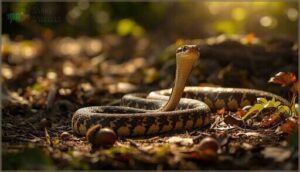
You’ll appreciate rat snakes for their calm temperament and impressive 4-to-6-foot length, making rat snake identification straightforward among non-venomous snakes.
These sturdy constrictors inhabit woodlands and fields across North America, where rat snake behavior centers on hunting rodents and small birds. Constrictor methods prove highly effective for subduing prey, while their adaptability aids both wildlife conservation efforts and their role in natural pest control.
Gopher Snake

Moving into larger territory, gopher snakes stretch 3 to 6 feet and pack a heavy-bodied frame with distinctive saddle-like markings across western North America. You’ll find these harmless snake species employing snake camouflage and snake constriction to hunt small mammals in gopher snake habitat ranging from deserts to grasslands—their reptile behavior during wild encounters often includes defensive hissing, yet they remain completely non venomous snakes.
- Impressive size aids snake identification and conservation awareness
- Saddle patterns provide effective snake camouflage in varied terrain
- Constriction methods efficiently subdue rodent prey populations
- Defensive displays mimic rattlesnakes but pose no venom threat
- Adaptable nature facilitates diverse ecosystems across western regions
Milk Snake
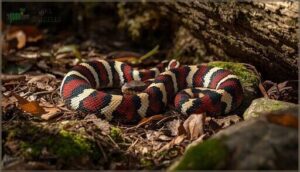
Milk snakes offer beginners colorful bands of red, black, and cream that mimic coral snakes, yet these harmless snake species rely on snake constriction rather than venom. You’ll observe their docile snake behavior across woodlands and rocky areas throughout North America, where milk snake habitat fosters rodent and lizard hunting—making snake identification and conservation awareness essential during any encounter.
| Milk Snake Trait | Details |
|---|---|
| Adult Size | 2 to 4 feet in length |
| Color Patterns | Bold red, black, cream bands |
| Pet Care Level | Beginner-friendly, docile nature |
Garter Snake
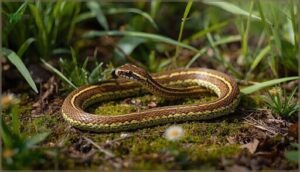
You’ll spot garter snakes by their slender frames and distinctive green, brown, or yellow stripes—perfect snake camouflage across grassy fields and gardens throughout the U.S.
These harmless reptiles exhibit fascinating snake behavior as they hunt insects, worms, and small amphibians, making garter diet incredibly diverse.
With garter conservation and wildlife conservation efforts protecting their widespread garter snake habitat, you can confidently appreciate these gentle creatures during any snake identification and conservation encounter.
Black Racer
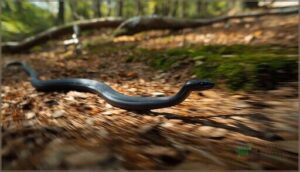
While gartner snakes prefer slower hunting methods, black racers live up to their name with lightning-fast snake behavior that startles many homeowners.
You’ll recognize these sleek, all-black non venomous snakes by their thin bodies and matte finish, distinguishing them from glossy rat snakes. Black racer habitat spans eastern North America, where racer conservation and wildlife conservation efforts protect these beneficial rodent hunters despite racer research showing declining populations in urbanized areas.
Habitats and Global Distribution

Non-venomous snakes aren’t picky about where they live—you’ll find them practically everywhere, from dense forests to sandy deserts and even your own backyard.
Understanding where different species make their homes helps you identify which snakes you’re likely to encounter in your area. Let’s look at the main habitats these fascinating creatures call home and where specific species tend to show up around the world.
Forests and Woodlands
You’ll find remarkable forest floor diversity when exploring woodlands, where non-venomous species thrive in layers from leaf litter to canopy. Rat snakes climb trees to hunt birds and use cavities for shelter, while indigo snakes patrol hardwood forests hunting small mammals.
Forest ecology depends on these predators—they control rodent populations and maintain balanced food webs. Woodland conservation protects essential tree snake habitats and vertical structure that arboreal species need for survival.
Deserts and Grasslands
You’ll encounter impressive snake adaptations in arid landscapes, where desert ecology enables species like gopher snakes and glossy snakes to thrive in temperatures exceeding 100°F.
Grassland habitats host plains garter snakes and rat snakes that hunt rodents across open terrain, maintaining ecosystem balance. These reptile ecology specialists use burrows and rock crevices to survive extreme conditions, making wildlife conservation essential for protecting their specialized snake habitat.
Urban and Backyard Environments
You can support snake conservation right in your own yard by creating backyard habitats that welcome urban wildlife.
Snake-friendly yards with wood piles, native plants, and unmowed sections attract garter snakes and other urban snake species like eastern rat snakes and black racers. These non-venomous snakes thrive in residential ecology, using your backyard ecosystem to control rodents while maintaining a healthy snake habitat.
Geographic Range by Species
Understanding habitat diversity and distribution patterns helps you identify which non-venomous snakes you might encounter in your region.
Habitat diversity shapes species preservation efforts across North America and beyond, while geographic isolation influences types of snakes in each area:
- Ball pythons inhabit West and Central African grasslands from Senegal to Uganda
- Corn snakes range throughout the southeastern United States to Louisiana
- Garter snakes span from Canada to Costa Rica across varied habitats
- Western rat snakes occupy the central U.S. Mississippi basin
- Gopher snakes demonstrate range expansion from Canada to Mexico
Conservation mapping relies on tracking snake characteristics and species migration patterns.
Benefits and Conservation of Non-Venomous Snakes

Non-venomous snakes aren’t just harmless creatures—they’re actually working hard to keep your backyard and local ecosystem in balance. From controlling rodent populations to serving as essential links in the food chain, these often-misunderstood creatures deserve our appreciation and protection.
Non-venomous snakes are hardworking ecosystem guardians that control pests and deserve our protection, not our fear
Let’s explore why these snakes matter so much and how we can safely share our spaces with them.
Natural Pest Control
Think of non-venomous snakes as your garden’s unpaid maintenance crew. Species like rat snakes and garter snakes excel at rodent control and insect predation, removing dozens of mice and slugs each season without chemicals.
This natural pest management strengthens ecosystem balance while supporting wildlife management goals. You’ll find these beneficial snake species delivering chemical-free pest control that protects crops and promotes habitat conservation across diverse environments.
Ecological Importance
Beyond pest regulation, non-venomous snakes weave themselves into complex food webs as both predators and prey, maintaining ecological balance across terrestrial ecosystems. You’re witnessing biodiversity conservation in action when snakes enable seed dispersal—rodent-consumed seeds pass through snake digestive systems and germinate miles away.
Snake ecology research shows these reptiles indicate habitat health, making reptile conservation efforts essential for preserving ecosystem balance and supporting thriving wildlife communities.
Threats and Conservation Efforts
Despite their ecological value, non-venomous snakes face serious survival challenges. Habitat fragmentation from urban sprawl cuts populations into isolated patches, while climate change and road mortality during seasonal migrations compound the crisis.
Here’s what threatens these beneficial reptiles:
- Agricultural expansion destroying woodland corridors
- Human persecution driven by unfounded fear
- Rising seas flooding coastal snake refuges
Conservation strategies now prioritize habitat protection through wildlife corridors and public education programs that transform attitudes toward reptile conservation efforts.
Safe Coexistence With Humans
Protecting habitat won’t matter if you kill every snake you see in your yard. Safe coexistence strategies start with simple wildlife management: seal foundation cracks, remove debris piles, and let non-venomous visitors pass through undisturbed.
Snake safety tips emphasize distance over confrontation—most human conflict happens when people try handling these reptiles. Wildlife education transforms urban encounters from frightening to fascinating, building environmental awareness that benefits animal diversity.
Frequently Asked Questions (FAQs)
What do non-venomous snakes eat in captivity?
Most captive snakes ironically feast on frozen mice when nature intended them to hunt warm-blooded prey; you’ll feed appropriately sized rodents regularly.
While occasionally offering quail chicks or earthworms for dietary variety and complete nutrition.
How do non-venomous snakes reproduce and care for young?
Most non-venomous snakes lay eggs that incubate for about 50 to 60 days, though some species give live birth. Pythons exhibit brooding behavior, but you won’t find extended maternal care after hatching.
Are non-venomous snakes active during the day or night?
Ball pythons sleep nearly twenty-three hours daily and hunt at night, while corn snakes peak at dawn and dusk.
Your non-venomous snake’s activity cycle depends on temperature, season, and species-specific thermal regulation needs.
How do non-venomous snakes kill their prey?
Most non-venomous snakes kill through constriction methods, wrapping coils around prey to stop blood flow within seconds.
Others swallow small prey alive, while some scavenge or target eggs, requiring no active killing techniques.
How long do non-venomous snakes typically live?
In the context of the clock ticking on your scaly neighbors, Snake Lifespan Factors vary widely—wild survival rates hover around 5 to 10 years due to predation, while captive care often doubles that to 20-plus years for popular snakes.
Can non-venomous snakes swim or climb trees?
Yes, many non-venomous snakes are skilled swimmers and tree climbers, using lateral undulation for aquatic movement and concertina climbing techniques to navigate branches, demonstrating impressive snake agility across diverse habitats.
Conclusion
Think of understanding non venomous snake types as unlocking a secret codec to your own backyard—once you crack the patterns, every scaled encounter becomes an opportunity rather than a threat.
These harmless species don’t just coexist with us; they actively protect our gardens, control rodent populations, and maintain the delicate balance nature intended. Your newfound knowledge transforms fear into fascination, replacing old myths with the confidence to appreciate these extraordinary reptiles safely.