This site is supported by our readers. We may earn a commission, at no cost to you, if you purchase through links.

A milk snake that looks perfectly healthy today can develop scale rot within weeks if humidity sits even 10% too high. That’s the tricky part of keeping these animals: they’re hardy enough to fool beginners, then unforgiving the moment husbandry slips. I’ve treated plenty of respiratory infections that trace back to one overlooked variable—usually temperature or ventilation.
Milk snake care requirements aren’t complicated, but they’re precise. You’re working with specific gradients, exact enclosure dimensions, and feeding schedules tied directly to age and species. Get the fundamentals right from setup through routine health checks, and you’ll have a snake that thrives for decades rather than one that just survives.
Table Of Contents
- Key Takeaways
- Milk Snake Species and Physical Characteristics
- Building The Ideal Milk Snake Enclosure
- Temperature, Humidity, and Lighting Requirements
- Feeding and Nutrition for Milk Snakes
- Health Monitoring and Routine Care
- Frequently Asked Questions (FAQs)
- Are milk snakes hard to take care of?
- Can I keep a milk snake in a 20 gallon tank?
- Do milk snakes like to be held?
- How long can a milk snake live without food?
- Can milk snakes bite through thick gloves?
- Do milk snakes need special winter care?
- How often should substrate be completely replaced?
- What plants are safe for bioactive setups?
- Can milk snakes swim or need water?
- Can milk snakes live with other reptile species?
- Conclusion
Key Takeaways
- Maintain a warm-side temperature of 85-88°F and cool-side of 70-78°F alongside 40-60% humidity, since even small deviations trigger scale rot, respiratory infections, or shedding problems.
- House hatchlings in 10-gallon tanks and upgrade to 40-gallon enclosures for adults, using wood or PVC materials over glass to hold heat more efficiently and stabilize the thermal gradient.
- Feed frozen-thawed rodents sized to roughly 1.5 times your snake’s girth on an age-based schedule, then wait 24-48 hours before handling to prevent regurgitation.
- Schedule annual veterinary exams and monitor daily for warning signs like appetite loss over three weeks, open-mouth breathing, or excessive hiding, since snakes hide illness until it’s advanced.
For a full feeding chart matched to your snake’s age and size, check out this ball python feeding schedule guide before your next mealtime.
Milk Snake Species and Physical Characteristics
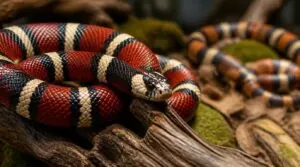
Milk snakes come in more varieties than most people expect, each with its own look and quirks. Before you set up an enclosure or plan a feeding schedule, you need to know what you’re actually working with. Here’s a breakdown of the subspecies, colors, sizes, and traits that define this popular pet snake.
If you’re curious how milk snakes stack up against similar-looking species, the Mexican black kingsnake makes for an interesting comparison in temperament and care.
If you’re curious how milk snakes stack up against other popular choices, this guide to ball python characteristics and care basics offers a useful point of comparison.
Whether you’re drawn to the fiery Honduran milk snake or the classic tri-color pattern of the Eastern variety, this guide to different types of milk snakes kept as pets breaks down what sets each one apart.
Popular Milk Snake Subspecies
Five subspecies dominate the pet trade, each shaped by where it evolved. Sinaloan milk snakes hail from Mexico’s dry scrublands; Hondurans come from Central American tropical forests; Easterns range from Canada to Florida.
- Sinaloans: docile, 3–4 feet
- Hondurans: largest, up to 6 feet, 25+ years
- Pueblans: compact mountain natives, calm temperament
Regional origin drives size, lifespan, and personality across this Lampropeltis triangulum family. These snakes often mimic venomous species to protect themselves from predators.
Color Patterns and Morphs
Color patterns split into three phases: blotched (brown-red saddles edged black, 26–46 per snake), banded (rings encircling the body), and intermediate (broken, partial rings). Morphs add another layer—albino, anerythristic, het carriers—each with distinct genetics.
| Morph | Eyes | Coloration |
|---|---|---|
| Albino | Pink | Red/yellow, no black |
| Anery | Normal | Black/yellow, no red |
| Het | Normal | Visually normal |
Size and Growth by Variety
Size varies wildly across Lampropeltis triangulum subspecies. New Mexico milk snakes top out at 14–18 inches, while black milk snakes hit 3–6 feet wild, 7+ captive. Males run 10–20% longer than females. Tropical subspecies outsize temperate ones by 30–50%. Captive specimens often exceed wild maximums, thanks to consistent feeding accelerating growth well beyond natural conditions.
Lifespan Expectations
Wild vs captive survival tells the real story: 15 years outdoors versus up to 20 in your care. Predation, vehicle strikes, and food scarcity cut wild lives short.
Genetics matter too — one Mexican milk snake reached 25. Your job: consistent nutrition, stable environments, and preventative veterinary care minimize stress and support long-term biological needs throughout every life stage.
Temperament and Activity Level
Rarely will you meet a more docile, nonvenomous reptile than the milk snake. Give them 2 weeks to settle in before regular handling, then keep sessions weekly and brief.
Watch for tail vibrating or hissing — defensive stress signals, not aggression. As nocturnal animals, expect peak activity after dark, with daytime hiding. Handle gently; these calm, curious snakes soon tolerate — even seek out — human interaction.
Building The Ideal Milk Snake Enclosure
Your milk snake’s enclosure isn’t just a container, it’s the foundation for its long-term health. Get the size, materials, and setup wrong, and you’ll be fighting stress, illness, or escape attempts for years to come. Here’s exactly what you need to get it right from day one.
A well-designed enclosure directly impacts how many years your snake thrives, so it’s worth understanding what really shapes a milk snake’s lifespan in captivity before you buy anything.
Enclosure Size by Age

Your milk snake’s housing needs will change fast, so plan for growth from day one.
Hatchlings start in 10-gallon tanks (20"x10"x12"H). Upgrade to 20-gallon setups once they hit 2 feet. Adults need 40-gallon enclosures, or use the space formula: length × half-length = minimum floor area. A 48-inch snake needs 48"x24" of floor space. Larger subspecies require bigger vivariums even as juveniles.
Best Enclosure Materials

Wood vs glass isn’t a close call: wood and PVC vivariums hold heat far more efficiently, cutting your energy costs and stabilizing that basking gradient.
Glass bleeds warmth constantly. PVC resists warping if you pair it with low-temp heat elements. Seal every seam with GE Silicon I—non-toxic once cured, unlike some silicones that off-gas fumes.
Choose a 40-gallon minimum with secure, locking access.
Substrate and Burrowing Setup
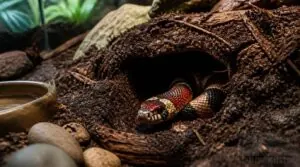
Bury the substrate question and you’ve buried your snake’s instincts—burrowing isn’t optional, it’s hardwired behavior.
Give them 3-4 inches of coco husk, cypress mulch, or aspen shavings. A DIY mix (40% topsoil, 40% Reptisoil, 20% play sand) balances moisture retention with tunnel stability.
- Skip pine or cedar—toxic oils
- Deeper substrate = less stress
- Replace fully every 3-4 months
Hides, Branches, and Enrichment

A snake with no place to hide is a snake in constant fight-or-flight. Give it two: one on the warm end, one on the cool side, sized so it fits snug when coiled.
Thermal hide placement matters as much as temperature itself.
Add climbing branches 2+ inches thick, securely anchored—climbing branch safety prevents injury. Include cork rounds, a humidity hide with sphagnum moss, and rotating enrichment.
Escape-Proofing and Housing Solo

Escape artists by nature, milk snakes test every seam in a reptile enclosure setup.
Lid Latch Security matters most—use locking screened lids. Check Ventilation Gap Management around cords and heat elements; seal gaps with silicone.
Never house two together. Solo Housing Benefits include reduced stress and no competition for hides. Your 40 gallon enclosure needs Material Durability Standards met: polycarbonate or wood, not flimsy plastic.
Temperature, Humidity, and Lighting Requirements

Your enclosure setup means nothing if the climate inside it is wrong. Milk snakes need a precise mix of temperature, humidity, and light to stay healthy and digest properly. Here’s what that mix looks like in practice.
Aim for a warm side of 88-92°F, a cool side of 78-82°F, and humidity around 40-60% (rising to 70-90% during shedding), and this boa constrictor care sheet offers a handy comparison for gauging the right gradient in your own setup.
Ideal Temperature Gradient
Because milk snakes can’t generate their own body heat, your enclosure must do the work for them through a proper thermal gradient.
Keep the warm side between 85-88°F and the cool side 70-78°F. This range lets your snake move freely to regulate its body temperature—warming up to digest, cooling down to rest. Never let either zone drift outside these limits.
Proper feeding also plays a role in thermoregulation—check out this snake feeding guide for pinky mice to match prey size to your snake’s girth and support healthy digestion.
If you’re drawn to those striking pale hues, check out this guide to popular rosy boa morphs to see how albino genetics shape their signature look.
Heating Equipment and Placement
Getting the gradient right means choosing the right hardware, not just the right numbers.
Use an undertank heater on the warm side, paired with a thermostat—probe placed right where your snake baskets. For wooden vivariums, this combo beats an overhead ceramic heat emitter on efficiency. If you do use one, mount it 10 inches above the hide with a protective guard. Calibrate monthly; thermal gradient stability depends on it.
Humidity Levels and Shedding Care
Humidity levels matter as much as heat. Keep the enclosure between 40-60%, checked with a digital probe hygrometer, not a dial gauge.
Watch for cloudy eyes and dulled skin—pre-shedding behavior signs appearing 7-10 days out. Boost humidity to 70% using a humid hide with damp sphagnum moss.
- Mist daily during shedding
- Clean humid hides weekly
- Soak for stuck shed
- Never use hot water
UVB Lighting and Photoperiod
UVB isn’t strictly required for milk snakes, but it’s cheap insurance for better appetite, color, and circadian rhythm support.
Use a T5 HO bulb (Reptisun 5.0), mounted at the ceiling, giving a UVI of 2.0-3.0 at basking level. Replace bulbs every six months.
Run 15-hour summer photoperiods, tapering to 9 hours in winter for natural seasonal cues.
Feeding and Nutrition for Milk Snakes
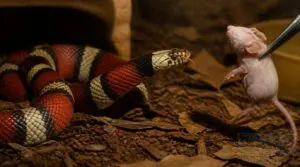
Feeding a milk snake looks simple until you get the details wrong. Prey size, timing, and supplements all affect your snake’s growth and long-term health. Here’s what you need to get right, starting with what to feed based on age.
Diet by Life Stage
Your snake’s diet shifts dramatically as it grows. Hatchlings need pinky mice, just 1-2 grams, while adults graduate to fuzzies, hoppers, and eventually full-grown mice or small rats for larger subspecies.
Wild juveniles favor lizards and skinks, but captive milk snakes thrive on frozen-thawed rodents exclusively. This all-rodent approach delivers complete reptile nutrition without the parasite risks live prey carries.
Feeding Schedule and Frequency
Rarely does a fixed schedule work for every milk snake — age drives frequency far more than habit. Hatchlings eat weekly, juveniles settle into once-weekly feedings by 2-3 months, and adults do best every 7-14 days.
Offer frozen-thawed rodents in the evening, matching their nocturnal instincts. Watch body weight weekly, and skip handling for 24-48 hours post-meal to avoid regurgitation.
Prey Size and Preparation
Prey size matters more than most owners assume. Aim for Ideal Prey Girth—roughly 1.5 times your snake’s thickest point, whether mice, rats, or chicks.
- Thaw frozen-thawed rodents in the fridge overnight
- Warm in water baths using Thawing Safety Methods
- Present with tongs, Mimicking Hunting Motion
- Try Scent Enrichment Techniques for picky eaters
- Watch bulge size—Preventing Regurgitation Risks matters
Calcium and Vitamin Supplements
Whole prey usually covers your snake’s needs, but supplementing prevents nutritional deficiencies during growth or breeding.
Calcium vs multivitamins serve different roles—don’t substitute one for the other. Dust prey lightly every 1-2 weeks. Watch D3 overdose risks: limit D3-calcium to once weekly, since excess causes hypercalcemia. For feeder rejection, try unscented powders. Trace minerals (like Miner-ALL’s 50-mineral mix) support long-term health beyond basic calcium supplementation.
Post-Feeding Handling Safety
Wait 24-48 hours minimum before handling—72 hours is safer. Digestion during this window is fragile, and early handling risks regurgitation.
- Support the full body
- Watch for stress signs (hissing, musk)
- Wash hands first
- Move slowly
- Keep sessions under 10 minutes
Let the snake initiate contact. Patience protects both digestion and trust.
Health Monitoring and Routine Care
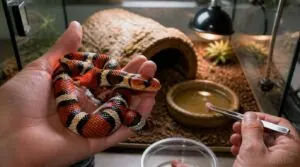
A healthy milk snake doesn’t happen by accident—it takes daily attention on your part. You’ll need to know how to handle your snake safely, spot trouble early, and keep its enclosure clean enough to prevent illness. Here’s what routine care actually looks like.
Safe Handling Techniques
Milk snakes count among the more docile reptiles you’ll handle, but timing still matters. Wait two weeks after arrival, then confirm regular feeding before touching them.
| Timing | Do | Avoid |
|---|---|---|
| First 2 weeks | Observe only | Handling |
| 24-48 hrs post-meal | Wait | Lifting |
| During shedding | Skip sessions | Forcing contact |
Support the body fully, watch for musking, and always wash hands—Salmonella prevention matters every time.
Common Illnesses to Watch For
Handling routines matter, but so does knowing what illness looks like. Watch for respiratory infection signs—wheezing, mucus, or open-mouth breathing—often tied to temps below 80°F.
Mouth rot symptoms include drooling and red, swollen gums. Check for scale rot (dark, blistered belly scales) from damp bedding, and paramyxovirus warning signs like tremors or "star-gazing." Freeze prey at -20°F for 48 hours to prevent parasites.
Signs of Stress or Illness
Illness rarely announces itself. Your snake tells you through behavior first, symptoms second—so learn the tells.
Illness rarely announces itself—your snake reveals it through behavior long before symptoms appear
- Appetite loss lasting 3+ weeks despite proper prey size
- Excessive hiding, over 95% of daylight hours in one spot
- Open-mouth breathing past 5 minutes, a red flag for respiratory infections
Watch also for glass climbing, jerky movements, or defensive striking—signs of stress needing a habitat review before problems escalate.
Cleaning and Sanitation Schedule
Daily spot cleaning takes five minutes: remove feces, urates, and leftover prey, then refresh the water bowl. Wipe down soiled hides.
Run weekly disinfection with a reptile-safe cleaner or 3% bleach solution—snake out, surfaces dry before return.
Swap substrate every 3–4 months (monthly for aspen). Sanitize feeding tools and decor separately from your habitat cleaner supplies.
Veterinary Care Guidelines
Book a vet visit once a year—even for a snake that looks fine. Annual exams catch parasites, early mouth rot, or organ issues before they escalate.
Know the red flags: labored breathing, retained shed over the eyes, or swelling near the mouth means emergency care now, not next week.
For transport, use a ventilated container with a towel inside, and keep the vehicle climate-controlled.
Frequently Asked Questions (FAQs)
Are milk snakes hard to take care of?
Not really — that’s the honest answer. Milk snakes suit beginner reptile keepers with a manageable learning curve: basic enclosure setup, weekly feeding, and consistent humidity control. Your real time commitment is daily monitoring, not complicated husbandry, once your temperature gradient is dialed in.
Can I keep a milk snake in a 20 gallon tank?
Only temporarily. A 20-gallon works for juveniles or smaller subspecies like Pueblans, but adult length constraints matter—most milk snakes need 30-40 gallons by 2-3 years old, so plan your tank upgrade timing before they outgrow it.
Do milk snakes like to be held?
It’s not love at first touch, but they warm up to it. Handling stress responses fade with age—juveniles bite or musk, while adults tolerate weekly sessions calmly using proper lifting support and gentle, side-approach handling.
How long can a milk snake live without food?
Adults can safely fast 4-10 weeks, sometimes longer during cooler seasons as metabolism slows. Juveniles tolerate only 10-30 days max. Beyond that, schedule a vet check — prolonged fasting often signals illness, not normal appetite cycles.
Can milk snakes bite through thick gloves?
Their bite is a bark, not a bite worth fearing. With teeth only 2–3 mm long, milk snakes can’t pierce hard leather or SuperFabric gloves—weak jaw strength and shallow tooth penetration depth mean thick, puncture-resistant gloves stop them cold every time.
Do milk snakes need special winter care?
Not exactly, but you’ll make choices. Keep your thermal gradient stable year-round, or opt for brumation protocols: 3-4 weeks fasting, then 60-65°F cooling for up to three months, followed by gradual winter feeding adjustments come February.
How often should substrate be completely replaced?
Plan on a complete substrate swap every 3–4 months for traditional setups—weekly for aspen, which traps moisture and mold fast. Bioactive tanks need only 2–3 yearly changes, while hatchling paper towels get replaced weekly, regardless of season.
What plants are safe for bioactive setups?
Snake plants and pothos aren’t just tank filler—both are bulletproof choices that survive burrowing and neglect. Bromeliads and sphagnum moss support your cleanup crew while tolerating humidity swings, letting your bioactive substrate thrive without constant babysitting.
Can milk snakes swim or need water?
Yes—milk snakes swim well using body undulations, crossing streams when needed.
Provide a shallow soaking dish on the cool side for daily hydration. Regular soaking helps with shedding, digestion, and microclimate humidity management, especially critical for Honduran subspecies requiring 60–80% ambient moisture.
Can milk snakes live with other reptile species?
A tank shared with the wrong roommate becomes a coffin, not a home. Predatory instinct runs deep, so don’t house milk snakes with other snakes. Some keepers report success with day geckos in large, well-ventilated setups—but that’s the exception, not the rule.
Conclusion
Milk snakes can live past 20 years, yet most never reach that mark because one overlooked variable—humidity, heat, or a missed shed—cuts the timeline short.
Meeting milk snake care requirements isn’t about being perfect; it’s about consistency. Check your gradient daily. Watch for subtle shifts in shed, stool, and behavior. Your snake can’t tell you something’s wrong, so you become its advocate.
Get the fundamentals right, and you won’t just keep it alive—you’ll watch it thrive.