This site is supported by our readers. We may earn a commission, at no cost to you, if you purchase through links.

Ball pythons don’t demand much—but their supplies can quietly drain your wallet if you’re not careful. A thermostat here, a bag of substrate there, and suddenly your “affordable” pet is costing more than expected.
The good news is that budget-friendly care doesn’t mean cutting corners on your snake’s health. Most experienced keepers know that a $15 coconut fiber block works just as well as a premium branded substrate, and a well-placed heat mat beats an overpriced “smart” heating system every time. The right affordable ball python supplies exist—you just need to know which ones actually deliver.
Table Of Contents
- Key Takeaways
- Essential Ball Python Supplies on a Budget
- Choosing an Affordable Ball Python Enclosure
- Top 10 Affordable Ball Python Supplies
- 1. Zoo Med Reptisun Terrarium Hood Light
- 2. Zoo Med Basking Spot Lamp
- 3. Zoo Med Dimmable Clamp Lamp
- 4. ReptiChip Coconut Reptile Substrate Bedding
- 5. Mosser Long Fibered Sphagnum Moss
- 6. Zoo Med Reptile Water Dish
- 7. Zoo Med Repti Rock Corner Bowl
- 8. Exo Terra Reptile Cave
- 9. Exo Terra Reptile Cave Hideout
- 10. Exo Terra Reptile Den
- Budget-Friendly Heating and Lighting Solutions
- Inexpensive Substrate Options for Ball Pythons
- Saving on Feeding and Maintenance Costs
- Tips for Reducing Overall Ball Python Expenses
- Frequently Asked Questions (FAQs)
- What supplies do I need for a ball python?
- What all do I need for a ball python?
- Is a 40 gallon tank big enough for a ball python?
- What is the average price for a ball python?
- Is a 50 gallon tank good for a ball python?
- How much does ball python food cost monthly?
- What are the cheapest heating options available?
- Can durable DIY enclosures reduce costs significantly?
- Are secondhand reptile accessories safe to use?
- What’s the average vet bill for ball pythons?
- Conclusion
Key Takeaways
- A heat mat under $25 paired with a thermostat gives your ball python reliable warmth without the price tag of “smart heating systems.”
- Coconut fiber blocks are one of the best budget substrate choices — one compressed brick expands up to 9 liters, holds humidity well, and supports natural burrowing.
- Buying frozen feeders in bulk drops your per-rat cost to around $2, making monthly feeding one of the cheapest parts of ball python ownership.
- Preventing health problems through consistent humidity (50–60%) and warm-side temps (88–92°F) costs almost nothing and saves you from vet bills that can hit $150 or more per visit.
Essential Ball Python Supplies on a Budget
Setting up a ball python doesn’t have to drain your wallet. You just need to know which supplies actually matter and where you can save without cutting corners.
A ball python setup cost calculator can help you figure out exactly where your money is going before you spend a dime.
Here’s what every budget-conscious keeper should have on hand.
Must-Have Enclosure Items
A solid ball python enclosure setup starts with the right supplies. You’ll need a secure reptile terrarium with reliable enclosure security — loose lids mean escape risks.
Add a water dish, snake hides for both warm and cool sides, and a hygrometer for humidity management. Proper ventilation systems keep air fresh without drying things out. These ball python supplies form your foundation.
Heating and Lighting Essentials
Once your enclosure is set, heat and light come next.
Ball pythons need a warm side around 88 to 92°F for proper thermoregulation, so reliable heat sources matter. A heat mat paired with a basking lamp covers both belly and overhead warmth.
Add a thermostat, a digital timer for consistent lighting options, and a low-output UVB bulb for a natural day-night cycle. For more details on recommended lighting and heating, check out care guides specific to ball pythons.
Feeding and Watering Supplies
Feeding and watering your ball python doesn’t have to drain your wallet. Get these four feeding supplies right, and you’re set:
- Feeding tongs – 12 to 18-inch tongs keep your hand clear during strikes.
- Frozen rats – Buy in bulk to cut costs.
- Water bowl – Wide, sturdy, and easy to clean daily.
- Feeding dish – Keeps substrate off thawed prey. For more details on safe thawing practices and preparing frozen prey correctly, consult expert care guides.
Substrate and Hides
Once feeding is handled, substrate and hides become your next priority. Coconut fiber blocks are a budget favorite — they expand to fill your reptile terrarium, hold humidity between 50 and 60 percent, and support light burrowing options.
A ball python needs at least two hides. Pick snug hide materials so your snake feels secure, and tuck damp sphagnum moss inside one for humidity control during shed.
Choosing an Affordable Ball Python Enclosure
The enclosure you pick sets the tone for everything else in your setup.
Your two main options are plastic storage tubs and glass terrariums, and each has real trade-offs worth knowing before you spend a dime.
Here’s how they compare — and which one might be the right fit for your snake.
Plastic Storage Tubs Vs. Glass Terrariums
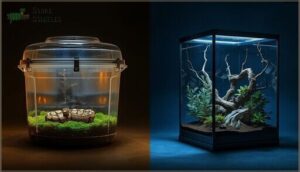
Plastic tubs win on price and Humidity Control — solid sides trap moisture better than a glass Reptile Terrarium with a screen top. That matters for your Ball Python’s health and shedding.
Glass offers better Enclosure Aesthetics and durability, but costs more and demands extra effort to manage heat. For pure function and Snake Security, tubs deliver strong value among budget Reptile Enclosure Options.
Sizing Recommendations for Juveniles and Adults
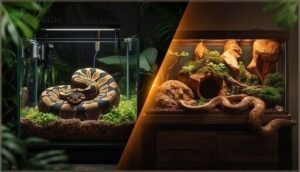
Size matters in ball python care, and getting it right from the start saves money on unnecessary upgrades.
Juveniles under two feet do well in a 20-gallon setup, while adults need at least 4x2x2 feet of enclosure dimensions. Smart habitat planning means tracking snake growth and timing size upgrades to key milestones — keeping your reptile enclosure options practical and your budget intact.
Safety and Ventilation Considerations

Even the most budget-friendly enclosure won’t cut it if ventilation and security aren’t dialed in. For solid airflow management and humidity control, follow these basics:
- Drill small holes on opposite sides for gentle cross-ventilation.
- Keep vents low on the cool side, high on the warm side.
- Latch lids securely — ball pythons are surprisingly strong.
Good enclosure security and respiratory health go hand in hand.
Top 10 Affordable Ball Python Supplies
Now let’s get into the good stuff — the actual supplies worth your money. These ten picks cover everything from lighting to hides, chosen for quality and affordability.
Here’s what belongs in your ball python’s setup.
1. Zoo Med Reptisun Terrarium Hood Light
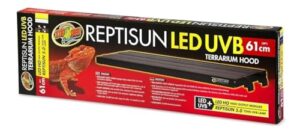
The Zoo Med Reptisun T5 HO Terrarium Hood punches above its weight for the price. It runs a single 24-watt T5 HO bulb, which is enough to support healthy UVB exposure without cranking up your power bill.
Ball pythons don’t need desert-level UV, so pairing this hood with a Reptisun 5.0 bulb hits the sweet spot. The built-in reflector directs light downward efficiently, and the on/off rocker switch makes daily use simple. A practical, budget-friendly lighting addition to any setup.
| Best For | Reptile and amphibian owners who need reliable UV lighting for pets like iguanas, tortoises, and Bearded Dragons without breaking the bank. |
|---|---|
| Brand | Zoo Med |
| Primary Use | Lighting |
| Material | Plastic |
| Reptile Safe | Yes |
| Ease of Use | Easy |
| Weight | 2.25 lbs |
| Additional Features |
|
- Simple rocker switch makes daily on/off a breeze
- Built-in reflector pushes light downward where your pets actually need it
- UL listed and compact enough to sit discreetly on top of most cages
- Mounting hardware isn’t included, so you may need zip ties or extra gear
- The ballast can fail over time, though it is replaceable
- Some users have had trouble getting the bulb to lock in securely
2. Zoo Med Basking Spot Lamp
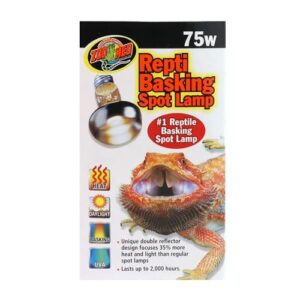
Looking for a heat source that won’t break the bank or overheat your snake? The Zoo Med Basking Spot Lamp delivers a focused beam of warmth right where your ball python needs it.
Its double reflector design means you get more heat with less wasted energy, helping maintain a clear temperature gradient. You’ll want to keep this lamp on one end of the enclosure and monitor basking surface temps closely.
It’s a reliable, affordable choice for creating a safe, cozy basking zone.
| Best For | Reptile owners who need an affordable, focused heat source for bearded dragons, chameleons, or desert iguanas and want a simple basking setup without a lot of fuss. |
|---|---|
| Brand | Zoo Med |
| Primary Use | Lighting |
| Material | Glass/Metal |
| Reptile Safe | Yes |
| Ease of Use | Easy |
| Weight | 1.6 oz |
| Additional Features |
|
- Delivers a focused beam of heat right where your reptile needs it, making it easy to create a solid temperature gradient
- Works with standard dome lamps and ceramic fixtures, so it fits into most existing setups
- Budget-friendly and reliable for day-to-day basking needs
- No UVA or UVB output, so you’ll need a separate bulb to cover your reptile’s light spectrum needs
- Lifespan can be hit or miss — some users report it burning out sooner than expected
- A few users feel there are better alternatives out there, so it may not be the right fit for everyone
3. Zoo Med Dimmable Clamp Lamp
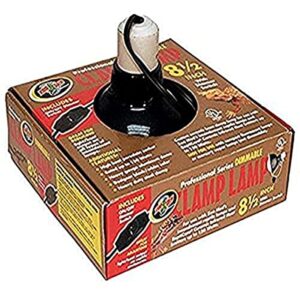
Control is everything in reptile heating. The Zoo Med Dimmable Clamp Lamp gives you that control with an inline dimmer switch that adjusts output without swapping bulbs or repositioning the fixture. It accommodates up to 150 watts, so most standard heat bulbs fit comfortably within its limit.
The 8.5-inch aluminum dome focuses warmth directly into your basking zone, and the sturdy steel clamp keeps it locked in place. On warmer days, just dial it back. Simple, practical, and budget-friendly.
| Best For | Reptile owners who want easy temperature control without constantly moving lights or swapping bulbs. |
|---|---|
| Brand | Zoo Med |
| Primary Use | Lighting |
| Material | Plastic |
| Reptile Safe | Yes |
| Ease of Use | Moderate |
| Weight | 1.2 lbs |
| Additional Features |
|
- The inline dimmer lets you fine-tune heat and brightness on the fly — no guesswork
- Handles up to 150 watts, so it works with most standard heat bulbs you already own
- Clamps onto just about any tank or cage, making it flexible across different setups
- Some buyers have had the switch break early or received the lamp damaged out of the box
- It gets seriously hot, so you can’t just set it and forget it — keep an eye on it
- The packaging and product description don’t always match up, which can cause some confusion about what it actually supports
4. ReptiChip Coconut Reptile Substrate Bedding
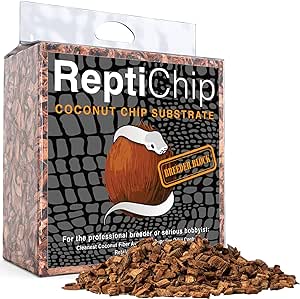
Once your heat source is dialed in, substrate becomes your next big decision. ReptiChip Coconut Reptile Substrate Bedding makes that choice easy.
Each compressed block expands to a full 72 quarts once hydrated — enough to fill a large enclosure or several tubs at once. The medium-to-coarse coconut chips hold humidity well, help control odors naturally, and let your ball python burrow comfortably.
Spot cleaning is straightforward, and the used substrate can even go straight into your compost bin.
| Best For | Reptile and amphibian owners — especially ball python keepers — who want a natural, humidity-friendly substrate that’s easy to maintain and compost. |
|---|---|
| Brand | Generic |
| Primary Use | Substrate |
| Material | Coconut Husk |
| Reptile Safe | Yes |
| Ease of Use | Moderate |
| Weight | 10 lbs hydrated |
| Additional Features |
|
- Expands to a full 72 quarts from one compact block, giving you great value for larger enclosures
- Holds humidity well and naturally cuts down on odors, so your pet’s habitat stays fresh longer
- Eco-friendly and compostable, making cleanup feel a little less wasteful
- Tends to cost more upfront than other substrate options
- Breaking apart the block can kick up some dust, which is annoying if you’re sensitive to it
- Needs regular spot cleaning to keep mold and odors from building up over time
5. Mosser Long Fibered Sphagnum Moss
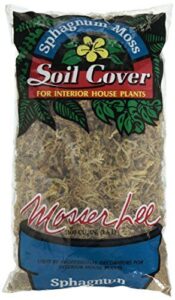
Substrate manages the floor setup — but what about humidity during shed? That’s where Mosser Long Fibered Sphagnum Moss earns its spot.
Pack a damp handful into a humid hide, and it can hold moisture for hours without turning swampy. It absorbs up to 20 times its weight in water, so a little goes a long way.
One small bag expands considerably when hydrated and can supply several humid hides over months — a genuinely budget-smart buy for shed season.
| Best For | Snake and reptile keepers who need reliable humidity control during shed season, especially those growing orchids, carnivorous plants, or running humid hides on a budget. |
|---|---|
| Brand | Mosser Lee |
| Primary Use | Substrate |
| Material | Natural Moss |
| Reptile Safe | Yes |
| Ease of Use | Moderate |
| Weight | 2.39 oz |
| Additional Features |
|
- Holds up to 20x its weight in water, so a damp handful stays moist for hours without getting soggy
- One small bag expands a lot once hydrated — stretches across multiple hides for months
- Works great for rooting cuttings, bulbs, and plants that love high moisture like orchids and carnivorous species
- Can arrive dry and may contain sticks or coarse bits, so you’ll likely need to soak and pick through it before use
- Some buyers feel the price doesn’t quite match the quantity or quality they get
- Not a one-size-fits-all solution — certain plants need a different type of moss entirely
6. Zoo Med Reptile Water Dish
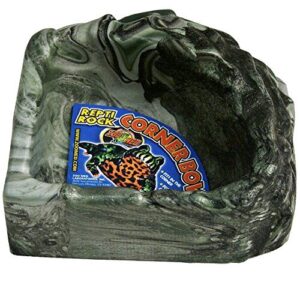
Fresh water is non-negotiable for a ball python — and how you deliver it matters. The Zoo Med Reptile Water Dish keeps things simple.
It’s molded from non-porous resin that mimics natural rock, so it’s easy to wipe clean and resists bacteria buildup. The low, sloped interior lets your snake drink without climbing over steep walls.
Adult ball pythons can even soak in the larger sizes, which helps during shed. Durable, reusable, and budget-friendly over time.
| Best For | Ball python owners who want a simple, low-maintenance water dish that works for both drinking and soaking. |
|---|---|
| Brand | Zoo Med |
| Primary Use | Water/Food Bowl |
| Material | Stone |
| Reptile Safe | Yes |
| Ease of Use | Easy |
| Weight | 0.35 lbs |
| Additional Features |
|
- Easy to clean — the non-porous surface doesn’t hold onto bacteria or grime
- Doubles as a soaking dish, which is great for helping your snake shed
- Durable and reusable, so it holds up well over time
- Might be too small for larger ball pythons
- The depth could be a drowning risk for smaller or younger snakes
- Takes up a decent chunk of enclosure floor space
7. Zoo Med Repti Rock Corner Bowl
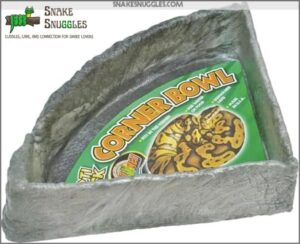
If your snake likes to soak — and many ball pythons do, especially during shed — the Zoo Med Repti Rock Corner Bowl is worth adding to your setup.
Its corner design tucks neatly against two walls, saving floor space for hides and decor. The X-Large runs about 14 by 14 inches, giving bigger snakes room to curl up comfortably.
Made from recycled plastic with a smooth interior, it’s easy to scrub clean and holds up well over time.
| Best For | Snake and reptile owners who need a spacious, easy-to-clean water dish that fits neatly into a corner of their enclosure. |
|---|---|
| Brand | Zoo Med |
| Primary Use | Water/Food Bowl |
| Material | Plastic |
| Reptile Safe | Yes |
| Ease of Use | Easy |
| Weight | 3.8 lbs |
| Additional Features |
|
- Corner design saves floor space, leaving more room for hides and decor
- Smooth surface makes it quick and easy to scrub clean
- Durable recycled plastic holds up well with regular use
- May be too large for smaller tanks or enclosures
- Depth could be a drowning risk for smaller lizards or amphibians
- Price runs a bit high compared to basic water dishes
8. Exo Terra Reptile Cave
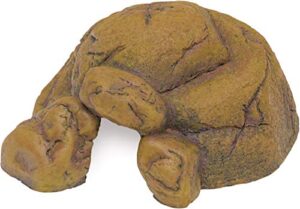
A good hide can make or break your ball python’s comfort level. The Exo Terra Reptile Cave delivers on both function and price.
Its solid resin build mimics natural rock, blends into almost any enclosure, and won’t tip over when your snake pushes against it. The smooth interior protects against scrapes, and cleaning takes minutes — just scrub and rinse.
It comes in multiple sizes, so you can match it to your snake’s current size and upgrade as they grow.
| Best For | Reptile and amphibian owners who want a natural-looking, sturdy hide that keeps their pet stress-free and comfortable. |
|---|---|
| Brand | Exo Terra |
| Primary Use | Hide/Shelter |
| Material | Resin |
| Reptile Safe | Yes |
| Ease of Use | Easy |
| Weight | 0.26 kg |
| Additional Features |
|
- Solid and stable — bigger snakes and lizards won’t knock it over
- Realistic rock look blends right into any terrarium setup
- Easy to clean, just scrub and rinse
- Color can run darker than it looks in photos
- Might be too heavy if you have a top-opening tank
- Occasionally arrives damaged, so inspect it when it shows up
9. Exo Terra Reptile Cave Hideout
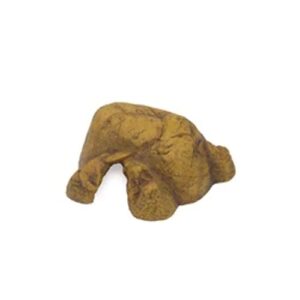
Think of the Reptile Cave Hideout as the snugger cousin of the standard cave. It’s designed with a lower, wider interior that gives your ball python that wrapped-in security they instinctively crave.
The realistic pebble texture blends right into naturalistic setups, and the smooth inside won’t snag scales. Add a little damp moss inside and it doubles as a humid hide during shedding. Affordable, stable, and easy to clean — it’s a simple upgrade that your snake will actually use.
| Best For | Reptile and amphibian owners who want a natural-looking, stress-reducing hide that works great as a humid hide during shedding. |
|---|---|
| Brand | Exo Terra |
| Primary Use | Hide/Shelter |
| Material | Resin |
| Reptile Safe | Yes |
| Ease of Use | Easy |
| Weight | 0.63 kg |
| Additional Features |
|
- Realistic pebble design blends naturally into any terrarium setup
- Smooth interior is easy to clean and won’t snag scales
- Stable base and enlarged hiding room give reptiles a secure, comfortable space
- May arrive damaged, with some users reporting it broken out of the box
- Darker coloring than expected, which might not suit all setups
- Can be heavy and awkward to place in top-opening tanks
10. Exo Terra Reptile Den
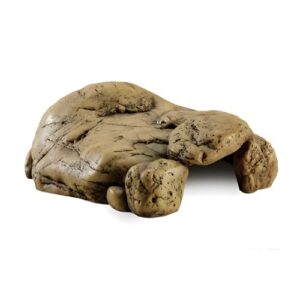
The Exo Terra Reptile Den takes a different approach — it’s a two-piece magnetic tunnel hide that clips right to your glass enclosure wall. One half sits inside, the other snaps on from outside.
Want to check on your ball python without lifting the lid? Just pull the outer piece off. That’s genuinely useful.
The insulated tunnel also runs cooler than the surrounding air, and you can tuck damp moss inside to create a simple humidity hide for cleaner sheds.
| Best For | Reptile and amphibian owners who want a natural-looking hide that blends seamlessly into any terrarium setup, whether they’re keeping ball pythons, corn snakes, bearded dragons, or giant African land snails. |
|---|---|
| Brand | Exo Terra |
| Primary Use | Hide/Shelter |
| Material | Plastic |
| Reptile Safe | Yes |
| Ease of Use | Easy |
| Weight | 1.17 kg |
| Additional Features |
|
- Looks natural and fits right into any terrarium without sticking out like a sore thumb
- Super stable, so your pet won’t tip it over and stress out
- Works for reptiles and amphibians at any life stage, so you won’t need to replace it as your pet grows
- Packaging isn’t always great, and some arrive damaged
- Sharp spots inside are a real possibility — worth running your hand around before you put your pet in
- May have paint chips or flakes, so a good rinse and scrub before use is a must
Budget-Friendly Heating and Lighting Solutions
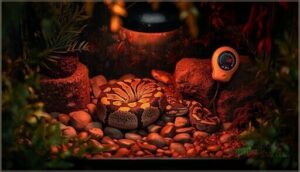
Keeping your ball python warm doesn’t have to drain your wallet. The right heat and lighting setup comes down to a few affordable pieces that actually do the job well.
Here’s what’s worth your money.
Affordable Heat Mats and Ceramic Heaters
Heating your ball python’s enclosure doesn’t have to drain your wallet. A basic heat mat runs under $25 and, paired with thermostat controls, creates reliable temperature gradients without the guesswork.
Ceramic heaters offer another solid option for larger setups.
| Heater Type | Estimated Cost |
|---|---|
| Heat Mat (small) | Under $25 |
| Ceramic Heater (50W) | ~$29 |
| On/Off Thermostat | $20–$40 |
| Combo Bundle | $50–$70 |
Cost-Effective Thermometers and Hygrometers
Accurate temperature and humidity control doesn’t require expensive equipment. A digital thermometer hygrometer combo usually costs between $10 and $20 — and accuracy matters more than price tags here.
- Digital thermometers track temperature gradients within ±2°F
- Hygrometers monitor humidity control between 20–99%
- Sensor placement mid-enclosure gives the truest readings
- Two units cover both warm and cool sides
Budget reptile care wins with smart monitoring.
Energy-Saving Lighting Options
LED Lighting runs on just 5–20 watts and lasts up to 50,000 hours — that’s years of use before a replacement. Pair it with a Digital Timer for automatic Temperature Control and a Dimming Thermostat to cut waste further.
UVB Savings stack up fast when you skip inefficient bulbs.
| Option | Avg. Cost Benefit |
|---|---|
| LED + Timer Controls | Lower monthly bill |
| Ceramic Heaters | Lasts longer, fewer replacements |
Inexpensive Substrate Options for Ball Pythons
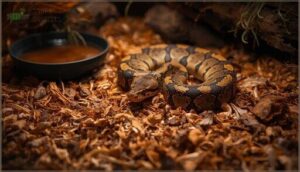
Substrate is one of the easiest places to save money without cutting corners on your snake’s comfort.
A few solid options work well for ball pythons and won’t drain your wallet. Here’s what’s worth your attention.
Coconut Fiber Blocks and Expanding Substrates
Coconut fiber blocks are one of the smartest buys in reptile bedding. A single compressed brick — usually $6 to $12 — expands up to 9 liters once hydrated, making substrate expansion genuinely budget-friendly for your reptile enclosure setup.
- Helps humidity control between 50–80%
- Encourages natural burrowing behavior
- Eco friendly options made from renewable coconut husks
- Works well in bioactive substrate builds
Coco fiber benefits your ball python care and maintenance long-term.
Paper Towels and Newspaper as Budget Choices
Not every ball python keeper needs loose bedding from day one. Paper towels and newspaper are legitimate budget substrates used by experienced keepers worldwide. A roll costs under three dollars and lines a tub a dozen times.
They’re not ideal for humidity control or snake enrichment, but they shine in quarantine setups — keeping reptile hygiene simple while you monitor your ball python’s health closely.
Tips for Maintaining Clean Substrate Affordably
Good substrate habits save money faster than any sale will. Spot-clean waste the same day it appears — this single step in waste management and odor reduction keeps your substrate usable for two to four months.
Spot-cleaning waste daily keeps substrate fresh for months, saving more than any sale ever will
Pair that with solid humidity control around 50 to 60 percent, and mold rarely becomes an issue. A bioactive substrate with springtails and isopods takes substrate depth and cleaning schedules even further by breaking down waste naturally.
Saving on Feeding and Maintenance Costs
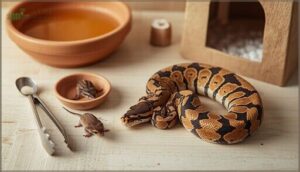
Feeding and keeping your ball python clean doesn’t have to drain your wallet.
A few smart habits can cut your ongoing costs substantially without cutting corners on care.
Here’s where to focus your budget.
Buying Frozen Rodents in Bulk
Bulk ordering frozen rats is one of the smartest moves you can make for long-term reptile care. Buying in packs of 25 can drop your per-feeder cost to about $2 — versus $3 or more bought singly.
Nail your rodent sizing first, then stock up. Just store bags sealed and rotate older feeders forward. Shipping costs often drop free above $99 with many suppliers.
Affordable Water Dishes and Feeding Tongs
Two small purchases make a big difference in your ball python’s daily routine: a solid water bowl and a reliable pair of feeding tongs. For water bowl safety and snake hydration, stainless steel or glazed ceramic dishes under $10 work better than plastic — they won’t scratch or trap bacteria.
For reptile feeding, rubber-tipped feeding tongs around $10 keep your hands clear and protect your ball python’s teeth during feeding.
Routine Cleaning With Budget Supplies
Keeping your ball python’s enclosure clean doesn’t require expensive products. A diluted vinegar mix or a few drops of unscented dish soap takes care of most daily sanitizing jobs and costs almost nothing.
For safe scrubbers, old toothbrushes and budget kitchen sponges reach every corner of reptile enclosures without scratching surfaces. Spot clean daily, deep clean monthly — that’s budget cleaning done right.
Tips for Reducing Overall Ball Python Expenses
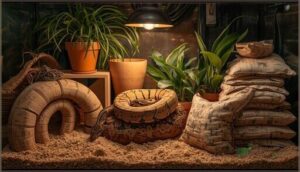
Keeping a ball python doesn’t have to drain your wallet if you know where to cut costs smartly. A few practical habits can make a real difference over time — from weekend DIY projects to knowing when to shop local versus online.
Here are some of the best ways to keep your expenses down without shortchanging your snake.
DIY Enrichment and Hides
You don’t need expensive enclosure supplies to keep your ball python comfortable. Some of the best DIY hide ideas come from your recycling bin. Reused plastic tubs with a side entrance hole make excellent homemade hides — just sand the edges smooth.
PVC pipe sections work perfectly as snake tunnels inside reptile enclosures, encouraging natural exploration and adding practical reptile enrichment without touching your budget.
Sourcing Supplies Locally and Online
Smart sourcing cuts your costs fast. Here are three reliable ways to find affordable reptile supply products:
- Local Pet Stores — Chain and independent shops run loyalty programs and weekly sales worth stacking.
- Online Retailers — Sites like ReptileSupply.com offer competitive prices on enclosure supplies and bioactive kits.
- Community Markets — Reptile forums and Facebook Marketplace surface used gear at steep discounts.
Preventing Costly Health Issues With Proper Care
Vet bills sneak up fast — but most are preventable. Solid reptile husbandry starts with daily habits, not expensive gadgets. Track these basics consistently and your ball python stays healthy without surprise costs.
| Care Area | Target Range | Why It Matters |
|---|---|---|
| Humidity Control | 50–60% daily | Prevents respiratory infection |
| Temperature Management | 88–92°F warm side | Aids snake nutrition and digestion |
| Health Monitoring | Weekly weigh-ins | Catches early reptile health changes |
Frequently Asked Questions (FAQs)
What supplies do I need for a ball python?
Setting up a proper ball python habitat means covering the basics: python enclosures, a heat mat, basking lamp, thermometer, hygrometer, hides, water dish, substrate, and frozen feeders for snake feeding and reptile health.
What all do I need for a ball python?
For a ball python, you’ll need a secure enclosure, proper heating, a water dish, hides, substrate, and a thermometer.
Good reptile care starts with having the right setup before your snake comes home.
Is a 40 gallon tank big enough for a ball python?
A 40 gallon tank can work short-term, but most adult ball pythons need at least a 4x2x2 foot enclosure. Plan for enclosure upgrades as your snake grows.
What is the average price for a ball python?
For most pet-focused buyers, expect to spend around $100 to $250 for a healthy ball python.
Price factors like genetics impact, morph rarity, and breeder costs push that number higher or lower depending on market trends.
Is a 50 gallon tank good for a ball python?
A 50 gallon tank is a solid scale up for most adult ball pythons. It offers enough floor space, provides a proper temperature gradient, and allows smart snake enclosure design — if you manage humidity control methods carefully.
How much does ball python food cost monthly?
Monthly feeding for a ball python costs surprisingly little. Most owners spend just 4 to 15 dollars per month on prey items, depending on the snake’s age and size.
What are the cheapest heating options available?
Heat mats are your cheapest starting point, usually running 10 to 20 dollars.
Halogen bulbs cost just a few dollars each. Ceramic emitters and heat tapes offer reliable warmth without breaking your budget.
Can durable DIY enclosures reduce costs significantly?
Yes, DIY enclosure materials can slash costs dramatically. A custom build using PVC or plastic tubs often runs 20 to 40 dollars versus 300-plus for commercial reptile enclosures — real savings for any ball python keeper.
Are secondhand reptile accessories safe to use?
Secondhand reptile accessories are like thrift store finds — they can be great deals or hidden liabilities.
With proper sanitization methods and used item inspection, many items are safe for your ball python.
What’s the average vet bill for ball pythons?
A routine ball python vet visit usually runs $80 to $150. Diagnostic costs can push that higher. Budgeting $200 annually for preventive care and keeping an emergency fund helps avoid financial stress.
Conclusion
Even the ancient Romans knew that smart spending outlasts reckless splurging—and that wisdom holds in the reptile hobby just as well.
Stocking up on affordable ball python supplies doesn’t mean settling for less. It means spending where it counts: stable heat, clean substrate, and secure hides. Your snake won’t know the price tag, but it will thrive because you made thoughtful choices.
Budget-conscious care, done right, is simply good care.