This site is supported by our readers. We may earn a commission, at no cost to you, if you purchase through links.
Most boa bites happen before the keeper even realizes something went wrong. One moment you’re reaching into the enclosure, the next you’ve got teeth wrapped around your hand, wondering what you missed. The bite itself isn’t the problem. The missed signals are.
Boas don’t strike randomly. They bite when they feel threatened, mistake your hand for food, or haven’t been given the right conditions to stay calm. Boa constrictor bite prevention starts with understanding what drives the behavior, not reacting after the fact.
Knowing your snake’s body language, handling habits, and enclosure setup changes everything.
Table Of Contents
- Key Takeaways
- Why Boa Constrictors Bite
- Recognize Warning Signs Before Handling
- Handle Your Boa Without Triggering Bites
- Prevent Feeding and Shedding Bites
- Reduce Bite Risk With Better Husbandry
- Frequently Asked Questions (FAQs)
- Do boa constrictors bite?
- What is the cure for "no-see-um" bug bites?
- Is it safe to handle a boa constrictor?
- What to do if a boa bites you?
- How do you keep a boa constrictor away from a snake?
- What should I feed my boa constrictor?
- How to stop snakes from biting you?
- Why did my boa constrictor bite me?
- Is it safe to hold a boa constrictor?
- How to tell if a boa is about to strike?
- Conclusion
Key Takeaways
- Boas almost always warn you before they bite — hissing, tail vibration, an S-shaped neck, or rapid tongue flicking are your cues to back off immediately.
- Most bites happen because of food scent on your hands, so washing thoroughly with unscented soap before every handling session is one of the simplest things you can do.
- Your boa’s enclosure does more for its behavior than handling ever will — stable temperatures (88–92°F basking, 78–82°F cool side), proper humidity, and secure hides keep chronic stress from building up.
- Two windows carry the highest bite risk — the 24–48 hours after a meal and the entire shedding cycle — so pause handling during both and let your boa settle before reaching in.
Why Boa Constrictors Bite
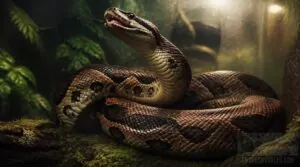
Boa constrictors don’t bite out of aggression — they bite because something has made them feel unsafe or confused. Understanding the "why" behind a bite is the first step toward preventing one. Here are the main reasons your boa might strike.
Recognizing these triggers early — and knowing how to respond — is exactly what boa constrictor bite prevention and behavior breaks down in practical, keeper-friendly terms.
Boa constrictors don’t bite out of aggression — they bite because they feel unsafe
Defensive Versus Feeding Bites
Although they look quite similar, defensive and feeding bites differ in cause and behavior.
- Defensive bites are quick strikes that release fast
- Feeding bites linger as the snake tests its target
- Prey scents on your hands can trigger a feeding response
- Proper handling lowers defensive behavior
- Stress reduction helps prevent both types
Research shows that snakes exhibit distinct post-feeding behavioral shifts, including reduced activity and altered refuge selection, which can inform safer handling timing.
Knowing the difference changes how you respond safely.
Stress, Pain, and Illness
A sick or stressed boa isn’t being aggressive on purpose. Pain and illness push snakes toward heightened defensive behavior because they can’t communicate discomfort. Watch for unusual hiding, appetite loss, or increased tension during handling.
If you suspect your boa is in pain, consulting a guide on safe pain relief options for injured snakes can help you respond appropriately without accidentally worsening their stress.
These are stress cues, not personality flaws. A boa in pain bites to protect itself. Sudden behavior shifts warrant a vet check before handling again.
Food Scents and Confusion
Boa constrictors hunt almost entirely by scent. If your hands carry prey scent from a recent feeding, your boa’s feeding response activates immediately. It simply doesn’t know you’re not food.
Food scents linger on enclosures and skin longer than you’d expect. Always wash thoroughly before handling, and use feeding tongs during meals. Skipping that one step builds stress before biting.
Age and Individual Temperament
Age shapes how your boa controls stress. Juvenile boa behavior runs hotter. Younger snakes escalate quickly and bite with less warning. Older constrictors build adult boa predictability over time.
Temperament variation matters too. Your handling experience level and calm approach affect how reactive your boa becomes. A quick snake temperament assessment before each session reveals whether today’s handling is wise.
Recognize Warning Signs Before Handling
Your boa won’t bite without warning — it almost always tells you first. Learning to read those signals takes a little practice, but once you know what to look for, you can sidestep most bites before they happen. Here are the key warning signs to watch for before you ever reach into the enclosure.
Hissing and Tail Vibration
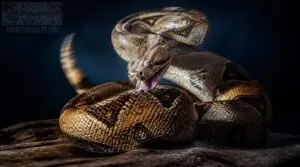
Your boa is talking to you. When it hisses or shakes its tail, that’s not random behavior. It’s a clear warning sign.
Learning how to properly support your boa’s full body weight while handling can make a real difference in reducing stress signals like hissing and tail shaking.
- A hiss forces air through the glottis, often loud enough to hear from across the room
- Tail vibration signals "back off now"
- Both together show a full defensive posture
Pause handling immediately when you notice this body language.
S-Shaped Strike Posture
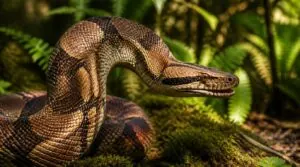
The S-shaped strike posture is one of the clearest warning signs you’ll see. Your boa pulls its head back and arches into a tight S curve, loading the neck for a rapid defensive strike. These snake body language cues mean one thing: back off now.
A boa in full defensive posture can reach peak velocity in under a second.
Flattened Head and Tight Coils
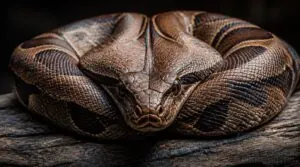
When a boa flattens its head, the neck widens and drops level with the body, creating a triangular silhouette that’s impossible to miss. That shape is a direct warning sign: strike is imminent.
Tight coils strengthen the threat. The body compresses into a stable launch platform. Approach from the side at midbody level, never over the head.
Rapid Tongue Flicking
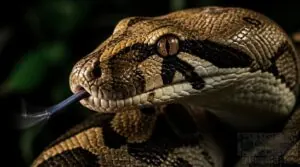
Think of it like a radar spinning faster when something’s wrong. Under normal conditions, a curious boa constrictor produces slow, relaxed flicks.
Rapid, sustained tongue flicking is a clear reptile stress indicator you shouldn’t ignore. Your boa is actively sampling the air at high speed, processing threats. Step back, give it a few minutes, then reassess before you reach in.
Cloudy Eyes Before Shedding
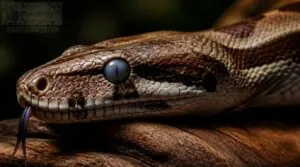
That blue-gray haze covering your boa’s eyes isn’t alarming. Cloudy eyes before shedding are a normal part of the shedding cycle, but they signal you to pause proper handling until it clears.
Vision dims during this window, and your boa relies more heavily on touch and scent to navigate. Incomplete shed signs clear within days, so gentle handling can wait.
Handle Your Boa Without Triggering Bites
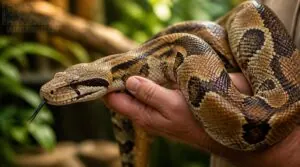
Good handling habits make a bigger difference than most people realize. Once you understand what your boa needs from you in those moments, the risk of a bite drops a lot. Here are five practical steps that keep both you and your snake comfortable during every interaction.
Wash Away Food Scents
Your hands carry prey scent longer than you’d think. Even after feeding routines, traces linger on your skin. Wash hands thoroughly with unscented soap before every handling session.
- Scrub for at least 20 seconds
- Skip lotions that mimic food smells
- Rewash after touching prey
Scent transfer is one of the most common bite triggers. Clean hands make the difference.
Approach Calmly From The Side
Once your hands are clean, your body language takes over completely. Boas read movement first.
Approach calmly from the side, never looming directly over the head. Move at about one to two feet per second, keeping your shoulders relaxed.
Pause if your boa tightens its coils or flashes any warning signs. Gentle handling starts with how you close the distance.
Support The Entire Body
Once you’ve closed the distance, support body weight immediately. Proper handling starts at first contact.
- Place one hand just behind the head
- Position the other hand under the midsection
- For boas over 6 feet, use both forearms
- Let them drape naturally and adjust as they move
Gentle handling means no dangling sections. Boas feel secure when every part is held.
Keep Handling Sessions Brief
Good body support builds trust. Handling time matters just as much.
| Type | Length | Frequency |
|---|---|---|
| Juvenile | 5–10 min | Every 2–3 days |
| Adult | 10–15 min | Daily |
| Defensive | Under 10 min | Twice weekly |
Regular handling stays effective only when you keep it short. Gentle handling under 15 minutes, with avoiding provocation in mind, makes every safe interaction something your boa learns to expect.
Stop When Stress Escalates
Even short sessions can turn tense. If your boa begins rapid tongue flicking or hissing, pause immediately. A tail shake or tight coil means stress is rising fast.
Set the snake down slowly and step back. Give it at least five minutes of quiet before trying again. Return it to its hide if the warning signs don’t ease.
Prevent Feeding and Shedding Bites
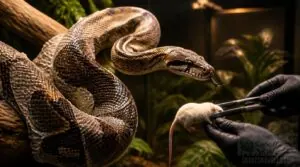
Two situations catch even experienced keepers off guard: feeding time and the shedding cycle. Both create temporary windows when your boa is more likely to strike — not out of aggression, but out of instinct or discomfort. A few straightforward habits can keep those moments safe for both of you.
Offer Prey With Tongs
Feeding time is the riskiest moment for your boa. Tongs keep fingers away from the strike zone and deliver proper feeding stimulation. Proper handling starts here.
Serrated jaws and a non-slip silicone sleeve let you hold frozen-thawed rodents securely, which is why many keepers choose these snake feeding tongs for frozen prey.
- Hold prey at the tip and move it slowly and steadily
- Sanitize tongs before and after every session
- Withdraw quickly once your boa strikes
These basic snake handling techniques prevent most feeding bites.
Choose Properly Sized Prey
Sizing up prey wrong sets off a chain of problems at feeding time. Prey that’s too large triggers stress indicators like tight coiling and restless pacing, making proper handling much riskier.
For proper prey size selection, match prey width to your boa’s widest body point. Weigh prey before each session. Consistent sizing helps enclosure safety and keeps feeding time predictable.
Stocking up on frozen feeder mice and rats in graduated sizes makes it easy to match prey to your boa’s changing girth over time.
Follow Age-Appropriate Feeding Schedules
When your boa is young, feeding time frequency matters more than you’d expect. Hatchlings eat every 10-12 days, juveniles every 14 days, and adults need a meal only every 4-6 weeks. Each stage has its own pace.
Overfeeding spikes stress and bite risk at feeding time. Age-appropriate schedules keep your snake’s behavior predictable and make gentle snake interaction much safer.
Wait Before Post-Meal Handling
After a meal, your boa needs real rest. Respect the postfeeding wait time of 24 to 48 hours before any contact.
Watch for these digestion signals:
- Slower movement means digestion is well underway
- A stable temperature gradient speeds up processing
- Humidity regulation keeps your snake comfortable
A secure habitat prevents stress bites. Resume gentle snake interaction only after digestion completes.
Pause Handling During Shedding
Shedding puts your boa on edge. During the snake shedding period, even calm snakes show reptile stress indicators and defensive snake behavior. Pause handling during shedding.
| Molt Stage | Recommended Action | Key Reason |
|---|---|---|
| Early loosening | Pause handling | Skin is fragile |
| Active shedding | Mist enclosure | Loosens old skin |
| Full shed complete | Resume contact | Calmer temperament |
After the full shed, resume gentle contact.
Reduce Bite Risk With Better Husbandry
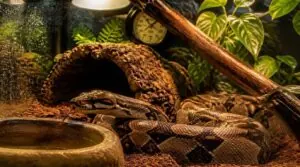
Your boa’s behavior doesn’t happen in a vacuum — the enclosure it lives in shapes its mood every single day. A stressed snake is far more likely to bite, and most of that stress comes down to how its environment is set up. Here’s what to get right.
Maintain Secure, Separate Housing
Think of the enclosure as your boa’s entire world. Adequate enclosure space reduces chronic stress, and stressed snakes bite far more. Keep each boa in its own enclosure. Check secure latches and ventilation to prevent escapes.
Add multiple hide boxes for the habitat enrichment benefits your snake will actually use. A solid proper enclosure setup is where bite prevention begins.
Control Heat and Humidity
Stable temperature control and humidity levels are the next layer of a solid proper enclosure setup. When either slips, your boa gets stressed, and stressed snakes bite.
Keep these four conditions dialed in:
- Basking zone: 88 to 92°F
- Cool side: 78 to 82°F
- Humidity: 50 to 70 percent
- Night drop: under 7 degrees
Check both zones twice daily.
Provide Hides and Climbing Enrichment
Once temperature gradients are set, hiding spots and climbing structures complete the picture. A boa without a secure retreat stays edgy, and that leads to bites. Natural cork branches or driftwood pieces — the kind you’d find browsing snake climbing branches reptile decor — give your boa something to grip and explore, reducing that restless energy before it becomes aggression.
| Feature | Placement | Benefit |
|---|---|---|
| Woven reed hide | Ground level, near ventilation | Cuts daytime stress |
| Climbing shelf | Mid-height | Encourages exploration |
| Rope ladder | Upper zone | Builds confidence |
Rotate habitat enrichment weekly. Your boa stays curious, not tense.
Plan Safe Release and First Aid
Even the calmest boas bite occasionally. Know your first aid procedures before it ever happens.
- Rinse the bite site thoroughly for proper wound cleaning
- Apply antibiotic ointment to prevent bacterial infection
- Cover securely with sterile gauze
- Confirm your tetanus booster is up to date
For safe release, lower your hands slowly to a flat surface and avoid a second strike.
Frequently Asked Questions (FAQs)
Do boa constrictors bite?
Yes, boa constrictors bite. They’re not venomous, but their sharp, backward-facing teeth cause real punctures. Most bites are a defensive reaction to stress or mishandling, not aggression. Respect their signals, and bites stay rare.
The boa constrictor bite force data reveals just how much pressure those backward-facing teeth can deliver — often more than first-time owners anticipate.
What is the cure for "no-see-um" bug bites?
Wash the bite with soap and water, then apply a cold compress for 10 minutes. Use hydrocortisone or antihistamine cream to calm the itch. Don’t scratch — it breaks skin and invites infection.
Is it safe to handle a boa constrictor?
A snake that can constrict you is surprisingly safe to handle when you’re prepared. Read its body language, avoid sudden movements, and support its full weight. Regular handling builds trust, making bites genuinely rare.
What to do if a boa bites you?
If a boa bites you, stay calm and don’t yank your hand back. Clean the puncture wounds right away with soap and warm water, apply antibiotic ointment, then watch closely for redness. Boas carry Salmonella.
How do you keep a boa constrictor away from a snake?
Separate enclosures with secure lids are non-negotiable. Never house different species together — territorial stress quickly triggers hissing, defensive striking, and serious injury. Maintain proper temperatures in each setup to keep both animals calm and comfortable.
What should I feed my boa constrictor?
Mealtime for your boa means appropriately sized rodents: mice for younger snakes and rats for adults. Feed juveniles weekly; adults every one to two weeks. Always thaw frozen prey to body temperature before offering.
How to stop snakes from biting you?
How to stop snakes from biting you? Move slowly and support the full body with both hands. Watch for hissing or tail vibration — those are early warnings. Skip handling during shedding or right after meals.
Why did my boa constrictor bite me?
Think of it like startling a sleeping guard dog. Your boa bit because it felt threatened or confused, not malicious. Sudden movement, food scent on your hands, or stress during shedding can trigger defensive strikes.
Is it safe to hold a boa constrictor?
Is it safe to hold a boa constrictor? Absolutely, when you support their full body, move calmly, and watch their body language for defensive warning signs. Respect their space, and consistent handling builds real trust.
How to tell if a boa is about to strike?
A boa rarely strikes without warning. Watch for hissing and tail thrashing, a head rising into an S-shape, or tight, rigid coils. When the body flattens and muscles tighten, that’s your final cue to back off.
Once you can read those warning signs, choosing the right snake hook for safe home handling helps you guide a boa calmly instead of provoking it.
Conclusion
The safest boas are often the ones people once feared most. That’s the paradox at the center of boa constrictor bite prevention: the more you truly understand your snake, the less it ever needs to bite.
Read the warning signs before every single session. Adjust your approach when tension rises. Give it the right environment, and fear stops being the default reaction.
Your boa isn’t trying to be difficult. It’s just asking to be understood.