This site is supported by our readers. We may earn a commission, at no cost to you, if you purchase through links.
A boa constrictor’s teeth grip, not graze. That first contact registers somewhere between a staple gun and a firm handshake from someone wearing rings. The surprise usually outpaces the pain.
Boa constrictor bite force ranges from around 50 N in smaller adults to nearly 400 N in large females, which puts it in striking overlap with the average human jaw. That comparison catches most people off guard. These snakes aren’t vipers, but they’re not harmless either.
Understanding what drives that force, how researchers measure it, and what to do when teeth meet skin changes how you handle every interaction with one.
Table Of Contents
- Key Takeaways
- How Strong is a Boa Constrictor’s Bite?
- How Boa Constrictor Bite Force is Measured
- Boa Bite Force Vs. Constriction Pressure
- Boa Constrictor Bite Force Compared With Humans and Other Snakes
- Boa Constrictor Bites: Pain, First Aid, and Prevention
- Frequently Asked Questions (FAQs)
- Which animal has 20,000 bite force?
- Can a human fight off a boa constrictor?
- Which is more aggressive, python or boa?
- What snake has the hardest bite force?
- Do boa constrictors bite?
- Do boa constrictors hunt humans?
- How strong is a Boa Constrictor?
- Can a boa constrictor eat a human?
- How much pressure does a boa constrictor exert?
- Are Boa constrictor bites dangerous?
- Conclusion
Key Takeaways
- Boa constrictor bite force ranges from 50 N in smaller adults to nearly 400 N in large females, putting it surprisingly close to the average human bite — far more powerful than most owners expect.
- Bite strength varies significantly based on the snake’s body temperature, size, sex, and hunger level, meaning a warm, large, hungry female is your highest-risk scenario.
- The bite is just the opening move — constriction is the real threat, delivering sustained pressure that cuts off blood flow in ways no force sensor can fully capture mid-squeeze.
- Boa bites carry no venom but pose a real infection risk, so immediate wound cleaning, antiseptic application, and medical follow-up for deep lacerations aren’t optional — they’re essential.
How Strong is a Boa Constrictor’s Bite?

The numbers behind a boa’s bite are more surprising than you’d expect. Estimates range widely depending on how and where measurements are taken, and a few key factors explain why no single figure tells the whole story. Here’s what actually shapes a boa’s biting power.
Reading your boa’s body language before and during handling is the first step, and recognizing pre-bite warning signals in boa constrictors can spare you from the surprising force those measurements actually describe.
Reported Bite Force Ranges
Although constriction steals the headlines, boa constrictor bite force still deserves your attention. Documented ranges tell the story:
- Small adults: around 50 N, near 60 psi
- Mid-sized boas: 150 to 250 N in controlled tests
- Large specimens: up to 400 N
- Peak recorded bite force: around 165 psi
- Comparison: human bite pressure consistently runs higher
Body size shapes every number.
Why PSI Estimates Vary
Those ranges aren’t inconsistent by accident. PSI bite force estimates shift based on how researchers set up the test. Pressure sensors inside a bite surface read differently than tooth-mounted transducers, and neither is universally standardized.
Paired with consistent methodology, recognizing the behavioral cues covered in this guide to safe boa handling and bite prevention helps researchers distinguish stress-induced bites from baseline feeding responses, adding another layer of variability to force measurements.
Contact area calculations matter too: a wider jaw gape spreads force across more surface, pulling PSI down even when raw muscle output stays the same.
Factors Affecting Bite Strength
Body temperature shapes everything. At 85-95°F, muscle metabolism peaks and bite force hits its ceiling. Drop that temp and you get a sluggish, weaker strike. Keeping your enclosure dialed in with a reptile thermostat temperature controller takes the guesswork out of hitting that ideal 85-95°F range consistently.
Size and sex factor in too. Larger adult females carry more muscle mass and produce greater force than males or juveniles. Hunger amplifies it: a feeding-motivated boa bites considerably harder than a satiated one. Understanding boa constrictor habitat requirements helps explain why temperature control is so critical to a boa’s physical performance and strike capability.
How Boa Constrictor Bite Force is Measured
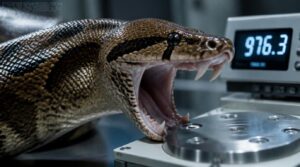
Getting to those numbers requires precision. Researchers use force sensors and pressure plates to capture exactly how much load a boa’s jaws deliver at peak strike. A calibrated load cell sits between the snake and the target surface, logging force in real time, separate from any constriction force readings.
Here’s what shapes a reliable measurement:
- Snake size and muscle mass directly influence peak bite readings
- Body temperature affects muscle performance at the moment of strike
- Jaw gape angle changes how force transmits to the sensor
- Sensor placement determines whether you’re catching true peak pressure
- Prior handling stress can suppress or spike a snake’s response
That’s why single-animal data rarely holds up as a species standard. Without consistent protocols across labs, you’re comparing apples to oranges.
Standardized field and lab protocols matter just as much in medical contexts—knowing exactly how to respond to a venomous snake bite can be the difference between a consistent, life-saving outcome and a preventable tragedy.
Boa Bite Force Vs. Constriction Pressure
The bite is the opening act. Boa constrictor bite force delivers a sharp, instantaneous peak load, but the real power starts the moment those coils wrap tight. That sustained constriction pressure is what actually subdues prey.
| Bite Force | Constriction Pressure |
|---|---|
| Instantaneous peak load | Sustained, minutes-long squeeze |
| Jaw adductors, puncture and grip | Full-body coiling, vessel occlusion |
| Measurable with force sensors and pressure plates | Resists direct, standardized measurement |
Researchers can capture bite force fairly well using force sensors and pressure plates, but constriction pressure resists direct quantification entirely. You can’t slip a sensor between a boa and its prey mid-kill. That table isn’t just data. It’s the difference between a weapon that startles and one that silences. What the bite initiates, the coils finish.
The bite startles; the coils finish
Boa Constrictor Bite Force Compared With Humans and Other Snakes

While boa constrictor bite force sounds intimidating, the numbers might surprise you. Boas usually clock in between 50 and 300 psi, putting them surprisingly close to average human bite pressure of 150 to 200 psi. That’s not the gap most people expect.
- Corn snakes and milk snakes usually stay under 100 psi, well beneath a boa’s range.
- Human bite pressure can peak near 200 to 320 psi with serious effort.
- Boa constrictor bite force sits mid-pack, roughly matching a determined human bite.
- True vipers frequently exceed 400 to 600 psi, making boas look moderate by comparison.
Bite severity isn’t only about raw force. Pain level depends on strike speed, bite location, and how many teeth connect.
Boa Constrictor Bites: Pain, First Aid, and Prevention
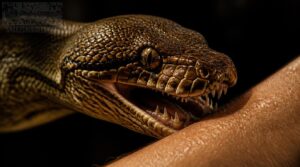
Getting bitten by a boa is a moment that separates the prepared from the panicked. Knowing what to expect and how to respond puts you firmly in the first group. Here’s what a bite actually feels like, how to handle it, and how to keep it from happening again.
Having a snake bite first aid kit within reach means you spend less time scrambling and more time responding calmly when it counts.
What a Bite Feels Like
Picture a sudden, heavy crushing pinch, and you’ll understand a boa bite instantly. The needlelike pain radiates out fast, sharper than most expect.
Bite sensation intensity varies by location, but the throbbing ache that follows is nearly universal. Your pain level stays manageable, so pain management is rarely complex, though swelling and mild bleeding confirm those recurved teeth went deep.
Immediate First Aid
Act fast. A boa’s bite isn’t venomous, but infection is real. Here’s your five-step protocol:
- Perform wound cleaning under running water immediately.
- Apply antiseptic solution to reduce surface bacteria.
- Cover with a sterile gauze pad.
- Wrap loosely using a pressure bandage, never tight.
- Use elevation therapy to limit swelling fast.
Remove rings first, stay calm, and get to a doctor.
Since swelling can make rings nearly impossible to remove by hand, keep an emergency ring cutter tool in your first aid kit so you’re never fighting jewelry over an injured finger.
Preventing Boa Bites
Prevention is always about mastery, not luck.
| Scenario | Safe Handling Tip | Why It Works |
|---|---|---|
| Approaching | Come from the side, move slowly | Avoids startling the snake |
| Lifting | Wear thick gloves, support the body | Reduces defensive response |
| Housing | Lock the enclosure properly | Eliminates escape-driven stress |
Gentle handling and proper housing are your real foundation. Master your snake handling safety routine, and bite prevention becomes pure instinct.
Frequently Asked Questions (FAQs)
Which animal has 20,000 bite force?
That number haunts reptile forums online. The truth? No verified animal achieves 20,000 psi. It’s biomechanically impossible. That figure lacks credible scientific support, so don’t let sensational claims mislead your understanding of real bite force.
Can a human fight off a boa constrictor?
Yes, you can. Gain distance fast, disrupt the coils, and slide the snake downward. The bite is brief; constriction is the real threat. Act immediately, not after it tightens.
Which is more aggressive, python or boa?
Neither wins by default. Individual temperament and your handling technique shape defensive strikes far more than species labels ever do. Pythons generally bite with greater force, but a stressed boa can react just as fast.
What snake has the hardest bite force?
Saltwater crocodiles dominate bite force records overall, but among snakes, large pythons like the reticulated python generate the highest measured bite forces.
Do boa constrictors bite?
Boa constrictors absolutely bite, and they do it well. Their sharp, recurved teeth grip before constriction kicks in. Most bites are purely defensive, triggered by stress or improper handling. No venom, but expect real pain.
Do boa constrictors hunt humans?
You’re too big, too alert, and too unpredictable to ever qualify as prey size for a boa. They actively pursue only small vertebrates. Any bite you take is purely a defensive bite, never deliberate predation.
How strong is a Boa Constrictor?
Strong enough to genuinely surprise most people. Adult boas can deliver 60 to 300+ psi of bite force, with larger individuals pushing even higher. Those muscular coils add a whole different, crushing layer of power.
Can a boa constrictor eat a human?
Nature doesn’t waste energy on the impossible. You’re basically safe: while technically a boa could attempt it, prey size and jaw expansion limits make consuming a healthy full-grown adult human mechanically improbable and nearly impossible.
How much pressure does a boa constrictor exert?
Those muscular coils generate 5 to 60 psi of constriction force, more than enough to cut off a prey animal’s blood flow. The pressure isn’t constant; it builds dynamically, responding to prey size and resistance.
Are Boa constrictor bites dangerous?
Even small wounds can fester." Boa bites are genuinely dangerous. Sharp, curved teeth cause real pain and infection risk. Clean the wound quickly, seek care for deep lacerations, and handle these snakes with proper restraint.
Conclusion
Think of this knowledge as a new sense. Boa constrictor bite force now lands in your mind with numbers, context, and consequences attached. You know what’s behind those teeth. You know the triggers, the ranges, and the right response when contact happens. That’s not a small thing. Most people walk into boa ownership on instinct alone. You’ve moved past instinct. Handle with that awareness, and every interaction becomes intentional, precise, and safer for you both.