This site is supported by our readers. We may earn a commission, at no cost to you, if you purchase through links.

A ball python’s best defense isn’t a dramatic strike; it’s a disappearing act. When something feels off, most of these snakes tuck in, hide their head, and turn into the neat little coil that gave them their name.
That tells you a lot before you even ask, are ball pythons docile? In most cases, yes, but their calm nature depends on context.
A snake that feels secure, warm, and unbothered often behaves quietly, while one dealing with poor setup, shedding stress, or rough handling can switch from shy to defensive in a heartbeat. The difference usually comes down to reading the snake in front of you.
Table Of Contents
Key Takeaways
- Ball pythons are naturally shy and calm, preferring to hide or curl up rather than strike when stressed.
- Their gentle temperament shines with proper enclosure setup, predictable routines, and gentle handling, making them ideal for beginners.
- Signs of stress like tight coiling, hissing, or sudden agitation mean you should adjust care or handling to keep your snake comfortable.
- Docility in ball pythons depends on genetics, age, environment, and how you handle them—not on emotional bonding or affection.
Ball Python Temperament Basics

Ball pythons have their own unique personalities, shaped by nature and their surroundings. Understanding how they act helps you create a space where your snake feels safe and calm.
For more tips on recognizing stress and making your python’s home inviting, check out this guide to ball python stress signals and handling.
Let’s look at what matters most when setting up their enclosure.
Natural Shy and Calm Disposition
Even in a busy home, you’ll notice your ball python’s tranquil behavior—these snakes have a calm temperament and a strong retreat instinct. They prefer a quiet habitat, spending most of their time hidden, reflecting their solitary nature and low activity levels.
If you keep their routine predictable, their natural disposition shines, and stress signs stay minimal.
Why They Curl Into a Ball
When your ball python curls into a tight ball, it’s not just a quirky habit—it’s a passive defense strategy and a clear behavioral indicator of stress in pet snakes. This behavior also offers defensive advantages of curling by shielding essential organs.
This posture hides their head, conserves heat, and signals that they feel threatened or need rest. You’ll also spot this sleep position in relaxed ball pythons, supporting energy efficiency and predator defense.
Defensive Behavior Vs True Aggression
When your snake curls up, it’s just evaluating threats—not launching an attack. True aggression means rapid lunges or repeated strikes, but most only flick their tail or flatten their head.
Notice these stress signs:
- Head Flattening and Tail Flicking
- Quick, defensive lunges
- Perimeter spacing for threat assessment
- Escalation threshold before biting
- Calm handling techniques prevent aggression
Nocturnal and Solitary Behavior Patterns
After a stressful moment, you’ll notice your pet prefers solitude, sticking to a single hide and rarely sharing space. This solitary reptile behavior means your python thrives with minimal disturbance, respecting its natural nocturnal and solitary habits.
Their nocturnal activity patterns—like nighttime foraging and chemosensory navigation—kick in after dusk. They use a thermal gradient for comfort, showing strong territory fidelity.
Yes, Ball Pythons Are Usually Docile
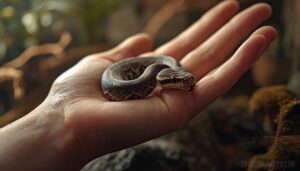
Ball pythons have a well-earned reputation for being gentle and easy to handle. Most people find their calm nature makes them a great choice for anyone new to snakes.
Let’s look at what makes these snakes so reliably docile around people.
Why They Are Considered Gentle Pet Snakes
Looking for a docile pet with a gentle spirit and Low Noise Sensitivity? Ball python temperament and behavior truly set them apart.
If you’re curious about how captive-bred ball pythons compare to wild-caught ones, this guide on beginner snake temperament explains why they’re often calmer and easier to handle.
Non-venomous Nature, Ease of Acclimation, and Long Lifespan make them a favorite for beginners. With Low Maintenance needs and a calm outlook, they rarely display stress signs—especially when you use proper handling and socialization techniques for pythons.
How Docile They Are Around People
Ever wonder how a docile and easygoing species like the ball python reacts to human proximity?
With consistent routine and gentle handling techniques for ball pythons, most will tolerate your presence remarkably well. Socialization early in life and behavioral conditioning in snakes boost their Human Proximity Tolerance, while Caretaker Scent Familiarity helps them recognize you, making handling session length less stressful.
Why They Rarely Bite When Handled Properly
When you use gentle pressure and steady support, ball pythons rarely bite. Their docile temperament thrives on predictable routine and positive reinforcement. Proper handling techniques for ball pythons—like picking them up after feeding timing, and watching for signs of stress—make all the difference.
Here’s what helps:
- Gentle Pressure
- Steady Support
- Predictable Routine
- Feeding Timing
Why “docile” Does Not Mean Affectionate
It’s easy to fall for the Affection Misconception—thinking a docile and relaxed temperament means affection for their owners. Ball python temperament and behavior revolve around Behavioral Tolerance, not emotional bonding.
A ball python’s calm nature shows tolerance, not affection—they don’t bond emotionally like mammals do
Unlike mammals, their Reptile Social Needs are minimal. The Human-Snake Bond is built on routine and comfort, not love. Misconceptions about ball python behavior often fuel the Emotional Attachment Myth.
What Affects Their Docility?
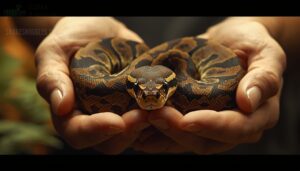
Several factors shape how gentle your ball python can be, from genetics to the way you care for them. It’s not just about their species; each snake has its own quirks and needs. Let’s look at what really influences their temperament.
Genetics and Individual Personality
Did you know ball pythons carry their personality in their genes? Heritable temperament genes and neurochemical personality markers shape how each snake reacts to stress, novelty, and handling. For example, you’ll notice:
- Morph lineage personality differences—some morphs stay calmer.
- Family lineage behavior patterns—gentle parents often have gentle offspring.
- Stress hormone receptors—these influence recovery after a scare.
Captive-bred Vs Wild-caught Temperament
Imagine two ball pythons: one captive-bred, one wild-caught. The captive-bred snake adapts quickly, showing lower Stress Hormone Profiles and shorter Acclimation Speed, while the wild-caught often needs longer Handling Session Length and Quarantine Duration Effects.
Enrichment Preference Differences are clear, too—captive-bred snakes explore more, while wild-caught ones stay wary.
Genetics and handling shape these temperament gaps.
Age Differences in Juveniles and Adults
When you compare juvenile ball pythons to adults, you’ll notice a clear shift. Juvenile Growth Rate is fast, and their Age-Related Metabolism keeps them active, curious, and sometimes jumpy.
As they reach Maturity Milestones and hit Adult Size Limits, Developmental Shifts bring steadier behavior. Handling and socialization techniques for pythons work best as they mature, reducing stress indicators in snakes.
Shedding, Feeding, and Seasonal Behavior Changes
As your ball python matures, shedding cycle timing and feeding frequency shifts become clear signs of seasonal behavioral variations. You’ll notice appetite drops before a shed, then rebounds after.
Seasonal humidity effects play a big role—too dry and molting stress indicators pop up.
Adjust prey size and offer shedding assistance techniques to keep temperament steady and stress indicators in snakes low.
Stress From Poor Enclosure Conditions
When shedding and feeding routines shift, enclosure stress can sneak up fast. For example, poor heating, or a broken temperature gradient, makes your snake restless.
Here’s what to watch for:
- Lighting Issues disrupt sleep cycles
- Noise Disturbance keeps them alert
- Substrate Discomfort causes tense posture
- Space Constraints limit hiding
- Ventilation Problems affect humidity levels
Enclosure enrichment creates a stress-free environment.
Calm Signs Vs Stress Signs
Knowing whether your ball python feels safe or stressed starts with watching their body language. Some signs are easy to spot once you know what to look for.
Here’s what you’ll notice in a calm snake versus one that’s feeling uneasy.
Body Language of a Relaxed Ball Python

Ever noticed how a calm ball python feels like a gentle river—smooth, steady, and unhurried? You’ll see Tail Relaxation, a soft Head Tilt, and Mouth Closed with a slow Tongue Flick.
Their Steady Breathing and loose coils signal docile comfort in a quiet environment. This body language shows stress reduction and true calm nature.
| Calm Sign | What You’ll See |
|---|---|
| Tail Relaxation | Loose, flexible tail |
| Head Tilt | Soft, angled head |
Tight Coiling, Hissing, and S-shaped Posture

When your ball python feels threatened, you’ll notice tight coiling, a sharp hiss, and that classic S-shaped posture.
These stress indicators—driven by Coil Muscle Dynamics and Hiss Acoustic Pattern—signal a defensive posture, not aggression.
Watch for S-Posture Alignment and Coil Frequency Modulation as timing cues.
Here’s how these behaviors look:
| Defensive Sign | What You’ll See | What It Means |
|---|---|---|
| Tight Coil | Muscles tense, head hidden | Preparing to strike |
| Hiss | Loud air expulsion | Warning, not attack |
| S-shaped Posture | Curved neck, anchored tail | Ready for defense |
Common Reasons for Defensive Strikes

If you rush a ball python or startle it with Sudden Movement or Vibration Stimulus, you’re likely to trigger a defensive strike. Prey Scent Confusion, poor Handling Position, or abrupt Lighting Changes also play a role.
Here’s a quick overview:
| Trigger | Typical Result |
|---|---|
| Sudden Movement | Defensive strike |
| Prey Scent Confusion | Mistaken bite attempt |
| Lighting Changes | Heightened stress |
When Irritability May Signal Health Problems

If python’s irritability persists, it’s wise to look for signs of infection, endocrine imbalance, or metabolic problems. For instance, rapid breathing or refusal to eat can point to common health issues in ball pythons.
Here’s a quick guide:
| Indicator | Possible Cause | Action Needed |
|---|---|---|
| Refusal to eat | Infection Indicators | Vet check |
| Rapid breathing | Endocrine Imbalance | Stress reduction |
| Sudden agitation | Medication Side Effects | Health monitoring |
How to Keep Them Gentle

Keeping your ball python gentle starts with the right approach to their care and environment. A few practical steps can make all the difference in how calm and trusting your snake becomes.
Here’s what you’ll want to focus on as you set up their home and routine.
Safe Handling Techniques That Build Trust
Want your ball python to trust you? Start with a Glove-Free Grasp and Full Body Support, keeping the snake steady and secure.
Set up a Calm Transfer Environment—quiet, safe, and escape-proof.
Before handling, do a Pre-Handling Check for stress signals.
Use Gentle Hand Pressure and Regular gentle handling; these handling and socialization techniques for pythons help build a docile pet.
How Often to Handle a Ball Python
How often should you handle your ball python? Aim for a Weekly Cadence of 1–3 stress-free sessions, each starting at just 5–10 minutes.
Always respect Post-Feeding Wait and Shedding Timing—handling frequency drops when your snake is digesting or shedding. Regular gentle handling and recognizing stress signals in reptiles are key Handling and socialization techniques for pythons.
Enclosure Setup That Reduces Fear
Imagine your ball python’s enclosure as its fortress of calm—every detail matters. You can create a stress‑free environment by focusing on:
- Visual Barriers and Quiet Placement to limit overstimulation
- Enclosure Orientation away from foot traffic
- Predictable Access routines for handling
- Substrate Depth for secure hiding spots
A secure enclosure with thoughtful setup helps your snake feel safe and gentle.
Temperature, Humidity, and Secure Hides
Just as a fortress needs climate control, your ball python’s calm depends on thermal gradient management and humidity control. Place secure hides on both warm and cool sides, and add a humidity hide for microclimate management—especially during sheds.
Use temperature monitoring and hygrometers daily. Secure hide design with tight lids and appropriate hiding spots keeps stress low and your snake feeling safe.
When to Avoid Handling Altogether
Even with perfect hides and climate, there are times to skip handling—like during the post-feeding window, the shedding stage, or right after relocation acclimation.
Signs of stress in ball pythons, such as tight coiling or hissing, signal discomfort. Respiratory distress or mite infestation also call for hands-off care.
Adjust handling frequency and techniques for snakes to prioritize stress reduction and recovery.
Frequently Asked Questions (FAQs)
Are ball pythons the most docile snake?
Like a fist opening slowly, ball pythons rank near the top in Comparative docility ranking.
Species temperament comparison and Behavioral research findings suggest Human perception bias aside, their Evolutionary defense mechanisms favor curling, not conflict.
Are ball pythons good pets for beginners?
Yes: Ball python temperament and behavior, beginner-friendly and docile, with community support; yet cost considerations, lifespan commitment, legal restrictions, species availability, and beginner reptile care practices, including stress reduction and health monitoring in reptiles, matter.
Can ball pythons recognize their regular caretaker?
Imagine a snake learning your rhythm, not your face.
Ball pythons recognize you through Scent Cue Recognition and Routine Cue Consistency—your Keeper Scent Signature and regular handling build trust, but bonding with your snake is more about behavioral conditioning than affection.
Are ball pythons safe around small children?
Ball pythons can be docile, but child supervision is critical. Enclosure security and handling safety prevent bites, while hygiene practices matter for health.
Watch for behavioral indicators of stress—defensive vs aggressive behavior—and always be ready with emergency response protocols.
Can ball pythons live near other pets?
Snakes and fur don’t always mix—pet partitioning strategies are key.
Scent barrier implementation and visual barrier placement help prevent stress, while feeding schedule isolation reduces defensive vs aggressive behavior.
Cross-species compatibility depends on ball python temperament and behavioral indicators of stress.
How long do ball pythons live in captivity?
With proper enclosure setup and maintenance, the lifespan of ball pythons in captivity often reaches 20–30 years.
Longevity records show some live past 40, especially with health screening, nutritional balance, veterinary checkups, and careful temperature and humidity requirements.
Conclusion
Imagine yourself gently cradling a calm ball python, its soft scales are a soothing balm for your hands. As you’ve learned, these snakes are usually docile, but their temperament depends on context.
By understanding their needs, recognizing stress signs, and handling them with care, you can build trust and create a harmonious bond.
With patience and attention, you’ll find that ball pythons are docile; it’s more than just a question – it’s a rewarding experience.