This site is supported by our readers. We may earn a commission, at no cost to you, if you purchase through links.
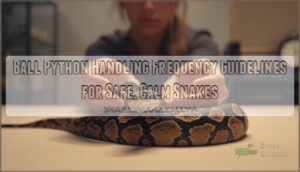
Most ball pythons don’t hate being handled—they hate handled wrong. A snake that tenses up, repeatedly musks, or refuses food after every session isn’t being difficult; it’s telling you something specific about how it’s being approached.
Getting ball python handling frequency guidelines right matters more than most owners realize, because consistency and timing shape how a snake experiences captivity at a fundamental level.
Too little handling produces a permanently skittish animal. Too much wears down even the most tolerant specimen.
What follows gives you a clear, behaviorally grounded framework for building sessions your snake can actually tolerate—and eventually, anticipate without alarm.
Table Of Contents
- Key Takeaways
- How Often to Handle a Ball Python
- Factors Affecting Handling Frequency
- Recognizing Signs of Stress During Handling
- Preparing for Safe Handling Sessions
- Proper Techniques for Picking Up Ball Pythons
- Handling Guidelines for New Ball Pythons
- When to Avoid Handling Your Ball Python
- Maintaining a Healthy Handling Routine
- Frequently Asked Questions (FAQs)
- Conclusion
Key Takeaways
- Handle your ball python gently two to three times a week, adjusting frequency based on stress signs and individual temperament.
- Always skip handling after feeding, during shedding, or if your snake shows illness or defensive behaviors.
- Watch for early stress signals like tight coiling, repeated striking, and hiding, and end sessions early if you notice them.
- Keep handling sessions consistent, short (15–20 minutes), and in a calm environment, especially during evening hours when your snake is naturally active.
How Often to Handle a Ball Python
Getting the handling frequency right makes a real difference in how calm and comfortable your ball python becomes over time. Too little, and they stay skittish; too much, and you’re adding stress instead of building trust.
If your ball python is gravid, tips for gentle handling during breeding can help you avoid unnecessary stress.
Here’s what you need to know about finding that sweet spot.
Recommended Weekly Handling Frequency
Often, your ball python does best with a gentle handling routine of one to three sessions weekly. This handling frequency provides Stress Recovery Timing and shifts with Seasonal Activity Shifts and Temperature Influence.
- Watch stress signs and end early.
- Adjust for Individual Tolerance Levels.
- Reduce sessions after Enclosure Disturbance.
- Note Seasonal Activity Shifts again.
- Use calm handling tips each time.
Can You Handle Ball Pythons Daily?
You might wonder if daily handling fits into Ball Python Care and Handling.
In practice, frequent contact leads to Stress Accumulation, Immune Impact, and Weight Loss Risk.
Handling Frequency matters—too much can cause Behavioral Regression and make stress signals more common. Feeding Timing Conflict also arises.
For stress reduction and desensitization, steady routines work better than daily sessions. Following proper handling techniques helps reduce stress.
Building a Predictable Handling Schedule
Consistency is what makes handling click.
Pick two or three fixed days each week, use the same Consistent Time Slots — ideally evening when your ball python is naturally active — and keep a Fixed Session Length of 15 to 20 minutes.
Standardized Hold Method builds familiarity fast.
Use Routine Logging to track sessions and Stress Signs, so your Handling Routine actually benefits Snake Health over time.
Factors Affecting Handling Frequency

There’s no single answer for how often you should handle your ball python. Different factors shape what’s best for each snake.
Let’s look at what can influence your handling routine.
Age and Life Stage Considerations
ball python’s age changes everything about how you approach handling. Hatchling frequency should stay around once weekly — young snakes stress easily and need time to settle.
Juveniles tolerate more contact but still need adjustment based on their response.
Adults do best with a stable handling routine, not constant contact.
Always reduce handling during pre-molt sensitivity periods, then return to normal post‑shed timing once shedding completes.
Temperament and Stress Tolerance
No two ball pythons are alike. Personality Variability means your snake’s temperament directly shapes its ideal handling frequency.
Watch for these stress signs to guide your routine:
- Tight, rigid coiling — reduce session length
- Repeated striking — space sessions farther apart
- Defensive Triggers like sudden movement — adjust your approach
- Ongoing hiding after return — extend the Recovery Interval
Respect your snake’s individuality.
Impact of Feeding and Shedding Cycles
Nearly every ball python will show Feeding Reduction and Shed‑Induced Stress during the shedding process. Adjust your handling frequency when you see stress signals—weight monitoring and hydration management are essential.
Seasonal shedding means your feeding schedule and snake health can shift month to month. Here’s how cycles affect handling:
| Feeding | Shedding |
|---|---|
| Reduced intake | Increased stress |
| Monitor weight | Manage humidity |
| Adjust sessions | Avoid handling |
| Track health | Watch signals |
Recognizing Signs of Stress During Handling
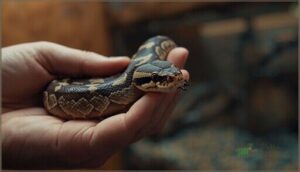
Stress signals in ball pythons can be subtle at first, but they’re important to notice.
If you know what to look for, you can keep handling sessions safe and comfortable. Here’s what you should watch for as you interact with your snake.
Early Warning Behaviors
Your snake’s body language tells you everything — if you know how to read it. Early stress signals are easy to miss, but catching them protects trust. Watch for:
- Head Sideways Search: repeated head tracking toward walls or cover
- Body Tightening: rigid, less fluid posture during handling
- Freeze Motion: sudden stillness followed by jerky repositioning
- Tongue Flick Gaping: rapid flicking paired with mouth opening
Refusal to settle — constantly repositioning without calming down — confirms defensive behavior is building. End the session early.
Escalating and Emergency Signals
When stress shifts gears, you’ll spot clear warning signs: Open-mouth Breathing, sudden Regurgitation Alerts, or Severe Respiratory Distress demands immediate hands‑off.
Neurologic Red Flags like Cork Screwing Behavior, uncoordinated movement, or stargazing aren’t just defensive behavior—they signal medical emergencies.
Prioritize safety precautions and proper Handling Techniques; end the session and seek veterinary help if these snake behaviors appear.
Remember to wash hands before handling to reduce bacterial risk.
Adjusting Frequency Based on Stress
Think of handling frequency as a dial, not a switch—watch for stress signs, like defensive coiling or hiding, and use Stress Log Tracking to spot patterns.
If your ball python tenses up or loses weight, shift to Recovery Day Planning.
Adjust handling techniques and duration based on Behavioral Thresholds and Enclosure Activity Monitoring to protect your snake’s wellbeing.
Preparing for Safe Handling Sessions

Before you ever pick up your ball python, a little preparation goes a long way toward keeping both of you safe and calm. The basics come down to what’s on your hands, space around you, and when you choose to handle.
In a moment, we’ll walk through simple, practical steps you can set up ahead of time.
Washing Hands and Removing Scents
Your hands carry more information than you realize — residual food smells, lotions, or cologne can trigger a feeding response before you’ve even lifted your ball python.
Wash hands thoroughly using fragrance‑free soap, scrubbing for at least 20 seconds. Proper drying technique matters too; damp hands transfer scents more easily.
Avoiding scented products before handling is a simple but essential safety precaution in responsible ball python care.
Setting Up a Calm Environment
After washing, shape the space around the Snake Enclosure so every interaction starts calm.
- Use Dim Lighting, a Solid Backdrop, and Minimal Clutter to lower visual load.
- Keep a Silent Room with stable Humidity Levels and a gentle Environment Gradient.
- Provide a Warm Surface and steady support to match your Handling Techniques and Safety Precautions.
These choices keep snakes relaxed.
Choosing The Right Time of Day
Timing matters more than most keepers expect. Ball pythons are most receptive during low-noise, low-light windows — usually late afternoon or early evening, when evening temperature stability is highest and snake behavior naturally shifts toward exploration.
| Time of Day | Handling Suitability |
|---|---|
| Morning | Low — morning noise levels often spike; snake may still be resting |
| Midday | Poor — midday light intensity can trigger defensive responses |
| Late afternoon | Good — late-afternoon basking helps calm temperament |
| Evening | Best — nighttime activity begins; enclosure environment is stable |
Proper Techniques for Picking Up Ball Pythons
Picking up a ball python safely starts with knowing the right approach. Your technique can make all the difference in how calm and secure your snake feels.
Let’s walk through the main methods you’ll want to use.
Approach From The Side
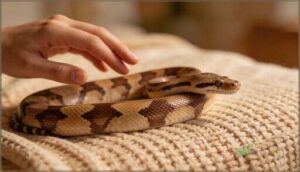
Side Entry Benefits, you approach your ball python from the side, aligning your hand with its mid-body. This technique reduces strike risk and lets the snake see you without sudden overhead movement.
Careful hand positioning and calm timing help you read stress signs in body language. Prioritizing safety precautions, you avoid the head, supporting trust and minimizing defensive reactions.
The Scoop and Support Method

Once you’ve approached from the side, slide both hands underneath using a mid‑body cradle — this gentle lift technique keeps the ball python from feeling like it’s falling.
Full‑body support is key, so use your forearms, not just your fingers. Tail anchoring method and steady hand positioning strategy together reduce stress signs almost instantly, making every session feel predictable and safe.
Hook Training for Defensive Snakes
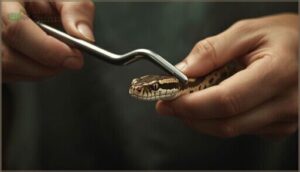
snake hook for defensive ball pythons isn’t about restraint — it’s about communication. Gentle redirection with calm, even movements signals that handling time is starting.
hook cue consistency helps your snake distinguish handling from feeding, reducing strikes. keep contact brief, just a few seconds, and never use the hook to grab.
Non-grab technique paired with defensive head control builds lasting trust.
Handling Guidelines for New Ball Pythons

When you bring home a new ball python, first days matter most for building trust. It’s important to set up the right environment before you even think about handling.
Here’s what you’ll need to create a calm, secure space for your snake.
Initial Settling-in Period
When a ball python first arrives home, think of it as a guest still learning the layout — it needs time, not touch. A two-week acclimation period with enclosure stability, temperature consistency, and proper hide placement gives your snake room to settle. Limited disturbances build early trust more effectively than frequent handling.
- Keep enclosure temperature steady at 75–85°F
- Maintain consistent hide placement throughout this period
- Avoid rearranging the enclosure layout
- Observe snake behavior and body language daily
- Prioritize gradual exposure over rushing handling frequency
First-Time Handling Steps
A calm environment setup is your foundation for gentle initial contact. Approach slowly, letting your snake notice your hand, then use secure midbody support to lift. Keep fingers away from the head and avoid sudden movements.
Gradual release technique helps during return. Watch for stress signs after handling—post-handling observation is key for trust building and adjusting handling frequency during the acclimation period.
Letting The Snake Acclimate Gradually
Think of acclimation as earning trust in installments — not all at once. Your snake needs time to read its new world before it’s ready for yours.
Acclimation is a gradual process of earning your ball python’s trust, giving it time to explore before connecting with you
- Temperature Gradient Stability keeps digestion calm and stress low
- Humidity Ramp rises to ~70% during sheds for clean separation
- Hide Placement Strategy offers microclimate choice on both warm and cool sides
- Gradual Enclosure Expansion lets snake behavior guide your handling frequency
When to Avoid Handling Your Ball Python

Knowing when not to handle your ball python is just as important as knowing how often to do it. There are specific situations where picking up your snake does more harm than good — even if it seems fine on the surface.
Here’s when you should leave your snake alone.
After Feeding
Would you risk a snake’s health for a few extra minutes of handling? After feeding, your ball python needs post‑meal rest to support digestion stability.
Handling too soon spikes regurgitation risk and disrupts temperature control. Meal size impact matters—larger prey means longer downtime. Stick to a steady handling frequency and feeding schedule, and watch for stress signs in ball python behavior.
| Digestion Stability | Regurgitation Risk | Temperature Control |
|---|---|---|
| Needs quiet time | Handling increases | Stable warmth aids |
| No movement | Stress triggers | Avoid swings |
| Larger meal, longer | Early handling | Consistent range |
| Rest is essential | Upset digestion | Comfort matters |
| Monitor behavior | Watch for signs | Health depends |
During Shedding or Illness
Shedding and illness turn your snake’s world upside down—skin sensitivity spikes, and temperature stability become essential.
Humidity management aids the shedding process, but handling frequency should drop sharply.
If you notice respiratory issues, stress signs, or feeding adjustments, pause all reptile handling safety routines.
Prioritizing snake health and wellness means letting your python rest, undisturbed, until recovery and normal behavior return.
Signs Your Snake Needs a Break
Just as illness demands rest, certain stress signs mean your ball python needs a break from handling. Watch for tail flicking, coil tightness, body tension, mouth gaping, and escape attempts—these behaviors show discomfort and rising anxiety. Adjust handling frequency and techniques promptly if you see:
- Persistent tail flicking
- Tight, rigid coils
- Open mouth gaping
- Repeated escape attempts
Maintaining a Healthy Handling Routine

Keeping your ball python comfortable and safe starts with a routine that fits its needs. The right approach helps you spot changes in behavior and adjust before problems arise.
Here’s what to pay attention to as you build a healthy handling schedule.
Monitoring Behavior and Wellbeing
Consistent monitoring is the backbone of good reptile health and wellness. Keep a simple activity log — note hide utilization patterns, feeding responses, and post‑handling recovery time after each session.
Weigh your ball python every two to four weeks for weight tracking, and record temperature correlation alongside behavior notes. These details reveal how your snake handling techniques are truly landing.
Adapting to Individual Needs
Tracking your ball python’s Calm Window Timing and Temperament Mapping helps you shape an Individualized Handling Schedule. Some snakes relax quickly, while others show stress thresholds after just a few minutes.
Seasonal Activity Adjustments also matter—snakes often shift their behavior in cooler months. By watching snake behavior and adapting your Handling Techniques, you’ll support true reptile care that fits each individual.
Keeping Sessions Positive and Safe
Once you’ve tuned into your ball python’s unique rhythms, focus on keeping each session positive and safe. Use a gentle voice tone and a consistent handling ritual in a temperature‑stable area with minimal distractions. Reward‑based interaction—like calmly returning your snake to its hide—reinforces trust.
Reliable Handling Techniques and clear Pet Care Tips shape calm Ball python behavior and support Reptile Handling Safety.
Frequently Asked Questions (FAQs)
Do ball pythons tolerate handling?
Like a cautious traveler, a ball python learns to trust gentle hands.
With proper Handling Techniques and attention to its Stress Threshold, many tolerate brief, calm sessions—especially when Owner Experience, Temperature Influence, and Habitat Stability support positive Snake Behavior.
Can handling frequency affect ball python lifespan?
Handling frequency can shape Longevity Correlation in ball pythons.
Stress Hormone Impact, which weakens Immune Function and alters Metabolic Rate.
Proper Handling Techniques support Snake Health and Wellness, driving positive Behavioral Adaptation and better Animal Welfare.
How does handling impact ball python breeding behavior?
During breeding season, even gentle animal handling can trigger stress in ball pythons. Gravid female handling risks feeding refusal and pairing disruption, while males show heightened courtship reactivity.
Careful handling techniques reduce Breeding Season Stress and support natural snake behavior.
Is handling recommended for ball pythons with health issues?
If your ball python shows signs of illness, limit handling.
Focus on Infection Isolation, Stress Monitoring, and Temperature Control.
Prioritize Health Checkups and Veterinary Care, and follow Veterinary Guidance for Medication Handling.
Safe Animal Handling and Reptile Health and Wellness come first.
Conclusion
Think of your ball python’s comfort like a steady current—consistent, gentle, and never rushed. When you follow ball python handling frequency guidelines with care, you create a rhythm your snake can trust.
Watch for stress signals as closely as you’d read shifting weather, adjusting your approach as needed. Each session, handled right, builds confidence and safety on both sides.
With patience and attention, you’ll shape a calm, predictable environment where your snake can truly thrive.
- https://www.knobcreeknaturalist.com/blog/handling-your-ball-python
- https://www.nwreptiles.com/general-ball-python-care-and-husbandry/
- https://thepetsportal.com/ball-python-handling-safety-precautions-to-take/
- https://temeculapetsalonandspa.com/blog/f/the-science-behind-shedding
- https://blog.getreptilia.com/blog/feeding-and-shedding-key-factors-in-reptile-weight-management