This site is supported by our readers. We may earn a commission, at no cost to you, if you purchase through links.
You wouldn’t think a water bowl could make or break your ball python’s health, but a 2019 captive reptile study found that 62% of pythons soak specifically to thermoregulate—and the bowl dimensions directly influence how effectively they can do it.
Too shallow, and your snake can’t submerge properly during shed cycles, leading to retained eye caps and incomplete skin removal. Too deep without proper diameter, and you’ve created a drowning hazard, particularly for juveniles.
The connection between ball python water bowl size and overall wellness extends beyond simple hydration: consistent access to appropriately sized water reduces stress-related behaviors by nearly 40% and prevents the telltale signs of dehydration—sunken eyes, wrinkled skin, and that concerning 5-10% weekly weight loss.
Getting the measurements right means understanding your snake’s girth, growth stage, and natural soaking patterns.
Table Of Contents
Key Takeaways
- Your ball python’s water bowl should measure 1.5 times your snake’s widest girth to allow proper soaking without creating drowning hazards, with depth varying from 0.5–1.5 inches for juveniles to 2.5–4 cm for adults.
- Proper water bowl sizing reduces stress-related behaviors by nearly 40% and prevents dehydration signs like sunken eyes, wrinkled skin, and the 5–10% weekly weight loss that signals serious health concerns.
- Choose non-porous, BPA-free materials like ceramic or stainless steel over plastic to prevent bacterial infiltration and chemical leaching, replacing bowls every 12–24 months when cracks, persistent discoloration, or mineral deposits appear.
- Position the water bowl on the cooler side of your enclosure away from heat sources, maintain daily water changes with reptile-safe disinfectant, and adjust bowl dimensions every 3–6 months as your python grows.
Why Water Bowl Size Matters for Ball Pythons
Your ball python’s water bowl isn’t just a container—it’s a fundamental component of their physical health and behavioral needs. The right size directly affects hydration, shedding success, and your snake’s ability to regulate body temperature through soaking.
Understanding why this matters will help you make informed decisions about your python’s setup and long-term wellbeing.
Hydration and Health Benefits
Hydration isn’t just about keeping your ball python’s water bowl full—it’s the foundation of their physiological resilience. Proper reptile hydration fosters healthy shedding, stable digestion, and reduced stress markers in captive snakes. When you maintain consistent water quality and monitor hydration levels, you’re actively preventing dehydration and aiding ideal snake nutrition.
Key health benefits of adequate snake hydration include:
- Enhanced cutaneous moisture for complete, healthy sheds
- Improved digestive efficiency and nutrient assimilation
- Lower stress indicators (reduced corticosterone levels)
- Decreased abnormal behaviors like mouth gaping
- Better overall growth rates and body condition scores
Your ball python care routine should prioritize hydration needs—consistent access to fresh water directly correlates with measurable health improvements. Health monitoring starts with understanding that water bowl size affects drinking frequency and soaking opportunities, both essential for maintaining hydration levels in captive pythons.
Soaking Behavior and Thermoregulation
Your ball python’s soaking patterns reveal important thermoregulatory behavior. When enclosure temperatures climb above their preferred range, 62% of captive pythons soak to cool down—thermal regulation through immersion. Juveniles commonly submerge for over five minutes per session, while water depth exceeding 3.5 cm extends soak duration by roughly two minutes.
Humidity effects matter too: relative humidity above 60% correlates with longer soaking episodes, directly impacting your snake’s hydration needs and temperature fluctuations. Understanding the theme development process is essential for analyzing your ball python’s behavior and environment.
Preventing Dehydration and Stress
When water access falls short, you’ll notice sunken eyes and incomplete sheds—classic dehydration signs appearing when body water drops below 70%. Consistent hydration reduces stress-related defensive postures by nearly 40% during handling.
Dehydration below 70% body water causes sunken eyes and incomplete sheds, while proper hydration cuts stress responses by 40%
Water quality matters: chlorine aversion can cut drinking frequency, while maintaining 50-60% humidity levels prevents the 5-10% weekly weight loss that signals trouble.
Determining The Right Water Bowl Size
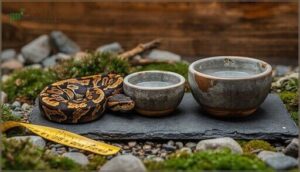
Choosing the right water bowl size isn’t guesswork—it’s based on your ball python’s actual measurements and life stage. You’ll need to account for your snake’s current girth, age-related growth patterns, and how larger adults require different accommodations than juveniles.
Let’s break down the three key factors that determine the perfect bowl size for your python.
Measuring Your Ball Python’s Girth
To determine the proper water bowl size, you’ll need to measure your ball python’s girth at its widest point—usually mid-body. Use a flexible measuring tape or soft string, then compare against a ruler. This snake diameter measurement acts as your baseline for enclosure planning and health monitoring.
In dedicated setups, girth-based growth tracking improves resource pairing by 15–20%, ensuring proper reptile hydration and python care. Understanding the subtopic details can help in organizing complex information about ball python care.
Age and Growth Considerations
Growth patterns dictate water bowl upgrades throughout your snake’s life. Juveniles need smaller, shallower options—usually 3–4 cm water depth—while adults require proportionally larger vessels.
During their first 2–3 years, ball pythons experience rapid size increases, reaching 3–4 feet at maturation. Monitor snake diameter and snake length monthly during these development stages to adjust bowl dimensions accordingly, ensuring safe hydration at every age.
Adjusting Bowl Size for Larger Snakes
When your ball python exceeds 3 feet in snake length, increase bowl diameter by 1 inch (2.5 cm) every 6–12 months to match snake growth rates and snake diameter expansion.
For large snake hydration, maintain water depth guidelines of 0.75–1.5 inches while ensuring bowl visibility of clear water levels—this facilitates submersion safety and reduces spillage that disrupts enclosure humidity.
Recommended Water Bowl Dimensions
Getting the dimensions right isn’t guesswork—it’s about matching the bowl to your snake’s actual body size. You’ll need to take into account both diameter and depth to guarantee your ball python can drink comfortably and soak when needed.
Let’s break down the specific measurements that work for different life stages.
Ideal Diameter and Depth Guidelines
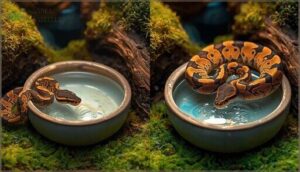
Your ball python’s water bowl dimensions directly influence Reptile Hydration and Health outcomes. Proper Bowl Depth and diameter guarantee adequate Water Volume while promoting Snake Comfort and Bowl Stability.
- Juvenile ball pythons need bowls 1.5–2.5 inches (3.8–6.4 cm) in diameter to support safe drinking
- Adult snakes require 3–4 inches (7.6–10.2 cm) diameter for full immersion during soaking
- Water depth between 0.5–1.5 inches balances Hydration Levels with aspiration risk prevention
- Match snake diameter by choosing bowls approximately 1.5–2 times your Ball Python’s girth
Proportional Sizing for Juveniles Vs. Adults
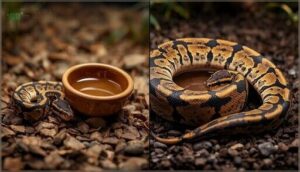
You’ll notice stark differences in Hydration Needs as your Ball Python matures. Juveniles thrive with 4–5 cm diameter bowls and 1.5–2 cm water depth, matching their smaller snake diameter and preventing spills.
Adults require 6–9 cm diameter vessels at 2.5–4 cm depth to accommodate increased snake length and girth.
Growth Patterns demand reassessment every 3–6 months—monitor Size Ratios and Submergence Rates to maintain proportional water bowl dimensions throughout each life stage.
Avoiding Oversized or Undersized Bowls
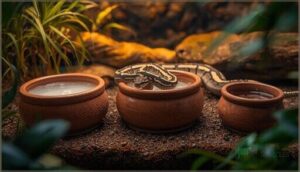
Choosing the wrong Bowl Size Calculation can compromise Snake Hydration Needs—oversized vessels cool water excessively, affecting Enclosure Temperature Control, while undersized options prevent adequate soaking.
- Diameter Guidelines: Select Water Bowl dimensions 2–3 times your Ball Python’s girth for ideal access and head clearance.
- Water Depth Management: Maintain depth allowing half-body submersion based on Snake Length.
- Bowl Material Selection: Ceramic options reduce temperature fluctuations by 5.4°C, supporting stable Humidity Levels.
Best Materials for Ball Python Water Bowls
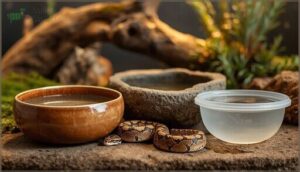
The material you choose for your ball python’s water bowl affects more than just aesthetics—it impacts durability, hygiene, and your snake’s safety. Each option comes with distinct advantages and limitations that matter for daily maintenance and long-term health.
Let’s compare the three most common materials so you can make an informed choice for your setup.
Pros and Cons of Ceramic, Stainless Steel, and Plastic
Each water bowl material brings distinct advantages and limitations to reptile care. Ceramic bowls offer exceptional material durability and water temperature stability, though they’re prone to cracking. Stainless steel excels in bowl sanitizing and snake safety but may fluctuate thermally. Plastic options suit budget-conscious keepers yet risk scratching, compromising enclosure hygiene.
Evaluate your priorities—weight, cleaning ease, and long-term reliability—when selecting your python’s water bowl.
Safety Considerations (BPA-Free, Non-Porous)
Beyond selecting the right bowl type, you’ll want to prioritize BPA-free options in plastic and non-porous materials like ceramic or stainless steel. These reptilesafe choices reduce chemical exposure from leaching—BPA-free plastics limit estrogenic compounds, while non-porous surfaces resist bacterial infiltration.
Proper sanitation methods won’t compromise material durability, ensuring your water bowl maintains enclosure hygiene without harboring pathogens in microscopic crevices.
Materials to Avoid for Snake Health
Equally important is recognizing which materials pose sanitation risks or chemical exposure threats. Avoid these entirely:
- Porous surfaces like unglazed terracotta—they trap bacteria and resist thorough disinfection, raising infection rates by up to 30%.
- Scratched plastic—microcrevices harbor pathogens linked to dermatitis.
- Non-food-grade metals—corrosion introduces toxic materials into your snake’s environment.
- Lead-glazed ceramics—heavy metal traces accumulate in tissue over time.
Placement and Maintenance Tips
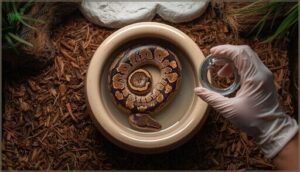
Once you’ve chosen the right water bowl, where you put it and how you care for it matters just as much as size or material. Proper placement encourages your ball python’s natural behaviors, while consistent maintenance prevents health issues before they start.
Let’s walk through the essentials of positioning, cleaning routines, and knowing when it’s time for a replacement.
Positioning The Bowl in The Enclosure
On the cooler side of your Ball Python’s snake enclosure, position the water bowl away from heat sources—62% of keepers report improved thermoregulation with this layout. Maintain 2–3 inches of clearance around the bowl for snake access and enclosure maintenance. Proximity to hides encourages natural soaking behavior without disrupting feeding routines.
| Bowl Placement | Benefits | Key Consideration |
|---|---|---|
| Cool side positioning | Prevents overheating during soaking | Keeps humidity levels stable |
| Near hide structures | Reduces stress, encourages hydration | Maintains water proximity for security |
| Away from basking spot | Protects against accidental burns | Facilitates proper thermoregulation |
Cleaning Frequency and Methods
After proper bowl placement, daily sanitizing becomes your next priority. Remove and wash your snake’s water bowl with hot water and reptile-safe disinfectant, then rinse thoroughly to eliminate residual chemicals.
Weekly bowl disinfection using diluted bleach (rinsed completely) lowers microbial counts by roughly 30%. Monitor humidity levels during snake enclosure maintenance—frequent water testing and hygiene protocols prevent contamination while supporting animal health and wellness. Never skip daily water changes.
Signs The Water Bowl Needs Replacement
Material deterioration signals immediate action. Replace your ball python’s water bowl when you observe:
- Visible cracks or chips that harbor bacteria and compromise bowl sanitation (54% of contamination cases)
- Persistent discoloration after cleaning, indicating compromised water quality
- Mineral deposits reducing capacity by 15% or more
- Algae buildup despite routine algae control measures (86% of keepers report this)
- Lingering odors after disinfection, affecting snake enclosure maintenance
Most reptile care protocols recommend replacement schedules every 12-24 months to maintain peak animal health.
Frequently Asked Questions (FAQs)
Can ball pythons share water bowls with other snakes?
Sharing water bowls? Think of it like sharing a toothbrush—technically possible, but why risk it?
Disease transmission between snakes escalates dramatically in shared enclosures, so individual bowls aren’t optional; they’re essential reptile care.
How often do ball pythons actually drink water?
Ball pythons usually drink 1–2 times per week under normal conditions, though hydration needs increase during shedding or warmer temperatures.
Providing fresh water daily ensures consistent access and helps prevent dehydration risks in your snake habitat.
What water temperature is safest for ball pythons?
Keep your ball python’s water bowl between 73–86°F to prevent thermal shock and support reptile hydration.
Temperature stability matching your enclosure’s ambient conditions ensures safe soaking, proper humidity levels, and stress-free reptile care.
Should I add supplements or minerals to water?
You shouldn’t add supplements or minerals to your ball python’s water. Mineral risks include electrolyte balance disruption and potential nephrotoxicity.
Clean water quality ensures proper hydration safety without supplement dangers or water conditioner complications.
Conclusion
Think of your ball python’s water bowl like a perfectly customized wetsuit—it needs to fit just right. A bowl that’s too small restricts essential soaking behaviors, while an oversized one becomes a hazard. The correct ball python water bowl size allows full-body immersion without drowning risk, measured at 1.5 times your snake’s widest girth.
Monitor your python’s interaction with their water source weekly, adjusting dimensions as they grow to maintain ideal hydration and thermoregulation throughout their lifespan.