This site is supported by our readers. We may earn a commission, at no cost to you, if you purchase through links.

Most snakes eating whole rodents don’t need supplements. Prey delivers balanced calcium, phosphorus, and fat-soluble vitamins in ratios no powder can replicate. That’s the baseline most keepers miss.
The problems start at the edges: a breeding female draining calcium reserves with every clutch, a recovering snake with a destroyed gut microbiome from antibiotics, or a collection fed muscle meat instead of whole prey. These gaps are real, and choosing the wrong product, or stacking too many, triggers toxicity faster than deficiency ever would. The best snake supplements solve specific problems; knowing which one fits your situation is the difference between good husbandry and a vet visit.
Table Of Contents
- Key Takeaways
- Top 10 Reptile Supplements Compared for Snakes
- 1. Flukers Reptile Calcium Supplement D3
- 2. Zilla Reptile Vitamin Food Spray
- 3. Exo Terra Calcium D3 Powder
- 4. Exo Terra Reptile Amphibian Vitamin Powder
- 5. Nature Zone Herp Pro Bearded Dragon Supplements
- 6. Nutribac Probiotic Supplement for Reptiles Amphibians
- 7. Nekton Tonic R Reptile Immune Support
- 8. Gargeer Reptile Probiotic Powder
- 9. Nature Zone Turtle Eye Vitamin Supplement
- 10. Gargeer Reptile Color Enhancer
- Do Pet Snakes Need Supplements on a Whole-Prey Diet?
- How to Choose Snake Supplements: Nutrients, UVB, and Product Forms
- When Might a Snake Need Supplements? Breeding, Recovery, and Special Diets
- How to Use Snake Supplements Safely and Avoid Vitamin Toxicity
- Frequently Asked Questions (FAQs)
- What supplements are good for snakes?
- What calms snakes down?
- What is the highest quality multivitamin on the market?
- What are the best vitamins for reptiles?
- What supplements do snakes need?
- Do snakes need calcium with D3?
- What do snakes need to be happy?
- Do snakes need vitamin and mineral supplements?
- Do snakes need vitamin C?
- Do snakes need calcium supplements?
- Conclusion
Key Takeaways
- Whole-prey diets already deliver balanced calcium, phosphorus, and fat-soluble vitamins, so healthy snakes on this diet rarely need supplements at all.
- Fat-soluble vitamins like D3 and vitamin A accumulate silently in tissue, meaning toxicity from over-supplementing is a faster and more likely risk than deficiency.
- The three situations that genuinely justify supplementation are active breeding cycles draining calcium, post-antibiotic gut recovery, and diets skewed toward muscle meat instead of whole prey.
- Your UVB lighting setup must inform your D3 choice — combining a D3 supplement with strong UVB exposure can push calcium absorption into dangerous imbalance.
Top 10 Reptile Supplements Compared for Snakes
Not every supplement on the market is formulated with snakes in mind, so knowing what you’re buying matters. The ten products below cover calcium, vitamins, and probiotics across different forms and use cases. Use this list to match the right product to your snake’s specific needs.
Before purchasing, review which snake supplements actually require calcium and D3 to avoid over-supplementing a healthy animal.
1. Flukers Reptile Calcium Supplement D3
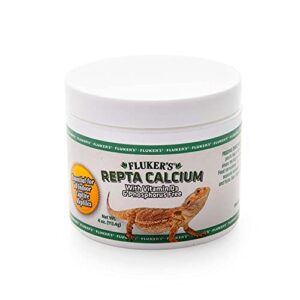
The Flukers Reptile Calcium Supplement D3 is a 4-ounce calcium powder built for indoor reptiles that don’t get consistent UVB exposure. You can dust feeder insects directly or mix it into food before offering it. The added D3 aids calcium absorption, which matters most during growth or active breeding cycles.
One practical caution: D3 accumulates in the body faster than most owners expect. Don’t apply it every feeding. Watch for lethargy or appetite loss, both reliable early indicators of excess.
| Best For | Indoor reptile and amphibian owners whose pets lack consistent natural UVB exposure and need reliable calcium and D3 supplementation. |
|---|---|
| Form | Powder |
| Target Species | Reptiles & Amphibians |
| Application Method | Dust or mix into food |
| Primary Benefit | Calcium & D3 |
| Vitamin D3 | Yes |
| Usage Frequency | Not every feeding |
| Additional Features |
|
- Contains added vitamin D3 to improve calcium absorption, which is especially important for reptiles kept without UVB lighting
- Versatile application — dust feeder insects or mix directly into food
- All-natural calcium source in a compact, easy-to-use 4-ounce format
- D3 builds up in the body over time, so overuse can lead to toxicity — careful dosing is essential
- Not a replacement for a balanced diet or professional veterinary guidance
- May not fully substitute for natural calcium sources available to outdoor or free-range reptiles
2. Zilla Reptile Vitamin Food Spray
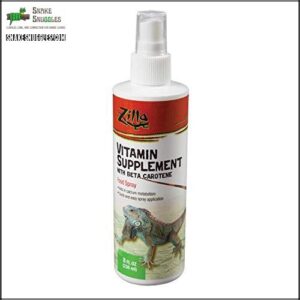
If powder dusting isn’t your preferred approach, or your snake reliably refuses dusty prey items, the Zilla Reptile Vitamin Food Spray offers a practical and low-mess alternative. Just mist it directly onto food, wait 15 seconds, and feed.
The formula covers vitamins C, B-complex, D3, niacin, folic acid, and beta-carotene, building a broad-spectrum micronutrient profile that helps fill common dietary gaps without the hassle of a powder container.
One important distinction worth noting: beta-carotene is a vitamin A precursor, not pre-formed retinol. Conversion efficiency varies considerably by species, so don’t treat it as a straight retinol substitute.
It’s completely mineral-free, so you’ll still need a dedicated calcium supplement alongside it for complete nutritional coverage. The D3 content is worth having, but the same accumulation risk that comes with powder-based D3 applies here too.
| Best For | Reptile and amphibian owners who want a quick, mess-free way to add vitamins to their pet’s diet without dealing with powder dusting. |
|---|---|
| Form | Liquid Spray |
| Target Species | Reptiles & Amphibians |
| Application Method | Spray onto food |
| Primary Benefit | Broad Vitamins |
| Vitamin D3 | Yes |
| Usage Frequency | N/A |
| Additional Features |
|
- Simple spray-and-feed application takes just 15 seconds, making vitamin supplementation fast and low-effort
- Covers a broad range of vitamins including B-complex, C, D3, and folic acid to help fill common nutritional gaps
- Works on insects, vegetables, and other food items, making it versatile across different feeding setups
- Contains no minerals, so a separate calcium supplement is still required for complete nutrition
- Uses beta-carotene rather than pre-formed vitamin A, which may not convert efficiently in all species
- The sprayer top has a reputation for breaking or sticking after limited use, which can make consistent application frustrating
3. Exo Terra Calcium D3 Powder
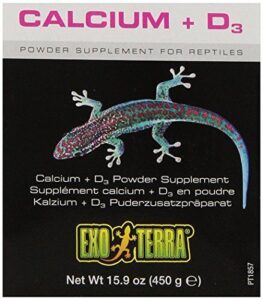
Where the Zilla spray leaves a mineral gap, Exo Terra Calcium D3 Powder fills it directly. The formula centers on calcium carbonate and oyster shell flour, with calcium content sitting between 35% and 37%, and it’s completely phosphorus-free.
That 14,740 IU of D3 per pound matters most for indoor animals. Without reliable UVB exposure, your reptile’s ability to make D3 on its own drops considerably, so having it pre-loaded in the supplement compensates for what the environment can’t provide.
The ultra-fine texture helps it cling to live insects, mealworms, or moistened food rather than falling off before your snake even strikes. A measuring spoon comes included, so your doses stay consistent across every feeding instead of relying on guesswork.
It’s labeled for indoor use only. If your setup already includes strong UVB lighting, track your total D3 intake carefully to avoid over-supplementation.
| Best For | Indoor reptile keepers — especially those with geckos, frogs, or tortoises lacking access to natural UVB — who need a reliable, phosphorus-free calcium supplement with built-in D3. |
|---|---|
| Form | Powder |
| Target Species | Reptiles (Indoor) |
| Application Method | Dust on insects or food |
| Primary Benefit | Calcium & D3 |
| Vitamin D3 | Yes |
| Usage Frequency | N/A |
| Additional Features |
|
- High calcium concentration (35–37%) from natural sources like calcium carbonate and oyster shell flour ensures effective supplementation with every feeding
- 14,740 IU of D3 per pound makes it a strong choice for indoor setups where UVB lighting is limited or absent
- Ultra-fine powder clings well to live insects and mealworms, and the included measuring spoon keeps dosing consistent
- Labeled for indoor use only, limiting its utility for reptile keepers with outdoor enclosures
- The significant D3 content requires careful monitoring if your setup already includes strong UVB lighting, since over-supplementation is a real risk
- At 15.9 ounces, smaller collections or infrequent feeders may find the quantity more than they need before the product’s freshness window closes
4. Exo Terra Reptile Amphibian Vitamin Powder
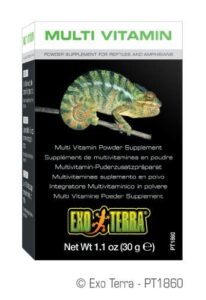
Exo Terra’s companion vitamin powder picks up where the Calcium D3 left off. Rather than targeting calcium metabolism alone, this formula covers the broader micronutrient gaps a simplified captive diet creates: vitamins A, D3, E, and K, amino acids, and trace minerals including zinc, copper, and iodine, all in a single 30g container.
For reptiles prone to eye issues specifically, a targeted option like liquid reptile vitamins for eye and immune support can complement a broad-spectrum powder by addressing localized deficiencies more precisely.
One detail worth flagging: vitamin A comes from beta-carotene, not preformed retinol. Some species can’t convert beta-carotene efficiently, so confirm your snake’s conversion capacity before relying on this as your only A source.
Dust it onto live feeders or mix it into prey before offering. A few users note the texture runs gritty and some animals reject the flavor initially, so start light and monitor acceptance.
Used alongside proper UVB and a varied prey schedule, it covers the nutritional baseline most captive snakes can’t build on their own.
| Best For | Reptile and amphibian owners looking to fill the broad micronutrient gaps that a simplified captive diet leaves behind. |
|---|---|
| Form | Powder |
| Target Species | Reptiles & Amphibians |
| Application Method | Dust on feeders or prey |
| Primary Benefit | Broad Micronutrients |
| Vitamin D3 | Yes |
| Usage Frequency | N/A |
| Additional Features |
|
- Covers a wide nutritional range in one product, including vitamins A, D3, E, and K, amino acids, and trace minerals like zinc, copper, and iodine
- Versatile application — dust it on live feeders or mix it into prey
- Compact 30g container makes it easy to store alongside other supplements
- Vitamin A comes from beta-carotene rather than preformed retinol, which some species can’t convert efficiently
- Gritty texture may cause some animals to reject food initially
- Mixed customer feedback around expiration date labeling
5. Nature Zone Herp Pro Bearded Dragon Supplements
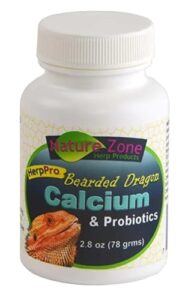
Few products combine calcium and probiotic support in a single 2.8 oz powder, but Nature Zone’s Herp Pro does. It’s formulated for bearded dragons, though its main ingredients fill genuine gaps in snake care, particularly around bone health and digestion.
Apply it by dusting feeder insects in a cup before each feeding. The two-pack format keeps your supply consistent without frequent reordering. No dosage instructions are included, so start light and monitor for changes in your snake’s feces or behavior.
| Best For | Snake and bearded dragon owners looking for a simple, dual-purpose supplement that supports both bone health and digestion in one powder. |
|---|---|
| Form | Powder |
| Target Species | Snakes & Bearded Dragons |
| Application Method | Dust feeder insects |
| Primary Benefit | Calcium & Gut Health |
| Vitamin D3 | N/A |
| Usage Frequency | Each feeding |
| Additional Features |
|
- Combines calcium and probiotic support in a single product, covering two common care needs at once
- The two-pack format means fewer reorders and a more consistent supply on hand
- Easy to use — just dust feeder insects before each feeding session
- No dosage instructions included, so owners have to guess and self-monitor
- No information on the probiotic strain or calcium source, making it hard to evaluate quality
- Shelf life and storage requirements are unspecified, which can affect long-term potency
6. Nutribac Probiotic Supplement for Reptiles Amphibians
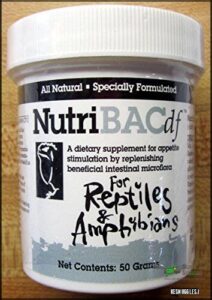
Seven active bacterial strains set Nutribac apart from the calcium and vitamin powders that dominate most supplement lineups. It directly targets gut microbiome health, which most other reptile products ignore entirely.
The mix includes Bacillus subtilis, Lactobacillus casei, and Enterococcus faecium, all suspended in a maltodextrin carrier that makes dusting onto feeder prey straightforward. The mechanism is competitive exclusion: beneficial bacteria colonize the gut and outcompete pathogens for space and resources, which improves digestion and helps immune function indirectly.
It’s most valuable after antibiotic or dewormer treatments, when beneficial gut flora take a real hit. Keepers report improved appetite and more regular defecation in corn snakes and hognose, two species prone to stress-related feeding refusals.
Apply 1 gram per feeding, dusted directly onto prey. Don’t mix it with water, because it cakes and loses effectiveness. Refrigerate after opening to keep live cultures viable.
| Best For | Reptile and amphibian owners looking to restore gut health after antibiotic or dewormer treatments, or help picky eaters get their appetite back. |
|---|---|
| Form | Powder |
| Target Species | Reptiles & Amphibians |
| Primary Benefit | Gut Health |
| Vitamin D3 Included | No |
| Application Method | Dust onto prey |
| Life Stages | All stages |
| Additional Features | Patented probiotic strain mix, post-antibiotic recovery use, appetite stimulation focus |
| Best For | Reptile and amphibian owners who want to restore gut health after antibiotic or dewormer treatments, or help a picky eater get its appetite back. |
|---|---|
| Form | Powder |
| Target Species | Reptiles & Amphibians |
| Application Method | Dust onto prey |
| Primary Benefit | Gut Health |
| Vitamin D3 | No |
| Usage Frequency | Per feeding |
| Additional Features |
|
- Seven active bacterial strains directly support gut microbiome health, an area most reptile supplements ignore entirely
- Straightforward to use — just dust 1 gram onto feeder prey, no mixing required
- Especially effective during recovery from antibiotics, dewormers, or stress-related feeding refusals
- Mixing with water makes it cake and clump, limiting how it can be applied
- Will not treat cryptosporidiosis, so infected animals still need to be isolated
- Results vary depending on the animal’s condition and how consistently it’s used
7. Nekton Tonic R Reptile Immune Support
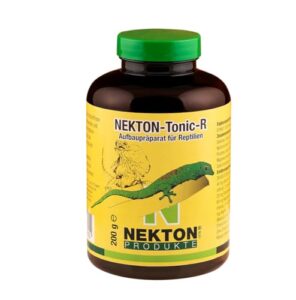
A day gecko owner once brought in a Phelsuma grandis that had dropped significant body weight after shipment stress. Nekton Tonic R became part of the recovery protocol immediately.
Most powders address one deficiency. This one doesn’t operate that way. Nekton Tonic R delivers 60 bioavailable trace elements alongside L-form amino acids and simple carbohydrates, plus a vitamin stack that includes 39,600 IU vitamin A and 1,998 IU D3 per serving. The L-form structure means your reptile absorbs nutrients without taxing an already stressed digestive system. That’s critical during illness or post-transit recovery.
For weak or recovering snakes, dissolve it in water and administer directly with a needleless syringe. For animals in better condition, mix it over feeder insects. Use it two to three times weekly under normal conditions, or daily during acute stress, not as a permanent dietary replacement.
| Best For | Reptile owners managing sick, stressed, or recovering animals—especially those keeping herbivorous species like green iguanas, turtles, or day geckos. |
|---|---|
| Form | Powder |
| Target Species | Reptiles & Amphibians |
| Application Method | Mix in water or dust feeders |
| Primary Benefit | Recovery & Nutrition |
| Vitamin D3 | Yes |
| Usage Frequency | 2-3x weekly or daily |
| Additional Features |
|
- Delivers 60 bioavailable trace elements plus L-form amino acids, making it easier for a stressed or weakened reptile to absorb nutrients without digestive strain.
- Covers a broad nutritional base in a single supplement, including high-dose vitamin A (39,600 IU) and D3, which are often the first deficiencies to emerge during illness or poor feeding.
- Flexible administration—can be mixed into water for syringe feeding or dusted over feeders—making it practical across a range of health conditions and species.
- Contains soy-derived ingredients, which may be a concern for owners managing animals with sensitivities or specific dietary restrictions.
- The high vitamin A content means overdose risk is real if used carelessly; it’s not a set-it-and-forget-it supplement.
- Not a complete diet replacement, so it requires consistent pairing with a proper feeding regimen to be effective long-term.
8. Gargeer Reptile Probiotic Powder
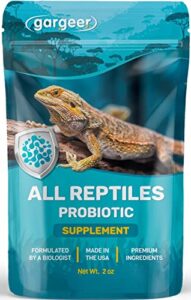
Take a ball python that just finished a course of antibiotics. The infection is gone, but digestion is sluggish and it’s refusing food. That’s precisely where a probiotic earns its place.
Gargeer’s probiotic powder delivers Lactobacillus acidophilus, L. casei, Enterococcus faecium, and Aspergillus oryzae at 200 million CFU per gram, a verifiable dose rather than vague marketing. The ultrafine powder coats feeder insects evenly and mixes into salads without clumping, so you’re not fighting the application process.
Dose at 1 teaspoon per pound of food, once weekly. Refrigerate after opening because heat and moisture kill live cultures faster than most people expect.
One note: maltodextrin is the first listed ingredient. It’s not a red flag, but worth tracking if you monitor additives. Otherwise, this is a clean, USA-made gut support option for recovery or routine maintenance.
| Best For | Reptile and amphibian owners who want an easy, everyday gut health boost, especially after deworming, illness, or surgery |
| Form | Powder |
| Target Species | Reptiles & Amphibians |
| Primary Benefit | Gut Health |
| Vitamin D3 Included | No |
| Application Method | Dust on food/insects |
| Life Stages | All stages |
| Additional Features | Made in USA, 1 tsp per pound dosing, boosts immune function |
Best For: Reptile and amphibian owners looking to support digestive recovery after antibiotics, illness, deworming, or surgery, as well as those wanting a simple routine gut health supplement.
| Form | Powder |
|---|---|
| Target Species | Reptiles & Amphibians |
| Application Method | Dust on food or insects |
| Primary Benefit | Gut Health |
| Vitamin D3 | No |
| Usage Frequency | Once weekly |
| Additional Features |
|
- Delivers a verifiable 200 million CFU per gram across four strains, so you know exactly what your animal is getting
- Ultrafine powder coats feeder insects and mixes into salads easily without clumping
- Made in the USA with straightforward once-weekly dosing at 1 teaspoon per pound of food
- Must be refrigerated after opening, which adds a storage step that’s easy to forget
- May not be practical for animals eating less than half a pound of food per week, since accurate dosing becomes difficult
- Maltodextrin is the first listed ingredient, which may be a concern for owners who closely monitor additives
9. Nature Zone Turtle Eye Vitamin Supplement
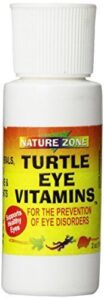
This one’s on the list for a reason, but it comes with a clear caveat: it’s not made for snakes.
Nature Zone’s Turtle Eye formula targets vitamin A deficiency directly, the leading cause of swollen, puffy eyes in captive turtles. You get antioxidants, beta-carotene, and phytonutrients in an unflavored liquid drop. Dosing is simple: 2-4 drops daily on food or placed directly into the mouth. At $9.99 for a 2-oz bottle, it’s targeted and affordable. It covers all life stages.
For snakes, the picture changes. There’s no species-specific dosing data, and the formula isn’t optimized for reptiles beyond chelonians. Some users reported no visible improvement after two weeks, and the packaging has been known to spill. If you keep turtles alongside your snakes, keep a bottle handy. For snakes exclusively, look elsewhere.
| Best For | Turtle and tortoise owners dealing with vitamin A deficiency symptoms like swollen or puffy eyes. |
|---|---|
| Form | Liquid Drop |
| Target Species | Turtles & Tortoises |
| Primary Benefit | Eye Health |
| Vitamin D3 Included | Not specified |
| Application Method | Drops on food/direct |
| Life Stages | All stages |
| Additional Features | Antioxidant-rich formula, phytonutrient mix, direct oral dosing option |
| Best For | Turtle and tortoise owners looking to prevent or address vitamin A deficiency symptoms like swollen or puffy eyes. |
|---|---|
| Form | Liquid Drops |
| Target Species | Turtles & Tortoises |
| Application Method | Drops on food or direct oral |
| Primary Benefit | Eye Health |
| Vitamin D3 | N/A |
| Usage Frequency | Daily |
| Additional Features |
|
- Targeted formula with antioxidants, beta-carotene, and phytonutrients specifically designed to support eye health in turtles
- Easy to administer — just 2-4 drops on food or directly into the mouth, suitable for all life stages
- Affordable at $9.99 for a 2-oz bottle, making it a low-cost option for turtle keepers
- Not formulated for snakes or other reptiles beyond turtles and tortoises
- Some users reported no visible improvement after two weeks of consistent use
- Packaging has been noted to cause spillage, with one user losing roughly 1/8 of the bottle’s contents
10. Gargeer Reptile Color Enhancer
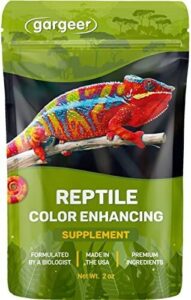
Color fading in captive snakes isn’t cosmetic. It’s a signal that chromatophore expression is being limited by diet. Gargeer’s Color Enhancer combats this with a carotenoid-rich mix drawn from spirulina, paprika, organic carrot, turmeric, beet, marigold, and hibiscus. These pigments support red, orange, and yellow coloration from the inside out when paired with proper UVB exposure, and they won’t do much without it.
The formula also delivers vitamins A, D3, C, and E alongside trace minerals, so you’re reinforcing general health while targeting color. Apply it weekly, dusted onto insects or mixed into gut-loads, veggies, or calcium powder. Don’t complicate the application.
At $15.95 for 1.76 oz, it’s a reasonable addition if your snake’s color has dulled in captivity. Refrigerate after opening and discard after six months. Don’t push beyond once-weekly dosing; excess carotenoids can cause digestive upset in sensitive animals.
| Best For | Reptile and amphibian keepers whose animals have experienced color fading in captivity and want a diet-based solution to restore natural pigmentation. |
|---|---|
| Form | Powder |
| Target Species | Reptiles & Amphibians |
| Application Method | Mix into feeds or dust insects |
| Primary Benefit | Color Enhancement |
| Vitamin D3 | Yes |
| Usage Frequency | Once weekly |
| Additional Features |
|
- Combines multiple natural carotenoid sources (spirulina, paprika, turmeric, beet, marigold, and more) to support vibrant red, orange, and yellow coloration from within
- Versatile application — can be dusted on insects, mixed into gut-loads, veggies, or calcium powder with minimal extra effort
- Doubles as a general health supplement with vitamins A, D3, C, E, and trace minerals, so you’re not adding a product with a single narrow purpose
- Results depend on proper UVB exposure — the carotenoids alone won’t restore color without it
- Short shelf life once opened (six months), and refrigeration is required to reach even that window
- Weekly dosing limit means impatient keepers may be tempted to over-apply, which can cause digestive issues in sensitive animals
Do Pet Snakes Need Supplements on a Whole-Prey Diet?

For most pet snakes on a whole-prey diet, routine supplementation isn’t necessary. A whole rodent delivers muscle, bone, organs, fat, and gut contents in proportions that already match a snake’s physiological needs. That includes calcium with D3 in appropriate ratios, with no calcium dusting required on your part.
Ball pythons, corn snakes, king snakes, and boas eating appropriately sized, well-fed rodents are already getting complete nutrition. Adding supplements on top of that introduces real risk. Fat-soluble vitamins like A, D3, and E accumulate in tissue. Overdose and deficiency produce overlapping symptoms, which makes self-diagnosing and supplementing a bad combination.
Prey quality matters more than any powder. A well-fed frozen-thawed rodent outperforms a poor-quality prey item dusted with calcium every time. Exceptions do exist for fish-eating species and invertebrate-based diets, where specific supplementation needs arise due to thiaminase risk and poor calcium-to-phosphorus ratios.
How to Choose Snake Supplements: Nutrients, UVB, and Product Forms
Not every snake needs the same supplement stack, and picking the wrong one can do more harm than good. The right choice depends on your snake’s diet, housing setup, life stage, and health history. Here’s what to weigh across key nutrient categories and product forms before you buy anything.
When Supplements Are Needed
Unless your snake is recovering from illness, feeding inconsistently, or moving through a high-demand phase like breeding or rapid juvenile growth, a whole-prey diet usually covers its needs.
Metabolic Bone Disease, a skewed calcium-phosphorus ratio, and disrupted gut absorption are the real clinical triggers for stepping in. Without a specific reason to intervene, supplementing blindly always risks vitamin D3 toxicity.
When a vet confirms one of these conditions, targeted products like a reptile calcium MBD supplement can help correct the deficiency without the guesswork of routine dosing.
Calcium
Calcium’s role is more specific than most assume: it only works when the calcium-to-phosphorus ratio stays balanced. A skewed ratio drives Metabolic Bone Disease regardless of how much calcium you add.
- Choose calcium carbonate for bioavailability
- Avoid phosphorus-heavy mineral blends
- Match supplement dosing consistency to feeding frequency
- Don’t assume all calcium forms absorb equally
- Confirm D3 before choosing a formula
D3
determines whether the calcium you’re adding actually reaches bone. Vitamin D3 synthesis from UVB shifts your total load, so you need to account for lighting before choosing a supplement.
| Lighting Setup | D3 Supplement | Risk |
|---|---|---|
| No UVB source | Supplement required | MBD |
| UVB adequate | Reduce dose | Low |
| UVB plus D3 | Excess | Toxicity |
| Juvenile | Higher dose | Monitor |
| Adult prey-fed | Minimal | Overdose risk |
And UVB
Few keepers account for how UVB lighting reshapes their supplement strategy. With UVB present, your snake drives its own Vitamin D3 synthesis, and excess supplemental D3 combined with strong UVB can push calcium absorption toward imbalance. Without UVB, dietary D3 is the only defense against metabolic bone disease.
Bulb age and distance from the basking site matter more than wattage.
Vitamin A Sources
Vitamin A from whole prey comes from animal tissue, not plants. Preformed vitamin A in liver is directly usable by snakes. Beta carotene from a carotenoid-based mix requires conversion that snakes perform poorly, and relying on it risks vitamin A deficiency even when doses appear adequate.
Rank by reliability:
- Liver tissue (prey)
- Retinyl palmitate
- Retinol-based powder
- Carotenoid-based mix
- Beta carotene
Probiotics And Recovery
Think of your snake’s gut as a disrupted community after illness or antibiotic treatment. A Probiotic Supplement helps rebuild it, but only if your snake’s actually eating.
Products with Bacillus subtilis or Enterococcus faecium provide spore-based stability through storage and delivery. A Lactobacillus-based probiotic mixture suits active feeders best. Either way, Gut Health recovery takes days to weeks, not hours.
Forms And Safe Dosing
A keeper adds calcium with D3 powder and a vitamin spray on the same feeding, unknowingly doubling the D3 dose.
Supplement forms affect dosage accuracy more than expected. Powders coat unevenly; sprays leave thin residue. Follow the product’s dosing guidelines, whether that’s scoops per prey weight or drops per session. Converting changes your actual exposure when you skip the label.
When Might a Snake Need Supplements? Breeding, Recovery, and Special Diets
Most snakes on a whole-prey diet don’t need supplements. Three situations actually change that.
Breeding cycles drive the most predictable demand. Egg production depletes calcium reserves faster than routine feeding replaces them, so females in active rotation often need targeted support during that window. Species-specific formulations matter here since dosing guidelines vary between smaller colubrids and large-bodied pythons.
Recovery works differently. After illness, a shed-related fast, or appetite disruption, resuming proper feeding is the priority. If gaps have been prolonged, a probiotic can help restore gut balance, but it won’t substitute for nutritional intake.
Special diets are the clearest case. Muscle-meat-heavy or limited-prey feeding skews calcium-to-phosphorus balance and reduces fat-soluble vitamin sources. Match the supplement to that specific nutritional gap.
How to Use Snake Supplements Safely and Avoid Vitamin Toxicity
Toxicity rarely announces itself. Fat-soluble nutrients like D3 and vitamin A accumulate silently across weeks of consistent overuse before any symptom appears.
Fat-soluble toxicity accumulates silently for weeks before your snake shows a single symptom
Three rules that protect your snake:
- Never stack two multivitamins; rotating between calcium-only and multivitamin products limits cumulative vitamin A exposure
- If your setup includes strong UVB, reduce or eliminate D3 supplements to avoid Vitamin D3 toxicity from overlapping sources
- Match dosing frequency to the product’s maintenance label, not the starter rate year-round
The calcium-phosphorus ratio matters as much as total calcium volume. High phosphorus intake blocks absorption even when you’re supplementing correctly. Check prey composition first.
Supplement safety comes down to understanding what’s already in your enclosure and what’s already in your prey before you introduce anything.
Frequently Asked Questions (FAQs)
What supplements are good for snakes?
Most snakes do best with a calcium reptile supplement paired with Vitamin D3 to maintain a healthy calcium-to-phosphorus ratio. If your animal is stressed or actively switching diets, a probiotic supplement helps maintain healthy gut function.
What calms snakes down?
Routine and environment calm your snake. Consistent handling, stable ambient temperatures, and a predictable feeding schedule do the most. Probiotics may also help indirectly by improving gut comfort, supporting appetite stimulation and calmer post-feeding behavior.
What is the highest quality multivitamin on the market?
No single multivitamin earns that title without ingredient transparency. Look for species-specific formulations with measurable vitamin A forms, calcium with D3 ratios clearly listed, and specific per-feeding dosing guidance to safely avoid vitamin D3 toxicity.
What are the best vitamins for reptiles?
Your reptile needs Vitamin D3, Vitamin A, and calcium. Keeping the calcium to phosphorus ratio balanced matters most. Calcium absorption depends directly on D3 levels, while probiotic strains support digestion after illness or antibiotic use.
What supplements do snakes need?
Most captive snakes need calcium with D3 to prevent metabolic bone disease. Your snake’s calcium phosphorus ratio and UVB setup both determine whether dietary vitamin D3 is actually necessary or creates a serious toxicity risk.
Do snakes need calcium with D3?
It depends on your setup. Without UVB lighting, calcium with D3 helps absorption and guards against metabolic bone disease. With adequate UVB, plain calcium usually works fine. Vitamin D3 toxicity is a real overdose risk.
What do snakes need to be happy?
Snakes need a proper thermal gradient, secure hides, and a reliable feeding schedule. UVB lighting drives Vitamin D3 production and calcium absorption, while a correct calcium to phosphorus ratio actively sustains gut health over time.
Do snakes need vitamin and mineral supplements?
Does diet alone cover everything your snake needs? Usually yes, if you’re feeding whole prey consistently. A complete carcass supplies the right calcium to phosphorus ratio naturally. Poor dietary variety raises deficiency risk over time.
Do snakes need vitamin C?
Unlike calcium absorption, vitamin C isn’t something you need to worry about for most snakes. They make it internally. Only illness, stress, or poor wound healing occasionally raises demand, and supplementation should follow veterinary guidance.
Do snakes need calcium supplements?
Ball pythons fed whole mice weekly almost never need calcium supplements. Intact bones naturally maintain the calcium-phosphorus ratio. Only gravid females, rapidly growing juveniles, or snakes eating muscle-only or very limited prey diets need it.
Conclusion
A breeding female dropping two clutches a year with no calcium support will pull from her bones before she pulls from her diet. That’s the gap best snake supplements are built to close, not replace sound husbandry.
Match the product to the problem. A probiotic after antibiotics, calcium for high-output breeders, nothing extra for a healthy ball python on whole prey. Precision beats routine supplementation every time.