This site is supported by our readers. We may earn a commission, at no cost to you, if you purchase through links.
A snake resting on damp substrate for days doesn’t complain. It can’t. By the time you notice the crusty edges lifting off its belly scales, bacteria have often had a week’s head start.
That’s the trouble with snake scale rot: it builds quietly in warm, wet corners of the enclosure before it ever shows on the surface. Staph and strep don’t need much—just a scratch, a puddle, and time.
Catch it early, and treatment is straightforward. Miss it, and you’re looking at deep tissue damage. Here’s how to tell the difference before it costs your snake more than a scale.
Table Of Contents
- Key Takeaways
- What is Snake Scale Rot?
- Scale Rot Symptoms to Watch
- What Causes Scale Rot?
- How to Treat Scale Rot
- Preventing Future Scale Rot
- Frequently Asked Questions (FAQs)
- Can scale rot spread to other reptiles?
- Which snake species are most susceptible to scale rot?
- How often should enclosures be deep cleaned?
- Are there natural remedies for treating scale rot?
- Can scale rot spread to other snakes nearby?
- Are certain snake species more prone to scale rot?
- Can nutritional deficiencies contribute to scale rot developing?
- How long does full recovery from scale rot take?
- Conclusion
Key Takeaways
- Scale rot is a bacterial infection (often Staph or Strep) that starts on the belly where damp substrate and friction create tiny skin breaks, and it can progress from mild discoloration to deep ulcers within days if ignored.
- Catching it early lets you treat it with diluted Betadine or chlorhexidine soaks at home, while spreading lesions, deepening ulcers, or lethargy after 48–72 hours mean it’s time to call a vet.
- Excess humidity, damp substrate, low temperatures, dirty enclosures, and scale injuries are the root causes, so fixing husbandry conditions is the real long-term solution.
- Prevention comes down to matching humidity to your species, maintaining a proper temperature gradient, doing daily spot cleaning plus deep cleaning every 1–3 months, and checking your snake’s belly regularly for early warning signs.
What is Snake Scale Rot?
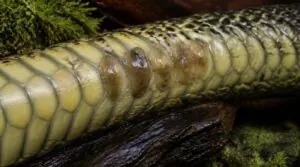
Scale rot isn’t just cosmetic. It’s a bacterial infection that can turn serious fast if you don’t catch it early. Here’s what’s actually happening beneath those damaged scales.
When bacteria slip through cracked or damaged scales, they can multiply quickly, which is why learning to spot the early signs of scale rot makes such a difference.
Bacterial Skin Infection
What’s actually happening under those crusty scales? Simple: bacteria, often Staphylococcus or Streptococcus, invade through tiny skin breaks. This triggers ulcerative dermatitis, ranging from surface-level erysipelas to deeper cellulitis with lymph node swelling. Purulent discharge signals active infection. Left unchecked, MRSA-resistant strains complicate treatment.
Poor enclosure hygiene creates the perfect breeding ground—which is exactly why scale rot demands prompt attention. Practicing regular hand washing can help reduce the risk of spreading these pathogens.
Belly Scale Vulnerability
Why does scale rot almost always start on the belly? Ventral scales sit in constant contact with the substrate, so substrate friction damage and trapped moisture create ventral microtears immediately.
Handler chemical residues and improper habitat humidity soften tissue further. Bacteria exploit these gaps, forming biofilm persistence that resists cleaning. Poor ventilation airflow issues compound the risk—proper reptile husbandry starts by respecting how exposed those belly scales really are.
Mild Versus Severe Cases
Not every case looks the same, and that’s what makes grading severity so important.
Mild scale rot stays put—slight brown or red staining, one small patch, minimal odor, no real change in movement or appetite.
Severe cases spread fast across multiple body regions, with thicker crusting, active tissue breakdown, noticeable discharge, and stronger odor. That’s when it edges toward ulcerative-necrotic dermatitis.
Why Early Care Matters
That mild-to-severe window closes faster than most keepers expect. Catching scale rot in its early stage means:
- Preventing tissue necrosis before it spreads
- Stopping infection spread to healthy scales
- Avoiding surgical debridement entirely
- Minimizing animal stress during treatment
- Reducing recovery time a lot
Wait too long, and simple bacterial infections become full ulcerative dermatitis—a case that needs real reptile veterinary medicine, not soaks.
Scale Rot Symptoms to Watch
Scale rot doesn’t hide for long once it takes hold. Your snake’s belly will show you exactly what’s wrong, if you know where to look. Here are the five warning signs worth checking for tonight.
Scale rot won’t stay hidden for long—your snake’s belly reveals the truth to anyone who knows where to look
Red or Brown Discoloration
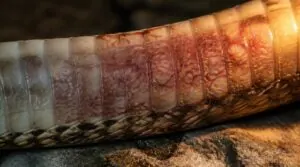
A color change isn’t proof of infection — it’s a clue you have to read carefully. Red often means active blood flow near the surface; brown can mean iron pigment leaking from broken vessels or post-inflammatory melanin after irritation.
Check for heat burn mimicry near basking spots, substrate staining patterns low in the enclosure, and spreading beyond one contact point, which signals real scale rot.
If you notice your snake soaking constantly near irritated skin, check out why your snake might be sitting in its water dish since prolonged soaking can worsen moisture-related skin issues.
Raised or Crusty Scales
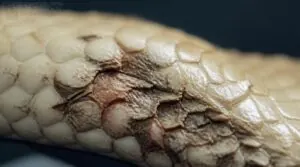
Run your fingertip over the belly and you’ll feel it before you see it: scale texture changes from smooth to gritty. Crust forms where scabs build over damaged skin, lifting scale edges above the surrounding surface.
That lifted look means deeper tissue exposure, not just surface irritation.
- Raised scale edges
- Rough, uneven texture
- Discolored skin beneath crust
- Tenderness on contact
- Thickened patches
Belly Blisters
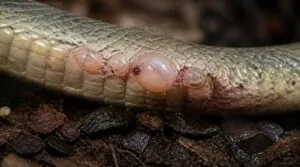
Where the belly makes contact with substrate, watch for raised, fluid-filled pockets—early ventral skin separation from moisture and friction. These pusfilled blisters signal bacterial lesion patterns taking hold beneath damaged scales.
Left untouched, blister rupture risk climbs fast, especially in unsanitary living conditions. Contact your vet promptly if you notice systemic illness signs like lethargy alongside blistering on your snake’s ventral scales.
Open Sores or Ulcers
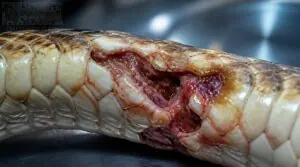
Once blisters rupture, you’re looking at true open lesions—craters where skin barrier integrity fails and tissue underneath is exposed. This stage marks a shift into Ulcerative Necrotic Dermatitis.
- Wound edges appear eroded and ragged
- Discharge ranges clear to bloody to purulent
- Surrounding tissue shows inflammation and erosion
- Depth signals how far bacterial infection has spread
Assess wound depth carefully. Untreated, these sores rarely heal alone.
Foul Odor Warning
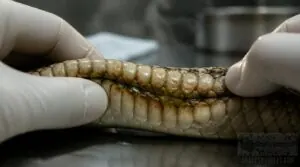
Trust your nose here—it often catches trouble before your eyes do. Bacterial waste scent signals active infection, not just dirty bedding. Moisture-driven odors intensify with damp scales, so check during handling inspection, focusing on belly seams.
Odor severity assessment matters: mild cases smell faint, more serious ones reek persistently. Strong, spreading odor demands hygiene response urgency—clean immediately and call your vet before necrotic tissue develops.
What Causes Scale Rot?
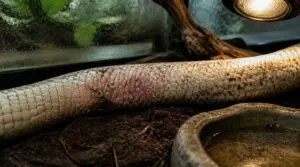
Scale rot doesn’t happen by accident. It’s almost always tied back to something fixable in the enclosure itself. Here are the five culprits you’ll want to check first.
If you’re unsure whether what you’re seeing is normal, this guide on why ball python eggs look deflated can help you tell harmless dimpling from a real problem.
Excess Humidity
Moisture is a bacteria’s best friend. Excess humidity keeps skin wet longer, slowing evaporation and inviting fungal or bacterial growth—especially with poor airflow or condensation on cooler surfaces.
Watch for:
- Humidity above your species’ target range
- Foggy glass or wet decor (condensation risk)
- Stagnant corners with weak airflow
- Inaccurate hygrometer readings
- Damp microclimates near hides
Damp Substrate
Air’s one thing, but what your snake actually lies on matters just as much. Substrate porosity decides how long water sticks around against the skin—fine, absorbent bedding traps moisture far longer than coarse material, delaying soil moisture balance and inviting microbial biofilm to take hold in an unsanitary living environment.
| Substrate Type | Moisture Retention |
|---|---|
| Fine coconut fiber | High |
| Aspen shavings | Moderate |
| Cypress mulch | High |
| Paper towel | Low |
| Reptile carpet | Low |
Low Enclosure Temperatures
Cool enclosures do more damage than owners realize. When the warm side falls short, snakes skip basking and linger on damp surfaces, slowing evaporation and digestion alike. That sluggish metabolism weakens immune defenses right as bacteria multiply in these moist microenvironments.
Thermal gradients aren’t optional comfort—they’re the mechanism driving proper drying, healthy digestion, and natural thermoregulation that keeps scale rot from taking hold.
Dirty Habitat Conditions
Poor habitat management piles onto that thermal problem fast. Waste left sitting builds ammonia buildup, irritating scales already softened by damp substrate.
Biofilm coats water bowls and hides, reseeding bacteria even after a quick wipe. Check corners and under hides—these microclimate damp spots hide contamination. Odor that lingers signals trouble.
Disinfect the enclosure regularly; don’t just spot-clean and hope.
Scale Injuries
Bacteria don’t need much of an opening. Retained shed traps moisture and creates micro-abrasions underneath. Rough bedding, sharp décor edges, water bowl rims, even rough handling can nick scales during normal movement.
Puncture wounds progress fast, from crust to ulcer within days. Any break in the skin barrier invites bacterial infections, leading to abscesses, scale loss, and full-blown scale rot if left unchecked.
How to Treat Scale Rot
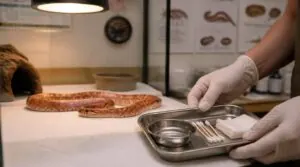
Once you spot scale rot, act fast. Treatment depends on catching it early and following the right steps in order. Here’s how to handle it, from quarantine to knowing when a vet visit is non-negotiable.
Quarantine Setup
Separate your snake first. Isolation workflow matters as much as any topical treatment, since scale rot spreads through shared water, substrate, and handling.
Set up a dedicated quarantine tank away from other reptiles, and handle this snake last, with tools that never touch healthy animals. Every hide, bowl, and surface stays in quarantine until fully disinfected, so pathogen control starts with strict separation, not soaks.
Paper Towel Substrate
Ditch the substrate entirely and switch to plain white paper towels for the quarantine period. Visual waste inspection becomes a breeze against a light background, and staining shows exactly where scale rot is worsening.
Fiber composition pulls moisture via capillary action, so change sheets the moment they’re damp—lingering moisture retention undoes your effort. Fresh towels daily keep humidity levels controlled while the cage stays easy to monitor and clean.
Diluted Betadine Soaks
Mild scale rot responds well to a Betadine bath: dilute povidone-iodine until it looks like weak tea, never full strength. Soak 10–20 minutes in lukewarm solution to fight bacterial infections without irritating tissue.
Watch soak duration closely—longer sessions cause skin maceration, worsening lesions. Blot dry afterward, don’t rub. Proper post-soak drying helps wound healing and prevents lingering dampness scale rot thrives on.
Chlorhexidine Cleaning
Chlorhexidine offers a stronger option for stubborn cases. Use a dilute solution, never full strength—undiluted chlorhexidine burns exposed tissue.
Two application methods work:
- Wipe affected scales gently with soaked gauze
- Soak briefly for even coverage
- Maintain proper contact time for antimicrobial effect
- Rinse residue afterward to prevent irritation
Watch for redness or rawness afterward. That signals irritation, not healing.
When to Call a Vet
Home care has limits. Lesions expanding after 48–72 hours, deepening ulcers, or lethargy signal septicaemia risk—call a vet immediately.
| Symptom | Action |
|---|---|
| Spreading discoloration | Vet visit |
| Abscesses/pus | Vet visit |
| Foul odor persists | Vet visit |
| Appetite loss | Vet visit |
| Pain when handled | Vet visit |
Trust your gut. If behavioral changes appear, don’t wait it out.
Preventing Future Scale Rot

Scale rot rarely shows up out of nowhere. It’s almost always the enclosure sending you a warning first. Here’s what a habitat that actually protects your snake’s skin looks like.
Species-Specific Humidity
One humidity setting does not fit every snake. A desert colubrid rots in the same conditions a tropical species needs to thrive.
- Arid species: 30–50%
- Woodland species: 50–70%
- Tropical species: 70–90%
Match habitat to species, mist for shedding moisture needs, then let it dry. Place sensors at snake level, not ceiling height, for accurate humidity sensor placement.
Proper Temperature Gradient
Humidity gets the headlines, but improper temperature causes just as many husbandry problems. Snakes need two-zone thermoregulation—a warm side and a true cool side—to digest food and avoid damp, stagnant skin conditions.
Check surface temperature hotspots with an infrared gun, not room thermometers. Secure thermostat probe placement right at the basking surface, then verify thermal gradients weekly, since decor shifts and heaters drift over time.
Daily Spot Cleaning
Grab clean gloves before touching anything. Spot cleaning isn’t just waste removal—it’s your daily scale rot checkpoint.
- Lift waste with tongs, not bare hands
- Remove damp substrate fully, don’t stir it into dry bedding
- Blot wet belly-contact spots dry immediately
- Scan coiled areas and hide entrances for early crusty patches
Contamination control matters here: dirty tools touch dirty zones only. Discard soiled paper towels right away.
Weekly Deep Cleaning
Daily spot cleaning takes care of the mess; weekly deep cleaning takes care of what hides. Precleaning with detergent lifts biofilm before disinfecting. Scrub drains, corners, and water bowl rims where residue collects.
| Step | Action |
|---|---|
| 1 | Detergent preclean, then rinse |
| 2 | Reptile-safe disinfectant, full contact time |
| 3 | Complete dry-out, check hidden damp spots |
Safe Enclosure Decor
Décor matters as much as cleaning schedules. Choose non-toxic materials—untreated wood, smooth stone—and skip sharp plastics. Smooth surfaces prevent skin abrasions that invite infection. Avoid small, ingestible pieces.
Secure branches so nothing tips mid-climb. Pet-safe artificial plants work well since they resist moisture buildup, unlike soil-based options that complicate humidity control and habitat hygiene.
Frequently Asked Questions (FAQs)
Can scale rot spread to other reptiles?
Fire spreads where fuel sits ready—scale rot works the same way. Yes, it can spread through shared surfaces, damaged skin, and contaminated bedding.
Isolate infected reptiles immediately; cross-species transmission is real, since pathogenic bacteria don’t discriminate between hosts sharing the same damp habitat.
Which snake species are most susceptible to scale rot?
Water snakes and garter snakes face the highest risk due to constant moisture exposure.
Ball pythons and rainbow boas get caught out by humidity mistakes, while small-bodied or immunocompromised snakes deteriorate fastest once belly contact with damp substrate triggers infection.
How often should enclosures be deep cleaned?
One keeper deep cleaned every six months and saw belly blisters within weeks. Aim for every 1 to 3 months, sooner with high humidity, damp substrate, or waste buildup, since biofilm and moisture accumulate fast and stress the skin.
Are there natural remedies for treating scale rot?
Diluted apple cider vinegar or tea tree oil (with a carrier) can help mild cases, but they’re not substitutes for proper Betadine soak ratios or chlorhexidine cleaning—true bacterial infection treatment still needs disinfectant care and environmental management.
Can scale rot spread to other snakes nearby?
Yes, it can, and quiet enclosures make silent carriers. Direct contact, shared water bowls, or contaminated tools spread pathogenic bacteria fast.
Quarantine isolation stops it cold—separate housing, dedicated tools, and controlling humidity keep healthy snakes from ever meeting the infection.
Are certain snake species more prone to scale rot?
Aquatic and ground-dwelling species face higher risk, since constant substrate contact and humidity delivered through wet bedding rather than ambient moisture keeps bellies damp longer, limiting drying time and encouraging bacterial skin pathogens to take hold.
Can nutritional deficiencies contribute to scale rot developing?
Absolutely, poor diet weakens skin and immune defenses. Vitamin A deficiency thins epithelial barriers, while inadequate calcium D3 balance stresses metabolic health. A less nutrient-dense prey source leaves snakes more susceptible to infections that manifest as scale rot.
How long does full recovery from scale rot take?
Mild cases often clear in 3 to 6 weeks, tracking with one or two shed cycles. Severe infections take 2 to 3 months. Full recovery means all infected scales are shed and new tissue looks completely normal.
Conclusion
A damp hide is like a locked room with a slow leak—quiet, until water reaches the floor. Snake health scale rot follows that same pattern: unnoticed dampness, then damage.
You hold the fix already. Dry substrate, correct temperatures, and routine belly checks stop this before it starts. Don’t wait for the smell or the blister. Your snake can’t tell you something’s wrong. Watching closely, drying quickly, treating early—that’s how you answer before it ever has to ask.