This site is supported by our readers. We may earn a commission, at no cost to you, if you purchase through links.
A new snake coming home is exciting—until you remember that excitement can cost you your entire collection. Pathogens hitch rides on the healthiest-looking animals, invisible until they’ve already spread. That’s why quarantine isn’t optional; it’s the wall between a single sick arrival and a catastrophic loss.
The hide box sitting inside that quarantine enclosure carries more responsibility than most keepers realize. Size, placement, humidity—get any of it wrong and you’re adding stress to an already compromised animal. Get it right, and you’re giving that snake the controlled environment it needs to reveal whatever it’s carrying.
Here’s exactly how to set up snake hide boxes for quarantine so nothing slips through.
Table Of Contents
Key Takeaways
- Matching the hide size to your snake’s body — snug for hatchlings, roomier for adults — is one of the simplest things you can do to reduce stress and get honest health signals during quarantine.
- Paper towels might be unglamorous, but they’re your best diagnostic tool: waste, mites, and moisture show up immediately, so swap them daily and you won’t miss a thing.
- A real quarantine setup means a physically separate room, dedicated tools that never touch your main collection, and a minimum 60–90 day isolation window — shortcuts here put everything you’ve built at risk.
- Clean hides with reptile-safe disinfectants like F10SC or diluted bleach, let them dry completely before putting them back, and track your snake’s weight weekly so you catch problems before they spiral.
Choose Quarantine Hide Box Sizes
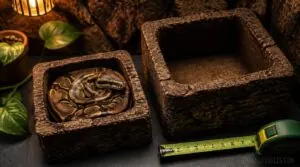
Getting the hide size right from day one makes quarantine smoother for both you and your snake. Too small and your snake feels exposed; too large and it won’t feel secure enough to settle in. Here’s how to match the right hide to your snake’s size and stage.
If you’re working with limited space, this guide to choosing snake hide boxes for small apartments can help you pick a resin or plastic option that’s easy to clean and won’t crowd your setup.
If you’re unsure where to start, this guide on creating a secure hiding place for pet snakes walks through the sizing details that matter most.
Hatchlings and Mini Hides
A mini hide box — measuring just 5.5" × 3" × 1.5" — is your best ally during hatchling quarantine. That snug fit isn’t accidental; it limits lateral movement, reducing the visual exposure that spikes stress in young snakes.
Think of it like swaddling. Tight, enclosed space tells a hatchling it’s safe, which directly promotes calmer feeding responses and healthier quarantine outcomes. The hide’s polypropylene provides durability for long‑term reuse.
Juvenile Colubrids and Boas
As hatchlings graduate to juveniles, their spatial needs shift fast. The small hide — 5.5" × 4" × 2.125" — fits young colubrids and hatchling boas comfortably, giving them enough room to turn without feeling exposed.
Young colubrids climb actively, so positioning hides at varied enclosure heights encourages that instinct during quarantine without compromising security.
Adult Colubrids and Pythons
Once young snakes hit adulthood, size mismatches become costly mistakes.
Adult colubrids — slender despite spanning several feet — fit the medium hide at 10" × 7" × 2.25".
Pythons, with their thick, muscular frames built for ambush and constriction, often demand the large option: 13.25" × 9" × 3.25", matching their heat‑seeking, coiled resting posture perfectly.
Large Boas and Heavy Snakes
Pythons can squeeze into tighter spaces, but large adult boas are a different challenge entirely. An 8–12 foot boa weighing 20–40 pounds needs room to coil without feeling exposed — the jumbo hide at 20" × 14" × 6.5" gives that.
Cramped quarters spike stress, and a stressed boa won’t eat or shed cleanly during quarantine.
Warm-side and Cool-side Hides
Every snake needs two hides — one on the warm side, one on the cool side — to move freely along the thermoregulation gradient.
- Place the warm hide directly above the heat source
- Face entrances away from airflow
- Use dense plastic for heat retention
- Keep the cool side between 72–80°F
- Control cool-side humidity to prevent mold
Set Up Quarantine Hides Safely
Getting the physical setup right is just as important as choosing the right hide size. Before your new snake settles in, there are a few non-negotiables you’ll want to have in place. Here’s exactly how to arrange a quarantine space that keeps your snake calm and your collection safe.
For hides that check all these boxes, ball python hides designed for travel and quarantine setups offer the offset single-entrance style that keeps snakes calm during those critical first weeks.
Separate Quarantine Room
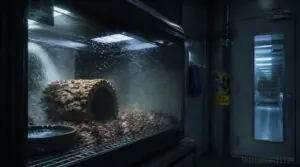
Think of your quarantine room as a firewall between new arrivals and your existing collection. That’s why physical isolation isn’t optional — it’s the foundation of biosecurity.
Ideally, the room sits on a separate HVAC zone to prevent airborne pathogen transfer. A small anteroom buffer lets you swap gloves and gear before entering, keeping cross-contamination firmly at the door.
Paper Towel Substrate
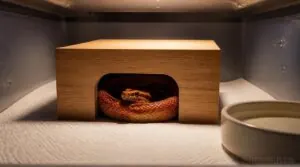
Paper towels aren’t glamorous, but they’re your sharpest diagnostic tool during quarantine. Their porous cellulose fiber network makes waste, mite activity, and moisture immediately visible — nothing hides.
Paper towels are unglamorous but ruthlessly honest — nothing hides from them during quarantine
That transparency is exactly what biosecurity demands.
Swap them out daily, and you’ve got a clean slate that keeps your snake hide box environment honest and infection-free.
Plastic or Glass Enclosure
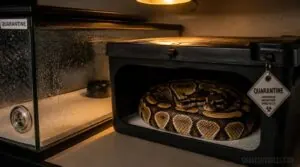
Regarding quarantine, your enclosure choice isn’t cosmetic — it’s biosecurity.
Plastic enclosures, especially high-density polyethylene, are lighter than glass by up to 70% and resist shattering if dropped. Glass, though heavier, offers near-zero moisture permeability, locking in humidity more reliably.
Both surfaces tolerate reptile-safe disinfectants well when you’re cleaning between quarantine cycles.
Offset Entrance Placement
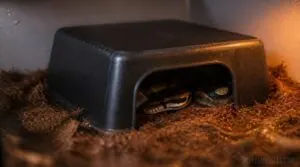
Where you place the hide’s entrance can quietly make or break your quarantine workflow. A slight lateral offset — roughly 15 to 25 degrees from center — keeps snakes feeling sheltered while still giving you a clear sightline from the front.
That offset also reduces direct confrontation during health checks, letting your snake retreat naturally rather than defensive-striking toward the opening.
Humidity Hide Positioning
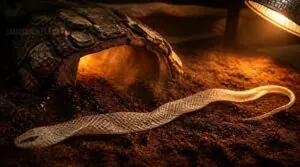
The sweet spot for ideal moisture placement is the warm side — not directly under a heat lamp, but close enough that gentle warmth drives steady evaporation inside the hide.
Aim for 80–95% RH internally while your enclosure sits at 60–70% ambient.
Watch for clean, complete sheds; that’s your clearest signal the humidity regulation is working exactly right.
Clean and Monitor Hide Boxes
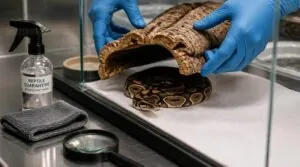
Keeping your quarantine hides clean isn’t just good practice — it’s how you catch problems before they spiral. From daily health checks to making sure every hide is bone-dry before it goes back in, each step below plays a real role in keeping your snake safe. Here’s what your monitoring routine should cover.
Daily Health Checks
Every morning during quarantine, give your snake a focused once-over before anything else. Check eye clarity first — bright, clear eyes signal good health, while persistent cloudiness beyond a normal shed cycle can indicate infection or mites.
Watch for tongue flicking frequency; a healthy snake usually flicks 3–5 times per minute during handling. Lethargic, motionless behavior in the enclosure is your early warning.
Pinch the skin gently. Skin elasticity tests reveal hydration status instantly — taut skin snaps back, wrinkled skin doesn’t.
Listen during handling. Open-mouth breathing or wheezing demands same-day veterinary attention.
Mite and Waste Detection
Once you’ve run your daily health check, your next job is hunting for what you can’t easily see. Snake mites are tiny — roughly the size of a poppy seed — but they leave a paper trail.
Look for small dark specks on hide surfaces, shed skins in the enclosure, or fine dusty residue near the entrance. Those are your clues.
Weekly Weight Tracking
Weight data is your early-warning system. Pick a fixed day — say, every Monday — and weigh before feeding so digestive mass doesn’t skew your numbers.
- Zero the scale with the container in place
- Record date, snake ID, and grams
- Note feeding status that week
- Repeat twice; log only matching readings
- Compare each week against your day-one baseline
Reptile-safe Disinfectants
Once your weight logs are current, it’s time to break down the hides themselves.
F10SC, chlorhexidine, and diluted bleach (½ cup per gallon) are your go-to options — each eliminates bacteria, fungi, and viruses without wrecking the ABS plastic. Give any product 1–5 minutes of contact time before rinsing. Never mix disinfectants; that’s how you create fumes nobody wants near your animals.
Fully Dried Hides
After disinfecting, make sure hides are fully dried before returning them to the enclosure. Residual moisture — even slight dampness — creates the exact microbial environment you’ve worked to eliminate.
Target around 14 percent moisture content and store dried hides off the ground on racks where air circulates freely. A ventilated, low-humidity room keeps them quarantine-ready.
Top 5 Quarantine Humidity Hides
Picking the right humidity hide can make a real difference during quarantine, especially when you’re trying to keep conditions stable for a stressed new snake. These five options cover a solid range of needs, from basic moisture retention to built-in sensor tracking. Here’s what’s worth considering.
1. Reptile Humidity Hide with Sensor
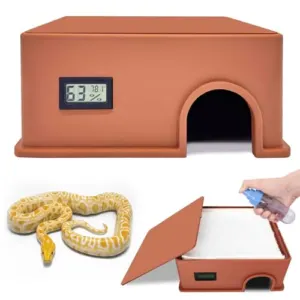
The Reptile Humidity Hide with Sensor measures 9.8 × 7.87 × 4.1 inches — roomy enough for juvenile ball pythons, corn snakes, and leopard geckos, but compact enough to sit cleanly inside most quarantine tubs. Its built-in digital sensor displays real-time temperature and humidity without you ever lifting the lid, which means less disturbance during that critical settling-in period.
A removable cotton pad and included spray bottle keep moisture management simple and fast.
| Best For | Reptile keepers housing juvenile ball pythons, corn snakes, king snakes, or leopard geckos who want easy humidity control and real-time environment monitoring without constantly disturbing their animal. |
|---|---|
| Material | PLA plastic |
| Dimensions | 9.8×7.87×4.1 in |
| Weight | 1.39 lb |
| Humidity Support | Sensor-monitored |
| Reptile Size Fit | Juvenile to medium |
| Ease of Cleaning | Easy-open lid |
| Additional Features |
|
- Built-in digital temperature and humidity sensor lets you check conditions at a glance without opening the hide or stressing your reptile
- Removable cotton pad and included spray bottle make humidity adjustments quick and mess-free
- Smooth interior is easy to clean and resists odor buildup, keeping maintenance simple between deep cleans
- Active reptiles can dislodge the sensor, requiring you to reinsert it — and some units have arrived without the sensor at all
- PLA plastic can soften under sustained high heat, so it’s not ideal for enclosures that run especially warm
- Sized for juveniles and smaller species only — larger adult snakes will likely need a bigger hide
2. Reptile Hide Box Humidifier
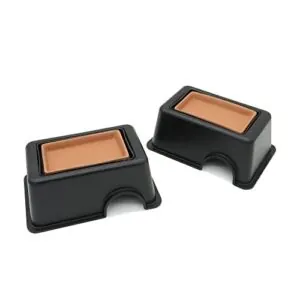
At just 6.7" × 4.3" × 2.75", the Reptile Hide Box Humidifier punches well above its size. The removable water tank fills the hollow interior, creating a localized humidity pocket that helps healthy shedding without soaking your snake’s resting area.
Cleanup takes seconds — pull it apart, rinse, dry completely, reassemble. The enclosed 1.7" × 1.2" entrance keeps things snug and secure, so even a skittish quarantine snake can settle in without feeling exposed.
| Best For | Reptile owners keeping small snakes, geckos, or lizards who need reliable localized humidity to support healthy shedding and stress-free hiding. |
|---|---|
| Material | Molded plastic |
| Dimensions | 6.7×4.3×2.75 in |
| Weight | 15.2 oz |
| Humidity Support | Removable water tank |
| Reptile Size Fit | Small reptiles only |
| Ease of Cleaning | Full disassembly |
| Additional Features |
|
- Creates a targeted humidity pocket right where your reptile rests, making shedding easier without over-humidifying the whole enclosure
- The snug 1.7" × 1.2" entrance gives smaller reptiles a genuinely secure, enclosed space that helps reduce stress
- Super easy to clean — just pull it apart, rinse, and reassemble in seconds
- The small interior won’t work for larger reptiles or if you’re trying to house more than one animal at a time
- The plastic can become brittle or start to discolor if it’s exposed to UV light for too long
- You’ll need to top off the water tank regularly — it keeps the hide humid but isn’t a substitute for a full enclosure water source
3. Hamiledyi Leopard Gecko Humid Hide
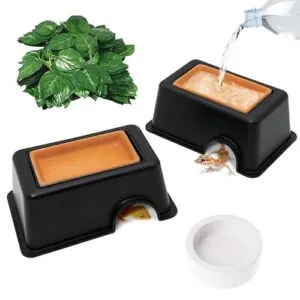
Don’t let the name throw you off — the Hamiledyi Humid Hide earns its place in snake quarantine setups despite being marketed for geckos. Its built-in water reservoir slowly releases moisture over 24–48 hours, making it genuinely useful for small snakes prone to stuck shed during the stress of a new environment.
The clear acrylic window is a quiet bonus: you can check on your snake without lifting the hide and disturbing it.
| Best For | Small and juvenile reptiles like baby snakes, juvenile leopard geckos, lizards, and chameleons that need extra humidity support during shedding or quarantine. |
|---|---|
| Material | High-impact plastic |
| Dimensions | 6.89×4.33×2.75 in |
| Weight | 1.01 lb |
| Humidity Support | Ceramic water basin |
| Reptile Size Fit | Juvenile and small |
| Ease of Cleaning | Rinse or wipe |
| Additional Features |
|
- The ceramic water basin slowly releases moisture over 24–48 hours, making it a hands-off solution for maintaining humidity during shed cycles
- Dual-function design lets you flip the basin to convert it into a standard dry hide when humidity isn’t needed
- Compact kit includes an artificial plant and food/water dish, so you’re getting a fairly complete setup out of the box
- The interior opening is sized for small and juvenile reptiles, so larger or adult snakes and lizards likely won’t fit comfortably
- The ceramic basin can chip with rough handling — worth inspecting for sharp edges before putting it in your enclosure
- There’s no self-regulating moisture system, so you’ll need to top up the water regularly to keep humidity levels consistent
4. Hypeety Reptile Humid Hide
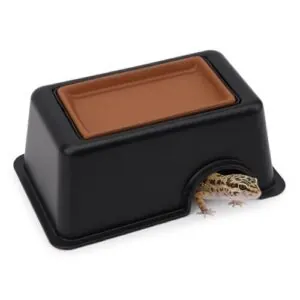
The Hypeety Reptile Humid Hide keeps things refreshingly simple. Its removable water tank releases moisture gradually over 24–48 hours, creating a reliable humid microclimate without constant intervention — exactly what a stressed quarantine snake needs.
The matte-finish plastic is a smart touch, giving snakes a slightly textured surface to push against during shedding rather than slipping on bare smooth walls.
At under seven inches long, it suits hatchlings and juveniles comfortably, and fits most standard tubs with ease.
| Best For | Small reptile owners — especially those keeping hatchling or juvenile leopard geckos and baby snakes — who want a low-maintenance way to maintain local humidity and support healthy shedding. |
|---|---|
| Material | Advanced plastic |
| Dimensions | 6.68×4.32×2.75 in |
| Weight | 3.53 oz |
| Humidity Support | Reversible water tank |
| Reptile Size Fit | Baby to medium |
| Ease of Cleaning | Regular cleaning needed |
| Additional Features |
|
- The removable water tank releases moisture steadily over 24–48 hours, keeping humidity consistent without daily top-ups
- Matte-finish textured plastic gives reptiles something to grip and push against during shedding, which smooth hides simply can’t offer
- Compact size fits easily into standard tubs and enclosures without eating up valuable floor space
- Only practical for baby to medium-sized reptiles — larger animals won’t fit comfortably inside
- In very dry setups, the gradual moisture release may not be enough on its own and could need supplemental humidification
- The water-holding sink requires regular cleaning to keep bacteria and mold from building up
5. Tinton Life Ceramic Humid Hide
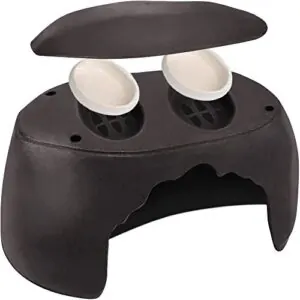
Ceramic changes the game. The Tinton Life Ceramic Humid Hide absorbs ambient moisture and releases it slowly, creating a naturally stable microclimate your snake can genuinely rely on — no sponges to refresh every day, no guesswork.
At 9.8 × 5.9 × 5.9 inches, it suits smaller and juvenile reptiles well. The integrated ceramic bowls double as food or water stations, saving space in stripped-down quarantine setups. Just rinse, dry completely, and it’s ready to go again.
| Best For | Small and juvenile reptiles like turtles, lizards, snakes, and amphibians that need a compact hide with built-in humidity support. |
|---|---|
| Material | ABS plastic |
| Dimensions | 9.8×5.9×5.9 in |
| Weight | 1.18 lb |
| Humidity Support | Ceramic bowl pair |
| Reptile Size Fit | Small and juvenile |
| Ease of Cleaning | No assembly required |
| Additional Features |
|
- Combines a hide, water dish, and food station in one unit — great for saving space in smaller or quarantine setups
- The ceramic bowls help maintain local humidity naturally, supporting healthy shedding and respiratory function
- No assembly needed and easy to clean — just rinse and dry
- Humidity isn’t regulated, so effectiveness depends entirely on the conditions in your overall enclosure
- Ceramic bowls can feel loosely fitted and may be fragile during handling or cleaning
- The size only works for smaller or juvenile reptiles — larger animals will outgrow it quickly
Frequently Asked Questions (FAQs)
How do you quarantine a snake?
Quarantine means isolating a new snake completely — separate room, separate tools, no contact with your existing collection — for 60 to 90 days minimum while you monitor its health.
What bedding is toxic to ball pythons?
Cedar and pine are the two beddings that can seriously harm your ball python. Their aromatic oils and phenols irritate airways, damage respiratory tissue, and can trigger wheezing, mucus, or open-mouth breathing.
Are hide boxes safe for venomous snake quarantine?
Yes, hide boxes are safe for venomous snake quarantine when paired with locking enclosure lids, secondary containment, and offset entrances that limit direct handler access during routine monitoring.
How long should quarantine hides stay in use?
Plastic hides usually last one to five years with regular cleaning. Replace yours the moment you spot cracks or mold that won’t scrub clean — bacteria hide where you can’t reach them.
What disinfectants damage ABS plastic hide boxes?
Alcohol-based cleaners, bleach above 5%, acetone, peracetic acid, and ozone all damage ABS plastic — causing crazing, microcracks, or warping. Stick to diluted, EPA-approved disinfectants and always rinse thoroughly.
Conclusion
animal looks fine. That’s exactly when keepers get complacent—and complacency is how collections collapse overnight.
Every decision you make around snake hide boxes for quarantine either contains a threat or lets it spread. Nail the sizing. Place the hides correctly. Disinfect religiously, and track every weight change without exception.
The quarantine period isn’t punishment for your new snake—it’s protection for every animal you’ve already earned the right to keep.