This site is supported by our readers. We may earn a commission, at no cost to you, if you purchase through links.

A corn snake that refuses to breed despite perfect captive conditions often has one answer hiding in plain sight: the calendar. Seasonal snake breeding patterns don’t respond to your schedule—they respond to the planet’s. Temperature climbing out of winter lows, daylight hours stretching past a critical threshold, a sudden tropical downpour hitting triple digits in millimeters—these aren’t background noise. They’re biological commands that have shaped reptile reproduction across millions of years.
What makes this fascinating, and genuinely useful, is how precisely these triggers interlock. Miss one cue, and the entire hormonal cascade stalls. Nail them all, and you’re watching biology execute a sequence older than most ecosystems on Earth.
Table Of Contents
- Key Takeaways
- What Triggers Snake Breeding Season
- Seasonal Snake Breeding by Region
- Snake Reproductive Strategies Explained
- From Mating to Hatchlings
- Top 3 Breeding Season Habitat Supplies
- Frequently Asked Questions (FAQs)
- What is the timing of snake breeding?
- Do snakes breed year-round?
- When do snakes mate?
- When do snakes breed?
- What Precautions Should Be Taken to Protect Oneself From Snake Bites?
- What Are the Benefits of Asexual Reproduction in Snakes?
- How Does the Geographic Location Affect the Mating Season for Snakes?
- How Do Snakes Locate a Mate During Mating Season?
- Are There Any Snakes That Exhibit Parental Instincts?
- What month is breeding season for snakes?
- Conclusion
Key Takeaways
- Snake breeding isn’t triggered by a single cue — temperature, photoperiod, rainfall, barometric pressure, and prey availability all have to align, and missing even one stalls the entire hormonal cascade.
- Where a snake lives dictates when it breeds: temperate species follow strict spring-summer windows tied to warmth and daylight, while tropical species sync reproduction to rainfall pulses and prey surges instead.
- Reproductive strategy — whether a snake lays eggs, carries live young, or stores sperm — reflects a precise energy trade-off, with viviparous females often skipping a year entirely because gestation depletes reserves too heavily to breed again immediately.
- In captivity, replicating the right environmental sequence matters more than any single condition: nail the triggers in order, and biology runs itself; get them out of sync, and even well-fed snakes won’t initiate mating.
What Triggers Snake Breeding Season

Snake breeding doesn’t follow a single clock — it’s influenced by a whole set of environmental signals that stack on top of each other. Understanding what those triggers are helps you recognize the patterns your snake is responding to, whether it lives in a temperate forest or a tropical rainforest.
Lighting, in particular, plays a surprisingly pivotal role — and snake breeding lighting setup and placement breaks down exactly how to dial in those cues for your specific species.
Here’s a closer look at the five key factors that set a snake’s reproductive season in motion.
Temperature Changes
When ambient temperatures climb after winter, your snake’s metabolic rate shifts dramatically, unlocking the hormonal cascades that signal reproductive readiness. These environmental temperature cues act like a biological key — without them, even well-fed snakes won’t initiate mating.
Regional warming trends are now pushing breeding windows several weeks earlier in temperate habitats, compressing natural cycles in ways that demand closer keeper attention. Considering climate velocity effects can improve predictions of how snake breeding ranges may move under warming trends.
Photoperiod Shifts
Temperature sets the ignition, but day length pulls the trigger. As winter loosens its grip, lengthening photoperiod activates your snake’s hormonal cascade within a 2 to 6 week window — a critical threshold that regulates gonadotropin release, sperm production, and female ovary activation.
Artificial lighting can quietly desynchronize these circadian clock signals, shifting breeding timelines in ways that catch even experienced keepers off guard.
Rainfall Patterns
In tropical regions, a single downpour — sometimes exceeding 100 mm in one hour — flips a biological switch. For tropical snakes, rainfall isn’t background noise; it’s the primary reproductive trigger, signaling prey abundance and setting breeding cycles in motion.
- Monsoon windows concentrate rainfall into intense 3–5 month bursts
- Tropical storms deliver sharp, 15-minute to 2-hour events
- Rainfall-driven prey spikes cue female ovulation timing
Barometric Pressure Changes
Rainfall is one trigger, but barometric pressure shifts work differently — quietly reshaping the microclimates snakes depend on before a storm even arrives.
When pressure drops, pheromone scent drift disperses unpredictably, disrupting courtship trails.
Stable high pressure, by contrast, locks in warmth and dry air, nudging metabolic rate shifts that prime snakes for breeding activity.
Prey Availability
Think of prey as the fuel behind the decision. When prey densities peak — spring insect emergence, post‑rain amphibian movement, humid nights driving small mammal activity — females gain the energy reserves needed to sustain vitellogenesis and gestation.
Without that surplus, energy allocation in breeding stalls. That’s why prey availability doesn’t just support reproduction; it actively triggers it.
Seasonal Snake Breeding by Region

Where a snake lives shapes everything about when and how it breeds. Geography doesn’t just set the backdrop — it drives the whole reproductive calendar, from the timing of emergence to when females are ready to mate. Here’s how breeding patterns break down across the world’s major climate zones.
Northern Temperate Cycles
Spring isn’t just a calendar event for northern temperate snakes — it’s a biological switch. Once ambient temperatures hold above 14°C for several consecutive days, males emerge from brumation and immediately begin expanding their home ranges, sometimes fivefold, searching for receptive females.
Tracking these behavioral shifts is key, and understanding signs of successful snake breeding helps you confirm whether that frantic roaming has actually paid off.
Peak mating activity usually clusters between daytime highs of 18–25°C, a narrow thermal window that makes April through June the critical seasonal mating window across most temperate latitudes.
Five environmental triggers that drive spring thaw courtship:
- Sustained soil and air temperatures above 14°C
- Increasing photoperiod signaling hormonal readiness
- Post-brumation energy recovery enabling travel
- Rising prey activity supplying essential calories
- Stable high-pressure weather allowing uninterrupted movement
Northern populations don’t have the luxury of a long temperate reproductive cycle — late springs or early cold snaps can compress the window to just weeks, making timing everything for breeding success.
Southern Hemisphere Timing
While the Northern Hemisphere’s snakes respond to April warmth, austral spring courtship unfolds from September onward, when rising temperatures and lengthening days trigger hormonal shifts in southern populations.
Coastal snakes often begin breeding weeks before their inland counterparts, where spring warmth arrives later.
Higher elevations delay breeding further still — sometimes a full month behind lowland populations.
Tropical Breeding Patterns
In the tropics, the calendar matters far less than the clouds. Rainfall pulses are the dominant breeding cue, triggering surges in prey availability that signal females it’s time to reproduce. Equatorial species may breed year-round, syncing clutches to short-lived resource booms rather than a fixed season.
Island populations often show surprisingly tight clutch timing shifts, driven by localized prey cycles unique to their habitat.
High-altitude Adaptations
High altitudes compress the breeding window into weeks, not months. Viviparous females bask aggressively to thermoregulate developing embryos, compensating for cold, oxygen-thin air. Their bodies respond with:
- Increased hemoglobin concentration for enhanced oxygen delivery
- Higher mitochondrial muscle density to sustain aerobic demands
- Antifreeze-like tissue compounds protecting cells near freezing temperatures
These adaptations keep reproduction viable where most reptiles can’t survive.
Latitude and Climate Effects
Latitude shapes the entire reproductive calendar. The closer a snake lives to the equator, the more solar radiation it receives year-round, compressing temperature variation and blurring seasonal boundaries.
The closer a snake lives to the equator, the more seasonal boundaries blur into perpetual breeding readiness
That’s why tropical species don’t operate on a strict spring-summer clock — rainfall becomes the dominant trigger instead, driving prey availability and reproductive readiness more reliably than any temperature swing.
Snake Reproductive Strategies Explained
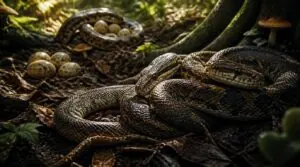
Not every snake follows the same reproductive playbook, and the differences run deeper than you might expect. Whether a species lays eggs, carries live young, or stores sperm for months, each strategy reflects a precise evolutionary trade-off between energy, timing, and survival.
Here’s a breakdown of the key reproductive strategies that shape how and when snakes bring new life into the world.
Annual Breeding Cycles
For most snakes in temperate zones, annual breeding cycles follow a rhythm locked to seasonal warmth and prey availability. Once temperatures rise past species-specific thresholds after brumation, males begin searching and females commit energy toward egg production.
In well-managed captive setups, this seasonal shift often translates into impressive results, as detailed in this guide on how often rosy boas lay eggs each year.
Key traits of annual breeders:
- Clutch sizes vary based on stored fat and prey quality
- Females enter intensive post-breeding feeding phases to rebuild energy reserves
- Reproductive timing aligns tightly with peak insect and rodent activity
- Smaller species reach sexual maturity in 2–4 years; others like black rat snakes may wait 7–10
- Some garter snake populations use parthenogenesis, reproducing without males entirely
Biennial Breeding Patterns
Not every female snake breeds each spring. For viviparous species, biennial reproductive cycles often emerge from simple math: internal gestation burns enormous energy reserves, leaving too little fuel to attempt reproduction again the following year. The body enforces a skip year, whether the snake "wants" one or not.
| Driver | Effect on Breeding Frequency |
|---|---|
| Energy depletion post-gestation | Forces biennial skip years |
| Resource scarcity pre-breeding | Delays ovulation cycle |
Hormonal cycle modulation aligns with this recovery window, suppressing receptivity until reserves rebuild sufficiently.
Oviparous Snake Reproduction
While viviparous females are locked into recovery cycles, oviparous snakes operate on a different timetable — one shaped largely by nest site selection and environmental chemistry.
The eggs themselves drive much of that strategy. Their leathery, permeable shells allow gas exchange and moisture absorption from the surrounding substrate, meaning the nest environment effectively becomes a second parent.
Viviparous Snake Reproduction
Where oviparous species outsource incubation to the environment, live‑bearing snakes internalize that responsibility entirely.
Intrauterine thermal buffering shields embryos from external temperature swings, allowing development to continue even when conditions outside are not ideal.
Maternal nutrient transfer through placental tissue sustains continuous fetal growth, with blood flow to the placenta increasing steadily as gestational metabolic demands rise toward birth.
Sperm Storage Timing
Timing isn’t just about when mating happens — sperm storage duration shapes whether fertilization succeeds at all. Once transferred, sperm viability depends heavily on conditions: oxidative stress accumulates with extended storage, reducing motility and DNA integrity. Key factors influencing outcomes include:
- Sperm motility longevity declines as storage extends beyond ideal windows
- Oxidative stress impacts accelerate when reactive oxygen species go unchecked
- Temperature storage conditions shift fertilization potential greatly
- Aging effects compound even without active mating opportunities
From Mating to Hatchlings
Once mating wraps up, the real work begins — and how it unfolds depends heavily on the species. Whether a female lays eggs or carries live young, every stage from fertilization to emergence follows a precise biological sequence shaped by temperature, timing, and instinct.
Here’s what actually happens between that first courtship encounter and the moment offspring appear.
Male Mate Searching

When mating season arrives, male snakes don’t simply wait — they expand their home range up to fivefold, covering ground they’d never patrol otherwise.
Older males navigate these routes faster, drawing on experience to locate receptive females efficiently, while younger males burn more time and stamina learning which patches actually pay off.
Pheromone Scent Trails
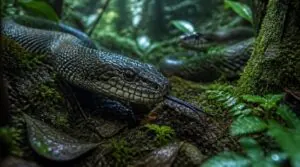
Following a male snake’s tongue-flicking trail reveals one of nature’s most precise chemical communication systems. Females release species-specific pheromones from skin and cloacal glands onto substrates, creating scent trails males track over several meters.
- Vomeronasal detection transfers cues via forked tongue to the Jacobson organ
- Trail longevity depends on humidity, substrate texture, and temperature
- Higher humidity slows evaporation, extending pheromone release effectiveness
- Concentration gradients let males determine direction and proximity
Courtship and Combat

Once a male locates a receptive female, the real contest begins. He raises his head and neck above his body, performing slow pendulum-like head sweeps while undulating his tail — a display that communicates both fitness and intent. Females don’t simply yield; they assess stamina, movement consistency, and how well a male withstands rival pressure before committing.
When two males converge on the same female, ritualized combat replaces courtship. They entwine, arch, and push — testing power and strength without inflicting serious injury. Winners claim mating priority. Some males then deploy copulatory plugs, physically blocking rival sperm access while guarding the female against remating attempts.
Egg Incubation Periods

Temperature is the engine driving egg incubation periods in oviparous snakes. At 26–27 °C, embryonic development proceeds steadily, yielding the strongest hatchling survival rates.
Pushing temperatures toward 30 °C can compress egg hatching time dramatically — from roughly 97 days down to 16.
Humidity matters too, keeping membranes pliable and supporting consistent development.
That’s why nest site selection isn’t accidental.
Live-bearing Gestation
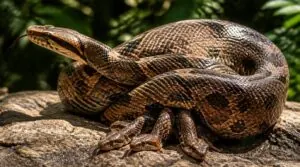
Unlike eggs, which rely on nest conditions, you can fine‑tune, viviparous snakes carry their young internally for 60 to 90 days — and the mother’s body temperature becomes the incubator. She’ll bask deliberately, raising her body temperature to accelerate embryonic growth.
Some species even transfer nutrients through placental‑like membranes, nourishing neonates that emerge fully formed, venomous, and ready to hunt independently.
Top 3 Breeding Season Habitat Supplies
Getting your snake’s environment right during breeding season isn’t optional — it’s what separates a successful reproductive cycle from a stressful one.
The right supplies make it easier to maintain the temperature gradients, humidity levels, and substrate conditions that trigger and support natural breeding behavior.
Here are three essentials worth having in your setup.
1. Exo Terra Calcium D3 Powder

Exo Terra Calcium D3 Powder earns its place in any breeding-season setup by addressing one of the most common deficiencies in captive snakes: inadequate calcium.
With 35–37% calcium by weight sourced primarily from calcium carbonate, it’s a phosphorus‑free formula that won’t disrupt the calcium‑to‑phosphorus balance. The included vitamin D3 (~14,740 IU/lb) helps absorption in species without reliable UVB access — dust it onto feeder insects or produce using the included measuring spoon.
| Best For | Reptile and amphibian keepers who house nocturnal or indoor species without reliable UVB lighting and need a reliable daily calcium supplement during breeding season or general care. |
|---|---|
| Primary Function | Nutritional supplement |
| Target Animals | Reptiles & amphibians |
| Product Weight | 3.2 oz (90.7 g) |
| Enclosure Size | All sizes |
| Ease of Use | Measuring spoon included |
| Key Limitation | Small container size |
| Additional Features |
|
- High calcium concentration (35–37%) in an ultra-fine powder that coats feeder insects and produce evenly and easily
- Phosphorus-free formula helps maintain a healthy calcium-to-phosphorus ratio without dietary interference
- Includes vitamin D3 (~14,740 IU/lb) to support calcium absorption in species that can’t synthesize it through UVB exposure
- Small 3.2 oz container can run out quickly if you’re maintaining a larger reptile collection
- Lacks phosphorus entirely, which may leave a dietary gap for species that need it in their supplement routine
- Excess vitamin D3 can build up and become harmful if used alongside strong UVB lighting without careful monitoring
2. Vivarium VE-100 Digital Thermostat

Once calcium is covered, temperature control becomes your next priority — and the VE-100 Digital Thermostat from Vivarium Electronics controls that job cleanly.
Its 700 W on/off relay keeps heating elements cycling within your target range, while the backlit probe display shows both current temperature and set point at a glance. Settings survive power interruptions, so a brief outage won’t reset your carefully dialed‑in breeding temps.
| Best For | Reptile keepers who want a reliable, easy-to-read tabletop thermostat for maintaining consistent vivarium temperatures without the complexity of advanced controls. |
|---|---|
| Primary Function | Temperature regulation |
| Target Animals | Reptiles |
| Product Weight | 2.2 lb (1 kg) |
| Enclosure Size | All sizes |
| Ease of Use | Backlit programmable display |
| Key Limitation | Single outlet only |
| Additional Features |
|
- Backlit display shows both current probe temperature and set point at a glance, making monitoring quick and effortless
- Retains your temperature settings after power interruptions, so brief outages won’t undo your carefully tuned breeding setup
- User-replaceable fuse and probe mean simple maintenance without cracking the unit open
- On/off relay only — no proportional or PID control, which can cause slight temperature swings compared to more advanced thermostats
- Night Drop functionality requires purchasing a separate ND module, adding cost if you need that feature
- Single outlet means you’ll need an external power strip to run more than one heating device at a time
3. Exo Terra Forest Bark Substrate

With humidity dialed in as tightly as temperature, substrate becomes the final variable — and Exo Terra Forest Bark controls it well. Harvested from European Douglas fir and heat-treated to reduce bacterial load, this 100% natural fir bark actively absorbs ambient moisture and releases it gradually, stabilizing humidity without constant misting.
The chunky bark texture also encourages natural burrowing behavior, giving your snakes the tactile environment they’d encounter in woodland habitats. Spot-clean daily; replace fully every eight weeks.
| Best For | Moisture-loving reptiles like frogs, crested geckos, and snakes that thrive in humid, woodland-style enclosures. |
|---|---|
| Primary Function | Enclosure substrate |
| Target Animals | Reptiles & amphibians |
| Product Weight | 1.06 lb (0.48 kg) |
| Enclosure Size | Medium to large |
| Ease of Use | Ready to use |
| Key Limitation | Not for dry species |
| Additional Features |
|
- Naturally regulates humidity by absorbing and slowly releasing moisture, reducing how often you need to mist
- Chunky texture encourages instinctive burrowing and digging behavior for a more enriching habitat
- Eco-friendly and heat-treated, so it’s free of harmful bacteria and safe for sensitive species
- Not suitable for dry-environment reptiles like bearded dragons, as it retains too much moisture
- Can turn dusty when it dries out completely, requiring more frequent cleaning or full replacement
- Needs occasional misting in very dry rooms to stay effective, adding a small maintenance step
Frequently Asked Questions (FAQs)
What is the timing of snake breeding?
Snake breeding timing follows the rhythm of the natural world. Spring warming triggers most temperate species, while tropical snakes respond to rainfall onset — each cue syncing reproduction with the conditions their offspring need to survive.
Do snakes breed year-round?
Not exactly. Tropical species can breed year-round, peaking when rainfall boosts prey. Temperate snakes follow strict seasonal cycles tied to temperature and daylight, making year-round breeding biologically impossible for them.
When do snakes mate?
Most snakes mate in spring through early summer, usually between March and June in temperate zones. Tropical species can mate year-round, with timing driven by rainfall and prey availability rather than temperature alone.
During breeding season, males often square off over mates, and how snakes defend their territory usually begins with bluffing before it escalates to real combat.
When do snakes breed?
Timing isn’t random. Snakes breed when environmental cues align — rising temperatures, longer days, and prey availability collectively signal the body that conditions are right to reproduce.
What Precautions Should Be Taken to Protect Oneself From Snake Bites?
Wear thick pants and high boots, stay on clear paths, and never reach into dark crevices. If bitten, immobilize the limb and seek antivenom immediately.
What Are the Benefits of Asexual Reproduction in Snakes?
Parthenogenesis lets a single female produce viable offspring without a male, enabling rapid colonization of isolated habitats, maintaining population numbers during mate scarcity, and preserving successful genetic combinations across generations.
How Does the Geographic Location Affect the Mating Season for Snakes?
Where you live on the planet largely determines when snakes around you breed. Warmer latitudes compress winters, triggering earlier courtship, while high-altitude and northern populations delay mating until temperatures reliably sustain development.
How Do Snakes Locate a Mate During Mating Season?
Snakes rely on chemical scent trails to locate mates. Females release pheromones that males detect using their tongue and Jacobson’s organ, following trails across terrain to find receptive partners with precision.
Are There Any Snakes That Exhibit Parental Instincts?
Yes, some snakes do exhibit parental instincts. Pythons are the clearest example — brooding females coil around their eggs, generating heat and defending the clutch until hatching.
What month is breeding season for snakes?
Breeding season varies by species and location, but most temperate snakes mate between March and May, while tropical species can breed year-round, often peaking during rainy seasons when prey is abundant.
Conclusion
Seasonal snake breeding patterns are less a mystery than a language—one written in temperature gradients, shifting daylight, and rain. Once you learn to read it, you stop guessing and start anticipating.
Every cue you replicate precisely moves biology forward. Miss one, and the cascade stalls before it begins.
The triggers are ancient, the logic is airtight, and the results, when you get the conditions right, speak for themselves.