This site is supported by our readers. We may earn a commission, at no cost to you, if you purchase through links.

Most new boa constrictor owners underestimate just how much space a 10-foot snake actually needs—and that miscalculation often leads to stressed, unhealthy animals within the first year. These powerful constrictors aren’t starter snakes, despite what some pet stores suggest.
They’re long-lived specialists (20-30 years in captivity) with exacting requirements for temperature gradients, humidity levels, and prey size ratios. Get the fundamentals wrong—a too-small enclosure, inconsistent heating, improper feeding schedules—and you’ll face respiratory infections, feeding strikes, and chronic stress behaviors.
Proper boa constrictor snake care demands precision from day one, starting with an enclosure that’s at least 6 feet long and a solid understanding of their unique physiological needs.
Table Of Contents
- Key Takeaways
- Essential Facts About Boa Constrictors
- Setting Up The Ideal Boa Enclosure
- Feeding and Nutrition Guidelines
- Daily Care and Safe Handling
- Preventing and Managing Health Issues
- Frequently Asked Questions (FAQs)
- Can boa constrictors live with other snakes?
- How often should I replace substrate bedding?
- What lighting do boa constrictors need daily?
- Do boas require any supplements or vitamins?
- How do I know my boa is shedding?
- Can boa constrictors be housed together safely?
- How do I prepare for breeding boas?
- What permits or licenses are required legally?
- How do I safely transport my boa?
- What should I do if my boa refuses food?
- Conclusion
Key Takeaways
- Boa constrictors need a minimum 6-foot enclosure with precise temperature gradients (88–92°F warm side, 78–82°F cool side) and 50–70% humidity to prevent respiratory infections and chronic stress behaviors that plague undersized setups.
- These snakes live 20–30 years and require whole prey items sized to 20–40% of body girth, fed every 7–14 days depending on age, with zero handling for 24–48 hours post-feeding to avoid regurgitation.
- Subspecies like Boa constrictor imperator and Boa constrictor constrictor differ significantly in adult size, temperature preferences, and care requirements—knowing your snake’s taxonomic classification shapes every husbandry decision you’ll make.
- Early detection of health problems—wheezing, mucus discharge, refusal to feed for two weeks, or incomplete sheds—demands immediate veterinary intervention, as delayed treatment turns minor issues into life-threatening conditions.
Essential Facts About Boa Constrictors
Before you bring a boa constrictor home, you need to understand what you’re actually getting—these snakes aren’t one-size-fits-all.
A solid boa constrictor pet care foundation helps you gauge whether your space, budget, and lifestyle can truly support one long-term.
The genus includes multiple species and subspecies with different care requirements, and knowing the basics will help you provide the right setup from day one. Let’s start with the essential facts every boa owner should know.
Common and Scientific Names
You’ll encounter Boa constrictor as the scientific classification for this species—genus Boa, species constrictor. The specific epithet describes how the snake subdues prey, while common names vary by region and language.
When purchasing supplies or seeking veterinary care, reference the scientific name to guarantee accurate species identification. Subspecies like Boa constrictor constrictor and Boa constrictor amarali receive trinomial names reflecting taxonomy basics and naming conventions.
Species and Subspecies Overview
The genus Boa contains multiple recognized subspecies—each with distinct taxonomic status shaped by geographic isolation and genetic variation. Understanding subspecies classification helps you select appropriate care protocols.
These distinctions reflect boa constrictor biology and evolutionary history across their Central and South American range. The Boa constrictor species, including Boa constrictor constrictor, Boa constrictor imperator, and Boa constrictor amarali, differ in:
- Maximum adult size and growth rates
- Temperature and humidity preferences
- Reproductive patterns and gestation periods
Physical Appearance and Size
Subspecies identity shapes much more than taxonomy—it determines your snake’s physical build. Adult boas average 10 to 13 feet in length, with Boa constrictor imperator usually smaller than Boa constrictor constrictor.
Body size variations depend on subspecies, prey availability, and genetics. Females grow heavier (15 to 60 pounds), while males stay lighter. Color patterns include brown, gray, or olive base tones with darker saddle markings.
Life Expectancy and Growth Patterns
You can expect your boa constrictor to live 20 to 30 years in captivity—some reach 40 with ideal care.
With ideal care, your boa constrictor can live 20 to 30 years in captivity—some even reach 40
Growth rate factors include diet consistency, enclosure heat, and subspecies genetics. Juveniles grow 12 to 24 inches in year one, slowing after age two.
Nutritional influence and health indicators like body condition and shedding cycles reveal whether your snake’s size variation stays within healthy norms.
Setting Up The Ideal Boa Enclosure
Your boa constrictor needs a well-designed home that matches its size, climbing habits, and long-term growth—and getting the setup right from the start saves you from costly upgrades later.
A proper enclosure isn’t just about floor space; you’ll need to account for height, security features, and the right mix of environmental elements to keep your snake healthy and stress-free. Here’s what you need to know about building an enclosure that works for both juvenile and adult boas.
Recommended Enclosure Size and Design

Your adult boa constrictor needs serious real estate—think minimum enclosure dimensions of 6 feet long, 2 to 3 feet tall, and 3 to 4 feet deep to allow full stretch and natural movement.
Pair that space with a smart feeding routine—proper portion control and feeding schedules prevent obesity and keep your boa thriving long-term.
When selecting reptile enclosures for your snake habitat, prioritize these design elements:
- Rigid materials like PVC or glass with smooth surfaces prevent injury from rubbing
- Front-opening access panels positioned at adult height minimize stress during routine maintenance
- Security features including escape-proof ventilation and reinforced latches that can’t be bypassed
Rectangular designs with proper airflow support bioactive terrarium setups while maintaining temperature gradients and humidity control zones.
Choosing an enclosure based on the animal’s size and airflow needs is critical to maintaining a healthy environment.
Temperature and Humidity Control

Maintaining proper climate control starts with a temperature gradient—set your warm side to 88 to 92°F and cool side to 78 to 82°F using overhead ceramic or infrared heat sources.
Humidity levels should stay between 50% and 60% for ideal reptile husbandry, increasing to 60% to 70% during shedding. Use digital thermostats and hygrometers to monitor conditions, and make certain gentle ventilation systems prevent stagnant air without chilling your boa.
For even greater precision, consider learning about advanced humidity controllers that help regulate environmental parameters for sensitive species.
Substrate and Bioactive Setup
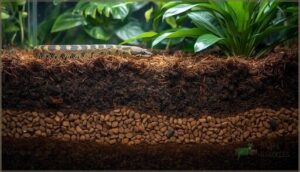
Your substrate choice forms the foundation of a bioactive design. Aim for a substrate depth of 2 to 4 inches, using Terra Firma Substrate or similar coconut-fiber blends that support microfauna balance with isopods and springtails.
Incorporate drainage systems—expanded clay or mesh barriers—to control humidity without waterlogging. Bioactive terrarium setup options like Bio Dude Solar kits simplify creating self-sustaining bioactive systems.
Hides, Climbing Branches, and Enrichment
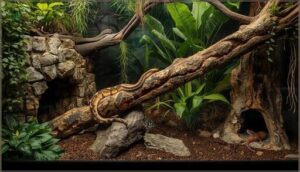
Climbing structures and hide placement transform your boa constrictor’s space from a holding bin into a thriving reptile enclosure design and construction. Here are five critical elements for environmental enrichment in your bioactive terrarium setup:
- Install hides measuring 1.5 times your snake’s width—double-sided options provide security without compression.
- Anchor natural wood branches for vertical spaces, supporting at least 5 pounds.
- Position enrichment materials along warm and cool zones.
- Choose branch textures like rough bark and cork rounds to promote grip.
- Inspect climbing structures monthly for cracks or looseness.
Security and Escape Prevention
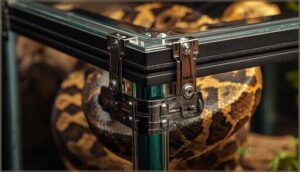
Think of your boa constrictor as a master escape artist—even a 5‑millimeter gap can become an exit route. Here’s what you need for escape-proof enclosure design:
| Security Feature | Specification | Maintenance Interval |
|---|---|---|
| Locking mechanisms | Two-action latches with teardrop keys | Monthly hinge checks |
| Secure lids | Impact-resistant acrylic with clasps | Weekly alignment tests |
| Barrier systems | Weather stripping, under 5mm gaps | Monthly integrity audits |
Your reptile housing and environment depends on fail-safe hinges and reinforced habitat setup—because one loose fixture compromises everything.
Feeding and Nutrition Guidelines
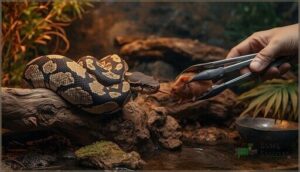
Getting your boa’s diet right isn’t complicated, but precision matters—these obligate carnivores thrive on whole prey items, and the size, frequency, and method of feeding all play a role in their long-term health.
You’ll need to adjust portions and timing as your snake grows, and a few safety practices will keep both you and your boa stress-free during mealtimes. Here’s what you need to know about feeding schedules, proper prey selection, and keeping your snake well-hydrated.
Recommended Diet and Food Types
Your boa constrictor thrives on whole prey animals—mice, rats, rabbits, or small birds that match the snake’s girth. Prey selection should align with your snake’s age and size, with items roughly 20 to 40 percent of the snake’s body girth for adults.
Always offer thawed or freshly killed prey using tongs to prevent accidental bites. Supplements like Repashy Calcium Plus aren’t routinely needed if you’re providing food variety.
Feeding Schedule by Age and Size
Once you’ve selected appropriate prey, you need a consistent feeding schedule that tracks your pet boa’s growth stage. Meal frequency prevents obesity and promotes healthy development—key elements of snake care and maintenance.
1. Hatchling Diet: Feed small mice every 7 to 10 days to fuel rapid growth during the first year.
2. Juvenile Feeding: Between 1 and 2 years, shift to every 10 to 14 days as appetite stabilizes.
3. Subadult Nutrition: After 2 years, maintain a 10- to 14-day interval with prey at 25 to 40 percent of body weight.
4. Adult Meals: Monitor weight gain closely—adjust prey size rather than frequency to prevent overfeeding. Growth monitoring ensures your boa constrictor remains healthy without excess bulk, and feeding guidelines adapt as your snake matures.
Safe Feeding Practices
Getting meal timing right is just the start—how you present food matters for digestive health and regurgitation prevention. Your boa constrictor needs pre-killed frozen prey thawed to room temperature, with prey size guidelines matching one and a half times body width at mid-body to avoid choking.
| Feeding Practice | Best Approach |
|---|---|
| Prey Type | Pre-killed frozen, fully thawed |
| Handling After Meals | Wait 24–48 hours minimum |
| Feeding Location | Calm, secure enclosure only.” |
Never handle your snake immediately post-feeding—stress triggers regurgitation and compromises snake nutrition.
Water Access and Hydration
Fresh water ranks alongside food in your boa constrictor’s survival—keep a dish large enough for full immersion during shedding, positioned on the warm side for easy access.
Change it daily to prevent bacterial growth and monitor water quality closely. If you notice wrinkled skin or dull eyes, boost humidity levels and check bowl placement to guarantee your snake can drink without obstruction.
Daily Care and Safe Handling
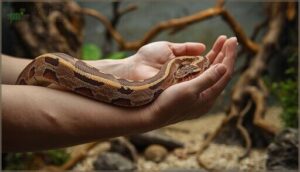
Building a relationship with your boa constrictor takes patience and consistency, and a good understanding of how these snakes communicate. Proper handling techniques will keep both you and your snake safe while reducing stress during interactions.
Daily maintenance routines—from spot-cleaning to monitoring behavior—help your boa stay healthy and comfortable in its environment.
Handling Techniques and Taming
When you approach your boa constrictor for the first time, think of it as building trust—not just asserting control. Support the snake’s entire body with both hands, cradling the midsection and hindquarters rather than grabbing the head.
Start with brief sessions (5–10 minutes) in calm environments, gradually increasing duration as snake behavior shifts from defensive to relaxed, enabling effective taming progressions.
Socialization and Reducing Stress
Regular social interaction—when done right—lowers stress hormones and builds confidence in your boa. Gentle handling after routine care helps your snake respond with calmness rather than fear, reinforcing stress management through predictable patterns.
Environmental enrichment like varied textures, safe hides, and climbing structures reduces boredom while supporting natural snake behavior and psychology, creating outlets for curiosity without overwhelming your animal.
Cleaning and Maintenance Routines
Consistent sanitation practices in your boa constrictor care routine protect both enclosure hygiene and your snake’s long-term health. Proper waste management and humidity control prevent bacterial buildup while substrate maintenance fosters natural behaviors.
Your cleaning checklist should include:
- Daily spot cleaning – Remove feces and urates to reduce ammonia accumulation
- Weekly surface disinfection – Wipe enclosure walls and accessories with reptile-safe disinfectant
- Bi-weekly substrate replacement – Change substrate layers in high-waste areas to maintain sanitation practices
Recognizing Signs of Stress
Vigilance in recognizing stress signals keeps your boa constrictor healthy and prevents escalating behavioral issues. Physical health indicators—persistent muscle tension, labored breathing, or sudden appetite loss—often precede visible behavioral changes. Monitor environmental factors like inadequate hides or improper temperatures that trigger defensive posturing.
| Stress Category | Observable Signs | Action Required |
|---|---|---|
| Behavioral Changes | Prolonged hiding, aggressive striking, refusal to feed for 2+ weeks | Review enclosure security; reduce handling frequency |
| Physical Health | Rapid weight loss, respiratory distress, excessive soaking | Schedule veterinary examination within 48 hours |
| Cognitive Effects | Disorientation, repetitive pacing, unresponsiveness to stimuli | Check temperature gradients; eliminate stressors |
| Environmental Factors | Constant glass-surfing, escape attempts, restlessness | Increase hide availability; adjust lighting cycle |
Snake health and wellness depend on early intervention—addressing stress improves animal behavior outcomes and enhances your reptile care commitment.
Preventing and Managing Health Issues
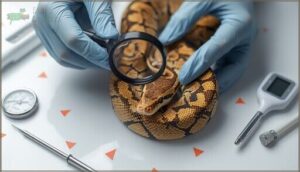
Even with excellent care, your boa can still develop health problems—but catching issues early makes all the difference.
Knowing what’s normal for your snake helps you spot warning signs before they become serious. Let’s cover the most common diseases, what a healthy boa looks like, and when it’s time to call your vet.
Common Boa Constrictor Diseases
Boa constrictors face several common health problems you should watch for—mouth rot causes swollen gums and yellow plaques around the mouth, while respiratory infections produce wheezing and mucus discharge.
Internal parasites lead to weight loss and lethargy, and Inclusion Body Disease (IBD) triggers neurological signs like tremors. External mites irritate skin and can cause anemia, particularly in younger boas.
Signs of a Healthy Boa
You’ll know your boa is thriving when several key indicators align—healthy appetite, vibrant appearance, and consistent behavior patterns all signal proper snake care and effective reptile husbandry and health practices.
- Healthy Appetite: Your boa readily accepts appropriately sized prey and maintains steady weight gain without sudden fluctuations
- Clear Skin: Bright, even coloration with complete single-piece sheds indicates proper boa constrictor care and maintenance
- Normal Respiration: Quiet breathing without wheezing, discharge, or open-mouth patterns during rest periods
- Active Behavior: Regular exploration, climbing, and calm responses to gentle handling throughout daily cycles
- Balanced Hydration: Pliable skin, well-formed waste, and consistent water bowl usage prevent common health problems
When to Seek Veterinary Care
Emergency care for your boa can’t wait when serious health alerts appear. Some veterinary signs demand immediate attention—respiratory distress signals medical emergencies that worsen rapidly if ignored.
| Urgent Veterinary Signs | When to Act |
|---|---|
| Wheezing, gasping, open-mouth breathing lasting beyond a few minutes | Seek care immediately for potential respiratory infections |
| Active bleeding, trauma from falls, rapidly worsening swelling | Requires urgent veterinary medicine and surgery intervention |
| Repeated regurgitation or multiple refused meals despite proper conditions | Schedule prompt evaluation for digestive health problems |
| Lethargy with inability to lift head, dehydration signs (sunken eyes, dry mouth) | Contact your veterinarian for animal health and wellness assessment |
Don’t hesitate when snake injuries or unusual symptoms persist—early veterinary medicine intervention prevents minor issues from becoming life-threatening conditions in your boa constrictor care routine.
Preventive Health Practices
Building a strong preventive care program protects your boa constrictor from disease before problems develop. Schedule annual health screening visits with a reptile-experienced veterinarian for parasite control and nutrition planning assessments.
Track monthly weight measurements—sudden shifts signal early illness in pet snake ownership. This proactive approach to animal health and wellness, combined with proper feeding and nutrition protocols, forms the foundation of responsible reptile and amphibian care.
Frequently Asked Questions (FAQs)
Can boa constrictors live with other snakes?
No, boas are solitary and prefer to live alone. Cohabitation risks stress, fighting, and injury. Multi snake enclosures rarely work long-term—individual housing ensures your snake’s safety and well-being.
How often should I replace substrate bedding?
Like tending to any living ecosystem, your boa constrictor’s substrate needs regular attention—spot-clean daily, but expect full replacement every 3–6 months depending on humidity control, waste management, and bioactive maintenance requirements.
What lighting do boa constrictors need daily?
Your boa constrictor needs a consistent 12-hour day-night cycle with low-intensity UVB lighting (around 0–0 UVB) positioned over the basking zones to support calcium metabolism without disrupting their nocturnal rhythms.
Do boas require any supplements or vitamins?
Most pet boas don’t need dietary additives—whole frozen–thawed rodents already deliver complete nutrient balance, including calcium from bones and fat-soluble vitamins from organs, making supplement risks outweigh benefits in typical boa care scenarios.
How do I know my boa is shedding?
You’ll notice cloudy, blue-tinted eyes and dull skin—classic shedding signs.
Your snake may hide more, rub its snout, and refuse food.
Boost humidity levels to 70–90 percent for a clean shed.
Can boa constrictors be housed together safely?
Housing multiple boas together isn’t recommended—territorial behavior and stress often lead to aggression, feeding conflicts, and health issues.
The safest approach is individual enclosures with separate hides and thermal zones.
How do I prepare for breeding boas?
Success in breeding season hinges on matching pairs by genetics, confirming reproductive health, and creating favorable conditions.
Temperature control around 88-90°F, correct boa pairing timing, and thorough husbandry guarantee breeding success.
What permits or licenses are required legally?
You’ll need federal permits for import-export activities, state licenses for exotic pet ownership and responsibility, local zoning approvals, health certificates for transport, and wildlife conservation compliance—requirements vary substantially by jurisdiction and species.
How do I safely transport my boa?
Transport safety is simpler than you think, yet critical—use a secure, ventilated container lined with towels, maintain 75–85°F, avoid direct sunlight, and monitor your boa’s stress levels throughout travel.
What should I do if my boa refuses food?
First, check that your enclosure temperatures hit 88–92°F on the warm side and humidity stays around 50–70%. Offer properly sized prey and reduce handling stress during feeding times.
Conclusion
Think of your boa’s terrarium as mission control—everything must function in sync or the whole system fails. Proper boa constrictor snake care isn’t about memorizing a checklist; it’s about understanding how temperature, humidity, feeding intervals, and space interact to support a 25-year commitment.
Monitor those gradients religiously, adjust your protocols as your snake matures, and you’ll avoid the preventable crises that plague inexperienced keepers. Precision today prevents problems tomorrow.
- https://www.reptifiles.com/red-tailed-boa-care/boa-species-subspecies/.)
- https://journals.biologists.com/jeb/article/218/14/2279/14389/Snake-constriction-rapidly-induces-circulatory
- https://www.ncbi.nlm.nih.gov/pmc/articles/PMC3061174/
- https://reptilesupply.com/blogs/reptiles/calcium-and-your-reptile
- https://pmc.ncbi.nlm.nih.gov/articles/PMC11591334/