
This site is supported by our readers. We may earn a commission, at no cost to you, if you purchase through links.

Your ball python hasn’t eaten in three weeks, and you’re watching the feeding dish like it holds all the answers. Meanwhile, your snake’s curled up in the cool corner—again—completely ignoring the perfectly thawed mouse you left two hours ago. Sound familiar?
Appetite issues in snakes aren’t just frustrating; they’re one of the most common concerns I hear from worried keepers in my practice. The good news? Most feeding problems stem from fixable environmental or husbandry factors, not serious illness.
Temperature gradients, humidity levels, and even your snake’s perception of safety play massive roles in whether they’ll strike at prey. Understanding the connection between your snake’s habitat, stress levels, and nutritional needs gives you the power to troubleshoot feeding refusals effectively and get your pet back on track.
Table Of Contents
- Key Takeaways
- Key Environmental Factors for Snake Appetite
- Recognizing Causes of Appetite Loss
- Nutrition and Feeding Techniques to Stimulate Eating
- Addressing and Preventing Feeding Problems
- When to Seek Veterinary Advice for Appetite Issues
- Frequently Asked Questions (FAQs)
- Should You Tempt a pet snake to eat?
- What should I do if my Snake refuses to eat?
- Do pet snakes eat a lot?
- Why do snakes eat so much?
- Can snakes eat prey other than rodents?
- How often should juvenile snakes be fed?
- Do snakes need water bowls in their enclosure?
- Can multiple snakes be housed together safely?
- Whats the best way to handle a snake?
- Conclusion
Key Takeaways
- Your snake’s appetite hinges on precise environmental conditions—temperature gradients between 24–35°C, humidity at 50–75% depending on species, and secure hiding spots on both warm and cool sides directly trigger feeding behavior or suppress it when off-target.
- Most feeding refusals stem from fixable husbandry mistakes rather than illness, including improper prey sizing (should match snake’s girth, never exceed 1.5x body diameter), stressed environments from frequent handling or enclosure changes, and low humidity causing chronic dehydration that kills appetite.
- Healthy adult snakes can safely refuse food for weeks or even months during natural cycles like shedding, breeding season, or seasonal fasting—monitor body condition and behavior rather than panicking at every missed meal, but seek veterinary care if refusal persists beyond several scheduled feeds with weight loss or respiratory signs.
- UVB lighting isn’t decorative—it drives vitamin D3 synthesis that controls calcium metabolism and bone strength, with research showing corn snakes experienced 211% increases in plasma vitamin D3 under proper lighting, directly impacting their ability to hunt and willingness to eat.
Key Environmental Factors for Snake Appetite
Your snake’s environment isn’t just a place to live—it’s the foundation of their appetite and overall health. When you get the enclosure conditions right, you’re setting up everything from digestion to metabolism for success.
Let’s walk through the key environmental factors that directly influence whether your snake eats well or refuses food.
Optimal Temperature Gradients and Basking Spots

Your snake’s digestive health hinges on precise thermal gradients—think a basking spot around 32°C paired with a cooler zone of 24–28°C. Research shows snakes raise their body temperature roughly 6°C after eating to fuel enzyme activity.
Without proper temperature control and thermoregulation techniques, even perfectly warmed prey won’t stimulate appetite or support nutrient absorption. Maintaining ideal temperatures is vital, and understanding temperature gradient principles can help.
Maintaining Proper Humidity Levels
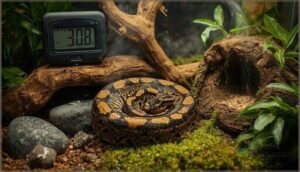
Getting the temperature right is only half the battle—humidity control matters just as much for triggering your snake’s appetite. Here’s what proper enclosure moisture delivers:
- Ball pythons need 50–60% baseline humidity, rising to 70% during sheds
- Corn snakes thrive at 65–75%, closer to their wild habitat conditions
- Chronically dry air causes dehydration with every breath, suppressing feeding behavior
- Digital hygrometers and humid hide design help you maintain stable microclimates
Low humidity triggers incomplete sheds and stress-related appetite loss, while microclimate management with secure hiding spots assists consistent eating patterns in reptile health.
Proper heat sources, such as infrared heat, are also essential for maintaining a healthy environment.
Importance of UVB Lighting

UVB lighting is essential for vitamin D3 synthesis in a snake’s skin, converting 7-dehydrocholesterol into the active hormone that regulates calcium metabolism and bone strength. Without sufficient UVB exposure, even well-fed snakes can develop metabolic bone disease, leading to skeletal weakness that impairs their ability to capture prey and reduces feeding drive. Modern research highlights the significance of proper UVB lighting, showing that corn snakes experienced a 211% increase in plasma vitamin D3 levels under appropriate lighting spectra. This evidence underscores the direct impact of UVB intensity on snake health and appetite stability.
| UVB Parameter | Impact on Snake Health |
|---|---|
| Appropriate UVI at basking site | Aids vitamin D3 production and calcium absorption |
| 6–12 month bulb replacement | Maintains effective UVB output for metabolic function |
| Species-matched photoperiod | Promotes normal activity levels and feeding responses |
Substrate Choice and Enclosure Hygiene
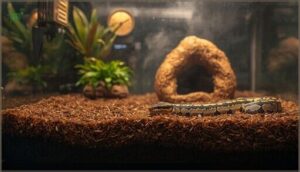
What you put under your snake has more impact than most people realize. In a three-year study of vipers, individuals on newspaper showed markedly lower food consumption compared with those on mulch—a clear link between substrate choice and feeding response. The difference? Mulch retained humidity better and allowed natural scent cues to build up, reducing stress. Meanwhile, frequent newspaper changes stripped away familiar odors, spiking stress hormones and suppressing appetite. Your substrate isn’t just bedding—it’s part of your snake’s environmental stability. Particulate options like bark mulch or coconut fiber help maintain proper humidity levels between 30–60%, support natural behaviors like burrowing, and require less frequent full replacement, all of which keep your snake comfortable and ready to eat.
Beyond material choice, enclosure maintenance directly affects disease prevention and appetite. Soiled substrate accumulates feces, uneaten prey, and microbial load, conditions that correlate with anorexia and reduced feeding interest. Regular spot-cleaning and scheduled full changes limit pathogen buildup—neglected enclosures show higher rates of respiratory and gastrointestinal disease, both known appetite suppressors. You’ll want to balance hygiene with stability: overly sterile, frequently changed setups can stress your snake, while dirty bedding raises impaction and infection risk. Choose non-toxic, appropriately sized substrate, keep temperature gradients consistent to support digestion, and monitor for waste buildup to create an environment where your snake feels secure enough to strike.
Daylight-Darkness Cycles and Privacy

Without a proper light cycle, your snake’s internal clock goes haywire—feeding rhythms collapse, stress hormones spike, and appetite vanishes. Field data shows nocturnal species hunt almost exclusively after dark, so mimicking natural photoperiods matters.
Pair stable lighting with visual barriers and multiple hiding spots to address privacy needs; snakes in complex enclosures with secure retreats consistently outperform those in exposed setups.
Darkness, humidity levels, and environmental factors work together to create a stress-free environment where feeding becomes routine again.
Recognizing Causes of Appetite Loss

When your snake suddenly turns up its nose at dinner, it’s natural to worry—but understanding why it’s happening puts you back in control.
Appetite loss isn’t random; it’s your snake’s way of signaling that something in its world needs attention.
Let’s walk through the most common culprits so you can identify what’s going on and respond with confidence.
Stress and Environmental Changes
Snakes thrive on routine, so any disruption—relocating the enclosure, excessive handling, or abrupt changes in temperature and humidity levels—can trigger appetite loss. Environmental stressors compound quickly, especially for sensitive species like ball pythons. To support a stress-free environment:
- Minimize handling during acclimation periods
- Maintain stable temperature gradients and humidity levels
- Provide multiple hides across thermal zones
- Avoid frequent enclosure rearrangements
Research shows captive snakes housed in barren setups exhibit higher stress behaviors and reduced feeding motivation.
Shedding Cycles and Seasonal Variations
Your snake’s appetite modulation during ecdysis timing is completely normal—most individuals reduce feeding as the pre-shed “blue” phase progresses. Juvenile snakes, which shed every 4–6 weeks, experience more frequent appetite dips than adults.
Seasonal adaptation also plays a role: temperate species naturally decrease food intake as photoperiods shorten, sometimes refusing meals for one to two months.
Maintain proper humidity levels (50–70%) and stable temperature gradients to support efficient shedding physiology and minimize prolonged appetite suppression during environmental synchronization with brumation cycles.
Illness, Parasites, and Infections
When your snake suddenly stops eating, underlying illness often deserves your attention first. Parasitic infections, respiratory disease, and oral infections frequently trigger appetite suppression before other symptoms emerge—making early Disease Diagnosis critical for successful Treatment Options and restoring snake health.
Watch for these Infection Signs requiring immediate Veterinary Care:
- Visible weight loss despite stable husbandry conditions
- Lethargy paired with increased hiding behavior
- Oral inflammation or excessive mucus suggesting mouth rot
- Labored breathing indicating respiratory infections
- Abnormal feces signaling intestinal parasites
Research shows 52% of surveyed pet snakes carried gastrointestinal parasites, with infected individuals commonly exhibiting anorexia. Parasite Control through regular fecal exams helps you catch reptile health issues before they compromise your snake’s appetite long-term.
Improper Husbandry Practices
Even subtle mistakes in animal husbandry can turn your snake’s appetite off like a switch. Inadequate Enclosures that don’t allow full body extension, Poor Substrate choices, Insufficient Hiding spots, Incorrect Lighting cycles, and Inconsistent Temperatures all trigger chronic stress that suppresses feeding.
Surveys reveal nearly half of pet snakes live at unknown humidity levels—a foundational snake care error. Your stress reduction efforts start with measuring temperature and adjusting environment daily.
Behavioral Signs of Appetite Decline
You’ll notice appetite loss before your snake stops eating entirely. Watch for reduced feeding response—when your snake ignores prey, tongue-flicks without striking, or drops food mid-constriction. These refusal patterns signal early inappetence.
Anorexia signs also include increased hiding during feeding times and decreased exploration. Stress reduction starts with recognizing these appetite cues in snake behavior, especially when combined with body thinning or lethargy.
Nutrition and Feeding Techniques to Stimulate Eating

Getting your snake to eat isn’t just about dropping food in the enclosure and hoping for the best. What you feed, how you present it, and when you offer it can make all the difference between a thriving snake and one that turns its nose up at every meal.
Let’s walk through the feeding techniques that actually work in clinical practice.
Choosing Appropriate Prey Size and Type
Getting prey size right is non-negotiable for snake care—it’s the foundation of digestive health and appetite success. Your goal: match prey width to your snake’s body diameter, never exceeding 1.5 times that measurement.
Five feeding techniques that work:
- Choose rodents equal to your snake’s thickest girth
- Weigh prey at 7–10% of body mass for ball pythons
- Warm frozen-thawed items to proper prey temperature
- Select species-appropriate prey type (mice for corn snakes, rats for larger pythons)
- Size down when uncertain—smaller meals beat regurgitation every time
Oversized prey triggers refusal, stress, and serious complications.
Feeding Schedules and Timing
Once you’ve nailed prey size, timing your meals right makes all the difference. Juvenile snakes thrive on 5–7 day feeding intervals to fuel rapid growth rates, while adults do best with 7–30 day schedules depending on species. Nocturnal feeding aligns with natural hunting patterns—offer prey in the evening when your snake’s most alert.
Here’s how feeding frequency varies:
| Life Stage | Feeding Interval | Typical Prey |
|---|---|---|
| Juveniles | Every 5–7 days | Small mice/rats |
| Adults (small) | Every 7–14 days | Medium rodents |
| Adults (large) | Every 14–30 days | Large rats |
Ball pythons naturally consume roughly 10 meals yearly in the wild—captive schedules shouldn’t exceed what digestion cycles can handle.
Gut-Loading and Nutritional Supplements
Beyond feeding schedules, what your prey eats determines what your snake receives. Gut loading—feeding insects calcium-rich diets 24–72 hours before offering them—transforms feeder insects into nutrient powerhouses, boosting calcium content and improving Ca:P ratios to 2:1 or higher.
For reptile nutrition and improving snake appetite, consider:
- Calcium supplements like calcium carbonate in cricket diets
- Vitamin boosters including D3 and vitamin A
- Commercial diets (Mazuri Hi Calcium, Repashy SuperLoad)
- Natural moisture sources (potatoes, oranges)
- Mineral enrichment with trace elements
This nutrient enhancement fosters bone health and metabolic function—critical for maintaining a strong appetite.
Offering Live Vs. Frozen-Thawed Prey
Once your prey is well-nourished, you’ll face the live prey versus frozen-thawed mice decision. While 20–30% of reluctant snakes respond to live prey’s movement cues, frozen-thawed options eliminate bite injuries, reduce parasite transmission, and maintain comparable nutrient retention over months of proper storage.
Here’s how they compare across critical snake feeding considerations:
| Factor | Live Prey | Frozen-Thawed Mice |
|---|---|---|
| Feeding Safety | High injury risk from rodent bites and claws; requires constant supervision | Eliminates retaliatory injuries; safe for unattended feeding |
| Prey Selection & Appetite | Strong hunting stimulus for reluctant feeders; triggers constriction response | Reliable acceptance once trained; suitable for most species long-term |
| Cost Efficiency & Humane Practices | Labor-intensive colony care; ethical concerns during constriction | Bulk purchase savings; pre-euthanized reduces prey stress |
Your choice hinges on your snake’s current feeding reliability and your capacity to monitor live interactions closely.
Specialty Diets for Specific Species
Species nutrition demands precision—ball pythons thrive on 10–15% body weight meals every 7–10 days as juveniles, while garter snakes maintained on earthworms need twice-weekly feedings due to lower caloric density.
Hognose snakes refusing rodents often accept prey scented with toad secretions, utilizing their innate anuran preference.
Matching feeding strategies to your snake’s natural dietary needs directly improves appetite and long-term reptile nutrition outcomes.
Addressing and Preventing Feeding Problems

When your snake won’t eat, the solution often lies in tweaking your approach rather than starting from scratch. Most feeding problems respond well to simple adjustments in husbandry, handling, and patience.
Here’s how to address common issues and keep your snake on track for long-term feeding success.
Stress Reduction and Hiding Spot Provision
Your snake’s refusal to eat often boils down to one overlooked factor: security. When your pet snake doesn’t feel safe, elevated stress hormones suppress appetite—sometimes for weeks. Proper Hiding Spot Placement and Enclosure Design aren’t optional luxuries; they’re essential for Stress Management and appetite recovery.
- Provide at least two Snake Refuge areas (warm side and cool side)
- Choose snug-fitting hides allowing full body contact with surfaces
- Position enclosures in quiet, low-traffic locations for Environmental Stability
- Minimize handling and external disturbances during feeding periods
- Add structural complexity like branches or foliage to reduce exposure anxiety
Research on captive snakes shows that animals in enriched environments with proper cover achieve better body mass and consume prey faster than those in barren setups. The environmental impact on pets—particularly animal behavior related to foraging—hinges on perceived safety. If your snake spends hours pacing enclosure edges or refuses to settle, inadequate refuge is likely the culprit. Snake care fundamentals start here: create a sanctuary where your animal can relax, digest, and thrive. Pet snake care improves dramatically when stress drops.
Snakes thrive and eat better when their environment offers secure hiding spots and a sense of safety
Adjusting Feeding Methods and Environment
Often, your snake’s refusal to eat isn’t a health crisis—it’s a Feeding Technique problem you can fix today. Try Prey Presentation changes first: tong-feed to simulate movement, or switch to darker-colored prey.
Survey data shows that Sensory Manipulation through dim lighting or evening feeding ranked among the most successful interventions for improving snake appetite, outperforming scent-based methods in captivity.
Monitoring and Adjusting Enclosure Conditions
You can’t guess your way to the right tank conditions—precision matters. Use digital thermometers at both ends to confirm your temperature control stays between 24–35 °C, and check humidity management with a hygrometer weekly.
Inspect substrate for moisture buildup, verify UVB lighting output every six months, and adjust enclosure design elements like air quality monitoring vents to prevent respiratory stress that kills appetite fast.
Avoiding Overfeeding and Digestive Issues
A too-large meal can trigger regurgitation or worse—prey beyond 125% of your snake’s mid-body diameter dramatically raises the risk of esophageal injury and prolonged digestive stress.
Stick to feeding strategies that prioritize meal sizing at 80–125% and space adult feedings 10–14 days apart.
This nutrient balance protects digestive health, prevents overfeeding risks, and keeps your snake’s appetite steady.
Patience During Natural Appetite Fluctuations
Not every missed meal signals trouble—many species naturally cycle through weeks or even months of inappetence during breeding season or cooler weather. Healthy adult ball pythons can safely refuse food for up to 12 months if body condition holds steady.
Monitor weight and behavior closely, but trust these physiological adaptations. Natural fasting is built into snake feeding habits, not against them.
When to Seek Veterinary Advice for Appetite Issues

Sometimes a snake’s appetite loss isn’t something you can fix with tweaks to temperature or feeding schedules—it signals a deeper problem that needs professional eyes. Knowing when to pick up the phone and call your reptile vet can make the difference between a minor hiccup and a serious health crisis.
Let’s walk through the red flags that mean it’s time to get veterinary support involved.
Persistent Refusal to Eat
When your snake has refused multiple consecutive meals despite adjusting temperature, humidity, and prey offerings, it’s time to consult an exotics veterinarian. Persistent inappetence lasting beyond a few weeks can signal serious anorexia causes—from parasitic infections to inclusion body disease.
Prolonged appetite loss weakens immunity, increasing malnutrition risks. Early veterinary intervention identifies underlying problems and prevents starvation effects before organ damage occurs.
Signs of Illness Requiring Professional Care
Appetite loss paired with respiratory issues like wheezing, open-mouth breathing, or nasal discharge demands immediate care—viral respiratory infections can devastate captive collections. Watch for neurological signs such as disorientation or stargazing, gastrointestinal problems including regurgitation or weight loss, and mouth rot with oral lesions. These systemic diseases often signal multi-organ failure.
- Lethargy with visible spinal processes
- Mucopurulent discharge alongside intestinal parasites
- Skin sores combined with respiratory infections
Don’t wait—these constellations predict serious snake health crises.
Regular Health Checks and Fecal Exams
Beyond crisis intervention, routine veterinary care keeps problems from snowballing. Schedule wellness exams twice yearly—your vet can catch weight trends and run diagnostic testing before appetite crashes.
Fecal exam frequency matters: adult snakes benefit from parasite detection every six months, while juveniles need screening four times in their first year. These health screenings identify subclinical infections early, protecting digestive health and preventing the cascade toward organ damage.
Veterinary Support for Dietary Planning
Your exotic animal veterinarian brings specialized expertise in reptile health and nutrition counseling that you won’t find elsewhere.
Dietary planning consultations evaluate your snake’s body condition, species-specific needs, and feeding strategies—adjusting prey size, frequency, and type based on health assessment.
When appetite issues persist, veterinary guidance integrates environmental factors with targeted nutritional interventions, using evidence-based feeding strategies to restore your snake’s appetite safely and effectively.
Identifying and Treating Underlying Health Problems
Systemic disease diagnosis begins with a thorough physical examination—your veterinarian will assess respiratory function, oral health, and body condition to pinpoint underlying snake diseases and treatment needs.
Blood work, radiography, and fecal testing uncover parasites, infections, or metabolic bone disease contributing to appetite loss.
Medical treatment may include antibiotics, nutrition therapy, or assisted feeding, while health checks and veterinary care target digestive health and issues before they become life-threatening.
Frequently Asked Questions (FAQs)
Should You Tempt a pet snake to eat?
Sometimes the kindest thing you can do is wait—yet waiting too long risks harm.
Tempting a pet snake to eat depends on fixing husbandry first, recognizing natural fasting, and knowing when appetite loss signals genuine trouble.
What should I do if my Snake refuses to eat?
When your snake refuses food, first verify temperature, humidity, and hiding spots are correct.
Monitor for weight loss, lethargy, or respiratory signs.
If refusal persists beyond several scheduled feeds, consult a reptile veterinarian promptly.
Do pet snakes eat a lot?
Compared to warm-blooded pets, your snake’s appetite is modest—adults usually eat just one appropriately sized meal every one to two weeks.
This infrequent feeding frequency reflects their efficient snake metabolism and low energy needs.
Why do snakes eat so much?
Actually, snakes don’t eat that much—they’re masters of the feast famine strategy. Their low snake metabolism and digestive efficiency let them thrive on infrequent, energy-dense meals, unlike mammals requiring constant fuel.
Can snakes eat prey other than rodents?
Think outside the box: yes, many snakes thrive on alternative prey like fish diets, amphibian foods, and invertebrate options. Species such as garter snakes naturally prefer non-rodent foods, reflecting diverse snake eating habits in the wild.
How often should juvenile snakes be fed?
Juvenile snakes typically need feeding every 5–7 days to support their higher metabolic needs and rapid growth rates.
Adjust your feeding schedule based on species, prey size, and body condition for ideal snake development.
Do snakes need water bowls in their enclosure?
Water bowls are the lifeblood of snake care and feeding—you absolutely need them in reptile enclosures and environments.
They support snake hydration, humidity control, and shedding, directly impacting your pet snake’s appetite and health.
Can multiple snakes be housed together safely?
Generally, no. Snakes are solitary creatures, and cohabitation risks include aggression, cannibalism, disease transmission, and chronic stress.
Most pet snake species thrive best when housed individually, reducing housing challenges and ensuring peak health.
Whats the best way to handle a snake?
Slow and steady wins the race for snake handling. Support at least one-third of your pet snake’s body, and approach from the side to minimize defensive behavior. Never handle during feeding or shedding cycles for best captive care.
Conclusion
Think of your snake’s appetite like a three-legged stool—remove one leg, and everything topples. Environment, nutrition, and health must work in harmony. When you’ve dialed in those temperature gradients, offered appropriate prey, and ruled out illness, you’ve built a solid foundation.
These boosting snake appetite tips aren’t just troubleshooting steps; they’re your roadmap to confident, informed care. Trust the process, stay observant, and your snake will thank you.
- https://azeah.com/reptiles-amphibians-snakes/benefits-feeding-frozenthawed-rodents-snakes
- https://petwave.com.au/blogs/our-blog-2/why-is-my-snake-not-eating-understanding-the-causes-and-solutions
- https://rodentpro.com/informationcenter/resources/feeding-frozen-thawed-prey-items-to-snakes-in-captivity
- https://lafeber.com/vet/feeding-the-hospitalized-snake/
- https://www.facebook.com/groups/967708664967231/posts/1309182334153194/