This site is supported by our readers. We may earn a commission, at no cost to you, if you purchase through links.
A single gene swap can transform a wild-type corn snake from burnt orange into a ghostly white animal with faint lavender saddles. That’s recessive mutation at work, expressed when two matching alleles finally meet in the same animal. Corn snake morphs aren’t decorative variations; they’re living proof of vertebrate genetics.
Understanding corn snake morph genetics separates informed keepers from impulsive buyers. A $50 Amel and a $1,000 multi-gene designer represent entirely different genetic stacking strategies, each with distinct health risks and care needs. Knowing the genetics behind each morph gives you a real edge at every step.
Table Of Contents
- Key Takeaways
- What is a Corn Snake Morph?
- Corn Snake Morph Genetics Explained
- Color Morphs and Unique Characteristics
- Pattern Morphs and Distinct Markings
- Designer Corn Snake Morph Combinations
- Choosing and Caring for Morphs
- Frequently Asked Questions (FAQs)
- How much do rare corn snake morphs cost?
- Where can I buy corn snakes safely online?
- Do corn snake morphs have different temperaments?
- Which corn snake morphs are easiest for beginners?
- Can different morphs be housed together successfully?
- Do corn snake morphs change color with age?
- Are corn snake morphs legal to own everywhere?
- Do different morphs have noticeably different lifespans?
- Can corn snake morphs compete in reptile shows?
- Do corn snake morphs change appearance between seasons?
- Conclusion
Key Takeaways
- Corn snake morphs are stable, inheritable genetic traits—recessive ones need two matching alleles to show, while dominant ones express with a single copy—so understanding inheritance lets you predict breeding outcomes instead of guessing.
- Color genes (like Amel, Anery, and Lavender) alter pigment while pattern genes (like Motley, Stripe, and Tessera) reshape markings, and polygenic traits like color intensity produce continuous, statistically variable results rather than fixed ratios.
- Stacking multiple genes creates designer morphs like Bloodred and Blizzard, but appearance alone can’t confirm genetics—epistasis can mask traits, so pedigree records and DNA testing are essential before pairing.
- Morph choice carries real-world stakes: rare multi-gene snakes can cost thousands, some morphs have specific health issues (like Scaleless shedding trouble or Stargazer’s wobble), yet temperament and lifespan depend far more on husbandry than genetics.
What is a Corn Snake Morph?
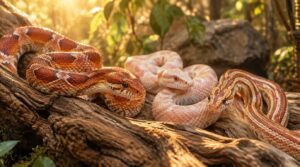
In the wild-type corn snake, you’ll see the classic orange-and-red palette of a Carolina classic. A corn snake morph is something different: a genetically inherited variant that changes color and pattern variations beyond what hatchlings would show naturally. These aren’t environmental quirks or random flukes. They’re stable, inheritable traits passed predictably from parents to offspring.
Whether you’re drawn to a bloodred, ghost, or tessera pattern, corn snake morph genetics and temperament facts make clear that these inherited traits shape appearance only — not how your snake behaves or bonds with you.
Think of morphs as nature’s paintbrush guided by selective breeding. Breeders pair snakes carrying specific alleles, and over generations, the visual diversity explodes: snows, tesseras, palmettos, and dozens more. Each morph gets its name from visible traits and breeder-recognized names, not veterinary terminology.
You’re not just buying a pretty snake. You’re joining a community built on genetics, careful record-keeping, and the thrill of producing something no one’s ever seen.
Corn Snake Morph Genetics Explained
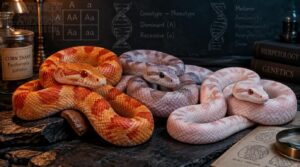
Ready to crack the genetic code behind every corn snake morph? Three forces shape what hatches from each clutch: recessive and dominant traits, pigment and pattern genes, and polygenic inheritance. Master these, and you’ll predict outcomes like a pro breeder instead of guessing at eggs.
Recessive and Dominant Traits
Genetics rule every morph you’ll ever breed. Recessive genes need two copies to show, so heterozygotes look normal while quietly carrying the trait. Pair two carriers, and roughly a quarter of the clutch becomes homozygotes displaying the morph.
Dominant mutations flip that script: one copy expresses instantly. Master genetic inheritance through simple Punnett squares, and you’ll predict litters with confidence.
Pigment and Pattern Genes
Dominant or recessive, every morph ultimately acts on pigment and pattern. Melanin production hinges on loci like Amel and Anery, while Pigment Distribution genes such as Diffused scatter color across scales. Pattern Expression follows separately: Motley and Stripe rewrite markings without touching color.
Know your levers:
- Amel strips black pigment entirely.
- Anery and Charcoal mute reds.
- Motley fuses dorsal blotches.
- Tessera sharpens borders dramatically.
Master both systems, and genetics becomes your paintbrush.
Polygenic Trait Inheritance
Not every trait follows clean Mendelian Ratios. Polygenic Traits like size, color intensity, and pattern blending stack many Recessive Genes with small effects, so your Genetic Blueprint predictions become statistical, not guaranteed. Polygenic Inheritance yields continuous variation, meaning hatchlings scatter around mid-parent averages.
Even subtle shifts in temperature or humidity during incubation can nudge polygenic expression, which is why exploring corn snake morph genetics and color variation helps breeders set more realistic expectations for each clutch.
| Trait | Single-Gene | Polygenic |
|---|---|---|
| Inheritance | Predictable ratios | Averaged effects |
| Phenotype | Discrete categories | Continuous spectrum |
| Environment | Minimal influence | Strong modifier |
| Selection speed | Fast fixation | Gradual shifts |
| Example | Amel | Color saturation |
Track lineages across generations for accuracy.
Color Morphs and Unique Characteristics
Here’s where corn snake keeping gets addictive. Each color morph tells a different genetic story, and knowing what drives each look helps you pick (or breed) with confidence. We’ll walk through the pigment-altering morphs in three groups, starting with the classics.
Amelanistic and Snow Morphs
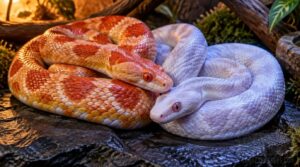
Want a corn snake stripped of its black pigment? That’s the Amelanistic Morph, better known as the albino. Its Recessive Genes halt Melanin Production, leaving blazing reds, oranges, and yellows. Pair amelanism with anerythrism and you get Snow Corn Snakes, ghostly white with faint saddles. Remember these three keys:
- Both parents must carry the allele.
- Juveniles show color shifts early.
- UV light enhances pale fluorescence.
Anerythristic and Charcoal Morphs
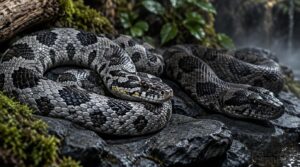
Strip away the reds, and you’ll meet the Anerythristic Variants: gray-and-black beauties with yellow accents, born from a recessive Color Mutation blocking pheomelanin. Charcoal morphs push darker, muting that yellow entirely. Combine them, and you get slate-graphite snakes with razor-sharp saddle edges.
Here’s the catch: Reptile Genetics demand DNA testing** demand DNA testing, since phenotype alone can’t confirm zygosity. Verify lineages before breeding.
A corn snake DNA testing kit takes the guesswork out of zygosity, giving breeders reliable results before pairing decisions are made.
Lavender, Caramel, and Butter
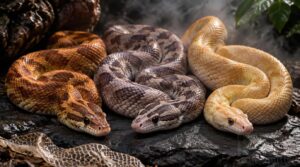
I once saw a Lavender Corn Snake under full-spectrum light: that gray-violet dorsal glow stunned the whole room. You’ll chase that moment too.
- Lavender dilutes eumelanin, producing purple-leaning tones.
- Caramel shifts pheomelanin, veiling browns in copper.
- Butter Corn Snakes suppress black-gray pigment, preserving cream.
These Color Mutations leave patterns intact, so examine shed cycles under multiple light spectra. Verify recessive genetics before pairing.
Pattern Morphs and Distinct Markings
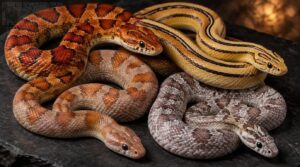
Color is only half the story; pattern morphs rewrite the very architecture of a corn snake’s saddles and stripes. You’re about to see how a handful of alleles can erase checkerboards, stretch blotches into racing stripes, or speckle a white canvas like paint flicked across glass.
Here’s your guide to the pattern-shifting genetics every serious keeper should know.
Motley and Stripe Patterns
Two patterns dominate the corn snake world, and you’ll spot them fast. Motley erases the belly checkering and fuses dorsal saddles into clean, connected bands, while Stripe lays a bold longitudinal line down the spine. Both are recessive, so pattern expression sharpens with age.
Pair either with high-contrast color genes, and Genetics hands you a showstopper.
Tessera and Diffused Patterns
Ever seen a corn snake wearing a stained-glass window? That’s Tessera. Its mosaic-like blocks align with dorsal markings, softened by diffused edges.
- Tessera creates angular, polygonal blocks, not stripes
- Diffused genetics blur pigment boundaries, softening contrast
- Both behave as polygenic traits, not single-gene
- Pattern expression shifts as snakes mature
- Phenotype alone can’t confirm genetics; verify through breeding
Palmetto and Scaleless Traits
If you want living art, meet the Palmetto corn snake. Its polygenic traits erase saddles into white patches. Add Scaleless genetics, and you get bare, velvet-smooth skin. Check the table:
| Trait | Look | Care Note |
|---|---|---|
| Palmetto | Saddle-free white blotches | Standard temps |
| Scaleless | Scale-free smooth skin | Soft substrate |
| Combined | High-contrast patchwork | Monitor sheds |
| Verification | Genetic testing | Track pedigrees |
| Rarity | Premium pricing | Buy documented lines |
Handle gently; scaleless skin bruises easily.
Designer Corn Snake Morph Combinations

You’ve got the single genes down, so now comes the fun part: stacking them. Designer morphs combine two, three, or even more recessive and dominant traits into snakes that look nothing like their parents. Here are the flagship combinations every serious hobbyist should know.
Bloodred and Blizzard Morphs
Several designer morphs stand out, and few rival the Bloodred and Blizzard pair.
Bloodred stacks recessive color mutations, deepening crimson as your snake matures. Blizzard, a blue-eyed leucistic line, strips pigment to a near-white canvas. Combine them and you get pale bodies with crimson accents and a deep red eye sheen.
Verify genetics first: confirm both parents are homozygous, because unverified lines risk subfertility.
Multi-Gene Appearance Changes
Bloodred and Blizzard prove a bigger truth: stack enough mutations and the phenotype transforms entirely. Epistasis lets one gene mask another, so an Amelanistic base can hide red pigment until a second mutation unlocks it. Polygenic Traits fine-tune hue and saturation, while each Pattern Mutation reshapes blotches into mosaics. Remember, appearance misleads; only Genotype Analysis confirms what you’re actually holding.
Stack enough mutations and appearance transforms entirely—only genotype analysis reveals what you’re truly holding
Breeding and Genetic Verification
Looks deceive; Genotype Analysis doesn’t. Verify every breeder claim before pairing.
- Pedigree records trace multi-generation lineage
- Genetic panels confirm Amel, Anery alleles
- Parentage tests across two generations
- Test lot IDs and lab credentials archived
- Clutch logs track hatch rates and deviations
Recessive Inheritance hides carriers, so Punnett predictions demand proof. Sound Breeding Strategies and honest Selective Breeding protect your collection.
Choosing and Caring for Morphs

You’ve mastered the genetics, so now it’s time to bring your ideal morph home. Choosing wisely means weighing morph-specific health risks, temperament, and real-world pricing before you commit. Here’s what you need to know to pick a snake that thrives in your care.
Morph-Specific Health Concerns
Picture a Scaleless corn snake struggling through a shed because its keeper’s hands were too dry. That’s preventable. Shedding difficulties spike when skin sensitivity goes unmanaged. A reptile shedding aid spray can make a real difference for Scaleless morphs, softening stubborn retained skin without the stress of soaking.
Genetic disorders like Stargazer’s neurological wobble cause feeding resistance, requiring careful prey placement. Palmetto’s eye defect rates and reduced fertility demand attention. For snakes with neurological wobbles like Stargazer, long-reach reptile feeding tongs let you position prey precisely without startling a sensitive animal.
Prioritizing snake health means knowing your morph’s vulnerabilities before they become crises. For example, the lavender morph carries a fully recessive genetic mutation that suppresses red and partially reduces dark pigmentation, making carrier identification impossible without proper parent documentation.
Temperament and Care Requirements
Handling comfort comes from routine, not morph selection. Your corn snake’s calm temperament depends on consistent care requirements: temperature control at 78–84°F warm side, 74–78°F cool ambient, and humidity management kept solidly between 40–60%.
Always skip handling right after feeding. Then start with five-minute sessions, supporting the full body with slow, unhurried movements. Steady, predictable routines produce steadier, calmer snakes.
Pricing, Rarity, and Selection
Value in the morph market follows rarity and documentation directly. Common single-gene morphs usually run $50–$250, but multi-gene combinations from breeders with verified genetic lineage records can easily exceed $1,000.
Selective breeding multiplies scarcity exponentially. Spring listings spike with demand; late fall softens prices.
When you’re selecting, always prioritize documented health clearances and phenotype stability over a tempting low price.
Frequently Asked Questions (FAQs)
How much do rare corn snake morphs cost?
Rare corn snake morphs can absolutely bankrupt your hobby budget overnight. On Morph Market, mid-tier rarity starts near $500, but price climbs fast: complex morph combinations and certified top color morphs hit $6,000 to $10,
Where can I buy corn snakes safely online?
Think of buying a corn snake like hiring a specialist surgeon. Sites like Morph Market connect you with verified breeders who document genetic stability, health records, and live arrival guarantees. Always check breeder reputation first.
Do corn snake morphs have different temperaments?
No morph is genetically wired for calm temperament or aggression. Your snake’s behavior reflects husbandry choices and early handling far more than any genetic variation. In herpetoculture, individual character consistently outweighs a snake’s morph type.
Which corn snake morphs are easiest for beginners?
Normal, Amelanistic, and Anerythristic stand out as the most beginner-friendly corn snake morphs, each offering a calm temperament, simple care requirements, and reliable feeding that keeps your overall reptile care journey stress-free from day one.
Can different morphs be housed together successfully?
Two corn snake morphs sharing one basking spot sounds idyllic until feeding time. You can house compatible morphs together, but separate hide boxes, proper enclosure size, and a strict quarantine of 4–6 weeks are essential.
Do corn snake morphs change color with age?
Most corn snake morphs don’t undergo dramatic color changes with age. Scale pigmentation stays largely stable, though subtle tonal shifts can occur after molts. Your morph’s phenotype expression reflects its genetics, not a life-stage transformation.
Are corn snake morphs legal to own everywhere?
Almost universally, yes, but notable exceptions exist. Corn Snake Morphs fall under legal pet ownership in 49 US states. Hawaii bans all snakes. Queensland, Australia outright prohibits them. You’ll want to confirm local rules first.
Do different morphs have noticeably different lifespans?
Hobbyists often assume rare morphs live shorter lives, but morph-specific genetics don’t reliably dictate lifespan. Your husbandry and diet quality matter far more. Well-kept corn snakes consistently reach 12 or more years, regardless of morph.
Can corn snake morphs compete in reptile shows?
Yes, they absolutely can, but there’s no single universal standard. Show eligibility varies by venue and local reptile clubs. Judges assess color uniformity, pattern accuracy, and documented genetics, so your preparation and paperwork matter most.
Do corn snake morphs change appearance between seasons?
Ever notice your snake looking brighter after a fresh shed? Corn snake morphs don’t seasonally shift. Scale pigmentation is locked by genetics, but the shedding cycle, lighting, and humidity shift perceived color and unique characteristics.
Conclusion
Every corn snake morph is a sentence written in DNA, and now you can read it. Whether you’re drawn to a classic Amel or chasing a multi-gene designer project, understanding corn snake morphs unique characteristics turns guessing into strategy.
You know which genes stack, which combos carry risks, and what a fair price looks like. That’s mastery. Pick your project, verify your genetics, and build something the hobby hasn’t seen yet.